
Territory planning is the process of dividing your market into clear, fair, and measurable sales territories so reps know exactly which accounts to pursue, how to prioritize them, and how success will be measured. A strong territory plan balances revenue potential, rep capacity, account ownership, local context, outbound activity, and review cadence.
Most territory planning advice stops at geography. That is not enough for modern B2B teams. A useful plan must also cover ICP fit, total addressable market, account scoring, quota fairness, data quality, email deliverability, sequence strategy, and handoff rules. This guide gives you the full operating system: definitions, steps, templates, examples, KPIs, mistakes, software guidance, and FAQ answers you can use immediately.
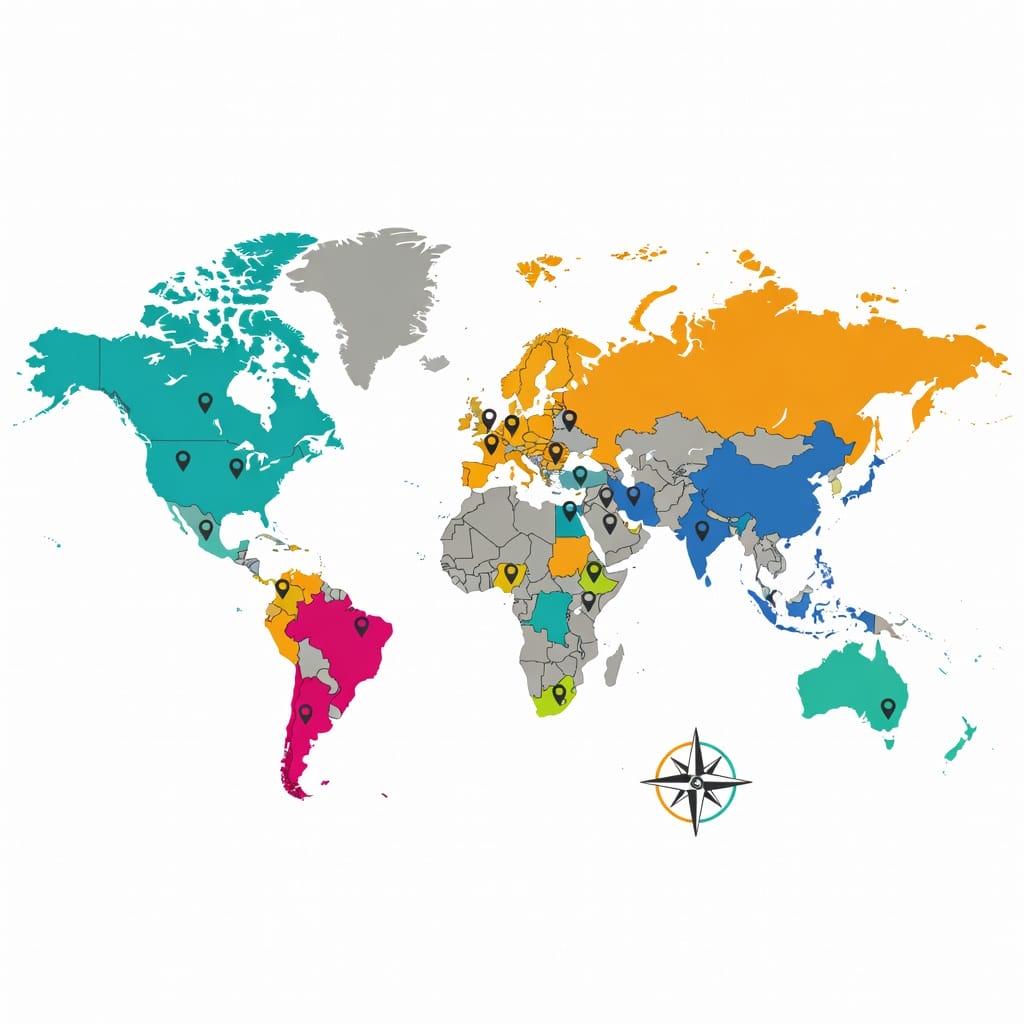
Direct answer: territory planning helps sales leaders decide who sells where, to whom, with what quota, and under what rules. It prevents account overlap, protects rep focus, improves coverage of high-value accounts, and makes pipeline forecasting more reliable by connecting market opportunity to daily execution.
What is territory planning?
Territory planning is the structured process of assigning markets, accounts, regions, industries, or customer segments to sales reps or teams. The goal is not just neat coverage on a map. The goal is to create a practical selling system where each territory has enough opportunity to hit quota, enough focus to avoid waste, and enough clarity to prevent internal conflict.
A territory can be geographic, vertical-based, account-size-based, language-based, channel-based, named-account-based, or hybrid. For example, an enterprise AE might own financial services accounts in North America, while an SDR team owns mid-market SaaS accounts in the United Kingdom and Ireland. The right model depends on your market density, buyer behavior, rep capacity, sales cycle, and go-to-market motion.
Territory planning vs. territory management
Territory planning is the design phase. You define territories, account rules, segment priorities, quota assumptions, and performance expectations before reps execute. Territory management is the operating phase. Reps and managers use the plan to prioritize accounts, run outreach, inspect pipeline, update data, and adjust strategy when a territory underperforms or becomes overloaded.
The distinction matters because many teams confuse a one-time planning spreadsheet with territory management. A plan that is not managed becomes stale quickly. New accounts enter the market, existing customers expand, contacts change jobs, budgets shift, and reps learn which segments actually respond. Treat the plan as a living operating document, not an annual slide deck that disappears after kickoff.
Territory planning vs. territory mapping
Territory mapping is one input inside territory planning. Mapping usually visualizes account locations, regional boundaries, travel routes, or market density. Territory planning uses that map, plus revenue potential, ICP quality, sales capacity, outreach channels, account ownership rules, and KPI targets, to decide how the business should assign and pursue opportunity.
This is why a map alone can be misleading. Two regions may look equal on paper while one has twice the number of high-fit accounts, shorter sales cycles, cleaner contact data, and stronger response rates. A proper territory plan combines visual mapping with commercial scoring. The result is a territory that reps can actually work, not just a neat shape on a dashboard.
Common ways to define a sales territory
The most common territory models are geography, industry, company size, account tier, named accounts, product line, language, channel, and lifecycle stage. A geographic model works well when buyers cluster by region or when field sales requires travel. A vertical model works better when industry expertise matters more than location. Named accounts work when a small list of strategic accounts deserves dedicated ownership.
Most growing B2B teams eventually move to a hybrid model. For example, you might assign enterprise accounts by named ownership, mid-market accounts by geography and vertical, and SMB accounts through pooled SDR coverage. Hybrid models need stricter rules because overlap becomes easier. Every account should have one accountable owner, one clear handoff path, and one source of truth in your CRM or outreach platform.
Territory planning vs. account planning
Territory planning decides how a market is divided and worked across many accounts. Account planning goes deeper into one target account or customer. A territory plan might say that a rep owns 180 mid-market healthcare accounts in the Northeast. An account plan would explain the buying committee, current pain, stakeholders, competitors, timeline, and next steps for one hospital software company inside that territory.
Both plans should connect. Territory planning tells reps which accounts deserve attention first. Account planning tells reps how to win the most important accounts. If your team has strategic accounts, use territory scoring to decide which accounts get account plans. This keeps planning effort focused where deal value and win potential justify deeper research.
Why territory planning matters
Territory planning matters because sales performance is not only a rep skill problem. It is also a market design problem. If one rep receives a dense territory full of high-fit accounts while another receives a thin, low-intent territory with unclear ownership, performance comparisons become unfair and forecasts become unreliable.
Good territory planning gives sales leaders a way to connect market opportunity to rep capacity. It helps answer practical questions: which territories are undercovered, which reps are overloaded, which accounts should be prioritized, which segments need different messaging, and which territories deserve more hiring, budget, or outbound infrastructure.
Higher rep productivity
Reps become more productive when they spend less time deciding who owns an account and more time selling. A clear plan removes avoidable friction: duplicate research, repeated CRM checks, internal Slack debates, and awkward account conflicts. It also lets reps specialize. When reps work a focused territory, they learn regional objections, industry vocabulary, common triggers, and relevant proof points faster.
Productivity also improves when account lists are realistic. A rep with 3,000 accounts and no prioritization model will skim the surface. A rep with a scored list of high-fit accounts, segmented sequences, and defined weekly coverage goals can work deeper. Territory planning turns a messy market into a manageable operating rhythm.
Fairer quotas and cleaner ownership
Quota fairness starts with opportunity fairness. If quotas are set without territory potential, managers may accidentally punish reps assigned to smaller markets or underdeveloped segments. Territory planning forces leadership to compare territories by account count, ICP fit, average contract value, pipeline history, expansion potential, sales cycle length, and rep capacity before quotas are finalized.
Clean ownership is equally important. Without clear territory rules, two reps may contact the same account, one rep may avoid a difficult segment, and managers may spend time arbitrating edge cases. A strong plan defines named accounts, inbound routing, expansion ownership, disqualification rules, and reallocation triggers. That clarity protects the customer experience and keeps internal trust intact.
Better account coverage
Account coverage means the right accounts receive the right level of attention. In weak territory systems, reps often overwork familiar accounts and ignore hidden opportunities. High-potential accounts can sit untouched because they are buried in a list, assigned to the wrong owner, or never enriched with usable contacts. Planning fixes this by linking account tiers to coverage expectations.
For example, Tier 1 accounts might require multi-contact research, executive personalization, and manager review. Tier 2 accounts might receive persona-based sequences. Tier 3 accounts might enter lower-touch nurture. This tiering prevents both extremes: treating every account like a strategic account, or blasting every account with the same generic outreach.
More relevant outreach and messaging
Territory planning improves messaging because it makes local context visible. A finance leader in Germany, a logistics operator in Texas, and a SaaS founder in Singapore may all fit your ICP, but the business environment, language expectations, compliance concerns, seasonal timing, and proof points can differ. A territory plan should record those differences so outbound teams can adapt copy intelligently.
This is where outreach execution matters. Once territories are defined, teams can build territory-specific email sequences, sender pools, warmup plans, and inbox ownership rules. Mystrika is useful here because it combines warmup, a cold email sequencer, AI writing support, personalization, and a unified inbox starting at $15 per month, which helps reps operationalize territory-specific outreach without losing replies across scattered inboxes.
More predictable pipeline by region or segment
Territory planning makes pipeline easier to inspect because every opportunity has context. Instead of looking only at company-wide pipeline, leaders can compare pipeline coverage by region, segment, vertical, rep, and account tier. This exposes whether a territory problem is caused by low activity, weak account quality, poor messaging, bad timing, insufficient capacity, or unrealistic quota assumptions.
Predictability depends on consistent definitions. If one manager defines an active account as any account with one email sent, while another requires a meeting or opportunity, territory reports become noisy. A planning document should define stages, coverage, activity thresholds, and KPI formulas. That shared language turns territory reviews from opinion debates into operating conversations.
Faster coaching and clearer management conversations
Territory planning improves coaching because it gives managers context for performance. Without a territory plan, a pipeline miss becomes a vague conversation about effort. With a plan, the manager can inspect account coverage, ICP quality, sequence performance, meetings booked, conversion, and territory potential. Coaching becomes specific because the manager can separate execution gaps from territory design gaps.
This also protects reps from unfair judgment. A territory with low account density, weak data, or long sales cycles may need different expectations than a dense territory full of in-market accounts. The plan creates a shared operating baseline. Managers can coach behavior while still acknowledging when the model needs adjustment.
What to include in a territory plan
A territory plan should be specific enough for a new rep, RevOps analyst, or sales manager to understand how the territory works without private context. It should explain the market boundaries, target segments, account scoring model, ownership rules, quota assumptions, outbound plan, review cadence, and escalation process.
Use the checklist below as your core structure. You can keep it in a CRM note, spreadsheet, sales planning doc, or territory management tool. The format matters less than the operating clarity.
| Territory plan component | What it answers | Owner |
|---|---|---|
| Territory definition | Which accounts, regions, or segments are included? | Sales leadership and RevOps |
| ICP and segments | Which accounts deserve priority? | Sales, marketing, RevOps |
| TAM estimate | How much opportunity exists? | RevOps |
| Account tiers | Which accounts get deeper coverage? | Sales manager |
| Rep capacity | Can the owner work the territory properly? | Sales manager |
| Ownership rules | Who owns edge cases and handoffs? | RevOps |
| Outbound plan | How will reps reach accounts? | SDR or AE manager |
| KPIs | How will performance be judged? | Sales leadership |
| Review cadence | When will the plan be adjusted? | Sales leadership |
Territory definition
Start with a plain-language definition of the territory. Write the included regions, excluded regions, account types, customer tiers, named accounts, and any special routing rules. If a territory is not geographic, define the actual boundary. For example: “North America mid-market cybersecurity companies with 100 to 1,000 employees, excluding named enterprise accounts and current customers.”
A good definition removes ambiguity. It should be clear enough that a rep can look at a new account and decide whether it belongs in the territory. If the answer depends on tribal knowledge, the definition is not finished. Include examples of included and excluded accounts because edge cases are where territory disputes usually begin.
ICP and account segments
Your ideal customer profile should translate into measurable account fields. Common fields include industry, employee count, revenue range, geography, department size, technology stack, funding stage, hiring signals, compliance requirements, and pain indicators. Do not rely on a vague statement like “fast-growing B2B companies.” Reps need filters they can use in the CRM, enrichment tool, or outreach platform.
Segmentation should also reflect how accounts buy. Some accounts need founder-led messaging. Some need finance approval. Some respond to operational pain. Some care about deliverability, integrations, procurement, or local support. Territory planning becomes more powerful when segmentation connects account characteristics to actual messaging and sales plays.
TAM and revenue potential
Total addressable market, or TAM, estimates how much revenue a territory could produce if the team captured the available opportunity. For territory planning, TAM does not need to be perfect. It needs to be consistent enough to compare territories. You can start with account count multiplied by estimated average contract value, then adjust for ICP fit, sales cycle difficulty, and expected penetration.
A simple formula is: territory potential equals high-fit account count multiplied by estimated annual contract value multiplied by realistic win potential. If 400 high-fit accounts exist, your average contract value is $6,000, and realistic penetration is 8 percent over the planning horizon, the modeled opportunity is 400 x $6,000 x 0.08. The exact number matters less than using the same method across territories.
Rep capacity and workload
A territory can look attractive and still be unworkable if the rep does not have enough capacity. Workload includes active opportunities, target account count, required research depth, sequence volume, travel, channel complexity, admin burden, and customer expansion duties. A rep managing strategic accounts cannot cover the same raw account count as an SDR running narrow outbound sequences.
Capacity planning should prevent both undercoverage and burnout. If a territory has thousands of accounts, create tiers and activity expectations. If a territory has few but complex accounts, define deeper account plans and multi-threading requirements. Fair workload is not equal account count. Fair workload is equal opportunity adjusted for effort.
Account ownership rules
Ownership rules explain who owns an account before, during, and after engagement. Include rules for inbound leads, outbound-sourced accounts, existing customers, subsidiaries, duplicate domains, account reassignment, no-response accounts, partner-sourced accounts, and rep departure. These rules protect both customer experience and team trust.
Write rules before conflict happens. For example, if an account has multiple domains, decide whether ownership follows parent company, billing entity, or prospecting domain. If a rep leaves, decide whether active opportunities transfer immediately and whether untouched accounts return to a pool. The more precise the rules, the less time managers waste on exceptions.
Outbound motion and messaging
A territory plan should explain how reps will reach accounts, not only which accounts they own. Include channels, sequence length, personalization depth, sender strategy, warmup status, time zone handling, reply ownership, and follow-up expectations. If outbound email is a major channel, include domain health, inbox allocation, unsubscribe handling, and verification steps.
This is also where supporting tools fit naturally. DoYouMail can support cold email infrastructure with SMTP, IMAP, unlimited email IDs, dedicated private IP at $39 per month, and bring-your-own-domain flexibility. FilterBounce can help verify email lists through CSV and API workflows with high accuracy. Mystrika can then help teams warm inboxes, write personalized emails, run sequences, and manage replies in one unibox.
Quota and KPI targets
Quota should connect to territory potential, not just company growth targets. Set quota assumptions using TAM, historical conversion, pipeline coverage, expected activity, average deal size, and rep ramp stage. Then define the KPIs that show whether the territory is healthy before the quarter is over. Waiting for closed-won revenue alone makes problems visible too late.
Include leading indicators and lagging indicators. Leading indicators include account coverage, meetings booked, reply rate, positive reply rate, opportunity creation, and stage conversion. Lagging indicators include quota attainment, revenue, win rate, average contract value, and sales cycle length. Together, these metrics show whether the plan is being executed and whether the territory itself is viable.
Review cadence
A territory plan should specify when it gets reviewed. Weekly reviews can inspect activity and account coverage. Monthly reviews can inspect pipeline creation and messaging performance. Quarterly reviews can rebalance workloads and quota assumptions. Annual planning can revisit the territory model itself.
Cadence prevents territory plans from becoming static. Markets change too quickly for an annual-only approach. New competitors appear, macro conditions shift, inbox performance changes, industry demand moves, and reps discover unexpected pockets of opportunity. Review cadence gives leaders permission to adjust without making every change feel political or reactive.
Risk register and assumptions
Every territory plan should list the assumptions that could break it. Examples include expected account count, reachable contact rate, average deal size, planned hiring, data freshness, sender reputation, market demand, and competitive pressure. Writing these risks down helps managers review the plan honestly instead of pretending every input is certain.
A lightweight risk register is enough. For each risk, add likelihood, impact, owner, and mitigation. If contact data quality is a high-impact risk, mitigation might be verification before sequencing and monthly bounce review. If rep capacity is a risk, mitigation might be account tiering or temporary pooled SDR support. This makes the plan more resilient.
How to create a territory plan in 8 steps
The best territory planning process moves from business goals to market segmentation, then from account scoring to execution. Do not begin with a map. Begin with the revenue problem you are trying to solve. Are you expanding into a new market, reducing account overlap, improving SDR productivity, fixing quota fairness, or launching a new outbound motion?
The eight steps below work for sales leaders, SDR managers, RevOps teams, founders, and account executives. You can use them for geographic territories, industry territories, named accounts, or hybrid teams.
1. Define your business goals and territory model
Start by naming the business outcome. A territory plan for market expansion is different from a territory plan for quota fairness. A plan for enterprise named accounts is different from a plan for high-volume SMB outbound. Write the goal in one sentence before you assign accounts. Example: “Increase mid-market pipeline in the Northeast by focusing SDR capacity on cybersecurity and compliance-heavy SaaS companies.”
Then choose the territory model. Use geography when local presence, time zones, language, or travel matter. Use industry when domain expertise drives trust. Use account size when sales motion differs by complexity. Use named accounts when a small group of strategic companies requires dedicated planning. Use hybrid when no single dimension explains buying behavior.
2. Segment your market by geography, industry, size, and intent
Segmentation turns a market list into usable selling groups. Start with geography, industry, company size, and revenue range, then add intent and fit signals. Intent signals can include hiring patterns, technology usage, funding events, website visits, content engagement, role growth, or public initiatives. Fit signals should match the problems your product actually solves.
Avoid over-segmentation early. If every segment has a different playbook, reps will not execute consistently. A practical starting point is three to five meaningful segments per territory. For each segment, write the buyer persona, main pain, typical trigger, likely objection, proof point, and recommended sequence angle. This gives reps useful guidance without creating an impossible planning burden.
3. Calculate TAM and revenue potential for each territory
Calculate territory potential with a consistent model. Count high-fit accounts, estimate realistic deal value, and apply a conservative penetration assumption. If you have historical conversion data, use it. If you are entering a new market, use ranges instead of pretending certainty. The output should help compare territories, not claim perfect forecasting accuracy.
A useful territory potential worksheet includes account count, ICP fit score, estimated average contract value, reachable contacts, historical win rate, sales cycle complexity, and current pipeline. If one territory has fewer accounts but much higher average deal value, it may deserve a higher quota than a larger but lower-value territory. TAM work prevents simplistic account-count assignments.
4. Score accounts against your ICP
Account scoring helps reps prioritize. Build a score from observable criteria: industry fit, company size, region, technology fit, funding stage, hiring activity, compliance need, relevant pain, current relationship, and data quality. Keep the score simple enough that reps understand it. A five-factor model used consistently is better than a 30-factor model nobody trusts.
Here is a simple scoring model you can copy:
| Factor | Score 0 | Score 1 | Score 2 |
|---|---|---|---|
| Industry fit | Poor fit | Adjacent fit | Core ICP |
| Company size | Too small or large | Near target | Exact target range |
| Trigger signal | None | Weak signal | Strong current trigger |
| Contact data | Missing or stale | Partial | Verified decision makers |
| Pain relevance | Unknown | Plausible | Clear public or observed pain |
5. Balance territories by opportunity and rep capacity
Balance territories using weighted opportunity, not raw account count. A territory with 200 enterprise accounts may require more effort than 2,000 small accounts. Compare account tiers, active opportunities, expected outreach volume, sales complexity, travel, expansion duties, and rep experience. If territories are unbalanced, reps will either cherry-pick or burn out.
A practical workload formula is: workload score equals Tier 1 accounts x 5, Tier 2 accounts x 2, Tier 3 accounts x 1, plus active opportunities x 4. This is not a universal truth. It is a starting framework you can adjust. The point is to make workload visible and comparable. Once visible, unfair assignments become easier to fix.
6. Set account ownership and handoff rules
Write ownership rules as if a new manager will inherit the team tomorrow. Define who owns inbound leads, dormant accounts, existing customers, subsidiaries, duplicate domains, open opportunities, no-response accounts, partner referrals, and reactivated opportunities. If the rule is not written, people will apply it inconsistently.
Handoff rules are especially important between SDRs, AEs, customer success, and account managers. For example, an SDR may own outbound engagement until a qualified meeting is booked, then the AE owns the opportunity. Customer success may own expansion after onboarding, unless a new business unit creates a separate enterprise opportunity. Clear handoffs protect follow-up speed and customer trust.
7. Build localized outbound sequences and messaging
Once territories are assigned, build messaging around territory context. Localized does not always mean language translation. It can mean industry-specific proof, region-specific regulations, local business calendars, time zone-aware sending, buyer maturity, or market-specific objections. Reps should not send the same generic sequence to every territory if the pain and context differ.
For outbound email, connect territory plans to sender infrastructure. Assign sending inboxes, warm them properly, verify email lists, personalize by segment, and route replies to the right owner. If you need more depth on sender reputation, this guide to email deliverability explains why authentication, warmup, list quality, and engagement signals matter before volume increases.
8. Set KPIs and review performance regularly
Define KPIs before launch so reps know what good execution looks like. Use a mix of activity, quality, pipeline, and revenue metrics. Activity without quality creates noise. Quality without enough volume creates slow learning. Pipeline without revenue can hide poor deal quality. Revenue without leading indicators makes coaching late.
Review territory performance at multiple levels. Weekly reviews should inspect account coverage, active sequences, replies, meetings, and blocked accounts. Monthly reviews should inspect pipeline creation, conversion, and segment performance. Quarterly reviews should inspect quota fairness, workload balance, market movement, and territory design. This cadence keeps the plan alive.
Territory planning template
Use this copyable template as a starting point. It is designed for B2B sales teams, but you can adapt it for field sales, SDR teams, enterprise account teams, founder-led sales, or channel sales. The template is intentionally practical: it combines territory definition, segmentation, account scoring, outbound execution, quota, and review cadence.
The best way to use it is to complete one territory first, review it with reps, and then standardize the format. Do not build a perfect template in isolation. Territory plans improve when the people who work the accounts challenge the assumptions.
Territory summary
Write a short summary at the top of every territory plan. Include the territory name, owner, manager, included account types, excluded account types, primary goal, quota, planning period, and review cadence. Keep it concise enough that a rep can understand the territory in two minutes.
Example: “Territory: UK and Ireland mid-market SaaS. Owner: SDR Team 2 and AE Group B. Included: B2B SaaS companies with 100 to 1,000 employees. Excluded: current customers, named enterprise accounts, agencies, and companies without verified business email contacts. Goal: create qualified pipeline from high-fit compliance and operations teams during Q3 and Q4.”
Account segmentation table
Create a table that separates accounts into practical working groups. Each segment should have a priority, persona, pain point, trigger, and recommended motion. This prevents reps from treating every account the same and gives managers a way to inspect whether the right accounts are receiving the right treatment.
| Segment | Priority | Buyer persona | Trigger | Recommended motion |
|---|---|---|---|---|
| High-growth SaaS | Tier 1 | VP Sales or RevOps | Hiring SDRs | Personalized outbound sequence |
| Compliance-heavy software | Tier 1 | COO or Head of Ops | New regulation or audit | Pain-led email with proof point |
| Mature SMB | Tier 2 | Founder or Sales Lead | Tool consolidation | Short sequence and direct offer |
| Low-fit accounts | Tier 3 | Mixed | Weak signal | Nurture or exclude |
ICP scoring table
Add an ICP scoring table so reps know why one account outranks another. Scores should be explainable. If reps cannot understand the score, they will ignore it. Use a small number of factors and make the scoring visible in the CRM or account list.
A simple rule is to prioritize accounts with both fit and timing. Fit without timing may need nurture. Timing without fit can waste rep effort. A high-scoring account should have clear ICP alignment, a relevant trigger, verified contacts, and a plausible business reason to respond now. Review the scoring model monthly until conversion patterns are clear.
Quota and pipeline target table
Connect quota to pipeline math. If a rep needs $300,000 in closed-won revenue and the team typically closes 25 percent of qualified pipeline, the territory needs at least $1.2 million in qualified pipeline. If the sales cycle extends beyond the quarter, pipeline targets should account for timing, not just total value.
| Metric | Target | Notes |
|---|---|---|
| — | —: | — |
| Closed-won quota | $300,000 | Planning-period revenue goal |
| Required qualified pipeline | $1,200,000 | Based on assumed 25 percent close rate |
| Meetings booked | 120 | Adjust by meeting-to-opportunity rate |
| Tier 1 account coverage | 90 percent | Multi-contact coverage required |
| Positive reply rate | Territory baseline plus improvement target | Compare by segment |
Outbound activity plan
The outbound activity plan explains how the territory will be worked each week. Include number of Tier 1 accounts researched, new accounts added to sequence, follow-ups completed, calls made if relevant, contacts verified, bounced emails reviewed, and replies handled. This turns territory strategy into daily operating behavior.
Do not set activity targets blindly. A strategic account motion requires more research and fewer accounts. A high-volume SMB motion may require more structured sequencing and tighter deliverability monitoring. If email is a primary channel, include warmup, sending limits, verified contacts, and reply handling in the plan. Otherwise volume can rise while performance falls.
Review checklist
A review checklist keeps managers from relying on anecdotes. Each review should ask: Are the right accounts being worked? Is activity sufficient? Are replies improving? Are bounces controlled? Are meetings converting? Is pipeline coming from priority segments? Are any territories overloaded? Are ownership conflicts appearing? Are reps following the handoff rules?
Keep review notes inside the same planning system where possible. A territory plan should accumulate learning over time. If a segment consistently underperforms, document why. If a new segment responds well, add it to the next planning cycle. The checklist should make territory learning repeatable instead of dependent on memory.
Data hygiene checklist
Before launch, check that every assigned account has a domain, company name, region, segment, owner, lifecycle stage, account tier, and last-updated date. For outbound teams, add verified contact email, persona, sequence status, sender account, unsubscribe status, and last-touch date. These fields make territory execution measurable and prevent reps from working bad data.
Data hygiene should be part of the territory review, not a one-time cleanup. Add a monthly audit for duplicate domains, bounced emails, missing owners, stale untouched accounts, and contacts without valid roles. Territory planning gets weaker every week that data quality is ignored. Clean data is not admin work. It is sales capacity protection.
Territory plan examples
Examples make territory planning easier because they show the tradeoffs. The right plan for a SaaS SDR team will not match the right plan for a field sales team or enterprise named-account motion. Use these examples as patterns, not templates to copy blindly.
Each example below uses a different territory logic: account-based outbound, geography, and industry vertical. In practice, your team may combine all three.
Example: B2B SaaS outbound territory plan
A B2B SaaS company wants to increase pipeline from mid-market software companies. The territory is defined as North America SaaS companies with 100 to 1,000 employees, excluding current customers and named enterprise accounts. Accounts are segmented by funding stage, SDR hiring activity, technology stack, and RevOps maturity. Tier 1 accounts receive deeper personalization and multi-contact outreach.
The execution plan uses verified contacts, warm sender inboxes, territory-specific sequences, and clear reply ownership. Mystrika fits this workflow because reps can use warmup, AI-assisted writing, personalization, a sequencer, and a unified inbox to manage responses by territory. The manager reviews positive reply rate, meeting conversion, and pipeline by segment every month, then adjusts account tiers based on actual engagement.
Example: geographic territory plan
A field or regional sales team may assign territories by state, country, metro area, or language region. The plan should not stop at borders. It should include account density, travel time, local competition, regional buyer behavior, seasonality, language needs, and market maturity. A smaller region with concentrated high-value buyers may deserve more attention than a larger region with scattered low-fit accounts.
The key risk in geographic planning is assuming land area equals opportunity. A strong geographic territory plan uses maps, but it also uses account scoring and pipeline math. For example, two territories may each contain 500 accounts, but one may have more enterprise buyers, cleaner contact data, shorter travel times, and higher response rates. The better plan recognizes those differences before quotas are assigned.
Example: industry-based territory plan
An industry-based territory works well when buyers value specialization. For example, one team may own healthcare technology, another owns financial services, and another owns logistics. Each vertical receives messaging, proof points, objections, and compliance context that match the industry. This can improve relevance because reps become fluent in the language and buying triggers of that market.
The tradeoff is workload balance. Some industries have more accounts, larger contracts, or longer sales cycles than others. The planning team should compare account count, average deal size, buying complexity, regulatory burden, and historical conversion. If one vertical has fewer but larger accounts, quota and activity expectations should reflect that. Industry expertise is powerful, but only when territory potential is measured fairly.
Example: agency territory plan
An agency or consultant may define territories by client category rather than geography. For example, one territory could include early-stage SaaS founders, another could include ecommerce brands, and another could include professional services firms. The plan should include offer fit, typical budget, proof points, buying triggers, contact sources, and likely objections for each category.
This model works best when the agency has different case studies and outreach angles for different buyers. It also supports whitelabel workflows. Mystrika’s whitelabel capability can be useful for agencies that run cold email outreach for clients and need territory-specific sequences, warmup, and reply management without exposing a patchwork of tools to the client.
Best KPIs to track by territory
Territory KPIs should show whether the territory is healthy, whether the rep is executing, and whether the market design is fair. Do not rely on one metric. A rep can have high activity and poor quality. A territory can have strong replies but weak conversion. A segment can create meetings but no revenue. KPI groups help separate these issues.
Use the table below as a starting dashboard. Customize it based on your sales cycle and motion.
| KPI category | Metrics to track | What it reveals |
|---|---|---|
| Pipeline | Pipeline created, pipeline coverage, stage conversion | Whether the territory can support quota |
| Revenue | Closed-won revenue, win rate, average contract value | Whether opportunities become business |
| Outbound | Emails sent, replies, positive replies, meetings booked | Whether outreach is working |
| Coverage | Accounts touched, contacts per account, tier coverage | Whether priority accounts get attention |
| Productivity | Meetings per rep, pipeline per rep, cycle time | Whether workload is reasonable |
| Quality | Bounce rate, unsubscribe rate, disqualification reasons | Whether data and messaging are healthy |
Pipeline and revenue KPIs
Pipeline and revenue KPIs are the core commercial indicators. Track qualified pipeline created, pipeline coverage ratio, opportunity count, stage conversion, win rate, average contract value, sales cycle length, closed-won revenue, and lost reasons. Compare each metric by territory, segment, rep, and time period so patterns become visible.
A territory with weak pipeline but strong win rate may need more account coverage or outbound volume. A territory with strong pipeline but poor win rate may have poor qualification or weak fit. A territory with long sales cycles may need different quota timing. The purpose of these KPIs is diagnosis, not blame. They help leaders identify whether the plan, execution, or market assumption needs adjustment.
Outbound activity KPIs
Outbound KPIs show whether reps are working the territory consistently. Track new accounts researched, contacts verified, emails sent, calls completed if relevant, sequence starts, follow-ups completed, replies, positive replies, meetings booked, and no-response accounts. Do not interpret raw activity without quality metrics. High send volume with low replies can damage performance and morale.
For email-heavy teams, separate activity by account tier and sequence type. Tier 1 accounts should usually receive deeper personalization and fewer generic touches. Lower-tier accounts may use more standardized sequences. Mystrika’s sequencer and unibox can help teams compare sequence performance and keep replies organized, especially when territories use different message angles or sender accounts.
Email and sequence performance KPIs
Email performance belongs in territory planning because outbound coverage often depends on inbox health and message relevance. Track delivery status, bounce rate, open signals where available, reply rate, positive reply rate, unsubscribe rate, interested replies, meeting conversion, and sequence step performance. Also track performance by sender, domain, territory, ICP segment, and message angle.
Poor email metrics can mean different things. High bounces may mean weak data quality or outdated lists, which is where verification with FilterBounce can help before launch. Low replies may mean poor targeting or weak messaging. Strong replies but weak meetings may mean the call to action is too heavy or the offer is unclear. Territory reviews should inspect these signals before increasing volume.
Account coverage KPIs
Account coverage shows whether the team is working the right accounts deeply enough. Track percentage of Tier 1 accounts touched, contacts per account, persona coverage, untouched high-fit accounts, inactive assigned accounts, stale opportunities, and accounts with no verified decision maker. Coverage is especially important in enterprise and mid-market sales where one contact is rarely enough.
Coverage metrics prevent hidden waste. A rep may appear busy while ignoring top-tier accounts. Another rep may work the right accounts but lack enough contacts to create a real buying conversation. By inspecting coverage, managers can coach account selection, research quality, and multi-threading. This is where territory planning connects directly to everyday pipeline generation.
Rep productivity KPIs
Rep productivity KPIs compare output to capacity. Track meetings booked per rep, qualified pipeline per rep, revenue per rep, active opportunities per rep, account load, time-to-first-touch, follow-up completion, and admin burden. Compare productivity within similar territory types rather than across completely different motions.
If one rep has lower productivity, ask whether the issue is skill, territory quality, workload, tools, data, or messaging. Territory planning should make those variables visible. Productivity improves when reps have clear priorities, clean data, reliable infrastructure, and a manageable number of accounts. It declines when territories become dumping grounds for unscored accounts.
Data quality KPIs
Data quality KPIs show whether the territory can be worked efficiently. Track duplicate accounts, missing owners, invalid emails, bounced emails, accounts without contacts, stale last-updated dates, missing industry fields, missing employee count, and accounts with no clear segment. These metrics may feel operational, but they directly affect rep productivity.
If data quality is poor, the territory plan will overstate reachable opportunity. A market may look large in a spreadsheet while only a fraction of accounts have usable contact data. Include data quality in territory reviews so the team fixes the root cause instead of blaming reps for slow activity.
Common territory planning mistakes
Most territory planning failures are predictable. Teams either over-index on geography, use stale account data, ignore rep capacity, skip ownership rules, or launch territories without a review rhythm. The plan may look complete in a deck, but daily execution reveals the gaps.
Use these mistakes as a pre-launch audit. If your plan fails any of them, fix the issue before assigning quota or pushing reps to increase activity.
Using geography alone
Geography is useful, but it is rarely enough by itself. A region can include many low-fit accounts or a small number of high-value accounts. It can have time zone advantages, language barriers, local regulations, seasonal demand, or different competitive pressure. Planning only by map boundaries can create territories that look equal but behave very differently.
If you use geography, add account scoring and workload analysis. Compare account density, high-fit account count, average deal size, travel requirements, response rates, and current pipeline. Geography should be a planning dimension, not the whole strategy. The best geographic plans combine maps with commercial reality.
Assigning accounts with stale data
Stale data causes reps to waste time on dead domains, wrong contacts, invalid emails, outdated employee counts, old funding signals, and accounts that no longer match your ICP. A territory plan built on bad data can make a market look larger than it really is. It can also create false confidence in quotas and activity targets.
Clean the data before assigning accounts. Verify emails, remove duplicates, update company fields, check customer status, refresh firmographics, and flag accounts with missing decision makers. If using outbound email, verify lists before sequencing. FilterBounce can support CSV and API verification so teams can reduce avoidable bounces before a territory launch.
Creating unequal rep workloads
Unequal workloads happen when teams assign territories by raw account count or historical habit. One rep may receive a territory full of complex enterprise accounts while another receives simpler accounts with shorter cycles. Equal account count does not mean equal effort, equal potential, or equal quota fairness.
Use workload scoring to compare territories before launch. Include account tier, active opportunities, sales cycle complexity, travel, customer expansion duties, and required personalization depth. If workloads are uneven, rebalance accounts, adjust quota, add support, or change expectations. Reps notice unfairness quickly, and unmanaged territory imbalance damages trust.
Ignoring local messaging
Local context can change response. Industry language, regulations, business calendars, time zones, buyer maturity, and common objections differ across territories. A sequence that works in one market can feel irrelevant in another. Territory planning should capture these differences so messaging is not rebuilt from scratch by every rep.
Create messaging notes for each territory. Include main pain points, trigger events, proof points, objection handling, send timing, and personalization ideas. Mystrika’s AI writer and personalization features can help adapt cold email copy by territory, but the underlying plan still needs clear inputs. AI helps most when territory strategy is specific.
Letting multiple reps contact the same account
Duplicate outreach confuses buyers and creates internal conflict. It often happens when ownership rules are missing, duplicate domains exist, subsidiaries are unclear, or inbound and outbound routing systems do not communicate. From the buyer’s perspective, duplicate outreach looks careless. From the team perspective, it creates credit disputes.
Prevent duplication with clear ownership fields, account locking rules, parent-child account logic, and reply routing. Use one source of truth for account owner and active sequence status. If multiple teams can touch the same company, define the exact handoff and escalation path. Clean ownership is one of the highest-value outputs of territory planning.
Not reviewing territories often enough
A territory plan is a hypothesis. It says, “If we assign this market to this owner with this motion, we expect this level of pipeline and revenue.” Like any hypothesis, it needs review. Annual planning alone is too slow for fast-changing markets, especially when outbound performance, hiring, budgets, and buying signals shift throughout the year.
Review weekly for execution, monthly for pipeline, quarterly for balance, and annually for model redesign. Do not change territories so often that reps lose focus, but do not protect a bad design for political comfort. The review cadence should make adjustment normal, evidence-based, and fair.
Launching outbound before infrastructure is ready
A territory can be well designed and still underperform if outbound infrastructure is not ready. Reps need verified contacts, warmed sending accounts, domain authentication, clear sending limits, unsubscribe handling, reply routing, and bounce monitoring before they increase volume. If this foundation is missing, the territory launch may create deliverability problems instead of pipeline.
Treat outbound readiness as part of territory planning. Decide which domains and inboxes will support which territories, which reps own replies, which sequences are approved, and how bounces are handled. This is especially important for agencies and distributed teams running multiple territories at once.
Territory planning software: what to look for
Software will not fix a weak territory strategy, but the right stack makes execution easier. At minimum, teams need a CRM or system of record, clean account data, territory fields, ownership rules, outreach workflows, reporting, and reply management. The stack should help reps work the plan, not create another administrative layer.

When evaluating tools, ask whether they support your actual motion. A field team may need mapping and route planning. An outbound SDR team may need sequencing, warmup, inbox management, and contact verification. A RevOps team may need dashboards, territory assignment rules, and clean integrations.
CRM fields and dashboards
Your CRM should store territory name, territory owner, account tier, ICP score, segment, region, industry, named-account status, active sequence status, opportunity stage, and last-touch date. These fields make dashboards possible. Without consistent fields, territory reporting becomes a manual spreadsheet exercise.
Dashboards should show pipeline, activity, coverage, conversion, revenue, and data quality by territory. Keep dashboards simple at first. A manager should be able to answer: Are priority accounts being worked? Is pipeline growing? Which segment is converting? Which territory is overloaded? Which accounts are untouched? Good dashboards turn the plan into a weekly operating system.
Account enrichment and segmentation
Enrichment tools help fill missing firmographics, technographics, contacts, and trigger signals. Segmentation improves when the data is current and structured. However, enrichment should not be treated as automatically correct. Reps should be able to flag bad data, and RevOps should periodically audit fields that drive scoring or routing.
A strong territory workflow separates required fields from nice-to-have fields. Required fields might include region, industry, employee count, domain, owner, status, and account tier. Nice-to-have fields might include technology stack, hiring signal, recent funding, or content engagement. This prevents the plan from depending on data you cannot maintain consistently.
Email sequencing and deliverability
Outbound territories need sequencing tools that can adapt by segment, time zone, and account tier. Reps should be able to run different sequences for different territories without losing control of replies. Deliverability also matters. If a team assigns a territory and immediately sends high-volume cold email from unprepared inboxes, performance can suffer before the messaging is properly tested.
Mystrika is a natural fit for this part of the workflow because it combines warmup, a cold email sequencer, AI-assisted writing, personalization, and unibox reply management. Starting at $15 per month, it gives small teams and agencies a practical way to execute territory-specific outbound without building a patchwork of separate tools.
Unified inbox and reply management
Reply management becomes harder as territories, sender accounts, and sequences grow. A unified inbox helps reps see responses in one place and prevents interested replies from getting buried. It also helps managers inspect response quality by territory. If replies are scattered across individual inboxes, territory performance becomes harder to coach.
A unibox is especially useful when multiple sending accounts support one territory. The rep should not need to check five inboxes to find one interested buyer. Centralized reply handling also supports cleaner handoffs. When a reply becomes a meeting or opportunity, the owner can update the CRM and stop duplicate outreach faster.
Reporting by territory, rep, and segment
Reporting should separate territory performance from rep performance. If a territory has low opportunity density, weak contact data, or poor market fit, blaming the rep alone is lazy management. If a strong territory underperforms despite good potential, the issue may be execution, messaging, or prioritization. Reporting by territory, rep, and segment makes that diagnosis possible.
Look for tools that let you compare sequence performance, reply rates, meetings, pipeline, and revenue by territory. If reporting cannot answer which territory is improving and why, the team will default to anecdotes. Territory planning requires feedback loops, and feedback loops require clean, segmented reporting.
Whitelabel and agency workflows
Agencies and consultants need an extra layer of territory control. They may run outbound for multiple clients, each with different territories, sender accounts, message angles, and reply routing rules. A whitelabel platform can make client delivery cleaner because the agency can manage outreach workflows without exposing fragmented infrastructure.
Mystrika’s whitelabel capability fits this need when agencies want territory-specific outreach, warmup, sequencing, AI writing, personalization, and unibox management under a cleaner client-facing workflow. The same rule still applies: software should execute a defined territory plan, not compensate for missing account rules or weak targeting.
Key Takeaways
Territory planning is not just drawing regions on a map. It is a revenue operating system that defines who owns which accounts, how opportunity is prioritized, how reps work the market, and how performance is measured. The strongest plans combine territory design with execution details: ICP scoring, TAM estimates, workload balancing, ownership rules, localized outbound, clean data, deliverability, and review cadence.
Use these takeaways as your quick audit:
- Define territories by commercial logic, not geography alone.
- Compare territories by revenue potential and rep workload before setting quota.
- Score accounts against your ICP so reps know where to focus first.
- Write ownership and handoff rules before conflicts appear.
- Connect territories to outbound sequences, warmup, verification, and reply management.
- Track leading indicators such as coverage, replies, meetings, and pipeline before waiting for revenue.
- Review execution weekly, pipeline monthly, balance quarterly, and territory model annually.
- Use tools like Mystrika, DoYouMail, and FilterBounce where they support the plan, not as substitutes for strategy.
Frequently Asked Questions
What is territory planning in sales?
Territory planning in sales is the process of dividing a market into assigned account groups, regions, industries, or segments so sales teams know what they own and how to pursue it. It includes account assignment, territory potential, rep capacity, quota logic, outbound strategy, KPIs, and review cadence. The goal is to create fair coverage and predictable execution, not just a prettier sales map.
How often should sales territories be reviewed?
Sales territories should be reviewed weekly for execution, monthly for pipeline health, quarterly for workload balance, and annually for full territory design. Weekly reviews catch missed follow-ups and untouched accounts. Monthly reviews show whether pipeline is forming. Quarterly reviews reveal fairness issues. Annual planning is best for larger structural changes such as new markets, new segments, or major hiring plans.
What is the difference between a territory plan and a sales plan?
A sales plan defines the broader revenue goal, strategy, channels, targets, and initiatives for a team or company. A territory plan explains how a specific market, account group, region, or segment will be assigned and worked to support that sales plan. In simple terms, the sales plan says what revenue the business wants, while the territory plan says who will pursue which opportunity and how.
How do you balance sales territories fairly?
Balance sales territories using opportunity and workload, not raw account count. Compare high-fit account volume, estimated deal value, sales cycle complexity, active opportunities, required personalization, travel if relevant, expansion duties, and rep experience. If two territories have the same number of accounts but one has more enterprise complexity, they are not equal. Fairness comes from adjusted opportunity, capacity, and quota assumptions.
Should territories be based on geography, industry, account size, or named accounts?
The best territory model depends on how your buyers behave. Geography works when location, language, time zones, or field coverage matters. Industry works when domain expertise improves trust. Account size works when SMB, mid-market, and enterprise motions differ. Named accounts work for strategic targets. Many B2B teams use a hybrid model because buying behavior rarely follows one clean dimension.
What KPIs should you track for territory performance?
Track pipeline created, pipeline coverage, quota attainment, win rate, average contract value, sales cycle length, account coverage, meetings booked, reply rate, positive reply rate, opportunity conversion, contacts per account, bounce rate, and untouched high-fit accounts. Use both leading and lagging indicators. Leading indicators help managers coach early. Lagging indicators confirm whether the territory produces revenue.
How do you assign accounts to sales reps?
Assign accounts using written rules based on territory definition, account tier, ICP score, named-account status, existing customer status, inbound source, rep capacity, and current ownership. Every account should have one accountable owner and a clear handoff path. Edge cases such as subsidiaries, duplicate domains, partner referrals, and dormant accounts should be documented before launch to prevent conflict.
How does territory planning help outbound sales teams?
Territory planning helps outbound teams focus on the right accounts, prevent duplicate outreach, adapt messaging by segment, assign sender infrastructure, and measure response by market. It also connects account ownership to practical execution: verified contacts, warm inboxes, personalized sequences, and reply management. Without territory planning, outbound teams often increase activity while creating overlap, weaker targeting, and noisy reporting.
What should be included in a territory planning template?
A territory planning template should include territory definition, owner, planning period, included and excluded accounts, target segments, ICP scoring, account tiers, TAM estimate, quota assumptions, pipeline targets, outbound plan, ownership rules, handoff rules, KPIs, review cadence, and open risks. The template should be detailed enough for execution but simple enough that reps and managers actually maintain it.
What tools help with territory planning?
Useful tools include a CRM for account ownership and reporting, enrichment tools for segmentation, verification tools for contact quality, outreach tools for sequencing, warmup tools for sender preparation, and a unified inbox for reply management. Mystrika supports the outbound execution layer with warmup, AI writing, personalization, sequencing, unibox, whitelabel options, and pricing from $15 per month, while DoYouMail and FilterBounce can support infrastructure and verification needs.