
B2B lead generation has entered a new phase. Artificial intelligence is no longer a future concept – it is actively reshaping how sales teams find, qualify, and convert prospects. For B2B companies trying to generate more leads, AI offers tools that automate research, personalize outreach at scale, and prioritize the accounts most likely to buy. This guide walks through practical ways to use artificial intelligence to generate more B2B leads, covering everything from AI prospecting tools to deliverability and compliance.
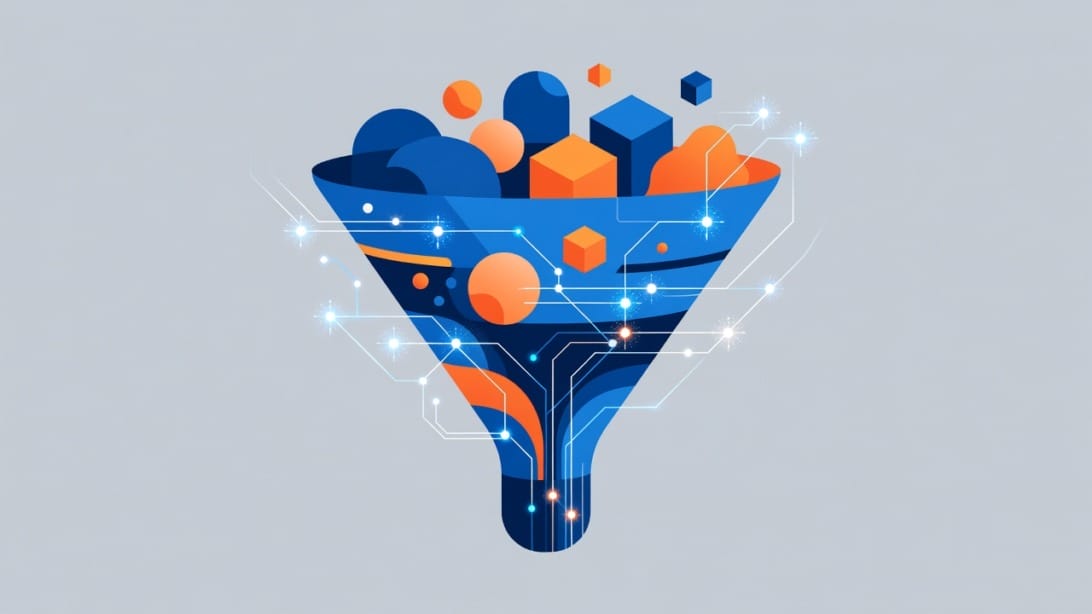
What Is AI-Powered B2B Lead Generation?
AI-powered B2B lead generation uses machine learning, natural language processing, and automation to find, qualify, and engage potential business customers. Instead of manually scraping databases or sending blanket email campaigns, AI tools analyze data signals – firmographics, intent data, hiring changes, funding events – to identify in-market buyers and then craft personalized outreach at scale.
Traditional lead generation relies on manual research, static lead lists, and generic messaging. AI-powered lead generation flips this model. It continuously scans thousands of data sources, scores leads based on their likelihood to convert, and automatically sequences personalized touches across email, LinkedIn, and other channels.
What makes AI different is its ability to learn and improve. Every reply, bounce, and conversion feeds back into the system, refining lead scoring models and message templates without requiring a human to sit at the controls.
Why B2B Companies Are Turning to AI for Lead Generation
B2B sales teams face a fundamental challenge: there are only so many hours in a day, but the volume of potential leads and data points has exploded. AI closes this gap by handling the repetitive, high-volume tasks that burn out SDRs while surfacing the leads that actually matter.
Sales representatives spend an estimated 67% of their time on non-selling activities – research, data entry, follow-up scheduling – rather than actually talking to prospects, according to the Orum State of Sales Report. AI automates the non-selling work so humans can focus on relationships and closing.
Lead quality improves dramatically with AI. AI lead scoring models analyze dozens of behavioral and firmographic signals simultaneously. They identify patterns that human SDRs would miss, such as a sudden spike in LinkedIn hiring at a target account or a funding round that signals budget availability.
Speed to lead matters more than ever. Companies that contact leads within five minutes are nine times more likely to convert them. AI-powered alert systems detect prospect behavior – a website visit, a form fill, a content download – and trigger an immediate personalized response without requiring manual queue monitoring.
The result is a lead generation engine that runs faster, targets more precisely, and improves over time – something static lead lists and manual outreach simply cannot match.
How AI Transforms the B2B Lead Generation Funnel
AI changes every stage of the B2B lead generation funnel, from prospecting to qualification to conversion. Understanding these transformations helps you decide where to invest.
Prospecting and List Building
AI-powered prospecting tools scan public data sources – company websites, job boards, Crunchbase, news mentions – to build targeted lead lists based on your ideal customer profile (ICP). Instead of searching LinkedIn Sales Navigator one profile at a time, AI agents find every company that matches your criteria and enrich each record with contact details, job titles, and intent signals.
A typical workflow: define your ICP as “Series A/B SaaS companies in North America with 50-200 employees that hired a VP of Sales in the last 90 days.” Traditional research would take days or weeks. AI does it in minutes.
Lead Enrichment and Data Quality
Raw lead lists are worthless without accurate data. AI enrichment tools fill in missing fields – phone numbers, email addresses, company size, technology stack – by cross-referencing multiple data providers. Waterfall enrichment, a technique popularized by platforms like Clay, queries one provider after another until the data field is populated or all sources are exhausted, pushing coverage rates from under 30% to over 80%.
Lead Scoring and Prioritization
AI lead scoring goes beyond simple demographic rules. Modern models incorporate behavioral signals: page visits, email opens, content downloads, event attendance, LinkedIn engagement. They weight each signal by its historical correlation with closed deals and produce a score that tells your team exactly which leads to call first.
A lead that visited your pricing page three times, opened two email sequences, and attended a webinar should rank higher than one that only filled out a form six months ago. AI makes this distinction automatically.
Personalization at Scale
Personalization is the biggest unlock of AI in B2B lead generation. LLMs (large language models) can generate customized email copy that references a prospect’s specific company, role, recent news, and expressed pain points – all in seconds. According to Campaign Monitor, personalized email campaigns can increase revenue by over 760% compared to generic blasts, and HubSpot reports that personalized CTAs convert 202% better than default versions.
Automated Outreach and Follow-Up
AI sequences handle the mechanics of multi-touch outreach. They send initial emails, schedule follow-ups based on recipient behavior, rotate channels (email to LinkedIn to phone), and adjust timing based on open rates. If a prospect replies, the AI either routes to a human or triggers a relevant next step – booking a demo, sending a case study, or adding a note to the CRM.
Essential AI Tools for B2B Lead Generation in 2026
The AI lead generation tool landscape has matured significantly. Here are the categories you need to know, with representative options in each.
Data and Enrichment Platforms
Tools like Clay and Cognism excel at finding and enriching B2B contact data. Clay offers a waterfall enrichment engine that queries multiple data sources, while Cognism focuses on compliant data with built-in GDPR protections and Do-Not-Call scrubbing. For teams that need clean, verified data with intent signals, these are the starting point.
Outreach and Sequencing
Instantly and Mystrika focus on cold email infrastructure with AI-powered warmup, deliverability optimization, and smart sequencing. These platforms handle the technical plumbing – SPF, DKIM, DMARC setup, sending limits, inbox rotation – that determines whether your emails land in the inbox or spam folder. Mystrika adds an AI unibox for managing replies across campaigns and an AI A/B testing engine that automatically optimizes subject lines and body copy.
AI SDR Agents
Apollo and Amplemarket combine lead databases with AI SDR capabilities, including automated email writing, follow-up scheduling, and CRM sync. These are more all-in-one platforms that reduce the need for point solution integrations.
Conversation Intelligence
Gong and Chorus (now part of ZoomInfo) use AI to analyze sales calls and meetings, extracting insights about competitor mentions, objection handling, and buyer sentiment. While not traditional lead generation tools, they inform the messaging and targeting strategies that drive lead generation.
How to Build an AI Lead Generation Workflow: A Step-by-Step Guide
Theory is useful, but implementation is what generates leads. Here is a practical workflow that a small B2B team can set up in a week.
Step 1: Define Your Ideal Customer Profile
AI works best with clear parameters. Write down the attributes of your best customers:
- Industry, company size, revenue range
- Geography and employee count
- Technology stack or tool usage
- Common triggers (funding, hiring, leadership changes)
Do not skip this step. Garbage in, garbage out still applies, even with AI.
Step 2: Build Your Lead List
Use an AI prospecting tool to find companies matching your ICP. Start with 500-1000 accounts. The tool will surface contacts at each account – typically VP-level or director-level titles – along with email addresses and phone numbers.
Step 3: Enrich and Verify
Run your list through an enrichment layer. This resolves missing fields, corrects outdated data, and flags invalid email addresses before you send a single message. Aim for an email verification rate above 95%. Cold outreach to invalid addresses damages sender reputation immediately.
Step 4: Set Up Deliverability Infrastructure
This is the step most guides skip, and it is arguably the most important. Before sending anything:
- Configure SPF, DKIM, and DMARC for every sending domain
- Warm up new domains gradually – 5-10 emails per day, scaling up over 2-3 weeks
- Set sending limits (25-50 emails per mailbox per day for cold outreach)
- Use multiple mailboxes and rotate them to avoid triggering spam filters
- Monitor blacklists and bounce rates daily
AI warmup tools automate this process by simulating natural sending patterns. They gradually increase volume while monitoring deliverability metrics and adjusting in real time.
Step 5: Craft AI-Powered Sequences
Write three to five touchpoints for your sequence. Use an LLM to generate personalized versions for each prospect:
1. Day 1: Introduction email referencing a specific trigger (funding, recent hire, blog post)
2. Day 3: Value-proposition follow-up with a case study or data point
3. Day 7: Social proof email (testimonial or customer logo)
4. Day 12: Breakup email or channel switch (LinkedIn message)
5. Day 21: Final follow-up (keep it short and direct)
AI A/B testing should run continuously. Test subject lines, opening sentences, call-to-action placement, and send times. The AI learns which combinations drive the highest reply rates for your specific audience.
Step 6: Manage Replies and Engage
When prospects reply, speed matters. AI unibox tools consolidate replies from all campaigns into a single inbox, categorize them (interested, not interested, out of office), and suggest responses. For hot leads, route immediately to a human SDR or AE for a call.
Step 7: Measure and Iterate
Track these metrics weekly:
- Deliverability rate (inbox placement percentage)
- Open rate (aim for 40-60% for targeted cold email)
- Reply rate (aim for 3-8%)
- Meeting booked rate (aim for 1-3% of all sent emails)
- Pipeline generated and revenue influenced
Every metric feeds back into your AI system. Low open rates trigger subject line retesting. Low reply rates trigger message rewrites. High bounce rates trigger domain rep warmup or list cleaning.
AI A/B Testing: Optimizing Every Part of Your Outreach
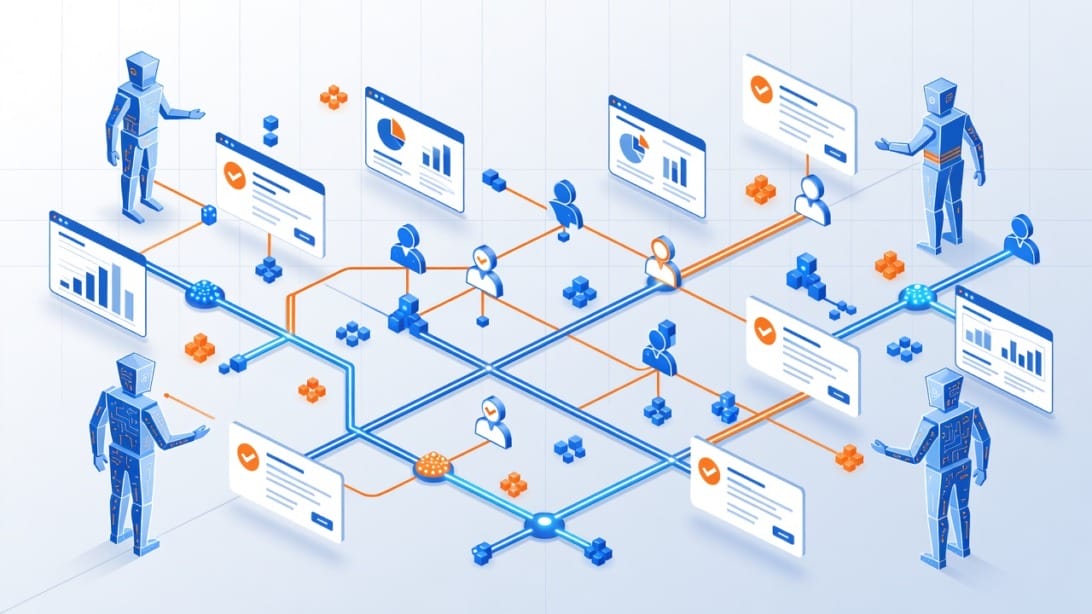
A/B testing is not new, but AI makes it continuous, multivariate, and self-optimizing. Instead of running one test per month and analyzing results manually, AI A/B testing engines test dozens of variables simultaneously and automatically shift traffic to the winning variants.
Subject lines are the highest-leverage test. AI can test length, tone (professional vs. conversational), personalization tokens, emoji usage, and question format against your specific audience. Within a week, the engine identifies which subject line style drives the highest open rate and allocates most sends to that variant.
Body copy testing goes deeper. AI tests opening sentences, value proposition framing, social proof placement, CTA wording, and link vs. no-link approaches. It segments results by industry, job title, and company size, so you know that technical buyers prefer data-heavy emails while executive buyers respond to outcome-oriented messages.
Send time optimization adjusts automatically based on when each prospect segment is most likely to engage. AI finds patterns you would never spot manually – Wednesday at 10 AM might work for VPs, but Tuesday at 7 AM works better for founders.
The cumulative effect of AI-powered A/B testing is substantial. Companies that run continuous AI optimization see reply rate improvements of 30-50% over static sequences within 60 days. For a deeper look at AI-powered inbox placement, see our guide to email deliverability.
Compliance and Privacy in AI Lead Generation
AI lead generation operates within a strict regulatory environment. Ignoring compliance is not just risky – it can destroy your sender reputation and lead to significant fines.
GDPR (Europe): Requires explicit consent or legitimate interest basis for contacting prospects. Data subjects have the right to access, correct, and delete their data. AI tools must respect these rights, which means your enrichment sources must be GDPR-compliant and your outreach must include a clear unsubscribe mechanism and data privacy notice.
CAN-SPAM (United States): Mandates accurate subject lines, a physical mailing address, and a functioning opt-out mechanism. It applies to all commercial email and does not require prior consent, but violations carry penalties of over $50,000 per email.
CCPA (California): Gives California residents the right to know what personal data is collected, to request deletion, and to opt out of the sale of their data. AI lead generation tools that purchase data from third-party sources must verify those sources are CCPA-compliant.
Do Not Call (DNC) registries: If your outreach includes phone calls, you must scrub numbers against national DNC registries. Several AI enrichment tools offer this as a built-in feature.
AI actually helps with compliance in many cases. Automated consent management, preference center integration, and data retention scheduling are easier with AI than with manual processes. The key is choosing tools that bake compliance into their data pipelines rather than treating it as an afterthought.
Real-World Examples of AI Driving More B2B Leads
These are illustrative examples based on common patterns observed across B2B teams using AI for lead generation.
Example 1: SaaS startup targets Series B companies. A B2B SaaS company used AI prospecting to find 400 companies that had raised Series B funding in the last six months, hired a VP of Sales within the last 90 days, and used a competitor’s tool. AI generated personalized emails referencing the funding event and competitor pain points. The campaign achieved a 6.2% reply rate and booked 12 demos from the initial list.
Example 2: Mid-market agency uses AI enrichment. A digital agency with 100 accounts in their CRM found that 40% of contacts had bounced or changed jobs. AI enrichment refreshed the entire database in under an hour, recovering 85% of previously lost contacts and uncovering 200 new decision-makers at existing accounts. A follow-up campaign to the refreshed list generated 60% more meetings than the previous quarter.
Example 3: Enterprise sales team deploys AI A/B testing. An enterprise software company ran static sequences for years with a 2.1% reply rate. They implemented AI-powered A/B testing across subject lines, body copy, and send times. Within 90 days, the reply rate increased to 4.8%, and the cost per meeting dropped by 55%.
These patterns are reproducible. The throughline is the same: AI handles the data work that humans cannot do at scale, and humans focus on the conversations that close deals.
Common Mistakes When Using AI for B2B Lead Generation
AI is powerful, but it is not magic. Teams that treat it as a set-it-and-forget-it solution make predictable mistakes.
Mistake 1: Ignoring deliverability. The best AI-generated email in the world is worthless if it lands in spam. Teams focus on copy and targeting but neglect domain warmup, authentication protocols, and sending limits. Cold outreach needs technical foundations before creative execution.
Mistake 2: Over-automating the human touch. AI can generate personalized emails, but it cannot build relationships. Prospects can tell when they are talking to a bot. Use AI to start conversations, but hand off to humans as soon as a prospect shows genuine interest.
Mistake 3: Using bad data. AI amplifies whatever data you feed it. If your ICP definition is wrong or your lead list is stale, AI will generate more bad leads faster. Invest in data quality before scaling AI outreach.
Mistake 4: Skipping compliance. The automated nature of AI outreach can amplify compliance violations. If your AI tool sends 10,000 emails per day without proper consent management or unsubscribe handling, you are generating risk, not leads.
Mistake 5: Not measuring the right things. Vanity metrics like emails sent and open rates look good in dashboards but do not correlate with revenue. Track meetings booked, pipeline created, and deals closed. Optimize for outcomes, not activity.
The Role of AI in Multi-Channel B2B Lead Generation
B2B buyers rarely convert from a single touchpoint. They interact across email, LinkedIn, phone, webinars, and content before making a decision. AI orchestrates multi-channel sequences that coordinate these touches rather than firing them in isolation.
An AI multi-channel sequence might work like this:
1. Day 1: Personalized email referencing a trigger event
2. Day 3: LinkedIn connection request with a note about shared connections or industry
3. Day 7: Follow-up email with a relevant case study
4. Day 10: LinkedIn message referencing the previous email
5. Day 14: Warm call attempt if the prospect has engaged with email or LinkedIn
AI decides which channel a prospect is most responsive to and shifts emphasis accordingly. A prospect that opens every email but ignores LinkedIn messages gets more email touches and fewer social touches. AI adjusts the sequence in real time based on engagement signals.
The multi-channel approach consistently outperforms single-channel outreach. Research across B2B sales teams shows that multi-touch, multi-channel sequences generate 2-3 times more qualified meetings than email-only campaigns.

Measuring ROI of AI-Powered Lead Generation
Return on investment for AI lead generation tools is not theoretical. It can be calculated with straightforward math.
Cost side: Monthly tool subscriptions (AI prospecting, enrichment, outreach platform, warmup). Typical costs range from $300 to $2,000 per month for a small team. Plus the time investment for setup and management – roughly 5-10 hours per week for a single person.
Revenue side: Number of qualified meetings booked multiplied by the close rate multiplied by average deal size. A conservative example:
- 50 qualified meetings from AI campaigns per quarter
- 20% close rate
- $10,000 average deal size
That is $100,000 in quarterly revenue from a tool stack costing $1,500-$3,000 per month.
The ROI improves over time because AI models improve with more data. Reply rates, conversion rates, and lead quality all trend upward as the system learns what works for your specific audience.
Key leading indicators to track month-over-month:
- Reply rate trend (should increase as AI optimizes messaging)
- Cost per meeting (should decrease as targeting improves)
- Pipeline velocity (time from first touch to opportunity, should compress)
- Lead-to-opportunity conversion rate (should increase with better scoring)
If these metrics are flat after 60 days of AI lead generation, revisit your ICP definition, data quality, and messaging strategy.
Future Trends: Where AI Lead Generation Is Headed
Several trends are shaping the next phase of AI-powered B2B lead generation.
AI agents that research and plan independently. Instead of requiring human prompts for each search, AI agents will continuously monitor target account lists, detect changes, and proactively suggest sequences. These agents function like virtual SDRs that operate 24/7.
Hyper-personalization beyond name-dropping. Future AI will analyze a prospect’s published content, social media activity, and public speaking appearances to craft outreach that references their actual ideas, not just their job title. The line between personalized and generic outreach will widen dramatically.
Voice and video AI for prospecting. AI-generated voice messages and video snippets for cold outreach are emerging. While still early, these formats could significantly differentiate early adopters from email-only competitors.
Predictive lead scoring on steroids. Current scoring models use 20-30 signals. Future models will process hundreds of signals in real time, including buying committee dynamics, competitive timing, and budget seasonality. AI will predict not just whether a lead converts, but when and with what offer.
Built-in compliance automation. Regulatory requirements are growing, not shrinking. Future AI platforms will bake consent management, data retention policies, and regional compliance checks directly into the outreach engine, reducing legal risk for sales teams.
Choosing the Right AI Lead Generation Stack
Building an AI lead generation stack means picking tools that work together rather than buying the most feature-rich platform. Here is a framework for evaluating options.
| Selection Criteria | What to Look For | Red Flags |
|---|---|---|
| Workflow fit | Solves your biggest bottleneck first | Overloaded with features you do not need |
| Integration | API-first, connects to CRM | Cannot export data, closed ecosystem |
| Deliverability | Built-in warmup, authentication, sending limits | No deliverability infrastructure |
| AI quality | Test 100 emails, measure reply rate | Robotic or generic copy |
| Total cost | Replaces 2-3 point solutions | Hidden per-seat or per-credit costs |
A balanced stack for a small B2B team (2-5 SDRs) might include:
- Data and enrichment: $200-500/month
- Outreach platform with warmup and AI: $200-400/month
- CRM (optional): $50-200/month
- LinkedIn automation (optional): $100-200/month
Total: $550-1,300/month for a full AI lead generation engine.
Key Takeaways
- AI transforms B2B lead generation by automating prospecting, enrichment, scoring, personalization, and outreach sequencing, allowing sales teams to focus on conversations instead of data entry.
- Deliverability infrastructure – domain warmup, SPF/DKIM/DMARC, sending limits, blacklist monitoring – is the most commonly overlooked factor in AI outreach and the most common reason campaigns fail.
- AI A/B testing should run continuously across subject lines, body copy, send times, and CTAs. Companies that automate optimization see 30-50% reply rate improvements within 60 days.
- Compliance under GDPR, CAN-SPAM, and CCPA is not optional. Choose AI tools that bake compliance into data sourcing and outreach, and always maintain proper consent and unsubscribe mechanisms.
- A practical AI lead generation stack for a small B2B team costs $550-1,300 per month and replaces manual processes that would require 2-3 additional hires.
- Multi-channel sequences (email, LinkedIn, phone) consistently outperform single-channel outreach by 2-3x in qualified meetings generated.
- Measure what matters: reply rate, meeting booked rate, cost per meeting, and pipeline influenced. Ignore vanity metrics like total emails sent.
Frequently Asked Questions
How does AI generate more B2B leads compared to traditional methods?
AI generates more B2B leads by automating the high-volume tasks that manual processes cannot scale: finding prospects across thousands of data sources, enriching records with accurate contact details, scoring leads based on behavioral and firmographic signals, and personalizing outreach at the individual level. Traditional lead generation relies on static lists and manual research, which limits volume and speed. AI processes more data, finds more relevant prospects, and reaches them faster – all while continuously improving based on results.
What is the best AI tool for B2B lead generation for small teams?
The best AI tool depends on your workflow gaps. For data and enrichment, Clay or Cognism work well. For cold email infrastructure with AI-powered warmup, sequencing, and reply management, Mystrika is a strong option. Apollo offers an all-in-one database and outreach platform. Small teams should start with the tool that solves their biggest bottleneck, then layer additional tools as needed. Most platforms offer free trials to test fit before committing.
Can AI completely replace human sales development representatives?
No, AI should not replace SDRs – it should augment them. AI handles research, data entry, initial outreach, and follow-up sequencing at scale. But human SDRs remain essential for building relationships, handling objections on live calls, reading social cues, and closing deals. The best results come from AI-generated leads handed to skilled humans for conversion. Teams that try to fully automate the sales process see lower conversion rates because prospects can tell when there is no human involved.
How do I avoid my AI-generated emails landing in spam?
Preventing spam placement requires three layers of protection. First, authenticate your sending domains with SPF, DKIM, and DMARC records. Second, warm up new domains by starting with 5-10 emails per day and gradually increasing volume over 2-3 weeks. Third, use an AI outreach platform that monitors deliverability metrics, rotates between multiple mailboxes, enforces daily sending limits (25-50 per mailbox), and checks blacklists. Even with perfect authentication, cold email to outdated or invalid addresses can damage reputation, so verify your list before sending.
Is AI-powered lead generation compliant with GDPR and other privacy laws?
AI lead generation can be compliant, but only if the tools and processes respect regulatory requirements. Under GDPR, you need a lawful basis for processing personal data – legitimate interest is common for B2B outreach, but data subjects retain the right to object and to have their data deleted. CAN-SPAM requires clear opt-out mechanisms and accurate headers. CCPA gives California residents rights over their data. Choose AI tools that source data from compliant providers, include unsubscribe links in every email, and offer data deletion workflows.
How long does it take to see results from AI-driven B2B lead generation?
Most teams see initial results within 30-60 days. The first two weeks are typically spent on setup: ICP definition, tool configuration, domain warmup, and list building. By week 3-4, the first campaigns are running and generating data. By week 6-8, AI optimization loops have enough data to start improving reply rates and lead quality. Full optimization – where AI models have accumulated significant behavioral data – typically takes 90-120 days. Patience during the warmup and learning phase is important; results compound over time.
What metrics should I track to measure AI lead generation success?
Track five core metrics: deliverability rate (inbox placement), open rate (target 40-60% for targeted cold outreach), reply rate (target 3-8%), meeting booked rate (target 1-3% of sent emails), and pipeline influenced (revenue from AI-sourced leads). Leading indicators to monitor monthly include cost per meeting, reply rate trend, and lead-to-opportunity conversion rate. Optimize for outcomes – meetings and pipeline – not activity metrics like emails sent or sequences launched.
How much does an AI lead generation tool stack typically cost?
A functional AI lead generation stack for a small B2B team costs $550-1,300 per month. This covers data enrichment ($200-500), outreach platform with warmup and AI features ($200-400), optional CRM ($50-200), and optional LinkedIn automation ($100-200). Enterprise-grade stacks with multiple data sources and advanced AI features can cost $2,000-5,000 per month for larger teams. When evaluating cost, consider the number of manual SDR hours you would need to replace. AI tools typically pay for themselves if they generate even 2-3 qualified meetings per month.
What is the biggest mistake B2B teams make with AI lead generation?
The biggest mistake is ignoring deliverability infrastructure. Teams invest heavily in AI copywriting and data enrichment but neglect domain warmup, email authentication (SPF, DKIM, DMARC), sending limits, and blacklist monitoring. The result is that well-written, personalized emails never reach the inbox. Deliverability should be the first priority, not an afterthought. The second most common mistake is over-automation – sending prospect communications that feel robotic and impersonal because every touchpoint was written by AI without human review.