
| Stores names, emails, phone numbers | Aggregates data from dozens of sources |
|---|---|
| Static records updated manually | Real-time enrichment and validation |
| No scoring or prioritization | AI-powered lead scoring |
| No intent signals | Tracks buyer intent and behavioral signals |
| Requires manual research | Automates research and qualification |
| Standalone data store | Integrates with CRM, outreach, and marketing tools |
A lead database tells you someone exists. A lead intelligence platform tells you whether they are worth contacting, why now is a good time, and what message will resonate.
Why It Matters in 2026
According to HubSpot, 28% of sales professionals blame lengthy sales processes for lost deals. Lead intelligence platforms directly address this by compressing the research and qualification phase from hours to seconds. Teams that adopt lead intelligence tools consistently report shorter sales cycles, higher conversion rates, and better CRM data quality.
The shift toward AI-powered sales tools has accelerated. Platforms now use machine learning to score leads, predict conversion likelihood, and recommend the best outreach timing. In 2026, a lead intelligence platform is no longer a nice-to-have for competitive B2B teams. It is the foundation of an efficient sales operation.
—
How a Lead Intelligence Platform Works
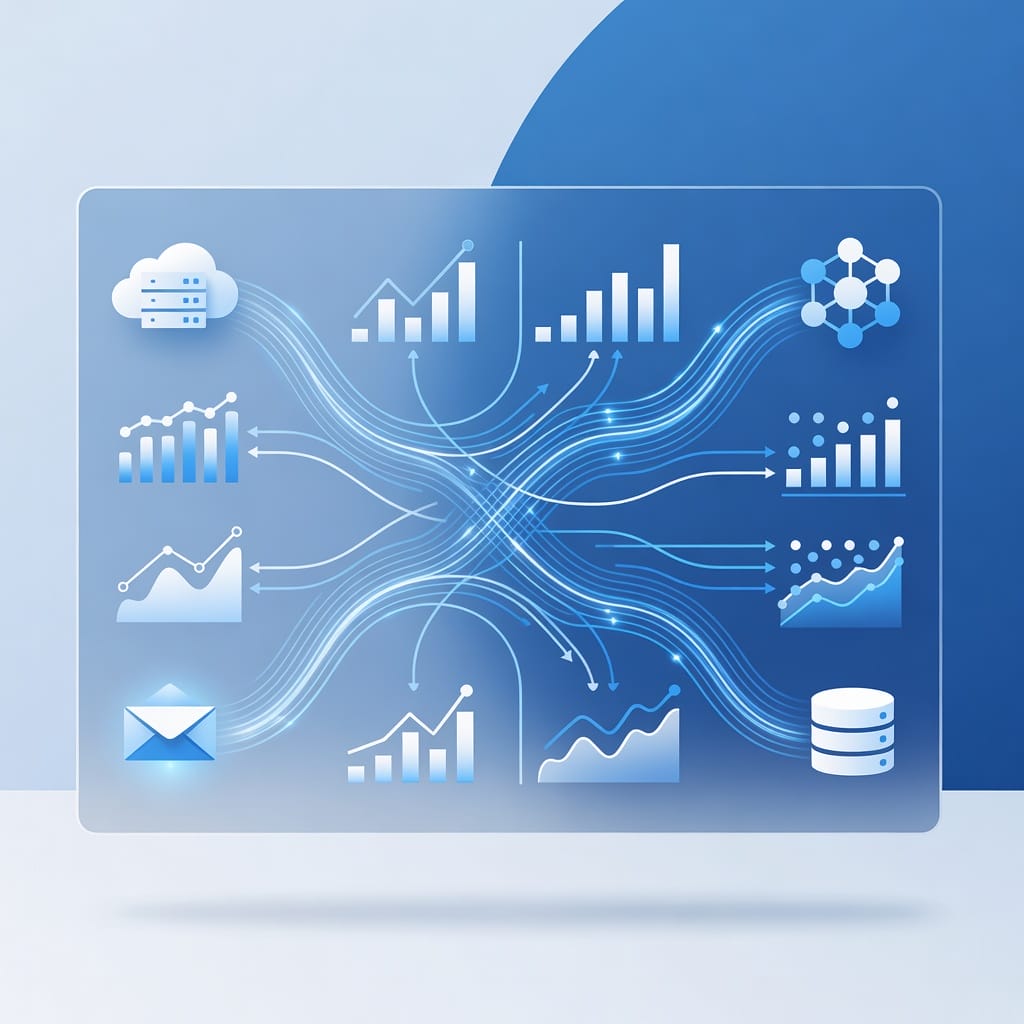
Understanding the data pipeline behind a lead intelligence platform helps you evaluate tools more effectively and set realistic expectations for what the technology can deliver.
[IMAGE 1: A clean, modern data flow diagram showing four connected stages in a horizontal pipeline: data collection (represented by multiple source icons flowing into a funnel), enrichment (a database icon with a plus symbol), scoring (a gauge or meter icon), and activation (an arrow launching toward a target). Use a professional blue and teal color palette on a white background. No text, no words, no letters. Minimalist corporate illustration style.]
Data Collection and Aggregation
The platform pulls data from multiple sources simultaneously. Common sources include:
- Public databases – company registries, SEC filings, LinkedIn profiles, business directories
- Company websites – job postings, press releases, team pages, technology disclosures
- Intent data providers – Bombora, G2 Buyer Intent, TrustRadius, and similar services track which companies are actively researching specific topics
- First-party signals – your website visitor data, email engagement metrics, content download history
- CRM records – existing contact data, deal history, communication logs
- Third-party data vendors – licensed contact databases with verified emails, phone numbers, and firmographic details
The aggregation layer normalizes this data into unified prospect profiles. This means a single contact might have data points from six or more sources merged into one record.
If you are building a prospecting database from scratch, this aggregation step is where lead intelligence platforms save the most time compared to manual research.
Enrichment and Normalization
Raw data is messy. People change jobs, companies rebrand, email addresses go stale. B2B data decays at roughly 30% per year as professionals move between roles and organizations.
Enrichment solves this by:
- Filling gaps – adding missing fields like company size, industry, revenue, and technology stack
- Verifying accuracy – checking email deliverability, phone number validity, and job title accuracy
- Normalizing formats – standardizing company names, addresses, and titles across records
- Deduplicating – merging duplicate records from different sources into a single clean entry
Real-time enrichment means this happens automatically as new leads enter your pipeline, not as a batch process you run once a quarter.
Scoring and Prioritization
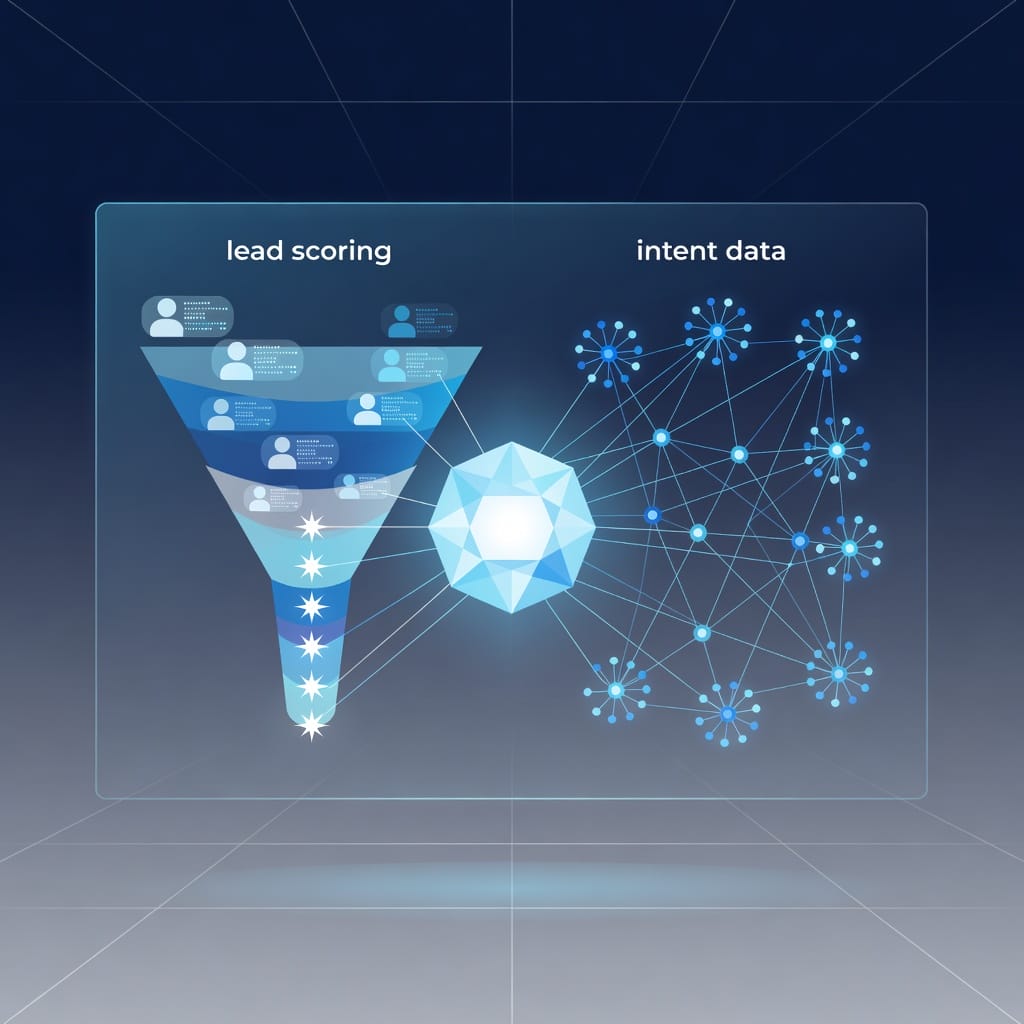
AI-powered lead scoring assigns each prospect a numerical score based on how closely they match your ideal customer profile and how actively they are showing buying signals.
Modern scoring models consider:
- Firmographic fit – company size, industry, revenue, and location match your target market
- Technographic fit – the prospect uses complementary or competing technologies
- Behavioral signals – website visits, content downloads, email opens, and social engagement
- Intent signals – the prospect is actively researching topics related to your product
- Engagement recency – how recently the prospect interacted with your brand
The platform continuously recalculates scores as new data arrives, so your hottest leads always appear at the top of the list.
Activation and Outreach
Data alone does not generate revenue. The activation layer connects lead intelligence to your outreach systems:
- CRM sync – enriched lead data flows into Salesforce, HubSpot, or Pipedrive automatically
- Email outreach – scored leads trigger automated email sequences through platforms like Mystrika
- Sales alerts – reps receive real-time notifications when high-value prospects show intent signals
- Marketing automation – leads are routed to appropriate nurture campaigns based on their score and stage
This is where lead intelligence meets execution. The platform identifies the opportunity, and your outreach tools convert it into a conversation.
—
Core Features Every Lead Intelligence Platform Needs
Not all lead intelligence platforms deliver the same capabilities. Use this checklist to evaluate whether a platform covers the features that matter most for your sales motion.
Multi-Source Data Aggregation
The platform should pull from a wide range of data sources, not just one proprietary database. Look for platforms that combine public data, intent signals, first-party website data, and third-party licensed databases. Single-source platforms create blind spots.
What to ask: How many data sources does the platform use? How frequently is the database updated?
Real-Time Enrichment and Validation
Batch enrichment that runs weekly is not enough. Your platform should enrich leads as they enter your pipeline and validate contact data before your team acts on it.
What to ask: Does enrichment happen in real time or on a schedule? What is the email verification accuracy rate?
Buyer Intent Signal Tracking
Intent data identifies companies that are actively researching solutions like yours before they fill out a form or request a demo. The best platforms combine first-party intent (your website behavior) with third-party intent (topic-level research activity from providers like Bombora and G2).
What to ask: Does the platform provide third-party intent data? How is intent scored and categorized?
AI-Powered Lead Scoring
Manual scoring rules break down as your data grows. AI-powered scoring adapts to your actual conversion patterns and improves over time.
What to ask: Does the scoring model use machine learning? Can you customize scoring criteria for your specific ICP?
CRM and Outreach Integrations
A lead intelligence platform that does not integrate with your existing tools creates another data silo. Essential integrations include CRM systems (Salesforce, HubSpot, Pipedrive), email outreach platforms, and marketing automation tools.
What to ask: Which CRMs does it integrate with natively? Does it support two-way data sync?
Data Compliance and Privacy Controls
Lead intelligence platforms handle personal data at scale. The platform must support GDPR, CCPA, and CAN-SPAM compliance natively, not as an afterthought.
What to ask: Where is data stored? Does the platform provide consent tracking and opt-out management? Is the data sourcing compliant with GDPR Article 6?
—
Top Lead Intelligence Platforms Compared
[IMAGE 2: An abstract visualization of multiple data dashboards side by side on a modern workspace, each showing different analytics and charts. The screens vary in layout representing different platform approaches. Clean, professional illustration style with blue, teal, and grey tones on a light background. No text, no words, no letters, no numbers. Modern corporate flat design.]
Comparison Table
The table below compares the leading lead intelligence platforms across the features that matter most to B2B sales teams.
| Platform | Best For | Data Sources | Intent Data | AI Scoring | CRM Integrations | Pricing Tier |
|---|---|---|---|---|---|---|
| ZoomInfo | Enterprise teams needing the largest B2B database | Proprietary database, 600M+ profiles | Yes (proprietary intent) | Yes | Salesforce, HubSpot, Outreach, 100+ | Premium |
| Apollo.io | Mid-market teams wanting an all-in-one platform | 275M+ contacts, multiple sources | Yes (basic intent signals) | Yes | Salesforce, HubSpot, Pipedrive | Affordable |
| 6sense | Enterprise ABM with deep intent intelligence | Multiple sources + proprietary intent | Yes (best-in-class) | Yes | Salesforce, HubSpot, Marketo | Premium |
| Cognism | Teams needing GDPR-compliant European data | Proprietary + licensed data, phone-verified | Yes (Bombora partnership) | Yes | Salesforce, HubSpot, Outreach | Mid-range |
| Lusha | Small teams needing quick contact lookup | Community-sourced + proprietary | Basic | No | Salesforce, HubSpot, Pipedrive | Affordable |
| Clearbit | Marketing teams focused on enrichment and segmentation | 250+ data sources | Basic | Yes | Salesforce, HubSpot, Segment | Mid-range |
For a detailed breakdown of ZoomInfo’s pricing structure, including hidden costs and credit system, see our ZoomInfo pricing breakdown. For Apollo’s plan comparison, read our Apollo pricing and plan details.
Platform-by-Platform Breakdown
ZoomInfo remains the most established player with the largest B2B contact database. It offers firmographic, technographic, and intent data in a single platform. The platform excels at enterprise-level prospecting and account-based marketing. Its pricing is credit-based and can get expensive at scale. Best for large sales teams with dedicated ops support.
Apollo.io combines sales intelligence, engagement, and automation in one platform. It is one of the most popular choices for mid-market teams because it offers a wide database of verified contacts alongside built-in email sequencing and calling. Apollo balances affordability with functionality, making it a strong starting point for teams that want intelligence and outreach in one tool.
6sense specializes in buyer intent intelligence. Its platform identifies which accounts are in-market for your solution by analyzing behavioral signals across the web. 6sense is best suited for enterprise teams running account-based marketing programs where intent-driven prioritization is critical.
Cognism differentiates with phone-verified mobile numbers and strong GDPR compliance, particularly for European markets. It partners with Bombora for third-party intent data and focuses on data accuracy over volume. Teams targeting EMEA prospects benefit most from Cognism’s compliance-first approach.
Lusha offers a simpler, lighter-weight approach. It provides verified contact data including direct phone numbers and email addresses through a browser extension and API. Lusha is ideal for startups and small sales teams that need quick access to contact information without a complex platform.
Clearbit focuses on real-time enrichment and segmentation. It pulls information from over 250 data sources and provides an API-first architecture that integrates with marketing automation workflows. Clearbit works well for marketing teams that need enriched data for segmentation and personalization rather than pure sales prospecting.
—

How to Choose the Right Lead Intelligence Platform
Decision Matrix
Score each platform on a 1-5 scale across these criteria to find your best fit.
| Criteria | Weight | Questions to Evaluate |
|---|---|---|
| Data accuracy | High | What is the email bounce rate? Are phone numbers verified? How fresh is the data? |
| Intent data quality | High | Does the platform offer first-party, third-party, or both? How granular are the intent signals? |
| Integration depth | Medium | Does it integrate natively with your CRM? Is it a two-way sync or one-way push? |
| Ease of use | Medium | How long does onboarding take? Can reps use it without dedicated ops support? |
| Compliance | High | Does the platform support GDPR, CCPA, and CAN-SPAM? Where is data stored? |
| Scalability | Medium | Does pricing scale reasonably with volume? Can it handle your projected growth? |
| Support quality | Low-Medium | Is onboarding included? What is the response time for support tickets? |
Matching Platform to Business Size
Startups and Small Teams (1-10 reps)
You need affordability, ease of use, and fast time-to-value. Apollo.io or Lusha are strong starting points. Both offer generous free tiers, simple interfaces, and enough data quality for early-stage prospecting. You can always upgrade to a more comprehensive platform as your team grows.
Mid-Market Teams (10-50 reps)
You need deeper data, better scoring, and tighter CRM integration. Apollo.io (on a paid plan), Cognism, or Clearbit fit this tier well. At this stage, intent data becomes more valuable because you have the team capacity to act on it. Prioritize platforms with native CRM integrations and automated enrichment.
Enterprise Organizations (50+ reps)
You need the deepest data coverage, best-in-class intent intelligence, and enterprise-grade compliance. ZoomInfo and 6sense lead this tier. Enterprise teams should evaluate platforms based on data accuracy at scale, admin controls, SSO support, and the ability to serve multiple teams (sales, marketing, customer success) from a single platform.
Questions to Ask During Demos
Before committing to a platform, ask these questions during your evaluation:
1. What percentage of your database is verified within the last 90 days?
2. How do you handle data compliance for contacts in the EU and California?
3. What is your email deliverability guarantee?
4. How does your intent data sourcing work, and which providers do you partner with?
5. Can I see a live enrichment of a sample lead from my target market?
6. What happens to our data if we cancel the contract?
7. How does the AI scoring model adapt to our specific conversion patterns?
8. What integrations are included in the base plan versus paid add-ons?
—
Lead Intelligence Platform by Business Size
Startups and Small Teams
At the startup stage, your primary constraint is budget, not data volume. You do not need a platform with 600 million contacts. You need accurate data for your specific niche and the ability to act on it quickly.
Recommended approach:
- Start with Apollo.io or Lusha for contact data
- Use a lightweight CRM like HubSpot or Pipedrive for pipeline management
- Focus on outbound email as your primary channel (Mystrika handles cold email sequencing with built-in warmup to protect your deliverability)
- Verify every email address before sending (Filter Bounce provides real-time email verification to keep your bounce rate under 2%)
Mid-Market Teams
Mid-market teams have enough volume to benefit from intent data and AI scoring, but they need platforms that do not require a dedicated admin to manage.
Recommended approach:
- Adopt Apollo.io (paid tier), Cognism, or Clearbit depending on your geographic focus
- Integrate deeply with your CRM for two-way data sync
- Layer intent data into your scoring model so reps prioritize in-market accounts first
- Set up automated enrichment workflows so every new lead is enriched before a rep touches it
- Use email hosting with proper SPF, DKIM, and DMARC records through DoYouMail to maintain sender reputation at scale
Enterprise Organizations
Enterprise teams need platform-level capabilities: admin controls, role-based access, multi-team support, and compliance documentation.
Recommended approach:
- Deploy ZoomInfo or 6sense as your primary intelligence layer
- Connect to Salesforce or enterprise CRM with native two-way sync
- Implement intent-driven routing so high-intent leads reach the right rep within minutes
- Build reporting dashboards that track intelligence ROI across the full pipeline
- Ensure your outreach infrastructure scales with proper email authentication (DoYouMail for dedicated email infrastructure) and verification (Filter Bounce for list hygiene)
—
Data Compliance and Privacy in Lead Intelligence
[IMAGE 3: An abstract illustration showing a shield or lock symbol protecting flowing data streams, with growth indicators (upward trending lines and small building silhouettes representing business scale) emerging from the protected data. Professional corporate illustration style in blue, green, and grey tones on a white background. No text, no words, no letters. Clean minimalist design.]
Lead intelligence platforms collect and process personal data at scale. Ignoring compliance is not an option. Non-compliant data practices can result in fines, reputational damage, and lost deals when prospects challenge your data sourcing.
GDPR Requirements
If you target prospects in the European Union, GDPR applies to your lead intelligence data. Key requirements include:
- Lawful basis for processing – you need a legitimate interest or consent basis for storing and using prospect data
- Right to erasure – prospects can request deletion of their data, and your platform must support this
- Data portability – prospects can request a copy of their data in a machine-readable format
- Transparent sourcing – you should be able to document where each data point came from
Platforms like Cognism were built with GDPR compliance as a core feature, making them stronger choices for EU-focused teams.
CCPA Considerations
The California Consumer Privacy Act gives California residents the right to know what personal data is collected, request deletion, and opt out of data sales. If you target US companies with California-based employees, your lead intelligence platform must support CCPA compliance natively.
Key capabilities to verify:
- Does the platform maintain a record of data sources for each contact?
- Can you respond to consumer data requests within the required timeframe?
- Does the platform support opt-out mechanisms?
CAN-SPAM and Email Compliance
Lead intelligence data feeds directly into email outreach. CAN-SPAM requires that every commercial email includes a valid physical address, a clear unsubscribe mechanism, and honest subject lines.
When using lead intelligence for email outreach:
- Always verify email addresses before sending (Filter Bounce catches invalid addresses before they hurt your sender reputation)
- Include proper opt-out mechanisms in every email
- Never use misleading subject lines or sender names
- Maintain a suppression list of opted-out contacts across all tools in your stack
Compliance is not just about avoiding fines. It is about building trust with prospects from the first touch.
—
Integrating Lead Intelligence with Your Outreach Stack
A lead intelligence platform generates its value only when the data reaches your outreach channels. Here is how to connect it to the rest of your sales stack.
CRM Integration
Your CRM is the central hub. Lead intelligence platforms should push enriched data into your CRM automatically, not require manual export-import cycles.
Best practices for CRM integration:
- Map lead intelligence fields to your CRM custom fields before activating the sync
- Set up deduplication rules so enriched data updates existing records rather than creating duplicates
- Use the CRM as the single source of truth – lead intelligence enriches CRM records, it does not replace them
- Configure field-level sync so only relevant data flows into your CRM (not every data point the platform collects)
Email Outreach Integration
Once leads are scored and enriched, the next step is outreach. Cold email is the most common channel for acting on lead intelligence data.
To connect lead intelligence to email outreach effectively:
- Route high-score leads into targeted email sequences automatically
- Use enriched data points (company name, role, recent trigger events) to personalize email content
- Set up sending infrastructure with proper email authentication – DoYouMail provides dedicated email hosting with SPF, DKIM, and DMARC configuration to protect your domain reputation
- Verify every email address before adding it to a campaign – Filter Bounce integrates with most outreach platforms to catch invalid, role-based, and disposable addresses before you send
Mystrika combines cold email sequencing with built-in email warmup, so your outreach maintains high deliverability from day one. It connects with lead intelligence platforms through webhook and API integrations, letting you trigger sequences based on lead score thresholds or intent signals. For teams evaluating their full outreach stack, our guide to cold email outreach tools covers the options in detail.
Multi-Channel Activation
The best outreach strategies do not rely on a single channel. Lead intelligence data should activate across:
- Email – personalized cold email sequences based on enriched prospect data
- Phone – direct dial and mobile numbers from the intelligence platform for warm calling
- LinkedIn – connection requests and messages triggered by intent signals
- Retargeting – website visitor intelligence feeding into paid ad audiences
- Direct mail – high-value accounts receiving physical outreach based on firmographic data
The key is connecting these channels through a unified workflow so your prospects experience consistent messaging regardless of where they encounter your brand.
—
Measuring Lead Intelligence ROI
Implementing a lead intelligence platform is an investment. Measuring its return ensures you are getting value and helps justify continued spend.
Key Metrics to Track
Pipeline velocity – measure how quickly leads move from first touch to opportunity. Lead intelligence should compress this timeline by eliminating manual research.
Lead-to-opportunity conversion rate – track the percentage of contacted leads that become qualified opportunities. Better targeting through intelligence data should increase this rate.
Data quality score – measure the percentage of CRM records that are complete, accurate, and current. Lead intelligence enrichment should drive this number up over time.
Rep productivity – track how many qualified conversations each rep has per day. Lead intelligence should increase this by reducing time spent on research.
Email deliverability rate – when combined with email verification (Filter Bounce) and proper sending infrastructure (DoYouMail or Mystrika), your deliverability should stay above 95%.
Cost per qualified opportunity – divide your total lead intelligence platform cost by the number of qualified opportunities generated. Compare this to your previous cost per opportunity to calculate direct ROI.
Benchmark Expectations
Based on typical results reported by B2B sales teams:
- Time savings – reps save 5-10 hours per week on manual research
- Conversion improvement – lead-to-opportunity rates increase 20-40% with better targeting
- Data freshness – enriched records maintain 90%+ accuracy versus 60-70% for unmanaged databases
- Email performance – verified email lists with proper warmup maintain 95%+ deliverability
These numbers vary by industry, team size, and implementation quality, but they set a reasonable baseline for what to expect from a well-implemented lead intelligence platform.
—
Key Takeaways
- A lead intelligence platform aggregates, enriches, and scores prospect data from multiple sources so sales teams can prioritize the right leads at the right time.
- The core pipeline works through four stages: data collection, enrichment and normalization, AI-powered scoring, and activation through outreach channels.
- Essential features include multi-source aggregation, real-time enrichment, buyer intent tracking, AI scoring, CRM integration, and data compliance controls.
- Top platforms serve different segments: Apollo.io and Lusha for startups, Cognism and Clearbit for mid-market, ZoomInfo and 6sense for enterprise.
- Data compliance (GDPR, CCPA, CAN-SPAM) is not optional. Choose a platform with native compliance controls.
- Lead intelligence generates ROI only when connected to outreach. Pair it with email verification (Filter Bounce), proper email hosting (DoYouMail), and cold email sequencing (Mystrika) for a complete outbound stack.
- Measure ROI through pipeline velocity, conversion rates, data quality scores, and rep productivity improvements.
—
Frequently Asked Questions
What is a lead intelligence platform?
A lead intelligence platform is a B2B software tool that collects prospect data from multiple sources, enriches it with firmographic, technographic, and behavioral details, and uses AI to score and prioritize leads for sales teams. It goes beyond a basic contact database by adding context like buying intent signals, company growth indicators, and engagement history. The goal is to help sales reps focus on the prospects most likely to convert.
How is lead intelligence different from lead generation?
Lead generation focuses on collecting new contacts and filling your pipeline with names and email addresses. Lead intelligence focuses on understanding those contacts deeply – their company context, buying intent, engagement patterns, and fit for your product. Lead generation answers the question of who to contact. Lead intelligence answers who to contact, why they are a fit, when to reach out, and what message will resonate.
How much does a lead intelligence platform cost?
Pricing varies significantly by platform and tier. Entry-level tools like Lusha and Apollo.io offer free plans with limited credits, with paid plans starting around $30-50 per user per month. Mid-range platforms like Cognism and Clearbit typically cost $100-300 per user per month. Enterprise platforms like ZoomInfo and 6sense use custom pricing based on data volume, features, and team size, often ranging from $15,000 to $50,000+ annually. Always request a trial or pilot period before committing to an annual contract.
What is buyer intent data and how does it work?
Buyer intent data identifies companies that are actively researching topics related to your product or service. Third-party intent providers like Bombora and G2 track content consumption patterns across thousands of B2B websites and publications. When a company shows a spike in research activity on relevant topics, the intent provider flags that company as showing buying signals. Lead intelligence platforms ingest this data and combine it with firmographic and behavioral signals to prioritize outreach to accounts that are in-market right now.
Is lead intelligence data GDPR compliant?
It depends on how the platform sources and processes data. GDPR-compliant lead intelligence platforms maintain a lawful basis for processing (typically legitimate interest for B2B data), provide mechanisms for data erasure requests, and document their data sourcing practices. Platforms like Cognism were built with GDPR compliance as a core feature. Always ask potential vendors where their data is stored, how they handle consent, and whether they can provide a data processing agreement before signing a contract.
How do I integrate a lead intelligence platform with my CRM?
Most lead intelligence platforms offer native integrations with major CRMs including Salesforce, HubSpot, and Pipedrive. The integration typically works through a connector that syncs enriched lead data into your CRM records automatically. Before activating the sync, map the lead intelligence fields to your CRM custom fields, configure deduplication rules, and decide which data points should sync versus stay in the intelligence platform. Test with a small batch of leads first to confirm data flows correctly before enabling full sync.
What is the difference between a lead intelligence platform and a CRM?
A CRM (Customer Relationship Management system) stores your existing contacts, deals, and communication history. It manages relationships you have already established. A lead intelligence platform identifies and enriches potential contacts before they enter your CRM. It provides the data and context that feeds into your CRM. Think of lead intelligence as the discovery and enrichment layer, and the CRM as the relationship management layer. The two work together – lead intelligence finds and qualifies prospects, and the CRM tracks them through the sales process.