
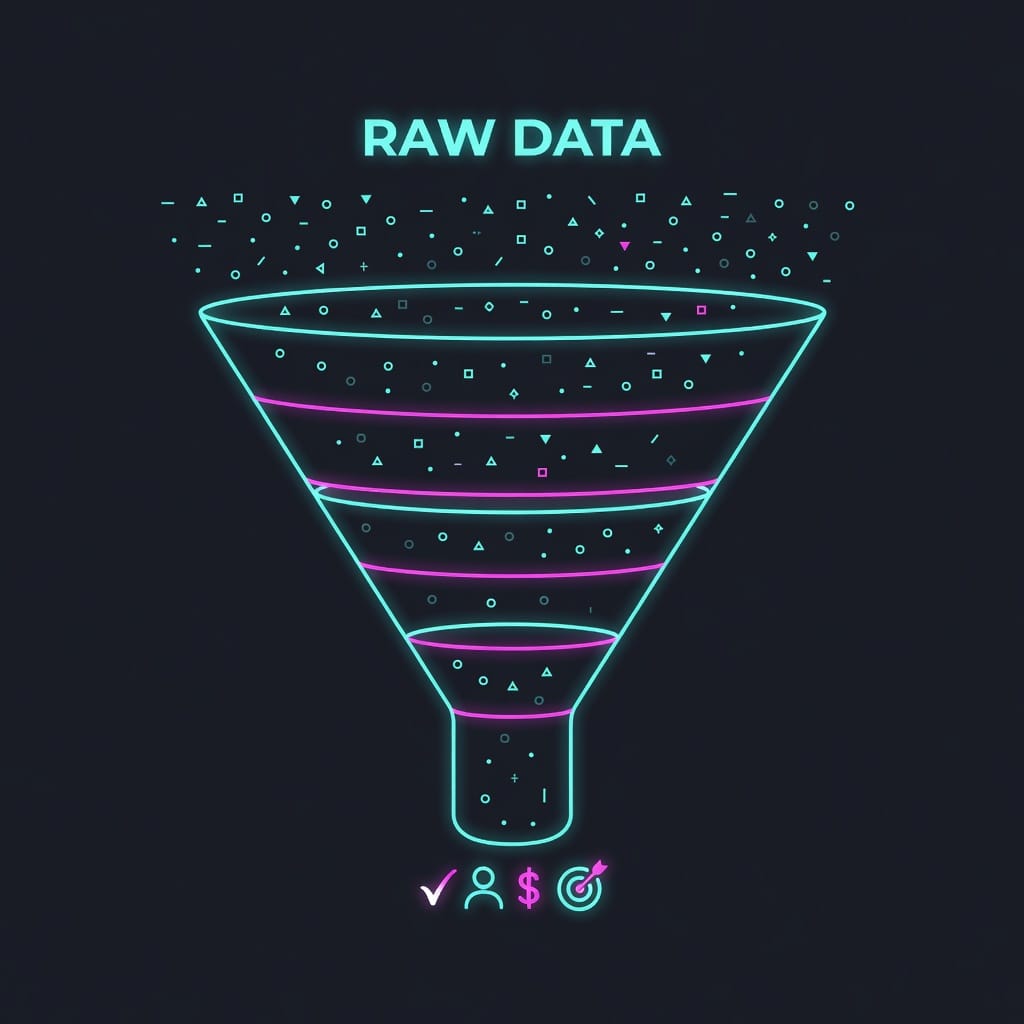
If you have spent any time in the trenches of B2B marketing over the last decade, you have likely stared at a whiteboard diagram of a funnel. It usually looks the same: a wide top capturing leads, a middle filtering them down, and a tiny spout at the bottom spitting out closed-won deals. But let me be entirely honest with you, speaking as a demand generation leader who has scaled pipelines for multiple SaaS companies: the traditional B2B marketing funnel is fundamentally broken in today’s buying environment.
We are operating in a world where the average B2B buying committee involves six to ten decision-makers. They are not patiently waiting for your sales team to hand-hold them through a linear journey. Instead, they are conducting independent research, reading reviews on G2, asking peers in private Slack communities, and engaging with your content anonymously long before they ever fill out a form or book a demo.
According to recent industry benchmarks, only 9% of marketing professionals are confident in their current content strategy and funnel architecture. Why? Because they are clinging to outdated playbooks that treat buyers like pinballs bouncing predictably from an eBook download to a sales call. Today’s buyer journey is non-linear, messy, and requires a highly orchestrated approach across content, SEO, paid media, and outbound channels like cold email.
In this comprehensive guide, we are going to tear down the outdated notions of the B2B marketing funnel and rebuild it for the modern era. We will explore exactly how to architect your Top of Funnel (TOFU), Middle of Funnel (MOFU), and Bottom of Funnel (BOFU) to capture high-intent demand. We will dive deep into attribution, pipeline velocity, and why integrating a robust cold email strategy using platforms like Mystrika is your secret weapon for driving predictable revenue. Let’s get started.
What is a B2B Marketing Funnel?
At its core, a B2B marketing funnel is a strategic framework designed to visualize and manage the customer journey from initial brand awareness to the final purchase decision, and ultimately, customer retention. It serves as a roadmap for marketing and sales teams to align their efforts, ensuring that prospects receive the right message, through the right channel, at exactly the right time in their evaluation process.
Unlike B2C funnels, which are often transactional, impulsive, and relatively short, the B2B funnel is a long-haul marathon. It involves significant financial investments, complex implementation processes, and the consensus of multiple stakeholders. A well-constructed funnel doesn’t just generate leads; it educates, builds trust, and positions your solution as the definitive answer to a specific business pain point.
When executed correctly, your funnel becomes a predictable revenue engine. You can look at the volume of traffic entering the top, understand the conversion rates at each subsequent stage, and accurately forecast the pipeline and closed-won revenue that will emerge at the bottom.

The Shift from Traditional to Modern B2B Funnels
The old way of thinking about the funnel was highly linear and heavily dependent on gating content behind forms to capture contact information as early as possible. Marketers would measure success by the sheer volume of Marketing Qualified Leads (MQLs) they could generate, regardless of whether those leads had any actual intent to purchase. This created massive friction between marketing and sales, with sales complaining about lead quality and marketing frustrated that sales wasn’t closing their pipeline.
The modern B2B marketing funnel requires a fundamental shift in mindset. Instead of forcing buyers to conform to our sales process, we must align our marketing efforts with how they actually want to buy. This means un-gating educational content, focusing on generating genuine demand rather than just capturing email addresses, and leveraging intent data to understand when an account is actively in-market.
Furthermore, the modern funnel is not a siloed marketing exercise. It demands absolute alignment between marketing, sales, and customer success (often referred to as Revenue Operations or RevOps). When these teams operate from a single source of truth, utilizing shared metrics and integrated technology stacks, the funnel transforms from a theoretical model into a high-performance growth machine.
Top of Funnel (TOFU): Driving Awareness & Demand Generation
The Top of the Funnel is all about brand awareness and problem identification. At this stage, your target audience may not even realize they have a problem that requires a solution, or they may be just beginning to understand the scope of their pain points. Your goal here is not to sell your product; it is to educate, provide value, and establish your brand as a trusted authority in the space.
The Critical Shift from Lead Gen to Demand Gen
For years, B2B marketing has been obsessed with lead generation: capturing contact information in exchange for a whitepaper or webinar, and immediately dropping those contacts into an automated email drip campaign. However, this approach often yields a high volume of low-intent prospects. The modern playbook emphasizes demand generation over lead generation. Demand gen focuses on creating brand affinity and educating the market so that when a prospect is finally ready to buy, your solution is the only one they consider. It involves distributing high-quality, un-gated content across the channels where your audience already spends their time, building trust before asking for any commitment. By shifting your focus to demand generation, you ensure that the prospects who eventually enter your pipeline are highly qualified and genuinely interested in solving their problems.
Using SEO and Content to Capture High-Intent Traffic
Search Engine Optimization (SEO) remains one of the most powerful tools for capturing high-intent traffic at the top of the funnel. When a potential buyer searches for a solution to their business problem on Google, they are displaying active intent. To capture this demand, your TOFU content strategy must revolve around comprehensively answering the questions your ideal customers are asking. This involves creating in-depth blog posts, ultimate guides, and glossary terms that rank for relevant, informational keywords. However, it is not just about keyword stuffing; it is about creating the best possible resource on the internet for that specific topic. When your content genuinely helps a prospect understand their problem better, they begin to associate your brand with expertise and reliability, paving the way for future engagement as they move down the funnel.
Cold Email for TOFU: Outbound as an Awareness Channel
While cold email is traditionally viewed as a sales development tool, it is highly effective as a TOFU marketing channel when executed correctly. The key is to shift the messaging from “buy my product” to “here is an insight that solves a problem you likely have.” By leveraging targeted outbound campaigns, you can proactively introduce your brand to key decision-makers who fit your Ideal Customer Profile (ICP) but haven’t yet discovered you organically. Sharing original research, industry benchmarks, or highly relevant content pieces via cold email positions your brand as a thought leader and drives highly qualified traffic to your website. This approach requires precision targeting and impeccable deliverability, which is why utilizing a robust platform like Mystrika is essential for scaling TOFU outbound efforts successfully.
Social Media and Dark Social’s Role in 2026
In 2026, social media for B2B marketing goes far beyond posting company updates on LinkedIn. The concept of “Dark Social”-the private channels where buyers share information, such as Slack communities, Discord servers, direct messages, and private podcasts-has become a dominant force in TOFU awareness. Buyers trust recommendations from their peers exponentially more than they trust vendor marketing. To influence Dark Social, marketers must focus on creating highly shareable, thought-provoking content that sparks conversations. This means leveraging executive personal brands, participating authentically in niche communities, and creating zero-click content (content designed to be consumed entirely within the social platform without requiring a click-through) to maximize reach and brand resonance.
Middle of Funnel (MOFU): Consideration & Evaluation
Once a prospect understands their problem and is aware of your brand, they enter the Middle of the Funnel. This is the consideration and evaluation phase. They are actively researching potential solutions, comparing vendors, and trying to determine which product best fits their specific needs. The MOFU is notoriously difficult to navigate-often referred to as the “messy middle”-because the buyer journey here is highly non-linear.
The Messy Middle: Why Prospects Stall
The middle of the funnel is where the majority of B2B deals go to die. Prospects stall in this phase for a variety of reasons: budget constraints, shifting organizational priorities, lack of consensus among the buying committee, or simply because the perceived risk of making a change outweighs the pain of the status quo. To combat this, marketers must provide content that actively reduces friction and builds internal consensus. This means moving beyond generic educational content and delivering highly specific, deeply technical, and ROI-focused materials. Your goal is to arm your internal champion with the exact ammunition they need to convince their CFO, CTO, and other stakeholders that your solution is not just a nice-to-have, but a strategic imperative.
Webinars, Case Studies, and Social Proof
In the MOFU, social proof is your most valuable currency. Prospects want to know that other companies, similar to theirs, have successfully solved the same problem using your product. High-quality case studies that highlight specific metrics, challenges overcome, and implementation timelines are critical assets. Similarly, webinars featuring joint presentations with successful customers provide an interactive platform for prospects to ask detailed questions and gauge the real-world impact of your solution. By showcasing undeniable proof of your product’s efficacy, you significantly reduce the perceived risk for the buyer, helping them move confidently towards a purchasing decision.
Lead Nurturing Workflows That Actually Convert
Traditional lead nurturing often consists of generic, time-based email sequences that offer little value and quickly lead to unsubscribes. To build lead nurturing workflows that actually convert in the MOFU, you must segment your audience based on their firmographics, their specific role within the buying committee, and their behavioral intent signals. If a prospect has downloaded a highly technical whitepaper on API integrations, they should receive follow-up content related to implementation and security, not a high-level overview of why integration matters. By utilizing behavioral triggers and dynamic content, you can deliver hyper-personalized nurturing campaigns that provide the exact information the prospect needs at that specific moment in their evaluation journey.
Integrating Cold Email Sequences in MOFU
Cold email isn’t just for initial outreach; it plays a vital role in the MOFU for re-engaging stalled prospects and multithreading across the buying committee. If a primary contact has gone dark, a strategically crafted cold email sequence to other stakeholders (such as the VP of Finance or the end-user) can reignite the conversation from a different angle. This is where advanced sequencing and AI-driven personalization become essential. By utilizing a platform like Mystrika, which offers infinite mailboxes, a powerful AI writer, and a unibox for managing responses, you can orchestrate complex, multi-touch MOFU campaigns that keep your solution top-of-mind and navigate the complexities of consensus-based B2B purchasing.
Bottom of Funnel (BOFU): Decision & Conversion
The Bottom of the Funnel is the sharp end of the spear. The prospect has evaluated their options, narrowed down the list of vendors, and is ready to make a purchasing decision. In this stage, marketing’s role shifts from education to enablement, providing the sales team with the precise tools they need to overcome final objections, justify the investment, and close the deal efficiently.
Enabling Sales with High-Conversion Assets
At the BOFU, marketing must work in lockstep with sales to create high-conversion enablement assets. These are not broad marketing brochures; they are highly targeted, tactical documents. Examples include detailed competitive battlecards that highlight exactly where your product outperforms the alternative, comprehensive ROI calculators tailored to the prospect’s specific inputs, and detailed implementation roadmaps that alleviate concerns about onboarding friction. By equipping your Account Executives (AEs) with these specific assets, you empower them to confidently address the most common roadblocks that arise during procurement and final negotiations, significantly increasing the win rate.
The ROI of Transparent Pricing and Free Trials
B2B buyers are increasingly demanding a B2C-like purchasing experience. They want transparency, speed, and the ability to evaluate a product hands-on before committing to a long-term contract. Obfuscating your pricing behind a “Contact Sales” button is a surefire way to introduce massive friction at the BOFU. Providing transparent pricing tiers, or at least a clear pricing calculator, allows buyers to qualify themselves and build their internal business case without waiting for a sales rep. Similarly, offering a frictionless free trial, a sandbox environment, or an interactive product tour allows the prospect to experience the “Aha!” moment independently, drastically reducing the time-to-close and increasing overall conversion rates.
Closing the Deal: Aligning Marketing and Sales
The BOFU requires absolute seamless alignment between the marketing and sales departments. If marketing is handing off leads that sales deems unqualified, or if sales is ignoring the intent data and insights marketing has gathered, the funnel will break down. This alignment is achieved through strict Service Level Agreements (SLAs) regarding lead follow-up times, joint pipeline review meetings, and shared revenue targets. Marketing should be actively monitoring the sales pipeline to identify deals that are stuck and deploying targeted BOFU campaigns-such as executive outreach or highly specific retargeting ads-to help push those critical deals across the finish line.
Using AI for Hyper-Personalized BOFU Outreach
In the final stages of a complex B2B deal, hyper-personalization is the difference between winning and losing. Generic follow-up emails simply will not cut it when negotiating a six-figure contract. This is where AI becomes a game-changer. By leveraging AI writing tools, sales and marketing teams can synthesize a prospect’s entire engagement history-which pages they visited, which webinars they attended, and previous email correspondence-to generate highly contextual and deeply personalized outreach at scale. Platforms like Mystrika, which seamlessly integrate AI writing capabilities within their sequencing tools, allow revenue teams to maintain a high level of personalization and relevance during the critical final days of the sales cycle, ensuring that no detail is overlooked.
Post-Purchase: Retention, Upselling, and Advocacy
A common and costly mistake in B2B marketing is assuming the funnel ends the moment a contract is signed. In the SaaS and subscription economy, acquiring a customer is only the beginning. The post-purchase stage focuses on retention, driving product adoption, identifying upselling opportunities, and ultimately turning your successful customers into vocal brand advocates.
Why the Funnel Doesn’t End at the Sale
In a recurring revenue model, customer churn is the silent killer of growth. If you are pouring resources into the top of the funnel only to lose customers out the bottom six months later, your business is fundamentally unsustainable. The post-purchase stage is where you realize the actual Lifetime Value (LTV) of your customer. Marketing’s role here is to continuously reinforce the value proposition, ensure smooth onboarding, and proactively educate customers on new features and best practices. By treating the post-purchase experience with the same strategic rigor as lead generation, you secure the foundation of long-term, predictable revenue growth.
Driving Product Adoption and Customer Success
The immediate goal after a sale is rapid product adoption. If a customer isn’t actively using your software and realizing value within the first 30 to 60 days, they are highly likely to churn. Marketing can drive adoption by creating targeted in-app messaging, automated onboarding email sequences, and comprehensive knowledge base articles. Furthermore, marketing should collaborate closely with Customer Success Managers (CSMs) to identify accounts with low utilization rates and deploy targeted re-engagement campaigns. By proactively guiding the customer towards their desired outcomes, you solidify the relationship and prove the ongoing ROI of your solution.
Turning Customers into Brand Advocates
The ultimate pinnacle of the B2B marketing funnel is transforming satisfied customers into brand advocates. Advocates are your most powerful marketing asset; they provide glowing testimonials, participate in case studies, refer new business, and defend your brand in Dark Social communities. Marketing must actively cultivate these relationships through exclusive customer advisory boards, VIP events, and structured referral programs. When you harness the voice of your successful customers, you create a self-sustaining growth loop where BOFU success directly fuels high-quality, high-intent TOFU awareness, drastically lowering your overall Customer Acquisition Cost (CAC).

B2B Marketing Funnel Metrics That Matter
You cannot optimize what you do not measure. A high-performance B2B marketing funnel requires a rigorous, data-driven approach to tracking performance across every stage of the buyer journey. However, tracking the right metrics is just as important as tracking anything at all. Vanity metrics like page views and social media likes must take a backseat to metrics that directly correlate with pipeline and revenue.
Tracking TOFU: Traffic, Reach, and Engagement
At the Top of the Funnel, you are measuring the effectiveness of your brand awareness and demand generation efforts. While overall website traffic is a baseline indicator, the quality of that traffic is far more critical. Key metrics include the percentage of traffic originating from your target accounts (Account-Based Marketing engagement), the time spent on high-value educational content, and the growth of your opted-in subscriber base. Additionally, tracking the reach and engagement of your content on social platforms-particularly the quality of the comments and the seniority of the individuals engaging-provides qualitative data on how well your messaging is resonating with your Ideal Customer Profile.
Measuring MOFU: MQLs, SQLs, and Pipeline Velocity
In the Middle of the Funnel, the focus shifts to lead qualification and pipeline movement. Tracking the conversion rate from raw lead to Marketing Qualified Lead (MQL) and subsequently to Sales Qualified Lead (SQL) is essential for evaluating the quality of your nurturing programs. However, a highly critical, often overlooked metric is Pipeline Velocity. Pipeline Velocity measures the speed at which opportunities move through your funnel from initial creation to closed-won. By analyzing the average days spent in each stage, you can identify specific bottlenecks in your MOFU-such as a lack of compelling case studies or slow sales follow-up-and implement targeted strategies to accelerate the buying cycle.
Analyzing BOFU: Win Rates and Customer Acquisition Cost (CAC)
At the Bottom of the Funnel, the metrics become strictly revenue-focused. The primary indicator of BOFU health is the Win Rate-the percentage of SQLs or opportunities that convert into paying customers. Segmenting your win rate by lead source, industry, and competitor allows you to identify exactly where your sales team is most effective. Additionally, calculating your Customer Acquisition Cost (CAC) and comparing it to your Customer Lifetime Value (LTV) determines the fundamental profitability of your entire marketing engine. If your CAC is rising while win rates are falling, it indicates a severe misalignment in your funnel that requires immediate strategic correction.
The Problem with Traditional Attribution Models
Traditional attribution models, such as first-touch or last-touch, are woefully inadequate for measuring the modern B2B buyer journey. If a prospect listens to your podcast for six months, reads a dozen blog posts, and then finally searches your brand name on Google to request a demo, a last-touch attribution model will credit 100% of the revenue to organic search, completely ignoring the demand generation efforts that actually created the intent. To solve this, sophisticated marketing teams are moving towards self-reported attribution (e.g., asking “How did you hear about us?” on the demo form) combined with software-based multi-touch attribution to get a holistic, nuanced view of which channels are truly driving pipeline and revenue.
Case Studies: Real-World B2B Marketing Funnel Success
Theory is important, but practical execution is what drives revenue. Let’s look at how highly effective B2B marketing funnels operate in the real world by examining three distinct case studies from companies that successfully optimized their TOFU, MOFU, and BOFU strategies.
Case Study 1: Scaling SaaS ARR through TOFU Outbound
A mid-market HR tech SaaS company was struggling to break through the noise using traditional inbound content marketing. Their SEO efforts were taking too long to yield results against entrenched competitors. They decided to pivot their TOFU strategy heavily toward outbound cold email. By meticulously defining their ICP and utilizing highly personalized, value-driven email copy that shared proprietary industry benchmarks rather than pitching a demo, they were able to capture the attention of busy HR executives. Utilizing an infrastructure built on multiple domains and automated warmup to ensure pristine deliverability, they generated a 300% increase in initial discovery calls within 90 days, effectively solving their top-of-funnel pipeline drought.
Case Study 2: Revamping the MOFU to Reduce Sales Cycle Length
An enterprise cybersecurity firm faced a crippling bottleneck in the middle of their funnel. While they were generating plenty of initial interest, prospects were stalling during the evaluation phase, resulting in a sales cycle that stretched over nine months. The marketing team conducted a deep dive and realized their MOFU content was too generic and failed to address the specific technical concerns of the IT buying committee. They revamped their strategy by creating deeply technical whitepapers, detailed competitive comparison charts, and on-demand technical webinars. By delivering this content via highly segmented, behaviorally triggered email nurturing workflows, they armed internal champions with the necessary data to build consensus quickly, reducing their average sales cycle by over 40%.
Case Study 3: Achieving 40% BOFU Conversion with AI
A fast-growing marketing automation platform was struggling with a low BOFU win rate. Their Account Executives were overwhelmed with opportunities and were resorting to sending generic, automated follow-up emails during the critical final stages of negotiation, which caused many deals to go cold. They implemented an AI-driven personalization strategy for all BOFU communications. By synthesizing the prospect’s entire engagement history and specific pain points discussed during discovery calls, the AI generated highly customized, hyper-relevant follow-up emails for the AEs to review and send. This level of personalized attention in the closing stages differentiated them from competitors, resulting in their BOFU conversion rate skyrocketing from 22% to an industry-leading 40%.

The Role of Cold Email in the B2B Marketing Funnel
Cold email has undergone a massive evolution. It is no longer about buying a list of 10,000 unverified contacts and blasting them with a generic sales pitch. When integrated strategically, modern cold email is a precision instrument that can drive predictable growth across every stage of the B2B marketing funnel.
Why Cold Email is Making a Comeback
In an era of rising digital advertising costs, decreasing organic social reach, and overcrowded content channels, cold email offers a direct, uncluttered line of communication to your exact target audience. It is making a significant comeback because, when executed with high relevance and personalization, it allows you to bypass the noise and proactively generate demand. Decision-makers are still checking their inboxes; they are just ignoring the spam. If your cold email offers genuine value, unique insights, or solves a highly specific problem, it cuts through the clutter and initiates meaningful B2B conversations far more cost-effectively than paid media.
Building a Sustainable Cold Email Infrastructure
The foundation of a successful cold email strategy is technical infrastructure. You cannot run a high-volume outbound campaign from your primary corporate domain; doing so risks your company’s entire email reputation. Building a sustainable infrastructure requires purchasing secondary domains, configuring authentication protocols (SPF, DKIM, DMARC) flawlessly, and utilizing dedicated IP addresses where necessary. Furthermore, you must distribute your sending volume across multiple inboxes to mimic human behavior and avoid triggering spam filters. This robust technical foundation is absolutely non-negotiable if you want your emails to consistently land in the primary inbox.
Deliverability: The Hidden Metric of Funnel Success
You can write the most compelling email copy in the world, but if it lands in the spam folder, your conversion rate is zero. Deliverability is the hidden metric that dictates the success or failure of your entire outbound funnel. Maintaining high deliverability requires continuous monitoring of your sender reputation, keeping your bounce rates meticulously low, and actively warming up your email accounts. For a deeper dive, check out this comprehensive guide on email deliverability best practices to understand how authentication protocols, blacklist monitoring, and inbox placement work together. Deliverability is not a set-it-and-forget-it task; it requires daily oversight and sophisticated tools to ensure that your messages are actually reaching the intended recipients, thereby keeping the top of your funnel consistently full.
Leveraging Mystrika for Automated, High-Volume Outreach
To scale your cold email efforts without sacrificing quality or deliverability, you need a powerful outreach platform. This is where Mystrika excels. Mystrika is the best cold email outreach platform on the market, offering a comprehensive suite of tools designed to automate and optimize your outbound funnel. Starting at just $15 per month, Mystrika provides an industry-leading email warmup pool, ensuring your sender reputation remains pristine. It features a sophisticated sequencer for building complex, multi-touch campaigns, an integrated unibox to manage all replies from one central dashboard, and a powerful AI writer to scale hyper-personalized outreach. With white-label capabilities and the ability to manage infinite mailboxes, Mystrika is the definitive engine for driving B2B pipeline.
Integrating DoYouMail for Scalable Infrastructure
Managing dozens of domains and email accounts for a large-scale outbound funnel can quickly become a logistical nightmare. Integrating a solution like DoYouMail simplifies this complexity immensely. DoYouMail provides high-quality, pre-configured email infrastructure, allowing you to instantly deploy multiple sending accounts with all DNS records and authentication protocols properly set up. By seamlessly pairing DoYouMail’s robust infrastructure with Mystrika’s sequencing and warmup capabilities, you create a highly scalable, reliable outbound machine that allows your team to focus on messaging and strategy rather than getting bogged down in technical configuration.
Ensuring Pristine Lists with FilterBounce
As mentioned earlier, a high bounce rate is the fastest way to destroy your sender reputation and ruin your deliverability. Before a single prospect is loaded into your Mystrika sequencer, their email address must be rigorously verified. FilterBounce is an essential tool in this process, providing highly accurate, real-time email verification. By running your prospect lists through FilterBounce, you eliminate invalid, risky, and catch-all email addresses, ensuring that your bounce rate remains well below the industry standard threshold of 2%. This proactive approach to list hygiene is a critical safeguard for the long-term health and success of your cold email funnel.
Common B2B Marketing Funnel Mistakes to Avoid
Even with the right framework, building a highly efficient B2B marketing funnel is challenging. Many organizations fall into common traps that severely limit their growth and ROI. By identifying and avoiding these pitfalls, you can drastically accelerate your path to a high-performing revenue engine.
Focusing Only on Lead Volume Over Pipeline Quality
The most pervasive mistake in B2B marketing is prioritizing the sheer volume of leads over the quality of the pipeline generated. Marketing teams often celebrate hitting their MQL targets, only for the sales team to discard 90% of those leads as unqualified. This misalignment wastes resources and damages inter-departmental trust. Success should be measured by the amount of qualified pipeline generated and closed-won revenue, not the number of PDF downloads. It is far better to generate 50 highly qualified, high-intent leads than 5,000 leads who only wanted a free t-shirt and have zero intention of buying your product.
Creating Content Without a Clear Funnel Stage in Mind
Content marketing is the fuel for your funnel, but creating content simply for the sake of publishing is a massive waste of effort. Every piece of content you produce must be mapped to a specific stage of the buyer journey and serve a deliberate purpose. A deeply technical integration guide is useless if promoted to a TOFU audience who barely understands their problem. Conversely, a high-level thought leadership piece will not help a BOFU prospect make a final purchasing decision. Ensure that every blog post, webinar, and case study has a clear objective and a designated place within your funnel architecture.
Ignoring the Friction in Your Buying Process
B2B buyers want a frictionless experience, yet many companies actively make it difficult to purchase their product. This friction takes many forms: requiring prospects to fill out 15-field lead forms to access a basic whitepaper, refusing to display pricing information, or forcing prospects to sit through a generic “discovery call” before showing them the actual product. You must ruthlessly audit your buyer journey and eliminate any unnecessary hurdles. By making it easy for prospects to educate themselves, evaluate your pricing, and experience your product’s value, you will significantly increase the velocity of your funnel.
Treating Marketing and Sales as Siloed Teams
When marketing and sales operate in silos, the funnel fundamentally breaks down. Marketing generates leads and throws them over the wall; sales ignores them and complains about lead quality. This adversarial relationship destroys revenue potential. To fix this, you must implement a Revenue Operations (RevOps) mindset. Marketing and sales must share the same goals, operate from the same data, and communicate constantly. Joint pipeline review meetings, strict Service Level Agreements (SLAs), and shared KPIs ensure that both teams are working cohesively to drive prospects smoothly from the top of the funnel all the way to closed-won.
Neglecting Your Email Deliverability Strategy
Many organizations build elaborate outbound campaigns, invest in high-quality prospect data, and write brilliant copy, only to have their emails land straight in the spam folder because they neglected their technical infrastructure. Deliverability is not an afterthought; it is a foundational requirement. If you are not actively monitoring your sender reputation, utilizing email warmup services like Mystrika, and verifying your lists with tools like FilterBounce, you are actively burning your domain reputation and throwing away pipeline. Treat deliverability as a critical KPI, and invest the necessary resources to ensure your emails actually reach your audience.
How to Build Your B2B Marketing Funnel in 5 Steps
Now that we have dismantled the outdated funnel and explored the modern approach, it is time to build. Architecting a predictable revenue engine requires a systematic, step-by-step approach. Follow these five steps to construct a B2B marketing funnel that drives scalable, sustainable growth.
Step 1: Define Your Ideal Customer Profile (ICP)
You cannot build a funnel if you do not know exactly who you are trying to attract. Start by defining your Ideal Customer Profile (ICP) with extreme precision. Do not just rely on basic firmographics like industry and company size. Dig deeper into technographics (what software do they currently use?), triggering events (did they recently raise funding or hire a new VP?), and the specific pain points that your product uniquely solves. Furthermore, map out the entire buying committee within that ICP. Understand the motivations, objections, and KPIs of the end-user, the internal champion, and the ultimate economic buyer. This deep understanding is the foundation upon which your entire funnel strategy is built.
Step 2: Map the Buyer’s Journey to Funnel Stages
Once you know who you are targeting, you must map out how they buy. Document the typical buyer’s journey from their perspective, not yours. What specific questions are they asking when they first identify a problem? Where do they go to research solutions? What specific information do they need to build a business case for their CFO? Map these actions and requirements to your TOFU, MOFU, and BOFU stages. This exercise will reveal exactly what content, messaging, and interventions are required at each step to successfully guide the prospect toward a purchasing decision.
Step 3: Create Stage-Specific Content and Assets
With the buyer journey mapped, conduct a comprehensive content audit to identify gaps in your current collateral. Then, begin creating stage-specific assets. For the TOFU, focus on SEO-optimized blog posts, industry reports, and thought-provoking social media content that drives demand and awareness. For the MOFU, develop high-value, un-gated assets like technical webinars, comprehensive case studies, and comparison guides that help prospects evaluate your solution. Finally, for the BOFU, arm your sales team with hyper-specific ROI calculators, competitive battlecards, and transparent pricing documentation that removes friction and facilitates the final close.
Step 4: Automate Lead Nurturing and Distribution
A highly effective funnel relies on automation to deliver the right message at the right time at scale. Implement a robust marketing automation platform to segment your audience based on their firmographics and behavioral intent signals. Build dynamic lead nurturing sequences that provide hyper-relevant follow-up content based on the specific actions a prospect takes. Furthermore, utilize sophisticated outbound sequencing tools like Mystrika to automate multi-touch cold email campaigns that engage the entire buying committee. Ensure your automation rules also handle lead routing perfectly, immediately assigning high-intent SQLs to the appropriate sales rep for rapid follow-up.
Step 5: Continuously Measure, Test, and Iterate
A B2B marketing funnel is never truly “finished.” It is a dynamic system that requires continuous optimization. Establish a robust reporting dashboard that tracks the key metrics discussed earlier: pipeline velocity, stage-to-stage conversion rates, win rates, and CAC. Conduct regular A/B testing on your landing pages, email subject lines, and ad creatives. Analyze the data meticulously to identify bottlenecks and areas of friction. If prospects are stalling in the MOFU, test new case study formats. If cold email open rates are dropping, audit your deliverability and adjust your warmup settings in Mystrika. Continuous, data-driven iteration is the absolute key to maximizing the ROI of your funnel over time.
Key Takeaways
- The modern B2B marketing funnel is non-linear and requires a shift from aggressive lead capture to value-driven demand generation.
- Top of Funnel (TOFU) strategies must focus on educating the market, leveraging SEO, and utilizing highly targeted cold email to reach decision-makers proactively.
- Middle of Funnel (MOFU) requires hyper-personalized nurturing and high-quality social proof (like case studies and webinars) to help buyers navigate the complex “messy middle” of consensus purchasing.
- Bottom of Funnel (BOFU) success relies on removing friction through transparent pricing, frictionless trials, and arming sales teams with highly specific enablement assets.
- Cold email remains a dominant channel for driving predictable pipeline, but it requires a flawless technical infrastructure, rigorous list verification via FilterBounce, and advanced sequencing and warmup using a platform like Mystrika.
Frequently Asked Questions
What is the difference between a B2B marketing funnel and a sales funnel?
The marketing funnel focuses on generating awareness, educating the market, and nurturing prospects until they display purchasing intent (TOFU and MOFU). The sales funnel takes those qualified leads (SQLs) and manages the process of negotiation, objection handling, and closing the deal (BOFU). In modern organizations, these funnels must overlap and operate as a unified revenue engine.
How long does it take to see results from a new B2B marketing funnel?
Because B2B sales cycles are typically long, ranging from three to nine months, you should not expect overnight revenue results. However, you should see leading indicators such as increased organic traffic, higher engagement rates on outbound sequences, and an increase in MQLs within the first 60 to 90 days of implementing a new funnel strategy.
Is gated content dead in B2B marketing?
While not entirely dead, gating top-of-funnel educational content is highly discouraged as it introduces massive friction and limits your reach. Gating should be reserved exclusively for extremely high-value, proprietary assets in the middle or bottom of the funnel, such as comprehensive industry benchmark reports or detailed ROI calculators.
How many emails should be in a B2B cold email sequence?
A highly effective B2B cold email sequence typically contains four to six touches spaced over two to three weeks. However, the focus should always be on relevance and value, not volume. Utilizing a tool like Mystrika allows you to easily test different cadences, leverage AI for personalization, and determine the optimal sequence length for your specific ICP.
How do I know if my funnel has a deliverability problem?
Key indicators of a deliverability problem include consistently low open rates (below 30% on average), a high bounce rate (above 2%), and sudden drops in engagement across your outbound campaigns. Utilizing a platform with built-in warmup features, like Mystrika, and verifying your lists beforehand are the best ways to proactively prevent and resolve deliverability issues.