
What Is a Sales Team?
A sales team is the group of people responsible for turning qualified market demand into revenue. That includes finding prospects, starting conversations, diagnosing needs, presenting the right solution, negotiating terms, closing deals, and helping new customers move smoothly into onboarding or customer success.
A strong sales team is not just a collection of people with quotas. It is an operating system for revenue. The team needs clear roles, a defined sales process, healthy pipeline coverage, reliable handoffs, accurate data, useful coaching, and the right tools to make selling repeatable instead of random.
In a small company, the sales team may be one founder and one account executive. In a larger B2B company, it may include SDRs, BDRs, account executives, account managers, sales engineers, RevOps, sales enablement, sales managers, channel partners, and customer success teams. The right model depends on your product, price point, buyer journey, sales cycle, market segment, and growth stage.
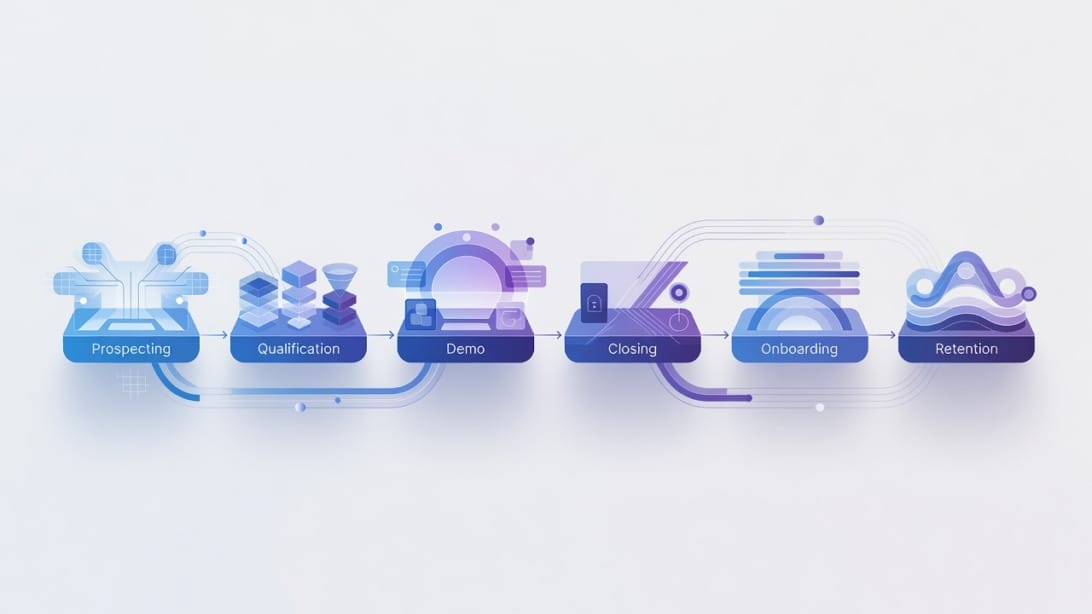
A useful way to think about a sales team is this:
| Question | What the sales team owns |
|---|---|
| Who should we sell to? | ICP feedback, account prioritization, buyer persona refinement |
| How do we create opportunities? | Prospecting, outbound, inbound qualification, referrals, partner leads |
| How do we convert interest into revenue? | Discovery, demos, proposals, negotiation, closing |
| How do we protect revenue quality? | Qualification standards, accurate forecasting, clean CRM data, expectation setting |
| How do we improve over time? | Coaching, enablement, win-loss learning, process iteration |
The mistake many companies make is hiring salespeople before defining the system around them. A sales team needs talent, but talent performs best when the company also provides focus, messaging, data, tools, coaching, and accountability.
Why a Sales Team Matters
A sales team matters because it creates predictable revenue, captures customer intelligence, and gives the company a direct feedback loop from the market. Marketing can create demand, product can build value, and customer success can retain accounts, but sales sits at the point where customer pain, budget, timing, objections, and business outcomes meet.
That makes the sales team valuable in five ways.
1. Revenue creation
The obvious job of a sales team is to generate new revenue. Reps identify the right accounts, start conversations, qualify opportunities, guide buyers through evaluation, and convert demand into signed business.
However, revenue creation is more than closing. A good sales team also prevents bad-fit deals, sets realistic expectations, and reduces churn risk by selling to customers who can actually succeed.
2. Market intelligence
Salespeople hear objections before anyone else. They know which competitors appear in deals, which pains are urgent, which features matter, which pricing concerns slow decisions, and which buyer segments are easiest or hardest to convert.
That intelligence should feed marketing, product, support, and leadership. If sales feedback only stays in call notes, the company loses one of its richest sources of market insight.
3. Pipeline predictability
Without a sales team, revenue can be lumpy and reactive. With a disciplined team, leadership can inspect pipeline, understand conversion rates, identify bottlenecks, and make better hiring, product, and cash-flow decisions.
A predictable sales team does not mean every forecast is perfect. It means the company can see where revenue is likely to come from, where risk exists, and which activities need correction.
4. Customer education
Buyers rarely purchase complex B2B products after reading one page. They need help understanding the problem, comparing options, managing internal stakeholders, and connecting features to business outcomes.
A good sales team educates without overwhelming. It clarifies tradeoffs, helps buyers build a business case, and makes the decision process easier.
5. Better company alignment
Sales touches marketing, product, customer success, finance, legal, and operations. When the team is structured well, it becomes a coordination layer across the business.
For example, if outbound response rates drop, sales may work with marketing on messaging, RevOps on targeting, and deliverability specialists on sending health. If demo conversion falls, sales may work with product marketing on positioning and enablement on talk tracks.
Core Sales Team Roles and Responsibilities
A sales team works best when each role has a clear purpose, success metric, and handoff point. Titles vary by company, but the responsibilities below appear in most growing B2B sales organizations.
| Role | Primary responsibility | Typical success signals | Common failure mode |
|---|---|---|---|
| Founder or sales leader | Define motion, positioning, early process, and revenue expectations | Repeatable wins, clear ICP, useful playbook | Hiring before the motion is validated |
| SDR or BDR | Create and qualify early-stage opportunities | Qualified meetings, clean handoffs, good account research | Chasing volume without fit or deliverability discipline |
| Account executive | Run discovery, demos, proposals, negotiation, and close | Qualified pipeline, win rate, forecast accuracy, revenue | Closing poor-fit deals or skipping discovery |
| Sales manager | Coach reps, inspect pipeline, set standards, improve execution | Rep development, forecast quality, consistent activity and conversion | Managing by pressure instead of coaching |
| RevOps or sales operations | Systems, CRM hygiene, reporting, routing, territories, process design | Data accuracy, operational speed, clear dashboards | Overbuilding process before reps need it |
| Sales engineer or solution consultant | Handle technical discovery, demos, proof points, and solution design | Faster technical validation, fewer late-stage surprises | Becoming a crutch for weak AE discovery |
| Customer success or account management | Retention, expansion, onboarding handoff, adoption | Renewal health, expansion, customer outcomes | Receiving poorly qualified customers from sales |
| Sales enablement | Training, playbooks, messaging, onboarding, content | Faster ramp, consistent messaging, better coaching assets | Creating content reps do not use |
Founder-led sales
Founder-led sales is the stage where the founder or senior operator sells directly. This is not a weakness. It is often the best way to learn why buyers care, what language resonates, and what objections block deals.
Do not rush out of founder-led sales too early. Before hiring your first dedicated salesperson, you should have a clear ICP, a few repeatable wins, a basic sales process, common objections, and a rough understanding of why deals close.
SDR and BDR roles
SDRs and BDRs focus on creating qualified opportunities. In many teams, SDRs qualify inbound leads while BDRs focus on outbound prospecting. Some companies use the titles interchangeably.
Their job is not simply to book meetings. Their job is to create meetings that are worth an account executive’s time. That means they need clear account criteria, accurate contact data, compliant outreach practices, strong messaging, and reliable handoff notes.
For outbound teams, deliverability matters as much as copy. If emails do not reach the inbox, the best prospecting strategy becomes invisible. Sales leaders should treat email deliverability as a core sales operations function, not a technical afterthought.
Account executives
Account executives own active opportunities. They run discovery, map pain to value, coordinate demos, handle objections, build business cases, negotiate, and close.
A strong AE does not just present features. They diagnose. They understand the buyer’s current process, cost of inaction, decision criteria, internal politics, timing, and success metrics. The best AEs create urgency without manipulation because they connect the problem to a measurable business consequence.
Sales managers
Sales managers turn individual effort into team performance. They coach calls, inspect pipeline, remove blockers, enforce qualification standards, and help reps improve skill by skill.
The role is often misunderstood. A sales manager is not just the top rep with a bigger title. Great managers spend less time personally rescuing deals and more time building repeatable behaviors across the team.
RevOps and sales operations
RevOps makes the revenue system work. This includes CRM design, lifecycle stages, routing rules, territories, reporting, compensation support, tech stack management, forecasting hygiene, and cross-functional process alignment.
Early teams may not need a full-time RevOps hire, but they do need RevOps thinking. If nobody owns data quality, your sales reports will eventually become fiction.
Sales engineers and solution consultants
Sales engineers support technical or complex sales. They help buyers understand implementation, integrations, security, use cases, and feasibility.
Use sales engineers carefully. They should strengthen technical confidence, not compensate for poor AE discovery. If every deal needs a sales engineer because reps cannot explain the product, the real issue is enablement.
Customer success and account management
Customer success does not always report into sales, but it is part of the revenue journey. The handoff from sales to success determines whether the promises made during the deal become outcomes after the deal.
Sales and success should agree on qualification standards, onboarding notes, expansion signals, and risk indicators. A closed-won deal that churns quickly is not a real win.
Sales Team Structure Models
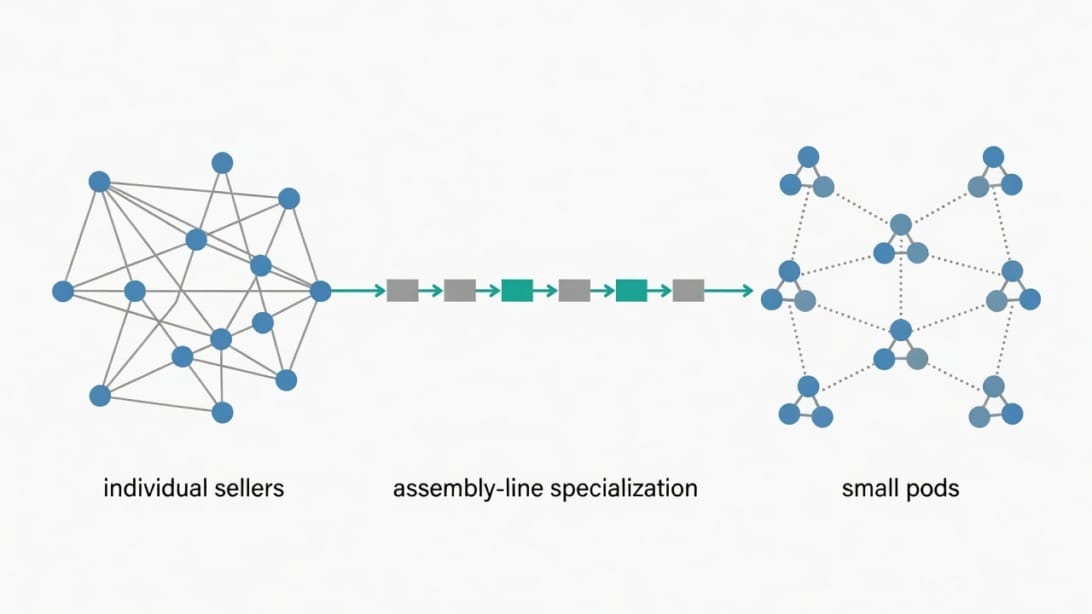
Sales team structure is the way responsibilities, territories, customer segments, and handoffs are organized. The structure determines who prospects, who closes, who manages accounts, how specialists support deals, and how managers coach performance.
There is no universal best structure. A founder selling a self-serve SaaS product does not need the same sales team structure as an enterprise company selling multi-stakeholder contracts. The best structure matches your go-to-market motion.
| Structure | How it works | Best fit | Watch out for |
|---|---|---|---|
| Island model | Each rep owns most of the sales cycle independently | Simple products, transactional sales, early validation | Inconsistent process, weak knowledge sharing |
| Assembly line model | Specialized roles handle different stages such as prospecting, closing, onboarding | Growing B2B teams with repeatable stages | Handoff friction and siloed incentives |
| Pod model | Small cross-functional groups own a segment, territory, or customer type | Teams needing speed, collaboration, and segment focus | Duplicate effort if pods are not coordinated |
| Geographic model | Teams are split by region or territory | Field sales, regional buying differences, local relationships | Uneven market potential and territory disputes |
| Market or segment model | Teams are split by SMB, mid-market, enterprise, industry, or use case | Different buyer journeys or deal sizes | Complexity in routing and messaging |
| Product model | Reps specialize by product line | Multi-product companies with technical depth | Cross-sell confusion and fragmented customer experience |
| Account-based model | Teams target named accounts with coordinated campaigns | Enterprise and strategic account sales | Requires strong research, patience, and alignment |
| Channel model | Partners, resellers, or affiliates help sell | Markets where partners own relationships or implementation | Less control over messaging and customer experience |
| Customer-success-led model | Expansion and renewals are central to revenue growth | Subscription businesses with strong expansion motion | New logo acquisition may get underweighted |
| Hybrid model | Combines two or more structures | Most scaling companies | Can become messy without clear rules |
Island sales team structure
In the island model, each salesperson operates almost like a mini business. They prospect, qualify, present, close, and sometimes manage the early customer relationship.
This model can work when the sales cycle is simple, the product is easy to explain, and the company is still learning what works. It gives reps ownership and can move quickly.
The downside is inconsistency. One rep may write great outbound emails while another relies on referrals. One may update the CRM carefully while another leaves gaps. As the team grows, this inconsistency makes forecasting and coaching harder.
Use the island model when you need speed and learning. Move away from it when handoffs, specialization, or reporting quality become bottlenecks.
Assembly line sales team structure
The assembly line model splits the sales process into specialized stages. For example, SDRs create qualified meetings, AEs run opportunities, sales engineers support technical validation, and customer success handles onboarding.
This structure works when your sales process is repeatable enough to divide into stages. It makes hiring easier because each role has a narrower skill profile. It also improves focus because prospecting, closing, and retention are different jobs.
The risk is handoff friction. If SDRs are rewarded only for meetings, they may book low-fit calls. If AEs are rewarded only for closing, they may overpromise. If customer success inherits bad-fit customers, churn follows.
The assembly line model needs shared definitions, clean notes, service-level agreements, and aligned incentives.
Pod sales team structure
A pod is a small team that owns a specific segment, territory, product, or account group. A pod may include SDRs, AEs, a manager, a sales engineer, and a customer success partner.
Pods work well when collaboration matters. Instead of throwing leads over a wall, the pod coordinates prospecting, messaging, deal strategy, and customer handoff around a shared market.
The risk is duplication. If every pod builds its own playbook, reporting, and messaging, the company can fragment. Pods need autonomy, but they also need central standards from RevOps and enablement.
Segment-based sales team structure
Segment-based teams split by customer type, such as SMB, mid-market, enterprise, industry, or use case. This is useful because different buyers need different sales motions.
An SMB buyer may want speed, price clarity, and simple onboarding. An enterprise buyer may need security review, procurement, legal, integration planning, and executive alignment. Asking one generic team to serve both motions can create confusion.
Segment-based structures need accurate routing. If inbound leads go to the wrong team, prospects get the wrong experience and reps fight over ownership.
Account-based sales team structure
Account-based sales focuses on a defined list of high-value accounts. The team researches each account, maps stakeholders, coordinates messaging, and works with marketing to create relevant touchpoints.
This model is best when deal value is high enough to justify deeper research and multi-threaded selling. It is not ideal for low-priced transactional products where volume and speed matter more.
Account-based sales requires discipline. If the target account list is too broad, the team loses focus. If marketing and sales do not coordinate, account-based selling becomes ordinary cold outreach with a fancy label.
Hybrid sales team structure
Most mature teams become hybrid. You may have SDRs and AEs in an assembly line, enterprise pods for strategic accounts, a customer success expansion team, and regional coverage for field events.
Hybrid structures are normal. The danger is ambiguity. Every hybrid model needs clear answers to these questions:
- Who owns the account?
- Who owns the opportunity?
- Who owns renewals and expansion?
- When does a lead move from one role to another?
- How are disputes resolved?
- Which metric decides whether the structure is working?
How to Choose the Right Sales Team Structure
Choose your sales team structure by matching it to your sales motion, not by copying a famous company. The right structure should reduce friction, improve accountability, and make the buyer experience clearer.
Use this decision matrix as a starting point.
| Situation | Recommended structure | Why it fits |
|---|---|---|
| Founder still closing most deals | Founder-led or island | Maximizes learning before specialization |
| First 1 to 3 sales hires | Light island with shared playbook | Keeps process simple while patterns emerge |
| Inbound volume is growing | Assembly line | Separates qualification from closing |
| Outbound is the main growth channel | SDR/AE assembly line or pods | Makes prospecting, sequencing, and handoffs measurable |
| Multiple customer segments behave differently | Segment-based | Lets teams tailor messaging and process |
| Enterprise accounts drive revenue | Account-based pods | Supports research, multi-threading, and complex buying committees |
| Expansion revenue is central | Customer-success-led or hybrid | Aligns sales with retention and account growth |
| New geography or vertical launch | Geographic or market-based pod | Creates focused ownership for a new market |
| Product portfolio is complex | Product-specialist overlay | Adds expertise without forcing every rep to know everything |
Questions to ask before restructuring
Before changing the team chart, answer these questions with real pipeline data and rep feedback:
1. Where do deals slow down most often?
2. Which handoff creates the most confusion?
3. Which customer segment has the clearest repeatable motion?
4. Which reps are overloaded with non-selling work?
5. Which role is missing from the current process?
6. Which metric will improve if the structure changes?
7. What could break if you restructure during an active quarter?
If you cannot explain what the new structure is supposed to fix, do not reorganize yet. Fix the process first.
When to Hire Your First Sales Team Members
Hire salespeople when you have enough clarity for them to succeed. A new rep cannot create a market, define the ICP, fix weak positioning, build every sales asset, and close deals without support.
A good first sales hire needs a foundation. It does not have to be perfect, but it should include enough signal to avoid guessing.
Hire when these conditions are true
Use this checklist before hiring your first dedicated sales role:
- You can describe your ideal customer in specific terms.
- You have closed enough deals to see a pattern.
- You know the top objections buyers raise.
- You can explain why customers choose you instead of doing nothing.
- You have a basic CRM or pipeline tracker.
- You have at least a simple sales deck, demo flow, or discovery script.
- You can spend time coaching the new hire.
- You know whether the first hire should generate pipeline, close deals, or both.
Do not hire yet if these are true
Delay hiring or hire a different role if:
- The founder cannot sell the product at all.
- The target customer changes every week.
- Pricing is still completely unclear.
- There is no defined handoff after the sale.
- Marketing is sending low-fit leads and calling it sales capacity.
- Leadership expects one salesperson to fix positioning, lead generation, closing, onboarding, and operations alone.
A common mistake is hiring an account executive when the real bottleneck is lead generation. Another is hiring SDRs when nobody can close the meetings they create. Diagnose the constraint before adding headcount.
How to Build a Sales Team Step by Step
Building a sales team is a sequence. If you skip the early steps, later hires inherit confusion. Use the following process whether you are hiring your first rep or rebuilding a team that has outgrown its original model.
Step 1: Define your sales motion
Start with the basics:
- Who is the ideal customer?
- What problem do they urgently need to solve?
- How do they discover vendors?
- Who participates in the buying decision?
- How long does evaluation usually take?
- What proof do buyers need before saying yes?
- What happens after the contract is signed?
Your sales motion may be inbound-led, outbound-led, product-led, partner-led, event-led, account-based, or a hybrid. The motion determines which roles you need first.
Step 2: Map the sales process
Write down the stages from first touch to closed-won and onboarding. Keep it simple at first.
A practical B2B sales process might look like this:
1. Target account identified
2. Contact researched and verified
3. Outreach started
4. Positive reply or inbound request received
5. Discovery completed
6. Qualified opportunity created
7. Demo or solution review completed
8. Proposal sent
9. Decision process confirmed
10. Closed-won or closed-lost
11. Customer handoff completed
Every stage should have an entry rule and an exit rule. If reps can move deals forward without evidence, the pipeline will look healthier than it is.
Step 3: Choose the first roles
Hire for the current constraint.
| Constraint | First role to consider | Reason |
|---|---|---|
| Founder has demand but no time to close | Account executive | Converts existing demand into revenue |
| Founder can close but lacks pipeline | SDR or BDR | Creates qualified conversations |
| Deals are technical and slow | Sales engineer or solution consultant | Improves buyer confidence and technical validation |
| Data and routing are chaotic | RevOps or sales operations | Fixes system reliability before scaling reps |
| Customers churn after purchase | Customer success | Protects revenue quality and learning loop |
| Reps are hired but inconsistent | Sales manager or enablement | Builds repeatable execution |
Step 4: Create role scorecards
A job description tells candidates what the role is. A scorecard tells your company what success means.
For each role, define:
- Mission of the role
- Outcomes expected in the first 90 days
- Required skills
- Coachable skills
- Disqualifying gaps
- Metrics the role owns
- Behaviors that fit your sales culture
- Handoff responsibilities
Scorecards reduce emotional hiring. They help interviewers evaluate candidates against the same criteria instead of personal preference.
Step 5: Build the hiring process
A consistent hiring process is more important than a clever interview question. Use structured stages that test the real work.
A simple process for a sales role might include:
1. Resume or profile review
2. Screening call for motivation, communication, and role fit
3. Skills interview focused on past performance and judgment
4. Role-play or practical exercise
5. Manager interview focused on coachability
6. Reference checks
7. Offer and compensation discussion
For SDRs, test research quality and messaging. For AEs, test discovery and deal strategy. For managers, test coaching. For RevOps, test process thinking and data accuracy.
Step 6: Document the playbook
A sales playbook does not need to be a massive document. It should answer the questions reps ask every day.
Include:
- ICP definition
- Personas and pains
- Positioning statement
- Discovery questions
- Qualification criteria
- Objection handling notes
- Competitive talking points
- Outreach examples
- Demo flow
- CRM rules
- Handoff checklist
- Forecasting definitions
The playbook should evolve. If reps stop using it, it is either outdated, too long, or disconnected from real selling.
Step 7: Create onboarding before the hire starts
Many companies hire first and design onboarding later. That creates slow ramp and inconsistent habits.
A basic 30/60/90 plan can prevent that.
| Time period | Focus | Expected outcomes |
|---|---|---|
| Days 1 to 30 | Product, ICP, messaging, tools, shadowing | Understand buyer problems, learn process, complete practice calls |
| Days 31 to 60 | Supervised execution | Run outreach or discovery with coaching, update CRM correctly, handle common objections |
| Days 61 to 90 | Independent ownership | Own pipeline or opportunities, forecast accurately, identify improvement areas |
Sales Team KPIs and Metrics That Actually Help
Sales metrics should help managers make better decisions. They should not become a scoreboard that creates pressure without insight.
A useful KPI system includes activity, conversion, pipeline, revenue quality, and customer outcome metrics. If you only track activity, reps may optimize for volume. If you only track closed revenue, managers see problems too late.
| KPI category | Examples | What it helps diagnose |
|---|---|---|
| Activity | Calls, emails, LinkedIn touches, tasks completed | Whether enough inputs are happening |
| Quality | Positive replies, qualified meetings, discovery completion | Whether activity is reaching the right people |
| Pipeline | New opportunities, pipeline value, stage aging | Whether future revenue is being created |
| Conversion | Meeting-to-opportunity, opportunity-to-close, proposal-to-close | Where the process leaks |
| Forecasting | Commit accuracy, next-step quality, close date movement | Whether managers can trust the pipeline |
| Revenue quality | Deal fit, churn risk, expansion potential | Whether closed-won deals are healthy |
| Customer outcomes | Onboarding completion, adoption, renewal signals | Whether sales promises match customer reality |
Leading indicators vs lagging indicators
Lagging indicators tell you what already happened. Revenue, closed-won deals, and quota attainment are lagging indicators.
Leading indicators tell you what is likely to happen. Qualified pipeline created, stage conversion, reply quality, and discovery completion are leading indicators.
Sales managers need both. Leading indicators help coach early. Lagging indicators confirm whether the system is working.
Metrics by role
Different roles need different metrics.
| Role | Primary metrics | Supporting metrics |
|---|---|---|
| SDR or BDR | Qualified opportunities, accepted meetings, reply quality | Account research completion, bounce rate, sequence performance |
| Account executive | Closed revenue, qualified pipeline, win rate, forecast accuracy | Discovery quality, stage progression, deal cycle notes |
| Sales manager | Team attainment, rep improvement, forecast reliability | Coaching completion, pipeline inspection, hiring quality |
| RevOps | Data accuracy, routing speed, report reliability | CRM completion, automation errors, lifecycle consistency |
| Customer success | Retention, expansion, onboarding success | Handoff completeness, adoption signals, risk notes |
Avoid metric traps
Some metrics are useful only when interpreted carefully.
- More emails do not matter if bounce rates rise or replies are low quality.
- More meetings do not matter if AEs reject them as unqualified.
- Bigger pipeline does not matter if close dates are fiction.
- Faster deal cycles do not matter if customers churn after buying.
- Higher win rates may mean reps are only working easy deals.
Use metrics to ask better questions, not to replace judgment.
Outbound Sales Team Workflows and Deliverability
Outbound is still one of the most controllable ways for a sales team to create pipeline, but it only works when the workflow is disciplined. A modern outbound sales team needs targeting, clean data, safe sending infrastructure, useful personalization, follow-up logic, reply handling, and CRM hygiene.
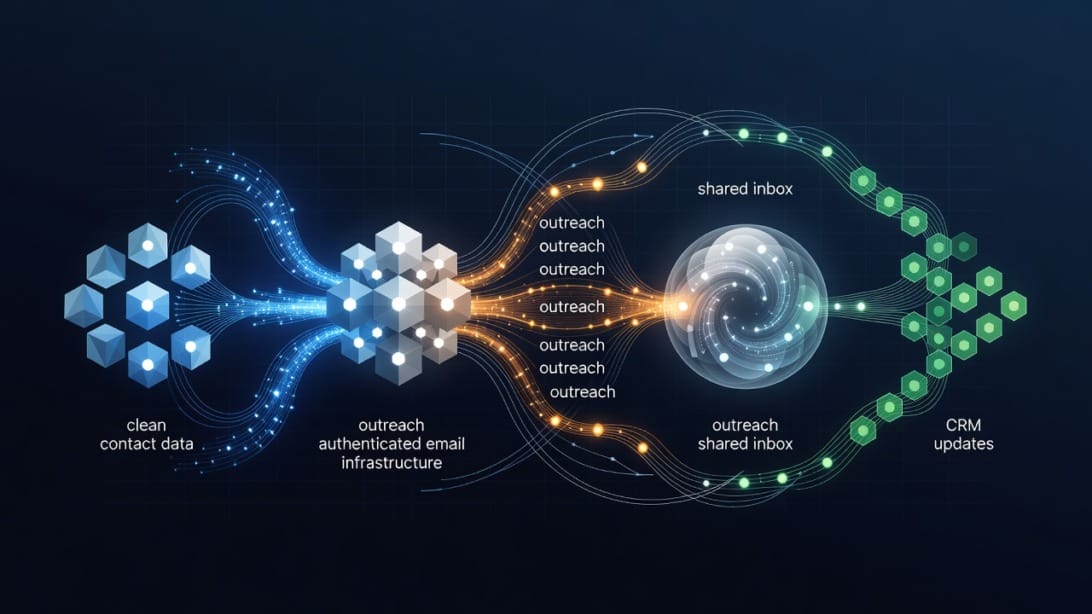
A good outbound workflow looks like this:
1. Define target accounts and personas.
2. Source contacts from reputable data sources.
3. Verify email addresses before outreach.
4. Segment prospects by pain, industry, role, or trigger.
5. Authenticate sending domains with SPF, DKIM, and DMARC.
6. Warm up new sending inboxes before scaling volume.
7. Write concise, relevant sequences.
8. Route replies into a shared workflow.
9. Sync outcomes to the CRM.
10. Review performance by segment and message.
Why deliverability belongs in the sales team operating model
Deliverability is not just an IT issue. It affects whether prospects ever see your outreach. If a team scales sending without authentication, warmup, list hygiene, and bounce control, it can damage domain reputation and reduce future pipeline creation.
Sales leaders should define rules for:
- Which domains and inboxes reps use
- How new inboxes are warmed before active campaigns
- How many prospects can enter a sequence at once
- What bounce thresholds trigger a pause
- How often lists are verified
- How replies and opt-outs are handled
- Who monitors domain health and sending reputation
Mystrika is built for cold email outreach teams that need sequencers, warmup, unified inbox workflows, provider rotation, and deliverability-aware campaign management. For teams that need sending infrastructure beyond their main workspace, DoYouMail can support outbound mailboxes. For list hygiene, Filter Bounce helps verify emails before prospects enter a sequence.
If your SDR team is growing, do not wait for deliverability problems to appear. Build list cleaning and cold email warmup into the process before you increase volume.
Outbound handoff checklist
Use this checklist before an SDR hands an opportunity to an AE:
- Prospect matches ICP.
- Account fits target segment.
- Contact has relevant authority or influence.
- Pain or trigger is documented.
- Source of interest is clear.
- Outreach history is visible.
- Meeting objective is defined.
- Any promised next step is noted.
- CRM fields are complete.
- AE accepts or rejects the meeting with a reason.
This checklist prevents the classic SDR-AE conflict where one team says, “We booked the meeting,” and the other says, “It was never qualified.”
Sales Stack for a Modern Sales Team
The right sales stack reduces manual work, improves visibility, and helps reps focus on selling. The wrong stack creates admin burden, duplicate data, and tool fatigue.
Start with the workflow, then choose tools. Do not buy software to compensate for unclear process.
| Tool category | Purpose | Buying advice |
|---|---|---|
| CRM | Source of truth for accounts, contacts, opportunities, and activity | Keep stages simple and enforce data quality |
| Sales engagement | Sequences, follow-ups, reply management, outbound workflows | Choose tools that support deliverability and team visibility |
| Email infrastructure | Sending domains, mailboxes, authentication, warmup | Separate outbound risk from core business email where appropriate |
| Email verification | Reduce bounces and protect sending reputation | Verify before sending, not after problems appear |
| Conversation intelligence | Call recording, coaching, deal review | Use for coaching, not surveillance |
| Sales enablement | Playbooks, collateral, training assets | Keep content searchable and tied to deal stages |
| Reporting and BI | Dashboards, forecasts, conversion analysis | Avoid vanity dashboards with no decisions attached |
| Scheduling and routing | Meeting booking and lead assignment | Make ownership rules clear |
For outbound-heavy teams, the stack should connect clean data, authenticated sending, controlled sequencing, shared reply management, and CRM updates. If any piece is missing, reps create workarounds.
Before importing a prospect list, verify it. Poor data creates bounces, wastes rep time, and harms deliverability. If this is a recurring workflow, build email verification into the team process instead of treating it as a one-off cleanup task.
Sales Team Compensation and Incentives
Compensation tells the sales team what the company really values. If the plan rewards meetings only, reps will optimize for meetings. If it rewards revenue regardless of fit, reps may close customers who churn. If it is too complicated, nobody understands how to win.
A good compensation plan should be:
- Simple enough for reps to understand.
- Aligned with the role’s real influence.
- Connected to revenue quality, not just activity.
- Fair across territories and segments.
- Easy to administer.
- Reviewed when the sales motion changes.
Match incentives to responsibility
An SDR should not be paid as if they control closed revenue alone. An AE should not be rewarded for deals that ignore qualification standards. A customer success manager should not carry expansion goals without influence over adoption and account health.
Tie incentives to what each role can reasonably affect.
| Role | Incentive should emphasize | Avoid overemphasizing |
|---|---|---|
| SDR or BDR | Qualified opportunities accepted by sales | Raw meetings with no quality filter |
| AE | Closed revenue and forecast discipline | Closing at any cost |
| Sales manager | Team performance and rep development | Personal heroics on individual deals |
| Customer success | Retention, expansion, adoption | Upsells that hurt long-term trust |
| RevOps | Operational reliability and data quality | Process volume without business impact |
Keep compensation connected to customer fit
Revenue that churns quickly can hide inside a good-looking quarter. Sales leaders should consider customer-fit checks, clawback rules, or quality thresholds where appropriate.
The goal is not to punish reps. The goal is to align selling behavior with durable revenue.
Sales Team Onboarding and Training
Onboarding is where your sales culture becomes real. If new hires learn by shadowing random calls and asking whoever is available, they will copy inconsistent habits.
A strong onboarding system teaches product, market, process, tools, messaging, and judgment.
A practical onboarding sequence
| Stage | What to teach | How to validate learning |
|---|---|---|
| Product and market | Use cases, customer pains, alternatives, value proposition | Rep explains the problem in buyer language |
| ICP and personas | Target accounts, roles, triggers, disqualifiers | Rep reviews sample accounts and explains fit |
| Sales process | Stages, exit criteria, handoffs, CRM rules | Rep moves mock deals through the process correctly |
| Messaging | Discovery questions, email angles, objection handling | Role-play and written outreach review |
| Tools | CRM, sequencing, inbox, calendar, reporting | Rep completes workflow without manager rescue |
| Live execution | Calls, emails, demos, follow-ups | Manager scores real work and coaches gaps |
Training should be continuous
Initial onboarding is not enough. Sales skills decay when coaching stops. Markets also change. Competitors adjust, buyers become more informed, and messaging that worked last quarter may lose power.
Use recurring training for:
- Discovery calls
- Objection handling
- Competitive positioning
- Pipeline hygiene
- Negotiation
- Account research
- Outbound writing
- Demo storytelling
- Forecasting judgment
- Handoff quality
The best training is close to real work. Review actual calls, emails, CRM notes, lost deals, and stalled opportunities.
Sales Team Management Cadence
A sales team needs rhythm. Without a cadence, managers react to problems late and reps operate in isolation.
The cadence should create visibility without turning every day into reporting theater.
| Meeting or ritual | Frequency | Purpose |
|---|---|---|
| Daily or async standup | Daily or several times per week | Surface blockers and focus areas |
| Pipeline review | Weekly | Inspect deal quality, next steps, and forecast risk |
| 1:1 coaching | Weekly or biweekly | Develop rep skills and remove individual blockers |
| Call or email review | Weekly | Improve execution with real examples |
| Forecast meeting | Weekly or biweekly | Align leadership on expected revenue |
| Win-loss review | Monthly | Learn from patterns across deals |
| Team enablement session | Monthly or as needed | Roll out messaging, process, or product updates |
| Quarterly planning | Quarterly | Review structure, targets, capacity, and priorities |
What a good pipeline review includes
A useful pipeline review is not a rep reading every deal name from the CRM. It should focus on evidence and risk.
Ask:
- Why is this opportunity qualified?
- What business problem is the buyer solving?
- Who is involved in the decision?
- What is the next agreed step?
- What could stop the deal?
- Has the close date changed? Why?
- What does the buyer need to decide?
- What support does the rep need?
Managers should leave pipeline reviews with clear coaching actions, not just updated numbers.
Remote and Hybrid Sales Teams
Remote sales teams can perform well when communication, documentation, and coaching are deliberate. They struggle when leaders try to recreate office habits through more meetings.
A remote or hybrid sales team needs stronger written systems than an office-based team because reps cannot rely on informal hallway context.
Remote sales team checklist
- Document CRM rules and pipeline definitions.
- Use shared call libraries for coaching.
- Create async updates for daily focus and blockers.
- Record enablement sessions for later review.
- Keep playbooks searchable.
- Define response expectations for internal channels.
- Use dashboards that managers and reps trust.
- Schedule team time for learning, not just pressure.
- Protect reps from meeting overload.
- Celebrate wins visibly.
Managing remote accountability
Remote accountability should be based on visible work quality and outcomes, not constant surveillance. Reps should know what good looks like, how progress is measured, and where to ask for help.
If a manager cannot tell whether remote reps are working without checking online status, the real problem is unclear expectations or weak metrics.
Common Sales Team Mistakes
Most sales team problems do not appear suddenly. They build from small misalignments that become expensive at scale.
Hiring before defining the motion
A salesperson cannot fix an undefined market. If nobody knows the ICP, message, price, or sales process, the first hire will spend too much time guessing.
Rewarding activity over outcomes
Activity matters, but only when it creates the right outcomes. A team that celebrates raw email volume, call counts, or meetings without quality control will eventually create pipeline noise.
Ignoring deliverability
Outbound teams often notice deliverability only after performance drops. By then, domain reputation, bounce patterns, or inbox placement may already be damaged.
Build sending health into the operating model early.
Creating unclear handoffs
Handoffs fail when one role believes its job is done and the next role does not have enough context to continue. Every handoff needs required fields, notes, acceptance criteria, and ownership.
Promoting the best rep without manager training
Top sellers do not automatically become great managers. Management requires coaching, prioritization, emotional control, hiring judgment, and process discipline.
Letting the CRM become optional
If CRM data is optional, reporting becomes unreliable. If reporting is unreliable, managers make decisions based on anecdotes. Keep the CRM simple, but enforce it.
Scaling a broken process
Adding reps to a broken process creates more broken output. Before hiring aggressively, inspect conversion rates, handoffs, messaging, enablement, and customer fit.
How to Restructure a Sales Team Without Breaking Pipeline
Restructuring can help a sales team grow, but it can also disrupt active deals. Treat restructuring as an operating change, not a chart redesign.
Step 1: Define the problem
Be specific. “We need a better structure” is not enough. Better than what?
Examples of clear restructuring goals:
- Reduce low-quality SDR handoffs.
- Improve enterprise deal support.
- Separate SMB and mid-market motions.
- Add customer success ownership for expansion.
- Improve forecast accuracy.
- Reduce manager overload.
Step 2: Protect active opportunities
Before moving accounts or territories, identify active deals, renewal risks, and executive relationships. Decide which opportunities should stay with the current owner until a natural transition point.
Step 3: Communicate ownership rules
Write down who owns accounts, contacts, opportunities, renewals, expansion, and customer handoffs. Ambiguity creates conflict.
Step 4: Update systems before launch
CRM routing, dashboards, sequences, territories, compensation rules, and reporting views should be ready before the new structure goes live.
Step 5: Monitor leading indicators
After restructuring, watch for early signals:
- Meetings accepted or rejected
- Opportunity creation
- Stage aging
- Rep activity quality
- Forecast changes
- Customer handoff issues
- Internal disputes over ownership
Do not wait for quarterly revenue results to discover that the restructure created a new bottleneck.
Sales Team Examples by Company Stage
Different stages need different sales team designs. Use these examples as patterns, not rigid templates.
Stage 1: Founder-led sales
Team:
- Founder or CEO
- Product or customer support help as needed
Focus:
- Learn the ICP
- Close early customers
- Build basic messaging
- Document objections
- Identify repeatable use cases
Best structure:
- Founder-led island model
Do not overbuild. The goal is learning and proof.
Stage 2: First sales hire
Team:
- Founder
- First AE or full-cycle salesperson
Focus:
- Transfer founder knowledge
- Create a basic playbook
- Build pipeline discipline
- Test whether someone else can sell
Best structure:
- Light island model with shared process
The first sales hire should be comfortable with ambiguity but not abandoned in it.
Stage 3: Early outbound team
Team:
- Sales manager or founder acting as manager
- 1 to 2 SDRs or BDRs
- 1 to 2 AEs
- Part-time RevOps ownership
Focus:
- Define target accounts
- Build outbound sequences
- Verify lists
- Monitor deliverability
- Create SDR-AE handoff rules
Best structure:
- Assembly line or small pod
This is where Mystrika, DoYouMail, and Filter Bounce can become practical parts of the operating system: outreach sequencing, mailbox infrastructure, warmup, unibox workflows, and clean prospect data.
Stage 4: Scaling sales team
Team:
- Sales manager
- SDR team
- AE team
- Customer success
- RevOps
- Enablement support
Focus:
- Consistent onboarding
- Forecasting reliability
- Segment routing
- Manager coaching
- Compensation clarity
Best structure:
- Assembly line, segment-based, or pod model
At this stage, process debt becomes expensive. Fix data, handoffs, and enablement before adding more headcount.
Stage 5: Multi-segment revenue organization
Team:
- Sales leadership
- SDR/BDR teams
- SMB, mid-market, and enterprise AEs
- Sales engineers
- Customer success and account management
- RevOps
- Enablement
- Channel or partner team if relevant
Focus:
- Segment specialization
- Territory planning
- Expansion strategy
- Executive forecasting
- Cross-functional alignment
Best structure:
- Hybrid model
The challenge here is not whether to specialize. It is how to specialize without creating silos.
Sales Team Playbook Checklist
Use this checklist to audit whether your sales team has the essentials in place.
Strategy and positioning
- Clear ICP
- Defined buyer personas
- Pain points by segment
- Differentiated positioning
- Competitor notes
- Pricing guidance
- Qualification criteria
Process and operations
- Sales stages with exit rules
- CRM field requirements
- Lead routing rules
- Handoff checklist
- Forecast categories
- Territory or account ownership rules
- Lost reason definitions
People and management
- Role scorecards
- Hiring process
- Onboarding plan
- Coaching cadence
- Performance review process
- Compensation plan
- Career path expectations
Outbound and tools
- Contact sourcing rules
- Email verification workflow
- Sending domain policy
- Warmup process
- Sequence review process
- Reply handling rules
- Unibox or shared inbox workflow
- CRM sync process
Learning and improvement
- Win-loss review
- Call review library
- Objection bank
- Messaging experiments
- Customer feedback loop
- Playbook owner
- Regular content updates
If several of these are missing, the issue may not be rep performance. It may be that the sales team is operating without a complete system.
Key Takeaways
- A sales team is a revenue operating system, not just a group of reps with quotas.
- The best sales team structure depends on your sales motion, buyer journey, deal complexity, segment, and company stage.
- Common structures include island, assembly line, pod, geographic, segment-based, account-based, channel, customer-success-led, and hybrid models.
- Hire for the current constraint. Do not hire an AE when the real problem is pipeline, and do not hire SDRs when nobody can close their meetings.
- Clear roles, handoffs, CRM rules, onboarding, and coaching matter as much as talent.
- Outbound sales teams need deliverability, warmup, list verification, sequencing, reply management, and CRM hygiene built into the workflow.
- Compensation should reward the outcomes each role can influence and protect long-term revenue quality.
- Remote and hybrid sales teams need better documentation, async communication, and coaching systems.
- Restructuring should start with a specific business problem and protect active pipeline during the transition.
- Tools such as Mystrika, DoYouMail, and Filter Bounce fit naturally when a sales team needs cold outreach workflows, mailbox infrastructure, warmup, unified inbox management, and clean prospect data.
Frequently Asked Questions
What is a sales team?
A sales team is the group responsible for creating and converting revenue opportunities. It may include prospecting, qualification, demos, proposals, negotiation, closing, account handoffs, and expansion support depending on the company structure.
In a small business, the sales team may be one founder or full-cycle salesperson. In a larger company, it often includes SDRs, account executives, managers, RevOps, sales engineers, enablement, and customer success partners.
What does a sales team do?
A sales team finds prospects, qualifies interest, diagnoses buyer needs, presents solutions, handles objections, negotiates terms, closes deals, and passes customers into onboarding or success. It also gives the company market feedback from real buyer conversations.
The exact work depends on the sales motion. An outbound team may spend more time on prospecting and sequences, while an enterprise team may focus on stakeholder mapping, technical validation, and business-case development.
What are the most important sales team roles?
The most common roles are SDR or BDR, account executive, sales manager, RevOps or sales operations, sales engineer, customer success, and sales enablement. Early companies may combine several of these responsibilities into one role.
The most important role is the one that solves the current bottleneck. If you lack pipeline, hire for prospecting. If you have demand but cannot close, hire closing capacity. If data is chaotic, add operations ownership.
What is the best sales team structure?
The best sales team structure is the one that matches your sales motion and reduces friction for buyers and reps. Simple or early-stage teams may use an island model, while growing B2B teams often move to assembly line, pod, segment-based, account-based, or hybrid structures.
Do not choose a structure because it sounds modern. Choose it because it solves a clear problem such as poor handoffs, weak segment focus, overloaded reps, low forecast accuracy, or slow enterprise deals.
When should a company hire its first salesperson?
Hire your first salesperson when you have a clear ICP, a repeatable reason customers buy, a basic sales process, known objections, and enough time to coach the hire. The process does not need to be perfect, but it must be teachable.
If the founder cannot sell the product at all, hiring a salesperson usually will not fix the problem. First validate the market, message, and value proposition.
Should the first sales hire be an SDR or an account executive?
The first sales hire should match the bottleneck. If you have leads or founder-generated opportunities but not enough closing capacity, an account executive may be the right first hire. If the founder can close but lacks enough qualified conversations, an SDR or BDR may be better.
Some early companies hire a full-cycle salesperson who can prospect and close. That can work, but only if expectations are realistic and the person receives support.
How do you manage a sales team effectively?
Manage a sales team with clear expectations, useful metrics, regular coaching, pipeline inspection, structured onboarding, and a cadence for learning from wins and losses. Good management improves behavior before the quarter is already lost.
Avoid managing only by pressure. Reps need standards, but they also need feedback, tools, role clarity, and help removing blockers.
What KPIs should a sales team track?
A sales team should track activity, qualified pipeline, conversion rates, stage progression, forecast accuracy, closed revenue, revenue quality, and customer handoff outcomes. SDRs, AEs, managers, RevOps, and customer success should each have role-specific metrics.
Do not rely on a single metric. High activity with poor conversion signals a different problem than low activity with strong conversion.
How does outbound email fit into a sales team?
Outbound email helps sales teams create pipeline by reaching targeted prospects directly. It works best when paired with accurate targeting, clean contact data, authenticated sending domains, warmup, useful sequencing, reply management, and CRM updates.
Sales leaders should treat deliverability as part of the sales operating model. If messages do not reach the inbox, copy and targeting cannot perform.
What tools does a sales team need?
Most sales teams need a CRM, sales engagement platform, email infrastructure, email verification, scheduling, reporting, and enablement resources. More complex teams may also need conversation intelligence, routing, BI, product demo tools, and partner management systems.
Start with the workflow before buying tools. A simple, well-run stack is better than a large stack that reps avoid or duplicate manually.
How do you scale a sales team without creating chaos?
Scale a sales team by documenting the sales process, defining roles, creating onboarding, enforcing CRM hygiene, building management capacity, and monitoring conversion quality before adding too many reps. Growth magnifies whatever system already exists.
If handoffs, targeting, messaging, or reporting are weak, fix them before aggressive hiring. More headcount will not solve a broken operating model.
How often should a sales team restructure?
A sales team should restructure only when the current model creates measurable friction or no longer matches the go-to-market motion. Restructure for a specific reason, such as segment specialization, enterprise support, forecast quality, handoff problems, or expansion ownership.
Avoid reorganizing as a substitute for coaching or process discipline. A new chart will not fix unclear expectations, poor qualification, or weak management.