
What Are Personality Profile Tools?
Personality profile tools are software platforms, assessments, or AI-assisted systems that help describe how a person tends to communicate, decide, work, respond to pressure, and collaborate. In business, they are used for sales personalization, team coaching, hiring support, leadership development, customer success, and self-awareness.
The key word is “support.” A personality profile should not become a label, a shortcut for judging someone, or a substitute for real conversation. The best tools give you a practical hypothesis: this person may prefer concise facts, collaborative discussion, visionary framing, or step-by-step detail. Then you validate that hypothesis through behavior, replies, and context.
For sales teams, that distinction matters. A profile can help you write a more relevant opening line, choose the right level of detail, or adjust a follow-up message. But it cannot rescue a bad list, a weak offer, or poor inbox placement. That is why a strong outreach workflow pairs personality insight with clean data, thoughtful messaging, and good email deliverability fundamentals.
Here is the simple way to think about the category:
| Tool type | What it usually measures | Best for | Watch out for |
|---|---|---|---|
| Self-assessment tests | How someone answers structured questions about themselves | Coaching, self-awareness, team workshops | People may answer aspirationally or inconsistently |
| Workplace assessments | Work style, strengths, motivation, behavioral tendencies | Hiring support, team design, leadership development | Do not use as the only hiring filter |
| AI personality analysis tools | Inferred communication style from public or CRM data | Sales personalization, account research, enablement | Privacy, accuracy, and stereotyping risk |
| Framework-specific tests | DISC, Big Five, MBTI-style, Enneagram, strengths, or values | Learning a shared vocabulary | Different frameworks answer different questions |
| Outreach workflow tools | Sequencing, personalization, verification, deliverability | Turning insights into actual campaigns | Not personality tools by themselves, but essential for execution |
This guide focuses on business use, with extra attention to sales personalization. It compares major personality profile tools, explains which frameworks matter, and gives you a safe workflow for turning profile insights into better outreach without sounding manipulative or robotic.
Quick Comparison of the Best Personality Profile Tools
If you need a fast shortlist, start with the use case rather than the brand name. A hiring team, a sales development team, and a leadership coach need different levels of evidence, workflow support, and reporting.
| Tool | Category | Best fit | Core framework or method | Strength | Limitation |
|---|---|---|---|---|---|
| Crystal | Personality and communication profile platform | Sales, recruiting, coaching, team communication | DISC plus additional personality frameworks | Actionable communication advice | Inferred profiles need validation |
| Humantic AI | Buyer intelligence and personality analysis | B2B sales personalization | DISC and AI inference | Sales-specific recommendations | Accuracy depends on data quality and context |
| Humanlinker | Sales personalization and profile analysis | Prospect research and icebreakers | DISC-style sales insights | Built around outreach workflows | Vendor-specific claims need scrutiny |
| Truity | Self-assessment library | Individual learning, career, teams | Big Five, Enneagram, Typefinder, DISC, career tests | Broad assessment catalog | Not primarily a sales workflow tool |
| 16Personalities | Free personality test | Self-awareness and light team discussion | MBTI-inspired with trait-style elements | Accessible and easy to share | Not ideal for high-stakes decisions |
| Predictive Index | Workplace talent optimization | Hiring support, workforce planning, leadership | Behavioral and cognitive workplace assessment | Strong business orientation | Requires disciplined implementation |
| Kolbe | Work instincts and conative strengths | Team design and role fit conversations | Conative method | Focuses on natural problem-solving approach | Less useful for cold outreach copy |
| CliftonStrengths | Strengths-based development | Coaching, leadership, team engagement | 34 talent themes | Positive development language | Does not directly predict buyer response |
| DiSC providers | Communication and behavior workshops | Sales training, team workshops | Dominance, Influence, Steadiness, Conscientiousness | Easy vocabulary for communication style | Can become oversimplified labels |
| Big Five tools | Research-grade trait understanding | Academic, coaching, some workplace use | Openness, Conscientiousness, Extraversion, Agreeableness, Neuroticism | Strong trait model | Less immediately memorable for sales reps |
| Enneagram tools | Motivation and self-reflection | Coaching and personal development | Nine motivation types | Good for reflective conversations | Less empirically grounded than trait models |
| Hogan assessments | Leadership and workplace risk | Executive development, selection support | Occupational personality and derailers | Mature workplace assessment category | Usually needs trained interpretation |
| Facet5 | Workplace trait profiling | Team and leadership development | Five-factor workplace model | Team-level reporting and nuance | Vendor-specific and less sales-focused |
| Caliper Profile | Talent and job-fit assessment | Hiring and development | Competency and personality analysis | Role-fit orientation | Not a lightweight tool for prospecting |
The best all-around sales stack is rarely a single personality platform. A practical team may use one personality analysis tool for research, Mystrika for campaign sequencing and reply management, DoYouMail for sending infrastructure, and Filter Bounce for list hygiene. The profile tool informs the message. The outreach stack makes the message deliverable, trackable, and scalable.
Personality Frameworks Explained Before You Choose a Tool
Most articles list tools without explaining the underlying frameworks. That is a problem because two tools can both claim to show “personality” while answering completely different questions.
DISC
DISC is one of the most common business communication frameworks. It typically groups behavior into Dominance, Influence, Steadiness, and Conscientiousness. For sales teams, DISC is useful because it converts quickly into communication guidance.
A prospect who appears highly detail-oriented may prefer proof, implementation steps, and risk reduction. A prospect who appears more visionary may prefer outcomes, strategic framing, and a short path to the decision. That does not mean the person is only one thing. It means your first message can be more respectful of their likely communication preference.
Use DISC when you need:
- Simple language for sales reps and managers
- Fast communication-style coaching
- Team workshop exercises
- Prospect messaging hypotheses
- A practical bridge between personality and conversation
Avoid treating DISC as a scientific diagnosis. It is a communication aid, not a complete map of a human being.
Big Five or OCEAN
The Big Five, often called OCEAN, looks at Openness, Conscientiousness, Extraversion, Agreeableness, and Neuroticism or emotional stability. Compared with many type-based tools, it is usually better suited to nuanced trait measurement because people receive scores on spectrums instead of being sorted into a small number of boxes.
For workplace use, Big Five language can help with coaching and role design. For sales outreach, it is less instantly copy-ready than DISC, but it can still help. For example, a highly conscientious buyer may value reliability, documentation, and precise next steps. A highly open buyer may be more receptive to new ideas and strategic experiments.
Use Big Five when you need:
- Trait-based language instead of fixed types
- More nuance than a four-quadrant model
- Coaching or research-informed discussion
- A way to avoid over-labeling people
MBTI-style and 16-type tools
MBTI-style tools group people into 16 types based on preference pairs such as introversion vs extraversion or thinking vs feeling. They are popular because the results are memorable and easy to discuss. That makes them useful for self-awareness workshops, onboarding conversations, and personal reflection.
For sales teams, MBTI-style tools are less useful unless the prospect has shared their type or the tool provides practical communication advice. Guessing someone is a specific 16-type profile from a LinkedIn page can become too speculative.
Use MBTI-style tools when you need:
- Accessible self-awareness language
- Workshop discussion starters
- Team empathy exercises
- Personal development conversations
Do not use MBTI-style labels as hiring filters or rigid sales assumptions.
Enneagram
The Enneagram describes nine motivation patterns. It is popular in coaching because it explores fears, motivations, and growth paths. It can create rich conversations, but it is also easier to misuse because the language can feel personal and interpretive.
For outreach, avoid saying anything that sounds like you have diagnosed a prospect’s hidden motivation. Instead, use the insight internally to choose tone. For example, if a tool suggests someone values control and competence, your message can be structured and evidence-led without naming the profile.
Use Enneagram-style tools when you need:
- Coaching prompts
- Self-reflection exercises
- Leadership development conversations
- Team empathy discussions
Avoid using Enneagram language in cold emails unless the recipient has explicitly shared that context.
Strengths, values, and work-style tools
Tools like CliftonStrengths, Kolbe, Predictive Index, Hogan, and Facet5 often fit better in workplace development than cold sales. They help teams discuss role fit, natural working style, motivation, derailers, and collaboration patterns.
These tools are powerful when the person being assessed participates directly. They are less appropriate when you are trying to infer a buyer’s personality from public information. That is why tool selection must start with consent and use case.
The Best Personality Profile Tools by Use Case
A generic “best tools” list is not enough. The right tool depends on whether you are personalizing a sales email, hiring a manager, coaching a team, or helping an individual understand themselves.
Best for sales personalization: Crystal, Humantic AI, Humanlinker, and outreach stack tools
Sales personality tools are designed to answer a practical question: how should I communicate with this specific prospect? They often analyze public information, professional profiles, or CRM context, then suggest tone, messaging style, and conversation openers.
Crystal is well known for communication-style recommendations. Humantic AI focuses on buyer intelligence. Humanlinker emphasizes sales personalization and icebreaker generation. These tools can be helpful at the research stage, especially for high-value accounts where a generic message would waste the opportunity.
However, a personality analysis tool is not the same as a complete outbound system. Once you know how you want to communicate, you still need:
- A verified email address
- A clean sending domain
- A relevant offer
- A sequence that adapts to replies
- A way to monitor bounces, replies, and deliverability
- A process for avoiding creepy or over-personalized language
That is where Mystrika fits naturally. Use personality insights to shape your angle, then build the actual sequence in Mystrika. If your list quality is uncertain, validate addresses with Filter Bounce before launching. If you manage separate sending infrastructure, DoYouMail can support domain and mailbox setup while Mystrika handles campaign execution and reply workflows.
For deeper messaging guidance, see this guide to cold email personalization.
Best for self-assessment: Truity, 16Personalities, and Crystal’s free tests
Self-assessment tools are useful when the person wants to learn about themselves. Truity offers a broad catalog of personality, career, and workplace tests. 16Personalities is popular because the results are easy to understand and share. Crystal’s free personality test experience is also useful for comparing frameworks in a more modern interface.
These tools are best when the output becomes a conversation, not a verdict. A team can ask:
- What part of the result felt accurate?
- What part felt incomplete?
- How do you prefer to receive feedback?
- What communication habits help you do your best work?
- What should teammates avoid assuming about you?
That last question is important. Any profile can flatten nuance if the team treats it as permanent identity.
Best for team coaching: CliftonStrengths, DiSC, Kolbe, Facet5, and Predictive Index
Team coaching tools need shared language. DiSC gives teams a simple communication map. CliftonStrengths frames people around talents. Kolbe focuses on instinctive problem-solving. Facet5 and Predictive Index can support more structured workplace conversations.
For team coaching, prioritize tools with facilitator resources, group reports, and clear debrief exercises. A strong team workshop should lead to practical agreements, such as:
- How we make decisions
- How we disagree
- How we document work
- How we handle urgent requests
- How we communicate risk
- How we onboard new team members
The tool is only the starting point. The value comes from changing team behavior after the assessment.
Best for hiring support: Predictive Index, Hogan, Caliper, and structured workplace assessments
Hiring is where caution matters most. Personality profile tools can support structured conversations about role fit, motivation, collaboration, and potential development areas. They should not be used as the only gatekeeping mechanism.
For hiring, look for tools that provide:
- Clear job relevance
- Validated workplace use cases
- Consistent administration process
- Trained interpretation or support
- Bias and adverse impact awareness
- Documentation for how results influence decisions
- Candidate transparency
Avoid using inferred social-profile personality analysis as a hiring screen. If a tool is used in selection, candidates should know what is being assessed, how results will be used, and how the assessment relates to the role.
How to Choose the Right Personality Profile Tool
Choose a personality profile tool by matching the tool to the decision you need to make. If the decision is low-stakes, such as improving a sales email or team discussion, a lightweight tool may be enough. If the decision affects hiring, promotion, compensation, or employee evaluation, you need a more rigorous process.
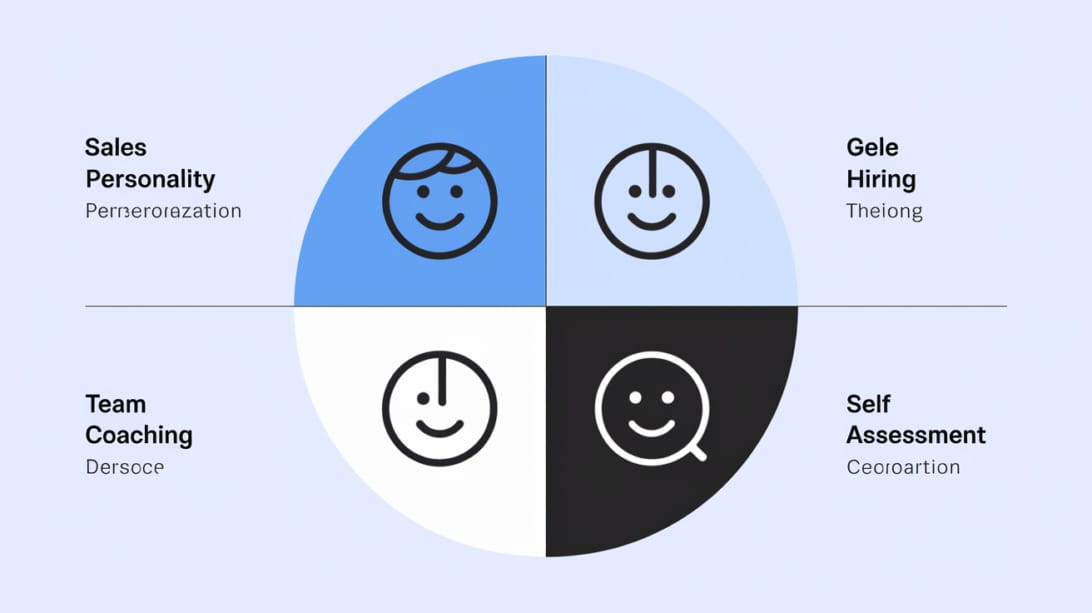
Use this decision matrix before buying anything.
| Decision factor | Sales personalization | Team coaching | Hiring support | Self-assessment |
|---|---|---|---|---|
| Needs direct user consent | Medium | High | Very high | High |
| Needs scientific rigor | Medium | Medium to high | Very high | Medium |
| Needs CRM or outreach workflow | Very high | Low | Medium | Low |
| Needs facilitator support | Low to medium | High | High | Low |
| Risk if wrong | Medium | Medium | High | Low |
| Best output | Messaging advice | Team discussion | Structured role-fit input | Reflection prompts |
| Avoid | Creepy personalization | Labeling teammates | Automated rejection | Treating type as destiny |
Step 1: Define the job to be done
Write one sentence before researching tools:
“We need a personality profile tool so that we can [specific action] for [specific audience] without [specific risk].”
Examples:
- “We need a personality profile tool so that sales reps can adapt enterprise outreach tone without making creepy assumptions.”
- “We need a personality profile tool so that managers can improve team communication without labeling people permanently.”
- “We need a personality profile tool so that recruiters can add structured role-fit discussion without replacing interviews or work samples.”
If you cannot complete that sentence, you are not ready to choose a tool.
Step 2: Separate assessment from inference
Some tools ask the person to take a test. Others infer personality from public data, professional profiles, or writing patterns. Both can be useful, but they carry different expectations.
Assessment works best when the person participates knowingly. Inference works best when the use case is low-stakes and the output is treated as a guess. Sales personalization can use inference carefully because the goal is to communicate more respectfully, not to decide someone’s future.
Step 3: Evaluate workflow fit
A tool that produces a beautiful profile but does not fit your workflow may sit unused. Sales teams should ask:
- Does it work with LinkedIn, CRM data, or account research?
- Can reps use it in under two minutes per prospect?
- Does it provide message guidance, not just a label?
- Can managers review how the guidance affects copy quality?
- Does it support team standards for safe personalization?
Hiring and coaching teams should ask:
- Does it include facilitator guidance?
- Is the framework appropriate for the decision?
- Are results easy to explain to participants?
- What training is required?
- Can the tool produce group-level reports?
Step 4: Check privacy and consent
Privacy is not a footnote. It is part of tool quality. Before adopting any personality profile platform, ask:
- What data does the tool collect?
- Does the person know they are being assessed?
- Is the tool analyzing public data, private CRM notes, or submitted answers?
- Can data be deleted?
- Is sensitive information inferred or stored?
- Are results shared with managers, sales reps, or third parties?
- Does the tool explain limitations clearly?
For sales outreach, avoid language like “I can tell you are a high-D personality.” That sounds invasive. Use the insight silently to adjust the message.
Step 5: Test with real scenarios
Do not buy based on a polished demo. Test each tool against real examples.
For sales:
1. Pick 20 real prospects across different personas.
2. Generate personality or communication guidance.
3. Write a first email and one follow-up for each.
4. Have a manager score the messages for relevance, clarity, and creepiness risk.
5. Launch a small campaign in Mystrika after verifying the list.
6. Compare reply quality, not just open rates.
For team coaching:
1. Run a small pilot with one team.
2. Facilitate a debrief.
3. Convert results into working agreements.
4. Check behavior change after 30 days.
5. Decide whether the tool improved collaboration enough to expand.
For hiring:
1. Validate role relevance.
2. Keep assessments consistent across candidates.
3. Use trained interpretation.
4. Combine results with structured interviews and work samples.
5. Document how the assessment supports, but does not replace, judgment.
Sales Outreach Workflow Using Personality Profiles
Personality insights can improve outreach when they make the message more relevant, respectful, and easy to answer. They hurt outreach when they make the sender sound like a fake psychologist.
The safe rule is simple: personalize the communication style, not the person’s identity.
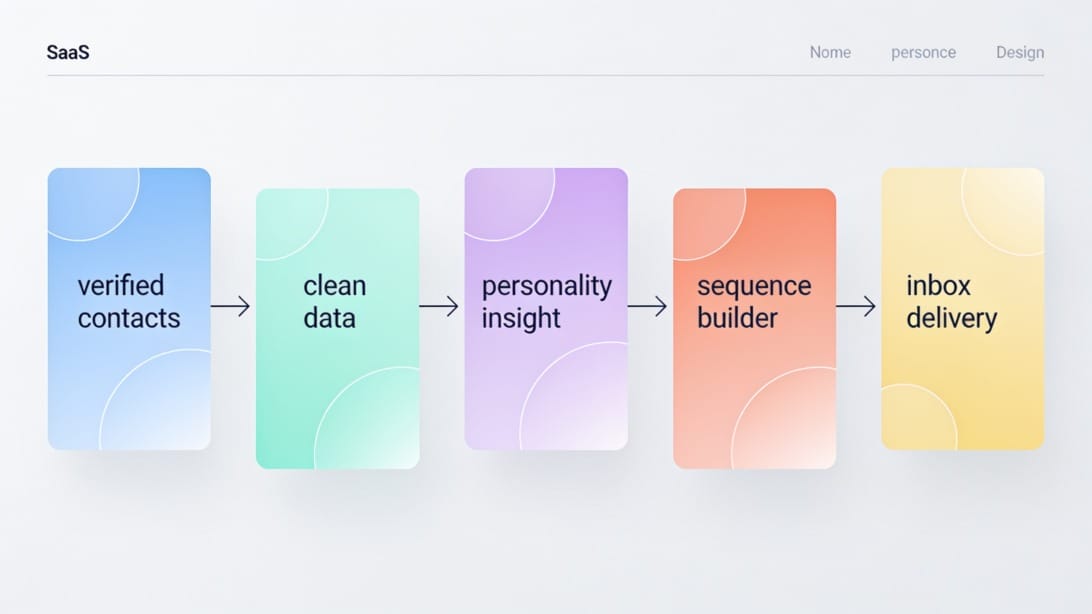
A practical workflow for cold email teams
Follow this workflow when using personality profile tools in outbound campaigns.
1. Build a targeted account list. Start with firmographic and role relevance. Personality analysis cannot fix bad targeting.
2. Verify contact data. Use a verification process before sending. If you need a data-quality primer, read this guide to email verification.
3. Research the account context. Look at company changes, hiring signals, product launches, funding, tech stack, or public priorities.
4. Generate communication-style guidance. Use a personality profile tool to create a hypothesis about tone, level of detail, and likely objections.
5. Write the email around business relevance. Mention the business trigger first. Use personality insight only to choose structure.
6. Build the sequence in Mystrika. Create variants for different personas or communication styles.
7. Use Filter Bounce before launch. Remove risky addresses so personalization work is not wasted on bounces.
8. Send from healthy infrastructure. If you manage mailboxes and domains, DoYouMail can support the sending foundation while Mystrika manages outreach operations.
9. Measure replies and objections. Track which messaging style earns thoughtful responses.
10. Update the playbook. Keep what works, remove what sounds forced, and document examples for the team.
Example: turning a profile insight into better copy
Weak version:
I noticed you seem like a detail-oriented person, so I thought you would appreciate this.
Better version:
Your team is hiring three outbound reps while expanding into healthcare accounts. The main risk is not writing more emails, it is keeping list quality, sequencing, and reply handling consistent as volume increases.
The better version uses the likely preference for detail, but it does not mention personality. It respects the prospect by focusing on their business situation.
Messaging patterns by communication style
| Likely preference | Email structure | Good phrase | Avoid |
|---|---|---|---|
| Direct and outcome-focused | Lead with result, then proof | “Here is the operational bottleneck I noticed” | Long warm-up paragraphs |
| Analytical and risk-aware | Lead with evidence and process | “The risk usually appears in list quality before copy” | Vague hype |
| Collaborative and relationship-led | Lead with shared context | “Teams in this stage often want a cleaner handoff” | Aggressive urgency |
| Vision-oriented | Lead with strategic change | “This becomes important when outbound moves from experiments to a repeatable motion” | Excessive tactical detail upfront |
Use these as writing prompts, not labels. If the prospect replies differently than expected, adapt.
Cold outreach checklist for personality-informed campaigns
Before launching, check every item:
- [ ] The list is targeted by role, company fit, and buying trigger.
- [ ] Email addresses are verified through Filter Bounce or a comparable validation process.
- [ ] The personality insight changes tone or structure, not the truth of the message.
- [ ] No email mentions a guessed personality type.
- [ ] Each message has a business reason for reaching out.
- [ ] Mystrika sequences include relevant follow-ups, not repeated first-email rewrites.
- [ ] Sending domains and mailboxes are healthy.
- [ ] Reply handling is centralized so the team can learn from objections.
- [ ] The campaign has a stop rule for low reply quality or elevated bounces.
For follow-up planning, this cold email follow-up strategy guide can help turn the first message into a complete sequence.
Evaluation Criteria for Personality Analysis Tools
A useful personality tool should be practical, explainable, and safe. Here is the evaluation checklist to use during demos.
| Criterion | What to ask | Why it matters |
|---|---|---|
| Use-case fit | Is this built for sales, hiring, coaching, or self-reflection? | A good coaching tool may be weak for outreach |
| Framework clarity | What model does it use? | Buyers need to understand what is being measured |
| Evidence level | What validation or reliability support exists? | High-stakes use needs more rigor |
| Output quality | Does it give specific guidance or only labels? | Labels are less useful than behaviors |
| Workflow integration | Does it fit CRM, sequencing, HRIS, or team processes? | Adoption depends on convenience |
| Privacy controls | What data is collected, stored, and shared? | Personality data can be sensitive |
| Consent model | Does the person opt in, or is the profile inferred? | Consent affects risk and tone |
| Explainability | Can users challenge or interpret results? | Black-box results are harder to trust |
| Bias risk | Could results disadvantage certain groups? | Critical for hiring and management |
| Actionability | What changes after the profile is created? | Reports without behavior change become shelfware |
A tool that scores well on every dimension may cost more or require training. That is fine if the decision is important. For low-stakes sales messaging, a lighter tool can work if the team has strong guardrails.
Common Mistakes to Avoid
Personality tools fail when teams confuse insight with certainty. Avoid these mistakes.
Mistake 1: Treating a profile as a fixed identity
People adapt by context. A founder in a board meeting may communicate differently from the same founder in a product review. A profile can describe tendencies, but it cannot capture every situation.
Better approach: use profiles as conversation hypotheses.
Mistake 2: Using personality language in cold emails
Telling someone you analyzed their personality can feel invasive. Even if the tool is accurate, the recipient did not ask for a diagnosis.
Better approach: let the insight shape the message structure without naming the profile.
Mistake 3: Ignoring list quality
A beautifully personalized email sent to the wrong address still bounces. A high-bounce campaign can hurt sending reputation and reduce the reach of future messages.
Better approach: verify data, monitor deliverability, and keep personalization tied to real account fit.
Mistake 4: Choosing tools based on popularity alone
Popular does not mean appropriate. A free self-assessment may be great for reflection but insufficient for hiring. A rigorous workplace assessment may be overkill for a quick sales email.
Better approach: match tool depth to decision risk.
Mistake 5: Letting the tool write generic compliments
Many AI-assisted tools can produce flattering but vague lines. Prospects recognize this quickly.
Better approach: combine personality style with specific business context.
Mistake 6: Skipping manager review
If every rep uses personality guidance differently, quality becomes inconsistent.
Better approach: build a short review rubric for relevance, accuracy, tone, and privacy risk.
Example Outreach Playbooks by Profile Signal
The following playbooks show how personality profile tools can guide outreach without labeling the prospect.
Playbook 1: Detail-oriented operations leader
Likely communication preference: precise, risk-aware, process-focused.
Email angle:
- Mention the operational bottleneck.
- Use concrete language.
- Offer a low-friction audit or checklist.
- Keep claims modest.
Example opening:
When outbound teams scale from founder-led sending to multiple reps, the first cracks usually appear in list hygiene, mailbox consistency, and reply routing. I had a practical idea for tightening that workflow without slowing the team down.
Why it works: it respects the buyer’s likely concern for process and risk.
Playbook 2: Growth-focused revenue leader
Likely communication preference: outcomes, speed, leverage.
Email angle:
- Lead with the growth constraint.
- Show how the workflow scales.
- Avoid too much implementation detail in the first line.
Example opening:
Your team seems to be moving from outbound experiments to a repeatable revenue motion. The constraint at that stage is usually not writing more emails, but building a system where targeting, sending, replies, and follow-ups improve together.
Why it works: it frames the conversation around scale and leverage.
Playbook 3: Relationship-led founder
Likely communication preference: trust, relevance, context.
Email angle:
- Start with a real business observation.
- Keep tone warm but not overfamiliar.
- Offer a helpful next step.
Example opening:
I noticed your team is selling into a market where credibility matters before the first meeting. A simple way to improve outbound is to make each sequence feel more like a relevant introduction and less like a campaign blast.
Why it works: it shows empathy without pretending to know the person deeply.
Playbook 4: Technical evaluator
Likely communication preference: proof, architecture, control.
Email angle:
- Explain the system.
- Mention deliverability and data quality.
- Avoid fluffy claims.
Example opening:
If your outbound motion depends on multiple domains and mailboxes, the technical layer matters as much as the copy. The workflow I would look at first is verification, sending infrastructure, sequence logic, and reply triage.
Why it works: it speaks to the operating system behind outreach.
Privacy, Ethics, and Compliance Checklist
Personality data can be sensitive because it describes behavior, preferences, motivations, or inferred traits. Even when the data comes from public sources, teams should treat it carefully.
Use this checklist before adopting any personality profile tool.
- [ ] The use case is clearly documented.
- [ ] The tool’s data sources are understood.
- [ ] Users know whether profiles are self-reported or inferred.
- [ ] High-stakes decisions include human review and additional evidence.
- [ ] Hiring use does not rely on personality results alone.
- [ ] The tool avoids protected-class inference.
- [ ] Data retention and deletion policies are clear.
- [ ] Results are shared only with people who need them.
- [ ] Sales messages do not reveal inferred psychological assumptions.
- [ ] The team has a process for correcting bad assumptions.
For cold outreach, the safest standard is this: if the recipient read your email and asked, “How did you decide to write it this way?” you should be comfortable explaining your process. “We noticed your public business context and wrote a relevant message” is acceptable. “We guessed your personality type” is not.
A Practical Buying Shortlist
Use this shortlist depending on your priority.
| If your priority is… | Start with… | Add… | Avoid… |
|---|---|---|---|
| Personalizing high-value sales outreach | Crystal, Humantic AI, Humanlinker | Mystrika, Filter Bounce, DoYouMail | Mentioning guessed type in emails |
| Building team communication language | DiSC, CliftonStrengths, Kolbe | Facilitated workshop and team agreements | One-off tests with no debrief |
| Supporting hiring conversations | Predictive Index, Hogan, Caliper | Structured interviews, work samples, trained interpretation | Automated rejection based on profile |
| Self-awareness and career reflection | Truity, 16Personalities, Crystal free tests | Coaching prompts and journaling | Treating results as permanent identity |
| Leadership development | Hogan, Facet5, CliftonStrengths | 360 feedback and manager coaching | Uninterpreted reports sent by email |
If you are buying for a sales team, your final decision should include the whole workflow, not just the personality tool. Ask: can reps go from account research to clean data to sequence launch to reply learning? If not, the personality tool may create interesting notes without improving pipeline.
Implementation Plan for Revenue Teams
Here is a 30-day rollout plan for a sales team that wants to use personality profile tools responsibly.
Week 1: Define standards
Create a short policy:
- Which tool will be used
- Which prospect segments qualify for profile-based research
- What reps may and may not say in emails
- How to handle uncertain or conflicting profile signals
- How managers will review messages
Also define the campaign quality metrics. Do not stop at opens. Track positive replies, objection quality, meeting fit, bounce rate, and unsubscribes.
Week 2: Build message templates
Create three to five approved message structures. For example:
1. Direct outcome-first message
2. Analytical risk-first message
3. Collaborative context-first message
4. Strategic change-first message
5. Technical workflow-first message
Each template should include placeholders for account-specific evidence. The personality signal changes the order and tone, not the offer itself.
Week 3: Launch a controlled pilot
Pick a narrow segment. Verify the list with Filter Bounce. Build the campaign in Mystrika. Keep the test small enough that managers can review the actual copy.
During the pilot, ask reps to log:
- Profile signal used
- Message structure selected
- Business trigger referenced
- Reply outcome
- Any discomfort or uncertainty about the personalization
Week 4: Review and standardize
Look at qualitative replies. Did prospects respond as if the message understood their situation? Did any messages feel too personal? Did the profile signal improve clarity or simply add complexity?
Keep only the patterns that improved relevance. Remove anything that created creepy wording, vague compliments, or unsupported assumptions.
Key Takeaways
- Personality profile tools help describe communication style, work preferences, motivations, and behavior patterns, but they should guide conversations rather than label people.
- The best tool depends on the use case: sales personalization, team coaching, hiring support, or self-assessment all require different levels of rigor and consent.
- DISC-style tools are often easiest for sales communication, while Big Five-style tools are better for nuanced trait discussion.
- For cold outreach, use personality insights to adjust tone and structure. Do not tell prospects you guessed their personality type.
- A personality tool is only one part of the outbound system. Clean data, verification, deliverability, sequencing, and reply management still determine whether the campaign works.
- Mystrika, DoYouMail, and Filter Bounce fit naturally around personality-informed outreach: profiles shape the message, verification protects list quality, infrastructure supports sending, and sequencing turns insight into action.
- Avoid unsupported performance claims, rigid labels, and high-stakes decisions based only on a profile.
- The safest workflow treats every profile as a hypothesis that must be validated through real behavior and response quality.
Frequently Asked Questions
What are personality profile tools?
Personality profile tools are assessments or software platforms that describe how a person tends to think, communicate, decide, work, or collaborate. They can be self-reported tests, workplace assessments, or AI-assisted systems that infer communication style from available data.
In business, they are most useful when they turn into better conversations. A good tool should help you adjust tone, ask better questions, or support development, not reduce someone to a label.
What is the best personality profile tool for sales?
The best personality profile tool for sales is usually one that gives practical communication guidance rather than only a personality label. Crystal, Humantic AI, and Humanlinker are common options for sales-focused personality analysis.
For actual outreach, pair the profile tool with an execution stack. Mystrika can manage sequences and replies, Filter Bounce can help reduce risky addresses, and DoYouMail can support sending infrastructure. The personality tool improves message relevance, but the outreach stack makes the campaign operational.
Are personality analysis tools accurate?
Personality analysis tools can be useful, but accuracy depends on the framework, data source, question quality, and use case. Self-assessments reflect how people answer at a point in time, while inferred profiles are best treated as educated guesses.
Use results as hypotheses. If a tool suggests a prospect prefers concise communication, write a concise message and watch the response. Do not assume the profile fully defines the person.
Can I use personality profiles in cold email personalization?
Yes, but use them carefully. Personality profiles can help you choose tone, structure, level of detail, and follow-up style for cold email personalization.
The safest approach is to personalize the message around business context while using the profile insight silently. Do not write lines like “you seem like a dominant personality” or “your profile suggests you dislike uncertainty.” That feels invasive and can reduce trust.
Which framework is best: DISC, Big Five, MBTI, or Enneagram?
There is no single best framework for every purpose. DISC is practical for workplace communication and sales coaching. Big Five is useful for nuanced trait-based discussion. MBTI-style tools are accessible for self-awareness. Enneagram is often used for reflective coaching and motivation conversations.
Choose based on the decision you need to support. For sales emails, communication guidance matters most. For hiring or leadership development, rigor, consistency, and trained interpretation matter more.
Should personality tools be used for hiring?
Personality tools can support hiring conversations, but they should not be used as the only decision factor. If a tool affects selection, it should be job-relevant, consistently administered, transparently explained, and interpreted alongside structured interviews, work samples, and role requirements.
Avoid inferred personality analysis from public profiles as a hiring screen. High-stakes decisions need stronger evidence and a fair process.
How do personality profile tools help sales teams?
They help sales teams adapt communication style. A rep can decide whether to lead with outcomes, risk reduction, collaboration, technical process, or strategic change based on the prospect’s likely preference.
The value is not in guessing a type. The value is in writing a clearer, more respectful message that feels relevant to the buyer’s situation.
What should I look for before buying a personality profile tool?
Look for use-case fit, framework clarity, output quality, privacy controls, workflow integration, and evidence level. A tool built for self-reflection may not be appropriate for hiring. A tool built for hiring may be too heavy for sales personalization.
During a demo, test the tool with real scenarios. Ask whether the output helps your team take better action or merely produces interesting labels.
How does Mystrika fit with personality profile tools?
Mystrika is not a personality assessment tool. It fits after the research stage, when you are ready to turn insight into outreach sequences, follow-ups, reply handling, and campaign learning.
A practical workflow is: research the prospect, use a personality profile tool to guide tone, verify the address with Filter Bounce, build the sequence in Mystrika, and send through healthy infrastructure such as DoYouMail where appropriate.
What is the biggest risk of using personality profile tools?
The biggest risk is overconfidence. Teams may treat a profile as certainty, label people too quickly, or use inferred traits in ways that feel invasive.
Prevent that by setting clear rules: profiles are hypotheses, not diagnoses; do not mention guessed types in outreach; do not use personality results as the sole hiring filter; and always combine tool output with real context and human judgment.