
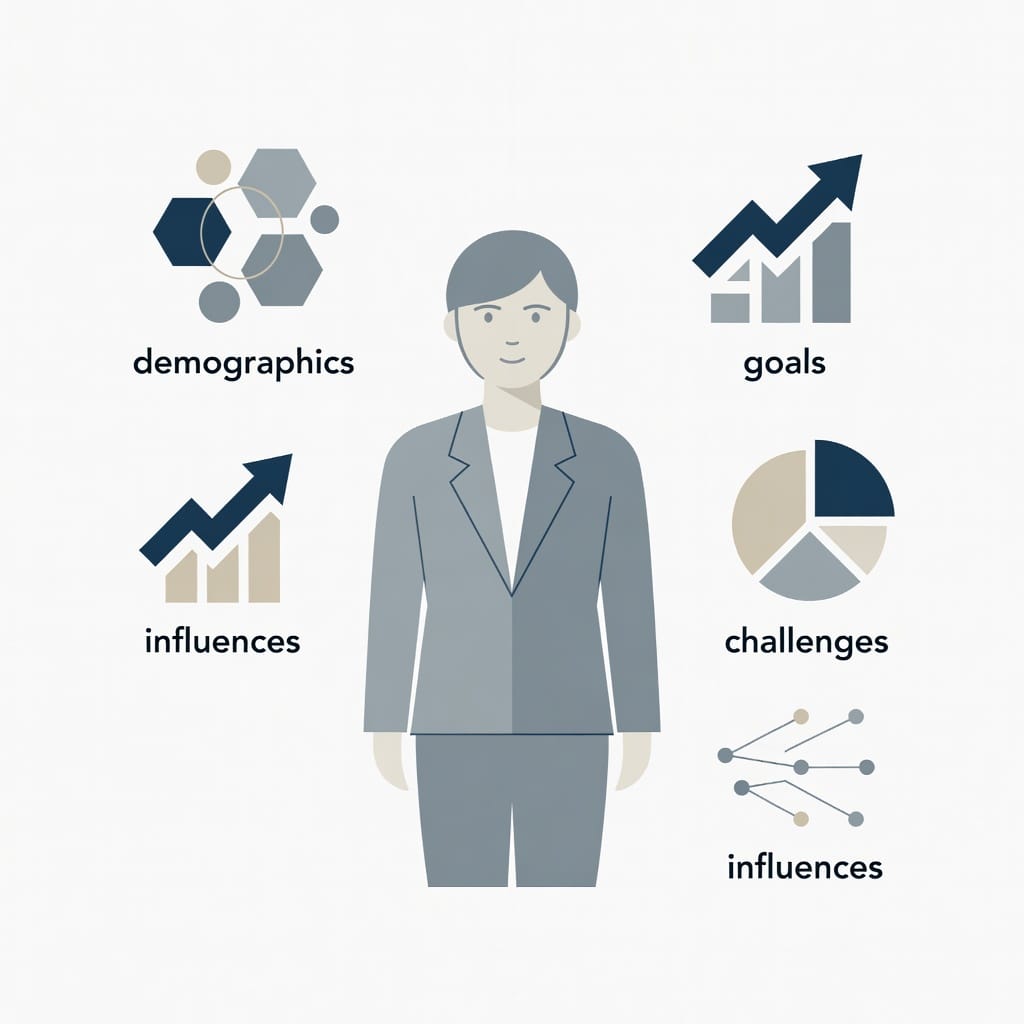
A customer profile is a detailed, data-driven description of your ideal customer that includes demographic, firmographic, psychographic, and behavioral characteristics. Unlike buyer personas that add storytelling elements, customer profiles focus on factual, measurable attributes that help you identify and target prospects more effectively in cold email campaigns.
Why Customer Profiles Matter for Cold Email Outreach
Customer profiles directly impact the success of cold email outreach by enabling precise targeting, personalized messaging, and improved deliverability. When you understand exactly who your ideal customer is, you can craft emails that resonate with their specific pain points, speak their language, and arrive in inboxes rather than spam folders.
The difference between generic outreach and profile-driven campaigns shows in every metric. Emails sent to well-defined customer profiles achieve higher open rates, better response rates, and ultimately more conversions. This happens because profiling reduces noise. Instead of blasting messages to anyone with an email address, you focus on prospects who match your ideal criteria and are more likely to engage.
Accurate customer profiling also protects your sender reputation. When you send emails to the right people, engagement signals improve, which tells email providers that your messages belong in primary inboxes. Poor targeting leads to low engagement, spam complaints, and deliverability problems that hurt all your email efforts. A well-researched customer profile becomes the foundation for sustainable cold email success.
Key Data Points to Include in a Customer Profile
Building an effective customer profile requires gathering information across multiple categories. Each data point serves a purpose in helping you identify, reach, and convert prospects.
Demographic Data
Demographics provide the basic identifying characteristics of your target customers. For B2C outreach, this includes age ranges, gender, income levels, education, marital status, and geographic location. For B2B, demographics shift to focus on the decision-makers within target companies, including their job titles, seniority levels, and professional backgrounds.
Demographic data helps you filter prospects quickly. If your product serves enterprise CTOs aged 40-55 with technical backgrounds, you can immediately exclude profiles that do not match. This filtering prevents wasted effort on unqualified leads while ensuring your messaging reaches people with the authority and budget to make purchasing decisions.
Firmographic Data
Firmographics describe the characteristics of organizations rather than individuals. This category becomes essential for B2B cold email campaigns where you target companies rather than consumers. Key firmographic data points include industry classification, company size by employee count or revenue, geographic footprint, growth stage, and technology stack.
Firmographic data enables industry-specific messaging and helps you understand the context in which your prospects operate. A startup with 15 employees faces different challenges than a Fortune 500 company with 50,000 employees. Your email messaging, offer structure, and follow-up cadence should reflect these differences. Companies using specific technologies may have immediate needs that align with your solution, while others using competing tools require different positioning.
Psychographic Data
Psychographics reveal the attitudes, values, interests, and lifestyles that influence purchasing decisions. This data goes beyond what people are to explore why they make the choices they do. Psychographic factors include professional values, risk tolerance, decision-making style, preferred communication channels, and content consumption habits.
Understanding psychographics helps you craft messages that resonate emotionally and intellectually. A risk-averse CFO needs different messaging than an innovation-focused CTO, even if both work at companies of similar size in the same industry. Psychographic alignment increases the likelihood that your email will connect with the prospect’s worldview and motivate action.
Behavioral Data
Behavioral data captures how prospects interact with your brand, industry, and competitors. This includes website visit patterns, content downloads, email engagement history, social media activity, purchase history, and response to previous outreach. Behavioral signals often predict buying intent more accurately than static demographic or firmographic data.
For cold email campaigns, behavioral data helps you identify prospects who are actively researching solutions in your category. Someone who visited your pricing page, downloaded a whitepaper, or engaged with your social content demonstrates higher intent than someone with matching demographics who has never heard of your company. Timing your outreach to coincide with behavioral triggers dramatically improves response rates.
Pain Points and Challenges
Documenting the specific problems your ideal customers face allows you to position your solution as the answer. Pain points should be specific and actionable rather than generic statements. Instead of noting that prospects struggle with “efficiency,” identify whether they deal with manual data entry, siloed information systems, slow approval workflows, or compliance documentation burdens.
The most effective cold emails directly address documented pain points within the first few sentences. When a prospect reads an email that names their exact challenge, they recognize that the sender understands their situation. This recognition builds credibility and increases the likelihood of continued engagement.
Buying Journey and Decision Process
Mapping how your ideal customers research, evaluate, and purchase solutions helps you time outreach and provide relevant information at each stage. Some organizations have formal procurement processes with multiple stakeholders and approval gates, while others empower individual decision-makers to make purchases quickly.
Understanding the buying journey also reveals the questions prospects ask at different stages. Early-stage research focuses on problem definition and solution categories, while later stages involve vendor comparisons, ROI calculations, and implementation planning. Your email content should match the stage where prospects currently sit.
Preferred Communication Channels and Content
Knowing where your ideal customers consume information and how they prefer to communicate guides your outreach strategy. Some decision-makers respond better to email, while others engage more on LinkedIn or through industry events. Content preferences vary from detailed technical documentation to concise executive summaries to video explanations.
Channel and content preferences affect both the medium and format of your cold emails. A technical audience may appreciate detailed explanations and data, while busy executives need concise value propositions delivered quickly. Matching your approach to preferences improves engagement and demonstrates that you understand how your prospects like to receive information.

How to Build a Customer Profile: Step-by-Step Guide
Creating customer profiles follows a systematic process that transforms raw data into actionable profiles you can use for cold email targeting and messaging.
Step 1: Gather Comprehensive Data on Your Audience
Start by collecting data from every available source. Survey existing customers to understand their characteristics and motivations. Analyze website analytics to see which visitor segments convert at the highest rates. Review social media insights to identify audience demographics and content preferences. Pull data from your CRM to examine the commonalities among your best customers.
Data sources extend beyond your own systems. Industry reports provide benchmarks for your market. Competitor analysis reveals who they target and how. Public company information, job postings, and professional networking sites offer insights into target organizations and their teams. The goal is to compile a rich dataset that captures the full picture of your ideal customer.
Step 2: Define Key Attributes of Your Ideal Customer
Analyze your collected data to identify the attributes that consistently appear among your best customers. Look for patterns in demographics, firmographics, psychographics, and behaviors. The attributes that correlate most strongly with successful outcomes become the core of your customer profile.
Prioritize attributes based on their predictive power. A job title that appears in 90% of your successful deals matters more than a geographic preference that appears in 40%. Weight attributes accordingly when scoring prospects. This prioritization helps you focus on the characteristics that actually predict success rather than collecting data for its own sake.
Step 3: Organize and Structure the Profile
Create a consistent template that organizes profile information logically. A typical structure includes a header identifying the profile name, a market segmentation summary covering demographics and firmographics, sections for pain points and motivations, a buying journey map, and notes on preferred channels and content.
The structure should make profiles easy to reference during campaign planning and email writing. When crafting a cold email, you should be able to quickly identify the prospect’s pain points, decision-making context, and communication preferences without searching through unstructured notes.
Step 4: Populate the Template with Rich, Detailed Information
Fill each section of your template with specific, detailed information rather than generic statements. Instead of noting that prospects are “mid-sized companies,” specify the employee count range and revenue band that defines your target. Rather than stating that prospects face “operational challenges,” document the exact workflow inefficiencies that create pain.
Rich detail enables precise targeting and personalized messaging. Generic profiles produce generic emails that fail to connect. Detailed profiles support emails that name specific challenges, reference relevant industry context, and demonstrate genuine understanding of the prospect’s situation.
Step 5: Put Your Profiles to Use
Apply customer profiles across your cold email operations. Use profile criteria to build targeted prospect lists that match your ideal customer definition. Reference profile attributes when crafting email subject lines and body copy. Segment campaigns by profile type so different customer groups receive messaging tailored to their specific characteristics.
Profiles also guide follow-up strategy. A profile that indicates long buying cycles and multiple stakeholders suggests a nurture sequence with educational content, while a profile showing quick purchasing decisions and single decision-makers supports a more direct sales approach. Let profiles inform every aspect of your outreach.
Step 6: Regularly Update and Refine Profiles
Customer profiles are living documents that require ongoing maintenance. Markets evolve, new competitors emerge, and customer needs shift. Schedule regular reviews, quarterly or annually, to assess whether your profiles still accurately represent your ideal customers.
Use CRM data and campaign performance metrics to identify when profiles need adjustment. If certain profile segments consistently underperform while others exceed expectations, investigate whether your profile criteria need refinement. Continuous improvement ensures your profiles remain relevant and effective.

Customer Profile Template for Cold Email
This template provides a structure you can adapt for your own customer profiling efforts. Customize the fields and depth based on your specific market and use case.
Profile Header
- Profile Name: [Descriptive name for this customer segment]
- Profile Type: [B2B Enterprise / B2B SMB / B2C / etc.]
- Primary Use Case: [Cold email outreach / Content marketing / Product development / etc.]
- Last Updated: [Date of most recent revision]
Market Segmentation Summary
Demographics:
- Age range: [Specify range]
- Gender distribution: [If relevant]
- Education level: [Typical educational background]
- Income range: [For B2C] or Job title/seniority: [For B2B]
- Geographic location: [Primary regions or countries]
Firmographics (B2B profiles):
- Industry classification: [NAICS codes or industry categories]
- Company size: [Employee count range and/or revenue band]
- Growth stage: [Startup / Scale-up / Enterprise / etc.]
- Geographic footprint: [Local / Regional / National / Global]
- Technology stack: [Relevant tools and platforms they use]
Psychographics:
- Professional values: [Innovation / Stability / Cost-efficiency / etc.]
- Risk tolerance: [Risk-averse / Moderate / Aggressive]
- Decision-making style: [Consensus-driven / Top-down / Data-driven / Intuitive]
- Content preferences: [Technical depth / Executive summaries / Case studies / etc.]
Behavioral Indicators:
- Content consumption patterns: [Blogs / Webinars / Podcasts / Research reports]
- Engagement signals: [Website visits / Email opens / Social interactions]
- Purchase triggers: [Budget cycles / Contract renewals / Growth initiatives]
Pain Points, Goals, and Motivations
Primary Pain Points:
1. [Specific challenge with context]
2. [Specific challenge with context]
3. [Specific challenge with context]
Business Goals:
- Short-term objectives: [What they aim to achieve in the next 6-12 months]
- Long-term vision: [Strategic direction over 2-5 years]
Decision Motivations:
- Primary drivers: [What motivates purchasing decisions]
- Success metrics: [How they measure outcomes]
- Risk concerns: [What keeps decision-makers up at night]
Buying Journey
Awareness Stage:
- How they recognize the problem: [Typical trigger events]
- Information sources: [Where they first learn about solutions]
- Key questions: [What they ask when exploring the category]
Consideration Stage:
- Evaluation criteria: [How they compare options]
- Stakeholder involvement: [Who participates in decisions]
- Timeline: [Typical duration from awareness to decision]
Decision Stage:
- Approval process: [Required sign-offs and gates]
- Implementation considerations: [What affects rollout]
- Success validation: [How they confirm the right choice]
Preferred Channels and Content
Communication Preferences:
- Primary channel: [Email / LinkedIn / Phone / etc.]
- Response patterns: [Best days/times for outreach]
- Message style: [Formal / Conversational / Technical / Executive]
Content Preferences:
- Format: [Written guides / Video / Interactive tools / etc.]
- Depth: [High-level overviews / Detailed technical content]
- Topics of interest: [Specific subjects that drive engagement]
Qualification Criteria
Must-Have Attributes:
- [Non-negotiable characteristic 1]
- [Non-negotiable characteristic 2]
- [Non-negotiable characteristic 3]
Nice-to-Have Attributes:
- [Desirable but not required characteristic 1]
- [Desirable but not required characteristic 2]
Disqualifying Factors:
- [Characteristics that make prospects poor fits]
- [Red flags that indicate mismatch]
Campaign Application Notes
Subject Line Approach: [Recommended tone and structure]
Opening Hook Strategy: [How to capture attention in first sentence]
Value Proposition Angle: [Primary benefit to emphasize]
Call-to-Action Approach: [Recommended next step and phrasing]
Follow-up Cadence: [Suggested sequence timing and content themes]
B2B vs B2C Customer Profiles: Key Differences
Customer profiling approaches differ significantly between B2B and B2C contexts. Understanding these differences helps you create profiles that accurately reflect your target market.
Decision-Making Unit Complexity
B2B purchases typically involve multiple stakeholders with different roles, priorities, and influence levels. A single B2B deal might require buy-in from the end-user, their manager, procurement, IT security, finance, and executive leadership. Each stakeholder brings different concerns to the evaluation process.
B2C purchases usually involve fewer decision-makers, often just the individual consumer or a small household unit. This simplicity allows for more direct messaging and faster sales cycles. However, B2C decisions can still involve emotional factors, social influences, and household dynamics that require consideration.
Purchase Cycle Duration
B2B buying cycles often span months rather than days or weeks. Enterprise software purchases, for example, might involve 3-12 months from initial research to contract signing. Long cycles require sustained nurture efforts and content that supports extended evaluation processes.
B2C purchases range from impulse buys completed in minutes to considered purchases requiring days or weeks of research. The cycle length depends on purchase price, complexity, and risk level. High-ticket B2C purchases like vehicles or home renovations may involve cycles comparable to smaller B2B deals.
Evaluation Criteria
B2B evaluation focuses heavily on ROI, total cost of ownership, implementation requirements, integration capabilities, security and compliance, vendor stability, and references from similar organizations. Decision-makers need evidence that the solution will deliver measurable business outcomes.
B2C evaluation balances functional benefits with emotional and social factors. Consumers consider how a product makes them feel, how it aligns with their identity, what peers and influencers recommend, and whether the price feels justified relative to perceived value. Emotional resonance often matters as much as functional specifications.
Messaging and Content Approach
B2B messaging emphasizes business outcomes, efficiency gains, risk reduction, and competitive advantage. Content tends toward detailed technical documentation, case studies, ROI calculators, and comparison guides. The tone is professional and focused on rational decision-making factors.
B2C messaging often balances functional benefits with emotional appeal, lifestyle alignment, and social proof. Content may include lifestyle imagery, user testimonials, influencer endorsements, and experiential descriptions. The tone can range from professional to casual depending on the product category and brand positioning.
Data Sources and Research Methods
B2B profiling draws from company databases, industry reports, job postings, LinkedIn research, trade publication analysis, and direct conversations with customers. Firmographic data from sources like ZoomInfo, Clearbit, or Apollo supplements internal CRM data.
B2C profiling leverages consumer databases, social media analytics, website behavior tracking, survey responses, and market research reports. Demographic and psychographic data from sources like Nielsen, Experian, or similar consumer data providers enrich internal customer records.
Common Mistakes When Creating Customer Profiles
Several pitfalls can undermine the effectiveness of customer profiling efforts. Avoiding these mistakes ensures your profiles provide genuine value for cold email campaigns.
Creating Profiles Based on Assumptions Rather Than Data
The most common profiling mistake is building profiles from assumptions about who customers should be rather than data about who they actually are. Assumptions often reflect the profile creator’s biases or desired customer base rather than market reality.
Base profiles on actual customer data whenever possible. Analyze your existing customer base to identify common characteristics. Survey prospects who engaged with your outreach to understand their attributes. Use data enrichment tools to fill gaps in your understanding. Let evidence guide profile development.
Making Profiles Too Broad or Too Narrow
Profiles that try to encompass every possible customer become useless for targeting. If your profile includes characteristics shared by 80% of the market, it provides no filtering value. Conversely, profiles so narrow that they match only a handful of prospects limit your addressable market unnecessarily.
Aim for profiles that capture your best customers while remaining large enough to support meaningful campaign volumes. Test profile criteria against your actual prospect database to ensure you have sufficient matches. Adjust breadth based on campaign performance data.
Ignoring Negative Profiles and Disqualifying Factors
Most profiling efforts focus exclusively on positive characteristics that define ideal customers. This approach misses the value of understanding who you should avoid. Negative profiles identify characteristics that predict poor outcomes, wasted effort, or reputational risk.
Document disqualifying factors alongside positive attributes. Note company types that never convert, job titles that lack purchasing authority, geographic regions with regulatory barriers, or behavioral patterns that indicate low engagement likelihood. Negative profiles prevent wasted outreach and protect sender reputation.
Treating Profiles as Static Documents
Creating a profile and filing it away ensures it becomes outdated. Markets shift, customer needs evolve, and competitive landscapes change. A profile that accurately reflected your ideal customer two years ago may no longer match current reality.
Establish a regular review cadence for all profiles. Quarterly reviews catch emerging trends and allow course corrections. Annual deep dives reassess whether fundamental assumptions still hold. Tie profile reviews to business planning cycles so profiles inform strategic decisions.
Failing to Connect Profiles to Campaign Execution
Profiles that exist separately from campaign planning and execution provide limited value. The purpose of profiling is to improve targeting and messaging. If profiles sit in documents that no one references during campaign development, the profiling effort was wasted.
Integrate profile review into campaign planning workflows. Require campaign briefs to reference specific profiles. Build prospect lists using profile criteria. Review profile attributes when writing email copy. Make profiles operational tools rather than theoretical exercises.
Tools and Resources for Customer Profiling
Effective customer profiling benefits from tools that help collect, organize, and activate profile data. The right technology stack streamlines profiling work and improves profile accuracy.
Data Collection and Enrichment Tools
Customer data platforms aggregate information from multiple sources into unified profiles. Tools like Segment, mParticle, or Tealium collect behavioral data across touchpoints and make it available for analysis. Data enrichment services like Clearbit, ZoomInfo, or Apollo add firmographic and contact data to incomplete records.
For cold email specifically, tools that verify email addresses and provide additional context about prospects help build accurate targeting lists. Services that append job titles, company information, and technology usage data to email addresses enable more precise profiling without manual research.
CRM and Customer Data Platforms
Customer relationship management systems serve as the central repository for profile information. Modern CRMs like Salesforce, HubSpot, or Pipedrive capture interaction history, deal outcomes, and customer characteristics in structured formats. Custom fields and tags enable tracking of profile attributes alongside standard contact records.
Integration between your CRM and email outreach tools ensures profile data flows into campaign execution. When your sequencing platform can access CRM profile attributes, you can build dynamic campaigns that automatically target specific profile segments with tailored messaging.
Analytics and Visualization Tools
Analytics platforms help identify patterns in customer data that inform profile development. Google Analytics reveals which visitor segments convert at highest rates. Mixpanel or Amplitude track user behavior within your product or website. Business intelligence tools like Tableau or Looker enable custom analysis of customer characteristics and outcomes.
Visualization makes profile data more accessible to stakeholders who need to apply it. Dashboards showing profile distribution, segment performance, and attribute correlations help teams understand who their customers are and how different profiles perform.
Email Verification and Deliverability Tools
Accurate email addresses are foundational to cold email success. Email verification services check whether addresses are valid, catch typos, and identify high-risk domains. Verification prevents bounces that damage sender reputation and ensures your outreach reaches real inboxes.
For comprehensive deliverability support, combining email verification with warmup services ensures your messages reach primary inboxes. Tools that gradually build sending reputation while monitoring deliverability metrics help maintain the inbox placement rates that make cold email campaigns viable.
List Building and Prospecting Platforms
Prospecting tools help you find prospects who match your customer profile criteria. Platforms like LinkedIn Sales Navigator, Apollo, or ZoomInfo enable searches based on job title, company size, industry, location, and other firmographic attributes. Some tools also provide technographic data showing what technologies prospects use.
When building cold email lists, verify that prospects match your profile criteria before adding them to campaigns. Use multiple data sources to cross-reference profile attributes and ensure accuracy. Quality targeting based on accurate profiles produces better results than volume-based approaches with poor fit.
How Customer Profiles Improve Email Deliverability
Customer profiling directly impacts email deliverability through multiple mechanisms. Understanding this connection helps justify profiling investment and guides profile development priorities.
Reduced Bounce Rates Through Accurate Targeting
Bounces occur when emails cannot be delivered to the intended address. Hard bounces result from invalid addresses, while soft bounces indicate temporary issues like full inboxes. Both types of bounces harm sender reputation when they occur at scale.
Accurate customer profiles help you target prospects with valid, active email addresses. When you research prospects before adding them to campaigns, you can verify email formats, confirm domain validity, and ensure the addresses belong to real people at target organizations. This upfront work prevents the bounce rates that damage deliverability.
Improved Engagement Signals
Email providers evaluate sender reputation partly based on how recipients interact with your messages. High open rates, click rates, and reply rates signal that recipients find your emails valuable. Low engagement or spam complaints indicate the opposite.
Customer profiles enable you to send emails that recipients actually want to receive. When your messaging addresses documented pain points and offers relevant value, engagement improves. Better engagement builds positive sender reputation, which improves inbox placement for future emails.
Lower Spam Complaint Rates
Spam complaints occur when recipients mark your emails as unwanted. High complaint rates trigger spam folder placement and can lead to domain blacklisting. Complaints often result from sending emails to people who have no interest in your offering or who never opted into receiving your messages.
Profile-driven targeting reduces spam complaints by ensuring you only email prospects who match your ideal customer criteria. When recipients recognize that your email addresses a real problem they face, they are less likely to report it as spam. Relevant, well-targeted emails generate engagement rather than complaints.
Better List Hygiene and Reputation Management
Regular list cleaning removes unengaged subscribers and invalid addresses that harm deliverability. Customer profiles help you identify which segments show declining engagement so you can investigate and address issues before they become systemic problems.
Profiles also guide re-engagement campaigns. Rather than sending generic “we miss you” messages to everyone, you can create targeted re-engagement sequences based on profile characteristics. Different segments may respond to different offers, messaging angles, or incentives.
Connection to Email Warmup and Authentication
Email warmup gradually builds sending volume and reputation by sending emails to engaged recipients who interact positively with messages. Customer profiles help identify the engaged prospects who make effective warmup recipients. Starting warmup campaigns with profile-matched prospects who have a history of engagement accelerates reputation building.
Email authentication through SPF, DKIM, and DMARC proves that you are authorized to send from your domain and that messages have not been tampered with. While authentication is a technical requirement rather than a profiling concern, accurate profiling ensures that authenticated emails reach engaged recipients who validate your sending practices through positive engagement signals.
Customer Profile Examples by Industry
Different industries require different profiling approaches. These examples illustrate how customer profiles adapt to specific market contexts.
SaaS and Technology
SaaS customer profiles typically emphasize technology stack, team size and structure, growth stage, and current tool usage. A profile for a project management SaaS might target mid-market technology companies with 50-200 employees, distributed teams, and existing use of collaboration tools like Slack or Microsoft Teams. The profile would note pain points around visibility into project status, difficulty coordinating across time zones, and challenges scaling processes as teams grow.
Psychographic factors for SaaS profiles often include openness to new tools, preference for self-service onboarding, and valuation of integrations with existing workflows. Behavioral indicators might include visiting competitor pricing pages, downloading comparison guides, or engaging with content about workflow automation.
Professional Services
Professional services firms like consulting, legal, or accounting practices have customer profiles centered on company size, industry, regulatory environment, and decision-maker characteristics. A consulting firm specializing in digital transformation might target established companies in regulated industries facing disruption from new entrants or technologies.
Pain points for professional services customers often involve capability gaps, regulatory compliance challenges, or competitive pressure requiring external expertise. The buying journey typically involves formal RFPs, multiple stakeholder reviews, and extended evaluation periods. Messaging should address risk concerns and provide evidence of successful outcomes in similar contexts.
E-commerce and Retail
E-commerce customer profiles focus on shopping behavior, product preferences, price sensitivity, and loyalty patterns. A profile for a fashion e-commerce brand might target women aged 25-40 with household incomes above $75,000, who shop online at least monthly, prefer sustainable brands, and show loyalty to 2-3 favorite retailers.
Psychographic factors include values around sustainability, interest in fashion trends, and social media engagement patterns. Behavioral data reveals preferred shopping times, device usage, and response to promotions. The profile would note that these customers research products on mobile but often complete purchases on desktop, respond well to email promotions featuring new arrivals, and show higher lifetime value when they engage with loyalty programs.
Healthcare and Life Sciences
Healthcare customer profiles must account for regulatory constraints, professional roles, and patient care contexts. A profile for a medical device company might target orthopedic surgeons at hospitals with 200+ beds, performing 50+ relevant procedures annually, with influence over equipment purchasing decisions.
Firmographic factors include hospital size, procedure volume, and existing equipment vendors. Psychographic considerations involve openness to new techniques, research orientation, and patient outcome priorities. The buying journey involves clinical evidence review, peer consultation, and often lengthy approval processes through value analysis committees. Compliance with regulations like HIPAA affects both data collection for profiling and messaging approaches.
Financial Services
Financial services customer profiles balance individual characteristics with institutional contexts. A profile for B2B fintech solutions might target banks and credit unions with assets between $500 million and $5 billion, facing competitive pressure from fintech disruptors, with technology modernization initiatives underway.
Pain points often involve legacy system limitations, regulatory compliance burdens, customer experience gaps, and competitive threats. Decision-making involves risk, compliance, technology, and business stakeholders. Messaging must address both business outcomes and regulatory considerations while providing evidence of successful implementations in similar institutions.
Key Takeaways
Customer profiles are data-driven descriptions of your ideal customers that enable precise targeting and personalized messaging for cold email campaigns. Unlike buyer personas that emphasize storytelling, customer profiles focus on factual, measurable attributes across demographic, firmographic, psychographic, and behavioral dimensions.
Effective customer profiling follows a six-step process: gather comprehensive data from multiple sources, define key attributes based on actual customer patterns, organize information in a consistent template structure, populate profiles with rich specific detail, apply profiles to campaign targeting and messaging, and regularly update profiles as markets evolve.
B2B and B2C customer profiles differ in decision-making complexity, purchase cycle duration, evaluation criteria, messaging approach, and data sources. B2B profiles emphasize firmographics, stakeholder dynamics, and ROI considerations, while B2C profiles balance demographics with psychographics and emotional factors.
Common profiling mistakes include building profiles from assumptions rather than data, making profiles too broad or too narrow, ignoring disqualifying factors, treating profiles as static documents, and failing to connect profiles to campaign execution. Avoiding these pitfalls ensures profiles provide genuine value.
Customer profiles directly improve email deliverability by reducing bounce rates through accurate targeting, generating positive engagement signals that build sender reputation, lowering spam complaint rates through relevant messaging, supporting list hygiene practices, and identifying engaged prospects for email warmup campaigns.
The connection between customer profiling and email deliverability tools like Mystrika becomes clear when you consider that accurate targeting improves engagement, which protects sender reputation. When combined with proper email warmup and authentication practices, profile-driven campaigns achieve better inbox placement and response rates. For guidance on implementing email warmup as part of your outreach strategy, see our guide to the email warmup process.
Frequently Asked Questions
What is the difference between a customer profile and a buyer persona?
A customer profile is a factual, data-driven description of your ideal customer based on measurable attributes like demographics, firmographics, and behaviors. A buyer persona adds storytelling elements, giving your customer profile a name, background story, and personality to make it more relatable for marketing teams. Customer profiles answer “who” while buyer personas answer “who and why in a narrative format.”
How many data points should a customer profile include?
A comprehensive customer profile typically includes 15-25 data points across demographic, firmographic, psychographic, and behavioral categories. The exact number depends on your market complexity and use case. Focus on attributes that predict success rather than collecting data for its own sake. Quality and relevance matter more than quantity.
How often should I update my customer profiles?
Review customer profiles quarterly to catch emerging trends and adjust for market changes. Conduct deeper annual reviews that reassess fundamental assumptions and validate profile accuracy against current customer data. Tie profile reviews to your business planning cycles so profiles inform strategic decisions about targeting and messaging.
Can I use the same customer profile for different marketing channels?
Customer profiles can inform multiple channels, but you may need channel-specific adaptations. Email outreach profiles might emphasize contact information and engagement history, while social media profiles focus on platform usage and content preferences. The core profile attributes remain consistent, but application details vary by channel.
What tools help with customer profiling?
Customer data platforms aggregate behavioral data, CRM systems store profile information alongside interaction history, data enrichment services add firmographic and contact details, analytics platforms identify patterns in customer data, and prospecting tools help find prospects matching your profile criteria. The right technology stack depends on your market, team size, and budget.
How do customer profiles improve cold email response rates?
Customer profiles improve response rates by enabling precise targeting of prospects who match your ideal customer criteria, supporting personalized messaging that addresses specific pain points, improving email deliverability through better engagement signals, reducing wasted outreach to unqualified leads, and informing follow-up cadence and content based on profile characteristics.
What is an ideal customer profile (ICP)?
An ideal customer profile, or ICP, is a customer profile that defines the characteristics of your most valuable customers. ICPs typically focus on B2B contexts and emphasize firmographic attributes like company size, industry, and revenue alongside the characteristics of decision-makers within those organizations. ICPs help prioritize sales and marketing efforts on the prospects most likely to generate significant value.
How do I handle multiple customer segments with different profiles?
Create separate profiles for each distinct customer segment rather than forcing diverse customers into a single profile. Different segments may require different messaging, channels, offers, and follow-up approaches. Document the criteria that distinguish segments so you can route prospects to the appropriate profile during qualification.
Should customer profiles include competitor information?
Customer profiles can note which competitors your ideal customers typically evaluate or currently use. This information helps you anticipate objections, differentiate your offering, and time outreach to coincide with contract renewal cycles. However, competitor information should supplement rather than dominate your profile, which should focus primarily on customer characteristics.
How do privacy regulations affect customer profiling?
Privacy regulations like GDPR, CCPA, and industry-specific rules affect what data you can collect, how you can use it, and what consent you need from prospects. Ensure your profiling practices comply with applicable regulations in your jurisdiction and your prospects’ jurisdictions. Document your data sources, purposes, and retention policies. When in doubt, consult legal counsel familiar with privacy regulations in your industry.