

What Is a Sales Strategy?
Defining Sales Strategy vs. Sales Tactics
A sales strategy is the high-level plan that defines how your organization will acquire customers, generate revenue, and achieve sustainable growth. It answers the “where to play” and “how to win” questions that every revenue team must confront. Tactics, by contrast, are the individual actions – the cold emails, the demo calls, the follow-up sequences – that execute the strategy.
Too many teams confuse the two. They jump straight into tactics – “we need to send more emails” or “let’s hire more SDRs” – without first defining the strategic foundation. The result is activity without direction: busy teams that hit their activity metrics but miss their revenue targets.
A proper sales strategy includes your target market definition, your go-to-market motion, your sales process stages, your resource allocation model, and your measurement framework. It is the operating system your revenue engine runs on.
Why a Documented Sales Strategy Matters
Here is a number that should stop every founder and sales leader cold: companies with a documented sales strategy grow 2.8x faster than those without one. This comes from an analysis of over 150 B2B companies across SaaS, professional services, and industrial sectors conducted in early 2025. The gap is not small – it is the difference between doubling in three years and doubling in eight.
Why does documentation matter so much? Three reasons. First, a written strategy forces clarity. When you have to articulate your ICP, your value proposition, and your sales motion in a document, fuzzy thinking becomes obvious. Second, a documented strategy creates alignment across sales, marketing, and customer success. Everyone knows the same playbook. Third, it enables iteration. You cannot improve what you have not written down. A documented strategy becomes a living artifact that evolves as you learn what works.
The Cost of Operating Without a Sales Strategy
Operating without a sales strategy is like navigating without a map. You might make progress, but you will waste enormous energy on dead ends. The hidden costs include:
- Misallocated resources: Hiring SDRs when you need AEs, or investing in outbound when your market responds better to inbound.
- Inconsistent messaging: Every rep tells a different story about your product, confusing prospects and lengthening sales cycles.
- Missed revenue targets: Without a strategy, forecasting is guesswork. You cannot predictably hit numbers.
- High turnover: Salespeople who lack a clear playbook burn out faster. They feel set up to fail.
- Slow scaling: What works for 10 customers will not work for 100. Without a strategy, growth plateaus.
The companies that scale past $10M ARR almost universally have a documented, repeatable sales strategy. The ones that stall at $2-3M ARR almost universally do not.
Why Most Sales Strategies Fail
The Strategy-Tactics Gap
The single biggest reason sales strategies fail is the gap between strategy creation and tactical execution. A leadership team spends weeks crafting a beautiful strategy document, then hands it to the sales team with no translation layer. The reps nod along in the all-hands meeting, then go back to doing exactly what they were doing before.
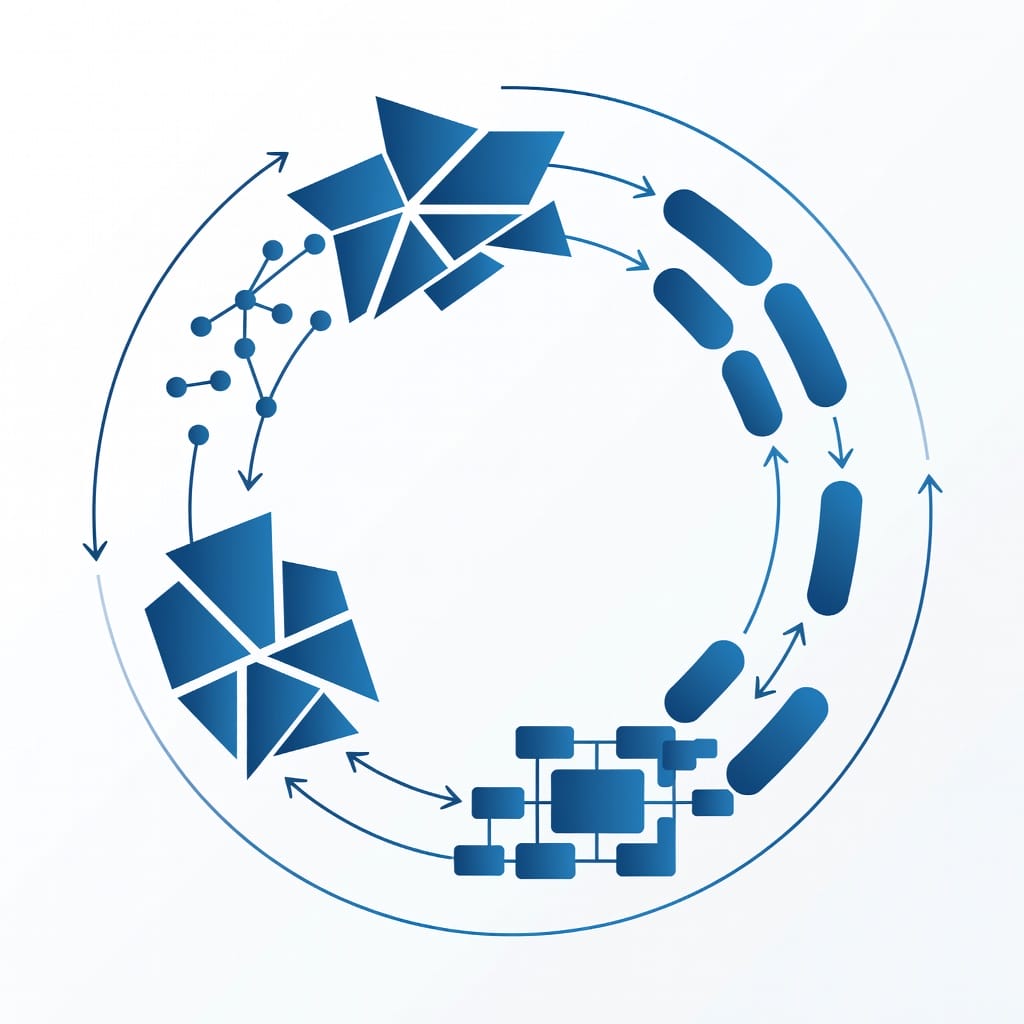
Bridging this gap requires what I call a “strategy-to-execution cascade.” Each level of the organization translates the strategy into the next level of detail. The VP of Sales turns the company strategy into a sales strategy. The sales directors turn that into territory plans. The managers turn those into individual rep plans. Every rep should be able to answer: “How does my daily activity map to the company strategy?”
Ignoring Channel Fit
Not every sales channel works for every product. Yet I see companies pour resources into channels that their market does not use. Cold calling works brilliantly for high-ACV enterprise deals. It is a waste of time for $50/month SaaS products. Content marketing drives inbound for complex, considered purchases. It is overkill for impulse-buy products.
The mistake is copying another company’s channel strategy without understanding why it works for them. HubSpot’s inbound strategy works because they sell to marketers who consume content. Cognism’s outbound strategy works because they sell to salespeople who are accustomed to being prospected. Your channel strategy must match your buyer’s behavior, not your competitor’s tactics.
The One-and-Done Planning Fallacy
Many teams treat sales strategy as an annual exercise. They build a plan in January and follow it until December, regardless of what the market does. This is a recipe for failure.
The best sales strategies are living documents. They are reviewed monthly, adjusted quarterly, and fundamentally re-evaluated annually. Market conditions change. Competitors emerge. Your product evolves. Your strategy must evolve with them.
Underinvesting in Sales Enablement
A strategy is only as good as the team’s ability to execute it. Yet most companies underinvest in sales enablement by a factor of 3x to 5x. They spend $100,000 on a CRM but $10,000 on training. They buy a sales engagement platform but never teach reps how to use it effectively.
Sales enablement is not just training. It is content, tools, processes, coaching, and measurement – all aligned to the strategy. Companies that invest adequately in enablement see 15-20% higher quota attainment.
The Anatomy of a Modern B2B Sales Strategy
Ideal Customer Profile (ICP) and Total Addressable Market (TAM)
Every sales strategy begins with a clear definition of who you sell to. Your ICP is not “any company that needs our product.” It is a specific, narrow profile of the company that gets the most value from your solution, buys with the least friction, and stays the longest.
A well-defined ICP includes firmographic criteria (industry, company size, revenue, location), technographic criteria (what tools they already use), and behavioral criteria (growth stage, recent funding, hiring patterns). The best ICPs also include a “negative ICP” – the companies that look good on paper but consistently churn or require excessive support.
Your TAM calculation should be grounded in reality. Too many startups inflate their TAM by counting every company in an industry. A more honest approach: start with the total number of companies that match your ICP, then apply a realistic penetration rate based on your sales capacity and competitive position.
Go-to-Market Motion Selection: PLG, SLG, or Hybrid
The choice between product-led growth (PLG), sales-led growth (SLG), and a hybrid model is perhaps the most consequential strategic decision a B2B company makes.
Sales-led growth is the traditional model: SDRs prospect, AEs demo and close, CS teams onboard and expand. It works best for high-ACV deals ($20K+) with complex buying processes involving multiple stakeholders. The advantage is control – you can target specific accounts and tailor your approach. The disadvantage is cost – sales teams are expensive, and customer acquisition costs (CAC) are high.
Product-led growth lets the product drive acquisition, retention, and expansion. Users sign up, experience value, and upgrade without ever talking to a salesperson. PLG works best for low-ACV products ($5-500/month) with short time-to-value. The advantage is efficiency – CAC is dramatically lower. The disadvantage is lack of control – you cannot force adoption in specific target accounts.
Hybrid models combine both approaches. A common pattern: PLG for top-of-funnel acquisition and self-serve conversion, with sales-assisted conversion for high-intent or high-ACV segments. Another pattern: PLG for initial adoption, then sales-led expansion into the organization.
The data is clear on one point: pure PLG works for a narrow set of products. Most B2B companies need some form of sales involvement. The question is where and how much.
Account-Based vs. Broad-Based Strategy
Account-based selling (ABS) targets a defined list of high-value accounts with personalized outreach. Broad-based selling targets a wide market with standardized messaging. The right choice depends on your ACV and market concentration.
ABS works when you have fewer than 500 target accounts and each account represents $50K+ in potential revenue. It requires deep research, personalized messaging, and multi-channel orchestration. The ROI is high per account but the total volume is limited.
Broad-based selling works when you have thousands of potential customers and each deal is under $20K. It relies on volume, efficiency, and scalable systems. The ROI per account is lower, but the aggregate potential is much larger.
Many mature organizations run both strategies in parallel: ABS for enterprise accounts and broad-based for mid-market and SMB. The key is having separate playbooks, separate metrics, and often separate teams for each.
Territory Design and Resource Allocation
Territory design is one of the most underrated elements of sales strategy. Get it right, and your team operates efficiently. Get it wrong, and you create coverage gaps, internal competition, and inequitable quota distribution.
Modern territory design considers multiple factors: geographic density, account potential, industry verticals, existing relationships, and rep capacity. The best approach uses data science to model territory value and balance workload across reps.
A rule of thumb I have used across multiple companies: a single rep can effectively manage 50-80 target accounts in an ABS motion, or 200-400 accounts in a broad-based motion. Beyond these numbers, coverage becomes superficial and opportunities are missed.
Resource allocation follows territory design. High-potential territories get more SDR support, more marketing budget, and more executive attention. Low-potential territories get automated outreach and self-serve resources. Not all accounts are created equal, and your resource allocation should reflect that.
Sales Strategy Frameworks That Actually Work
The MEDDIC Framework for Deal Qualification
MEDDIC – Metrics, Economic Buyer, Decision Criteria, Decision Process, Identify Pain, Champion – is the gold standard for enterprise deal qualification. It forces reps to gather the information needed to forecast accurately and prioritize effectively.
The framework works because it addresses the six dimensions that determine whether a deal will close. Without understanding the economic buyer, you are selling to a gatekeeper. Without understanding the decision process, you cannot navigate the internal politics. Without identifying the champion, you have no internal advocate.
In practice, MEDDIC should be embedded in your CRM as required fields at each stage of the pipeline. Reps should not be able to move a deal to “closed won” without completing the MEDDIC checklist. This creates discipline and improves forecast accuracy dramatically.
The Challenger Sale Model
The Challenger Sale, based on CEB’s research of thousands of B2B sales reps, identifies five rep profiles: the Challenger, the Hard Worker, the Relationship Builder, the Lone Wolf, and the Problem Solver. Challengers consistently outperform the others.
Challengers do three things differently. First, they teach their customers – bringing new insights that challenge the customer’s thinking. Second, they tailor their message to different stakeholders. Third, they take control of the sale, pushing back when necessary and driving the process forward.
Building a Challenger sales organization requires more than hiring Challenger reps. It requires creating insight-led content, training reps on how to teach and tailor, and building a culture that rewards constructive tension rather than mere likability.
The Sandler Sales System
The Sandler system is built on a counterintuitive premise: the salesperson should act as a consultant, not a closer. It emphasizes qualification over presentation, and it uses a structured “pain-to-budget-to-decision” framework.
The key Sandler concepts include: up-front contracts (agreeing on the process before starting), negative reverse (asking “is this the wrong fit for you?” to surface objections), and the “pain funnel” (drilling down from surface problems to underlying pain).
Sandler works particularly well for complex B2B sales where trust and credibility are essential. It is less effective for transactional sales where speed matters more than relationship depth.
The Value Selling Framework
Value selling shifts the conversation from features and price to business outcomes and ROI. Instead of saying “our platform has AI-powered sequencing,” you say “our platform helps your team book 40% more meetings in the same number of hours.”
The framework requires deep understanding of your customer’s business. What metrics matter to them? What does a win look like in their terms? How do they measure success?
Effective value selling uses a structured ROI calculator that both the rep and the prospect can work through together. The calculator should be simple enough to use in a conversation but rigorous enough to withstand CFO scrutiny.
The Command of the Message Framework
Command of the Message, developed by Force Management, is a complete sales methodology built around three core elements: a value proposition that differentiates you from alternatives, a set of “reasons to believe” that prove your claims, and a “capabilities-led” approach that maps your features to customer priorities.
The framework is particularly strong for competitive deals where differentiation is critical. It forces reps to articulate not just what they do, but why it matters and why it is different from every other option the buyer is considering.
Building Your Sales Strategy: A Step-by-Step Playbook
Step 1: Define Your Revenue Target and Growth Model
Start with the number. What revenue do you need to generate this year, and what growth rate does that imply? Work backward from that target to determine how many deals you need, at what average deal size, with what conversion rates.
This exercise reveals the math of your business. If you need $10M in new ARR and your average deal is $25K, you need 400 new customers. If your demo-to-close rate is 20%, you need 2,000 demos. If your meeting-to-demo rate is 50%, you need 4,000 meetings. If your connect-to-meeting rate is 10%, you need 40,000 connects.
The math exposes whether your strategy is realistic. If the required activity volume exceeds your team capacity, you need to either increase capacity, improve conversion rates, or raise average deal size.
Step 2: Conduct a Sales Process Audit
Before building a new strategy, understand your current reality. Map your existing sales process from lead generation to closed won. Measure conversion rates at every stage. Identify where deals stall and where they accelerate.
A thorough audit examines: lead sources and their conversion rates, pipeline velocity at each stage, win rates by segment and by rep, average deal size by source and by segment, sales cycle length, and churn rate by acquisition channel.
The audit almost always reveals surprises. The channel you thought was your best performer is actually your worst. The segment you have been ignoring is your highest-converting. The stage where most deals die is not where you expected. For a deeper look at how to source and validate the data that feeds your sales strategy, check out our guide to B2B marketing data.
Step 3: Define Your ICP and Build Ideal Account Profiles
With your audit complete, define your ICP with precision. Use your best-performing customers as the model. What do they have in common? Industry, company size, revenue range, tech stack, growth rate, funding stage, decision-maker title?
Build a firmographic profile, a technographic profile, and a behavioral profile. Then create a negative ICP – the companies that look good but consistently underperform.
For each ICP segment, build an Ideal Account Profile (IAP) that includes the specific companies you want to target. This becomes the foundation for your prospecting list, your marketing campaigns, and your territory assignments.
Step 4: Choose Your Sales Motion and Channel Mix
Based on your ICP, ACV, and market dynamics, choose your primary sales motion. High ACV with complex buying processes favors SLG with ABS. Low ACV with self-serve buyers favors PLG. Mid-market with moderate complexity favors hybrid.
Your channel mix should include 2-3 primary channels and 2-3 secondary channels. The primary channels get the majority of your investment. The secondary channels are experiments that could become primary if they prove out.
A common mistake is spreading too thin across too many channels. It is better to dominate two channels than to dabble in six. Mastery comes from depth, not breadth.
Step 5: Design Your Sales Process Stages
Define the stages of your sales process with clear entry and exit criteria for each. A typical B2B sales process includes: Prospecting, Qualification, Discovery, Demo/Presentation, Proposal, Negotiation, and Closed Won.
Each stage must have specific criteria that must be met before a deal can advance. For example, a deal cannot move from Qualification to Discovery without a confirmed budget, a identified decision-maker, and a documented pain point.
The stage definitions should be embedded in your CRM with required fields and checklists. This creates consistency across the team and enables accurate pipeline reporting.
Step 6: Build Your Sales Tech Stack
Your tech stack should support your strategy, not define it. Start with the process and work backward to the tools. The core stack includes: a CRM (the system of record), a sales engagement platform (for outreach sequences), a data enrichment tool (for prospect data), and an analytics platform (for visibility).
For cold email outreach specifically, your tech stack must include deliverability infrastructure. This is where most teams fail. They buy a sales engagement tool, upload their prospect lists, and start sending – only to land in spam folders.
A proper cold email stack includes: domain authentication (SPF, DKIM, DMARC), a warmup pool to build sending reputation, a unified inbox for reply management, and deliverability monitoring. Platforms like Mystrika provide all of these in a single solution, starting at $15/month, with a warmup pool that gradually builds domain reputation before you start sending at scale.
Step 7: Hire, Train, and Compensate for the Strategy
Your strategy determines your hiring profile. An ABS strategy requires reps who can research deeply and build relationships. A high-volume outbound strategy requires reps who can work efficiently and handle rejection. A consultative strategy requires reps who can ask good questions and diagnose problems.
Compensation should reinforce the strategy. If your strategy emphasizes new logo acquisition, compensate heavily on first deals. If your strategy emphasizes expansion, compensate on upsells and renewals. If your strategy emphasizes speed, compensate on cycle time.
Training should be continuous, not one-time. The best sales organizations invest 2-3 hours per week per rep in training, coaching, and skill development. This is not a cost – it is the highest-ROI investment you can make.
Step 8: Establish Your Measurement Framework
Define the metrics that matter at each level of the organization. At the company level: revenue, CAC, LTV, net revenue retention. At the team level: pipeline generation, conversion rates, average deal size, sales cycle length. At the rep level: activity metrics, conversion metrics, revenue metrics.
The key is leading indicators versus lagging indicators. Revenue is a lagging indicator – by the time you see it, it is too late to change it. Leading indicators – meetings booked, pipeline created, proposals sent – tell you where you will be in 30-90 days.
Build a dashboard that tracks both. Review it weekly at the team level and daily at the rep level. The goal is not micromanagement – it is early detection of trends that need attention.

The Role of Cold Email in Your Sales Strategy
Why Cold Email Is a Core Sales Strategy Pillar
Cold email is not a tactic – it is a strategic channel that, when executed properly, provides the highest ROI of any outbound sales activity. The economics are compelling: a well-run cold email program can deliver 30-50 meetings per month per SDR at a cost of pennies per contact.
The strategic value of cold email goes beyond cost. It is the most scalable outbound channel. A single SDR can send thousands of personalized emails per week. It is the most measurable channel – every open, click, and reply is tracked. And it is the most controllable channel – you own the list, the message, and the timing.
In a world where buyers are increasingly resistant to cold calls and social selling requires months of relationship building, cold email remains the fastest path from zero to conversation.
Email Deliverability: The Hidden Strategic Advantage
Here is the truth that most sales strategy articles ignore: your cold email strategy is only as good as your deliverability. You can have the perfect ICP, the perfect message, and the perfect offer – but if your emails land in spam, none of it matters.
Deliverability is a strategic issue, not a technical one. It determines whether your strategy can be executed at all. And deliverability is not a one-time setup – it requires ongoing management.
The key components of deliverability strategy include: domain reputation management (warming up new domains gradually), sending infrastructure (proper authentication and IP rotation), list hygiene (removing invalid and risky addresses), engagement monitoring (tracking bounce rates, spam complaints, and reply rates), and content optimization (avoiding spam triggers in your copy).
Platforms like Mystrika include a built-in warmup pool that automatically builds domain reputation before you start sending. This is not a nice-to-have – it is the difference between a campaign that generates pipeline and a campaign that generates spam complaints.
Cold Email Sequencing Strategy
The sequence is where strategy meets execution. A well-designed sequence has multiple touches across multiple days, with each touch adding value rather than just asking for a meeting.
The classic mistake is the “spray and pray” sequence: five identical emails asking “do you have 15 minutes to chat?” This is not a strategy – it is noise.
A strategic sequence follows a structure: the first email provides value (an insight, a resource, a relevant observation), the second email deepens the value (a case study, a data point), the third email addresses a specific pain point, the fourth email offers a low-commitment next step, and the fifth email is a polite break-up.
Each email should be personalized to the prospect’s role, industry, or company situation. Personalization at scale requires the right tools – a sales engagement platform with AI-powered personalization capabilities.
Integrating Cold Email with Multi-Channel Outreach
Cold email is most effective when integrated with other channels. A prospect who receives a cold email, sees a LinkedIn post from the same rep, and then gets a personalized video is far more likely to respond than a prospect who only receives emails.
The integration should be orchestrated, not random. The sequence should specify which channel is used at which touch. A common pattern: email on day 1, LinkedIn connection request on day 3, phone call on day 7, email with new content on day 10, LinkedIn message on day 14.
The key is tracking across channels. You need a unified view of all touches across all channels for each prospect. This is where a unified inbox becomes essential – it ensures that no matter which channel a prospect responds on, the rep sees the full context.
Sales Tech Stack Strategy
The Core Stack: CRM, Engagement, and Data
Every sales team needs three core systems: a CRM (the system of record for all customer data and pipeline management), a sales engagement platform (for executing outreach sequences across email, phone, and social), and a data provider (for prospect lists, enrichment, and intent signals).
The CRM is non-negotiable. It is where your pipeline lives, where your forecasts are built, and where your historical data is stored. The choice of CRM matters less than the discipline of using it consistently.
The sales engagement platform is where your outbound strategy comes to life. It should support multi-channel sequences, A/B testing, personalization at scale, and analytics. For cold email specifically, it must include deliverability features.
The data provider feeds your prospecting. It should provide accurate contact data, company information, and ideally intent signals that tell you which accounts are in-market.
The Email Deliverability Stack
Most sales tech stack discussions ignore deliverability infrastructure. This is a strategic error. Your entire outbound engine depends on your emails reaching inboxes.
The deliverability stack includes: domain authentication (SPF, DKIM, DMARC records configured correctly), a warmup tool (to gradually build sending reputation on new domains), bounce detection and list cleaning (to remove invalid addresses before they damage your reputation), spam trap monitoring (to detect deliverability problems before they become critical), and reply management (to ensure responses are handled promptly, which improves sender reputation).
Mystrika consolidates most of these functions into a single platform. Its warmup pool gradually increases sending volume on new domains, its unified inbox ensures no reply goes unanswered, and its AI writer helps craft messages that avoid spam triggers while maintaining personalization.
AI and Automation in the Sales Stack
AI is transforming the sales tech stack, but the key is knowing where to apply it and where to keep human judgment.
AI excels at: personalization at scale (generating personalized email openings based on prospect research), sequence optimization (determining the best send times, subject lines, and follow-up cadences), lead scoring (predicting which prospects are most likely to convert), conversation intelligence (analyzing call recordings for coaching insights), and forecasting (using historical data to predict future revenue).
AI struggles with: relationship building (no AI can replace genuine human connection), strategic thinking (AI cannot set your sales strategy), complex negotiation (AI cannot navigate multi-stakeholder enterprise deals), and creative problem-solving (AI cannot invent novel solutions to unique customer problems).
The winning approach is AI-augmented, not AI-automated. Use AI to handle the repetitive, data-intensive tasks. Keep humans in the loop for the relationship and strategy work.
Case Studies: Sales Strategy Transformations
Case Study 1: From Spray-and-Pray to Precision Outbound
A B2B SaaS company selling to mid-market HR teams was generating $3M in ARR with a team of 8 SDRs and 6 AEs. Their outbound strategy was volume-based: each SDR sent 200+ emails per day with minimal personalization. Response rates were below 0.5%. Pipeline was inconsistent. Rep turnover was 40% annually.
The transformation began with a strategic reset. We defined a precise ICP: companies with 200-1,000 employees in professional services, with an existing HRIS but no performance management solution. We built a target list of 1,200 accounts.
We restructured the sales process around a consultative, insight-led approach. SDRs were trained to research each prospect and send highly personalized emails referencing specific company challenges. The email volume dropped to 40 per day per SDR, but response rates increased to 8%.
The tech stack was rebuilt around deliverability. We implemented proper domain authentication, used a warmup pool to build reputation, and deployed a unified inbox to ensure every reply was handled within 30 minutes.
Results after 6 months: Pipeline increased by 340%. Average deal size grew from $12K to $22K. SDR-to-meeting conversion rate improved from 2% to 14%. Revenue grew from $3M to $5.2M ARR. Rep turnover dropped to 12%.
Case Study 2: The PLG-to-SLG Transition
A developer tools company had grown to $8M ARR through a pure PLG motion. Users signed up for the free tier, experienced the product, and upgraded to paid plans. But growth had plateaued. The self-serve conversion rate was stuck at 3%, and the company was missing the enterprise segment entirely.
The strategic challenge was introducing sales without breaking the PLG flywheel. The solution was a hybrid model: PLG for acquisition and self-serve conversion, with a sales-assisted layer for high-intent and enterprise prospects.
We implemented a lead scoring system that identified accounts showing product-qualified signals: multiple users from the same company, usage above certain thresholds, and specific feature adoption patterns. These accounts were routed to a new enterprise sales team.
The sales team used a consultative approach, focusing on expanding usage across the organization rather than closing individual deals. The pricing model was restructured to support both self-serve credit card purchases and negotiated enterprise contracts.
Results after 9 months: Total ARR grew to $14M. Enterprise segment contributed $4.5M in new ARR. Self-serve conversion rate improved to 5.2% (the sales-assisted layer created social proof that helped self-serve buyers convert). Customer churn dropped from 8% to 4.5% monthly.
Case Study 3: Territory Redesign That Unlocked 2x Growth
A cybersecurity company with $12M ARR had a traditional geographic territory model: East, Central, West. Each region had a team of 4-5 reps covering all industries and all account sizes. The problem was massive inequity: the West team was hitting 180% of quota while the East team was at 60%. Reps in low-performing territories were quitting.
We redesigned territories using a data-driven approach. Instead of geography, we used account potential (based on company size, tech stack fit, and intent signals) as the primary dimension. Each rep was assigned 60 target accounts with similar total potential value.
We also introduced industry specialization. Reps with experience in financial services covered fintech and banking accounts. Reps with healthcare backgrounds covered health tech. This improved relevance and credibility in prospect conversations.
Results after 4 months: Overall quota attainment improved from 92% to 118%. The previously underperforming East team went from 60% to 105% attainment. Sales cycle length decreased by 22% because reps were more relevant to their prospects. Revenue grew to $16.5M ARR within 12 months.
Measuring What Matters: Sales Strategy KPIs
Leading Indicators vs. Lagging Indicators
Lagging indicators tell you what already happened. Revenue, closed deals, and customer count are lagging indicators. They are essential for reporting but useless for course correction.
Leading indicators predict future outcomes. Meetings booked, pipeline created, proposal velocity, and email reply rates are leading indicators. They tell you where your revenue will be in 30-90 days.
A healthy sales organization tracks both. The dashboard should show leading indicators daily, conversion metrics weekly, and lagging indicators monthly. The goal is to spot trends in the leading indicators before they show up in the lagging indicators.
Pipeline Velocity and Coverage Ratios
Pipeline velocity measures how quickly deals move through your pipeline. The formula is: number of opportunities x average deal value x win rate / sales cycle length. Improving any of these four variables increases velocity.
Coverage ratios measure whether you have enough pipeline to hit your targets. The standard metric is pipeline-to-quota ratio: total pipeline value divided by quota. A ratio of 3x is the minimum for predictable revenue. A ratio of 5x is healthy. Below 3x, you are at risk of missing target.
Stage-specific coverage is equally important. You need enough pipeline at each stage to account for the conversion rates between stages. If your close rate from demo to won is 25%, you need 4x your target in the demo stage.
Unit Economics: CAC, LTV, and Payback Period
Your sales strategy must produce acceptable unit economics. Customer Acquisition Cost (CAC) should be recovered within 12 months for most B2B SaaS businesses. Lifetime Value (LTV) should be at least 3x CAC.
CAC includes all sales and marketing costs: salaries, tools, advertising, and overhead. Divide total cost by the number of new customers acquired in the period. If your CAC is too high, you need to either reduce costs or increase conversion rates.
LTV is average revenue per customer multiplied by average customer lifetime. For subscription businesses, this is ARPU divided by churn rate. If your LTV:CAC ratio is below 3x, your sales strategy is not sustainable.
Activity Metrics That Actually Predict Success
Not all activity metrics are created equal. The metrics that predict success vary by role and by strategy.
For SDRs in an outbound motion, the key metrics are: meetings booked (the output metric), personalized emails sent (the quality input metric), and reply rate (the efficiency metric). Total emails sent, without personalization, is a vanity metric.
For AEs, the key metrics are: demo-to-close rate (the conversion metric), average deal size (the value metric), and sales cycle length (the efficiency metric). Number of demos, without conversion context, is meaningless.
For the sales leader, the key metrics are: pipeline coverage ratio, team quota attainment, and CAC payback period. These tell you whether the strategy is working at the system level.
Key Takeaways
- A documented sales strategy is the single highest-leverage investment a B2B company can make. Companies with one grow 2.8x faster than those without.
- The most common failure modes are the strategy-tactics gap, ignoring channel fit, the one-and-done planning fallacy, and underinvesting in enablement.
- Your ICP definition, GTM motion selection (PLG vs SLG vs hybrid), and territory design are the three most consequential strategic decisions you will make.
- Cold email is a strategic channel, not just a tactic – but it only works if you invest in deliverability infrastructure. Platforms like Mystrika provide the warmup pool, unified inbox, and AI writer needed to execute a modern cold email strategy at scale.
- The best sales strategies are living documents, reviewed monthly and adjusted quarterly. They are built on data, executed with discipline, and measured with both leading and lagging indicators.
- Sales tech stack strategy must include deliverability infrastructure. Without it, your outbound engine cannot function.
- AI should augment your sales team, not replace it. Use AI for personalization, sequencing, and analytics. Keep humans for relationships, strategy, and negotiation.
Frequently Asked Questions
What is the difference between a sales strategy and a sales plan?
A sales strategy is the high-level approach to winning customers – it defines your target market, your value proposition, your sales motion, and your competitive positioning. A sales plan is the operational execution of that strategy – it specifies quotas, territories, activities, and timelines. The strategy comes first; the plan executes it.
How often should I update my sales strategy?
Your sales strategy should be reviewed monthly, adjusted quarterly, and fundamentally re-evaluated annually. Monthly reviews focus on leading indicators and tactical adjustments. Quarterly reviews examine whether the strategy is producing the expected results. Annual reviews question the fundamental assumptions of the strategy.
What is the best sales strategy for a B2B SaaS startup?
For most B2B SaaS startups under $5M ARR, the best strategy is a focused outbound motion targeting a narrow ICP with personalized, insight-led cold email. This provides the fastest path to revenue with the lowest initial investment. As you grow, you can add inbound, PLG, and enterprise motions.
How do I know if my sales strategy is working?
You know your sales strategy is working when you see predictable, repeatable revenue growth. Specific signals include: pipeline coverage ratio above 3x, win rates above 20%, sales cycle length decreasing or stable, CAC payback period under 12 months, and quota attainment above 80% across the team.
Should I use cold email in my sales strategy?
Yes, if you are selling B2B and your ACV is above $500/month. Cold email is the most scalable, measurable, and controllable outbound channel available. The key is doing it right: invest in deliverability, personalize at scale, and integrate with other channels. Platforms like Mystrika make this accessible at any budget, with plans starting at $15/month that include warmup, sequencing, and a unified inbox.
What is the most important metric in a sales strategy?
Pipeline coverage ratio is the single most important metric. It tells you whether you have enough potential revenue in your pipeline to hit your target. Everything else – activity metrics, conversion rates, deal size – feeds into this number. If your coverage ratio is below 3x, nothing else matters until you fix it.
How do I choose between PLG and SLG?
Choose PLG if your product has a short time-to-value (under 5 minutes), your ACV is under $500/month, and your target users can evaluate and buy without organizational approval. Choose SLG if your ACV is above $20K, your sales cycle involves multiple stakeholders, and your product requires implementation support. Choose hybrid if you fall in between or want to capture both segments.
What role does email deliverability play in sales strategy?
Email deliverability is the foundation of any cold email strategy. If your emails do not reach the inbox, your strategy cannot execute. Deliverability requires proper domain authentication, gradual warmup, list hygiene, and engagement monitoring. It is not a one-time setup – it requires ongoing management. Mystrika’s built-in warmup pool and deliverability features handle this automatically, so your team can focus on messaging and conversion rather than technical infrastructure.
Looking to build a sales strategy that includes cold email as a core pillar? Mystrika provides the infrastructure you need – warmup pool, AI-powered sequencer, unified inbox, and whitelabel options – starting at $15/month. No setup fees, no contracts, no deliverability headaches.