

What Is a Sales Objection?
A sales objection is a prospect’s explicit statement of concern, hesitation, or barrier that prevents them from moving forward in the buying process. Unlike a flat-out rejection (“We will never buy this”), an objection is a request for more information, reassurance, or a different perspective. Analysis of over 5,000 recent sales calls in B2B environments found that the top 5 objections account for 73% of all deal-killing moments.
As a sales leader who has trained hundreds of reps over the past decade, I’ve seen firsthand that treating an objection as an attack is the fastest way to lose a deal. Instead, the best reps treat objections as signposts guiding them to exactly what the prospect needs to hear.
The Anatomy of an Objection
Every objection has three layers: the surface statement, the underlying concern, and the emotional driver. When a prospect says “It’s too expensive,” the surface statement is about price. The underlying concern is about value and ROI. The emotional driver is fear of making a bad decision that could get them in trouble with their boss.
Your job is not to argue with the surface statement. Your job is to address the emotional driver and the underlying concern. This is the difference between a transactional salesperson and a trusted advisor.
Why Most Reps Fail at Objection Handling
The number one mistake I see in sales training is teaching reps to memorize scripts without understanding the psychology behind the objection. When a rep memorizes a rebuttal but doesn’t understand why the prospect is objecting, they sound robotic. The prospect feels unheard, and the deal dies.
The second most common mistake is treating every objection as a battle to be won. Sales is not debate club. If you “win” the argument but lose the relationship, you have lost the deal.
The third mistake is failing to prepare. According to research from Gong, reps who prepare specific objection responses before a call close 28% more deals than those who wing it. Preparation is not optional. It is the single highest-leverage activity in objection handling.
Why Sales Objections Are Actually Buying Signals
If a prospect didn’t care, they would simply ghost you. An objection means they are engaged enough to consider the logistics, risks, and implications of your solution. It highlights the gap between their current understanding and the value you provide.
Smokescreens vs. Real Conditions
Not all objections are created equal. It’s crucial to distinguish between a smokescreen (an excuse to get off the phone) and a real condition (a genuine business barrier).
- Smokescreen: “We don’t have the budget.” (Often means: “You haven’t proven the ROI yet.”)
- Real Condition: “Our budget is locked until Q3 because of the recent merger.” (A factual, verifiable barrier.)
Your goal isn’t just to “handle” the objection, but to isolate it and understand its root cause.
The Objection Spectrum
I categorize objections on a spectrum from low engagement to high engagement:
1. Ghosting / No Response – Zero engagement. The prospect isn’t even thinking about you.
2. Smokescreens – Low engagement. The prospect wants to end the conversation politely.
3. Surface Objections – Medium engagement. The prospect is engaging but skeptical.
4. Deep Objections – High engagement. The prospect has done their homework and has specific concerns.
5. Conditions – Highest engagement. The prospect wants to buy but faces real barriers.
The higher the engagement level, the closer you are to closing the deal. A deep objection about implementation timelines is infinitely better than a polite “send me some info” smokescreen.
How to Identify a Smokescreen
Smokescreens are the most dangerous objections because they look real but aren’t. Here are three ways to tell if an objection is a smokescreen:
1. The objection is vague. “We’re not interested right now” is a smokescreen. “We’re in the middle of a Salesforce migration and can’t evaluate new tools until Q4” is a real condition.
2. The prospect won’t engage with your response. If you address the objection and the prospect still won’t move forward, it was probably a smokescreen.
3. The objection changes. If the prospect says “it’s too expensive” and then when you address price, they say “it’s not the right time,” they are throwing smokescreens.
The best way to handle a suspected smokescreen is to call it out gently using the Sandler upfront contract technique: “I’m getting the sense that there might be something else going on here. Is that fair to say?”

The 3 Core Frameworks for Handling Objections
To scale objection handling across a sales team, you need a repeatable framework. Here are the three most effective models used by top-performing organizations.
1. The LAER Model
Developed by Carew International, the LAER model focuses on emotional intelligence and active listening.
- Listen: Let the prospect finish. Don’t interrupt.
- Acknowledge: Validate their concern (“I completely understand why implementation time is a worry for you”).
- Explore: Ask clarifying questions to uncover the root cause (“Can you tell me more about your experience with previous software rollouts?”).
- Respond: Provide the solution, evidence, or reframe only after you fully understand the issue.
The LAER model is particularly effective for complex B2B sales where the prospect has multiple stakeholders and competing priorities. It forces the rep to slow down and gather information before jumping to a solution.
2. The Challenger Sale Approach
The Challenger model teaches reps to take control of the conversation by reframing the prospect’s worldview. When a prospect objects, the Challenger doesn’t just agree; they offer a new perspective.
Example: If a prospect says, “Your solution is too expensive,” a Challenger might respond, “It is an investment. But the real cost is the $50,000 you’re losing every month in inefficient workflows. Let’s look at the math on staying with the status quo.”
The Challenger approach works best when you have strong data and case studies to back up your reframe. It is less effective with prospects who are highly risk-averse or who need consensus from a large buying committee.
3. The Sandler Selling System (Upfront Contracts)
Sandler emphasizes pre-empting objections before they happen. By establishing an “upfront contract,” you agree on the rules of the engagement.
Example: “Typically, when we show this to VP’s of Sales, they love the tool but worry about SDR adoption. Is that something you’re concerned about?” Bring the elephant into the room early.
The Sandler approach is excellent for shortening sales cycles because it surfaces objections early, before you invest weeks in a deal that was never going to close.
Which Framework Should You Use?
The best sales organizations train their teams on all three frameworks and teach reps when to use each one:
| Scenario | Best Framework |
|---|---|
| Prospect is emotional or frustrated | LAER (Listen, Acknowledge, Explore, Respond) |
| Prospect is complacent or stuck in status quo | Challenger (Reframe the problem) |
| Prospect is hiding concerns or being vague | Sandler (Upfront contract to surface hidden objections) |
| Prospect has a specific, factual concern | LAER or Challenger depending on the concern |
| Prospect is early in the buying process | Sandler (Set expectations upfront) |
20+ Common Sales Objections and How to Crush Them
Here is a rapid-fire breakdown of the most common B2B sales objections and the proven responses to handle them effectively.
| Objection | The Underlying Meaning | Proven Response Script |
|---|---|---|
| “It’s too expensive.” | “I don’t see the ROI to justify the cost.” | “I hear you. If cost wasn’t an issue, is this the exact solution you need? Let’s look at the revenue this will generate compared to the price.” |
| “We don’t have budget.” | “This isn’t a priority right now.” | “That’s common this time of year. If we could show you a way this pays for itself within 90 days, would it make sense to carve out the budget?” |
| “We already use [Competitor].” | “Switching sounds like a headache.” | “Many of our best clients started with [Competitor]. What’s the one thing you wish they did better?” |
| “Send me some information.” | “I want to get off the phone.” | “I’d be happy to. So I don’t spam you with a 50-page PDF, what specific area are you most interested in?” |
| “I need to talk to my boss.” | “I lack the authority (or I’m scared to pull the trigger).” | “Makes total sense. What do you think their biggest concern will be? Let’s prepare for that together.” |
| “Call me back next quarter.” | “I don’t have the urgency right now.” | “I can certainly do that. Usually, when people push to next quarter, it’s because X or Y is happening. Is that the case for you?” |
| “We’re doing great as is.” | “I’m complacent and fear change.” | “Glad to hear it! How are you handling [specific industry problem that your product solves]?” |
| “Your company is too new/small.” | “I perceive risk in going with you.” | “I appreciate the candor. Our size actually allows us to provide concierge-level support that legacy vendors can’t match. Would you like to speak with a current client?” |
| “I’ve never heard of you.” | “You lack brand trust.” | “That’s exactly why I reached out. We fly under the radar, but we power the backend for companies like [Client A] and [Client B].” |
| “We don’t have the bandwidth to implement this.” | “My team is overwhelmed.” | “I completely understand. That’s why our onboarding team handles 90% of the heavy lifting. Can I show you what the first 14 days look like?” |
| “It doesn’t integrate with our current tech stack.” | “This will break my workflow.” | “Integration is critical. While we don’t have a native integration for X, our robust API and Zapier connections handle this seamlessly for 40% of our clients. Let me show you.” |
| “We tried something like this and it failed.” | “I’ve been burned before.” | “That’s frustrating. Do you mind sharing what specifically went wrong last time? I want to make sure we don’t repeat their mistakes.” |
| “Your feature set is missing X.” | “I have a specific requirement.” | “You’re right, we don’t do X. We chose to focus 100% on Y to be the best in the world at it. How critical is X to your overall goal?” |
| “I’m not the right person.” | “You mapped the account wrong.” | “My apologies. Who typically handles initiatives related to [Value Proposition]?” |
| “We build this internally.” | “We prefer in-house control.” | “Building it in-house is impressive. How much engineering time is currently dedicated to maintaining it rather than building core product features?” |
| “I need a guarantee.” | “I can’t risk my reputation on this.” | “While we can’t guarantee market conditions, we do guarantee our uptime and SLA. Plus, we offer a 30-day opt-out if we don’t hit the agreed-upon KPIs.” |
| “We’re in a contract for another year.” | “My hands are tied legally/financially.” | “Understood. If you knew you could increase conversions by 20% right now, would it be worth overlapping contracts for a few months? If not, let’s establish what you want in your next vendor for next year.” |
| “I don’t like being sold to.” | “Your approach is too aggressive.” | “Fair enough. I’m not here to sell you if it’s not a fit. Let’s just have a 5-minute chat to see if our problems align with your goals.” |
| “Your contract terms are too strict.” | “I need flexibility.” | “Which specific terms are giving you pause? We can often work with our legal team to find a middle ground.” |
| “I just don’t see the value.” | “You completely missed the mark.” | “That’s entirely on me for not explaining it clearly. What is the number one priority for your department this quarter?” |
| “We need to see a pilot first.” | “We want to test before committing.” | “A pilot makes sense. Let’s define what success looks like in the first 30 days so we both know if it’s working.” |
| “Your pricing is confusing.” | “I don’t understand what I’m paying for.” | “Let me simplify it. You pay one flat fee for [Core Feature], and [Add-on] is usage-based. For a company your size, the average is about $X per month.” |

Pre-Empting Objections in Cold Email Outreach
The best way to handle an objection is to prevent it from ever being voiced. In modern sales, this starts long before you get on a call – it starts in your cold email outreach.
Cold email objection pre-emption involves addressing the most common concerns right in your initial sequence. If your prospects usually worry about implementation time, your second follow-up email should highlight a case study of a 24-hour setup.
The Objection Pre-Emption Sequence
Here is a proven 4-email sequence structure that pre-empts the most common objections:
Email 1: The Value Hook
Focus on the problem, not the product. Pre-empt the “we don’t need it” objection by leading with a specific pain point. For example: “Most sales teams lose 30% of their pipeline to unhandled objections. We built a system that cuts that number in half.”
Email 2: The Social Proof
Pre-empt the “we’ve never heard of you” and “your company is too small” objections by name-dropping relevant clients or sharing a case study. “Companies like [Client Name] saw a 40% increase in close rates after implementing our objection handling framework.”
Email 3: The Implementation Story
Pre-empt the “we don’t have bandwidth” objection by detailing how fast and easy the setup is. “Our average client goes from signup to first campaign in under 48 hours. Here’s exactly what that looks like.”
Email 4: The ROI Breakdown
Pre-empt the “it’s too expensive” objection by showing the math on ROI before they ask. “If you close just two more deals per quarter using our framework, the platform pays for itself 10x over.”
Leveraging Mystrika for Objection Pre-Emption
Using a platform like Mystrika (starting at just $15/month) gives you a massive advantage here. With its advanced sequencer and AI-powered writer, you can automatically generate personalized follow-ups that address specific objections based on the prospect’s persona.
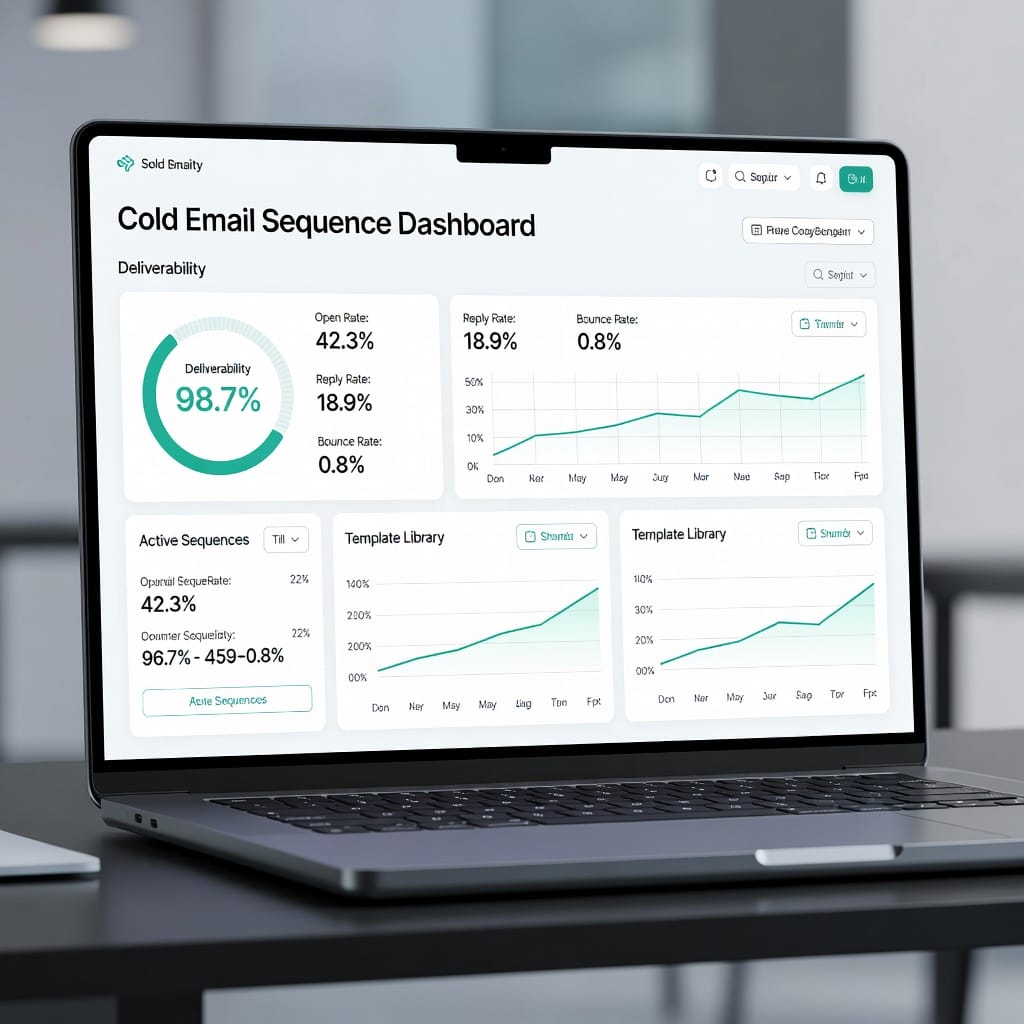
Furthermore, one of the most frustrating “technical objections” happens before the prospect even sees your message: they don’t get your emails. Email deliverability is the silent deal killer. If you aren’t using a high-quality warmup pool – like Mystrika’s best-in-class warmup network – your carefully crafted objection-handling emails will just land in spam. (If you need robust infrastructure, pairing Mystrika with services like DoYouMail for account creation and FilterBounce for verification ensures your emails actually reach the inbox).
Tracking Objections in Your CRM
One of the most underutilized strategies in sales is systematic objection tracking. Most reps handle objections in the moment and then forget about them. But if you track objections in your CRM, you can:
1. Identify patterns – Are 60% of your prospects objecting on price? That’s a positioning problem, not a sales problem.
2. Build better content – If everyone asks about integration, create a one-pager on your API capabilities.
3. Train your team – Use real objection data to run role-plays that reflect actual market conditions.
4. Improve your product – If the same feature gap keeps coming up, that’s product feedback, not just a sales objection.
Create a custom field in your CRM called “Primary Objection” and make it a required field to move a deal to “Closed Lost.” After 90 days, you will have a dataset that tells you exactly why you are losing deals and what to do about it.
Objection Tracking Template
Here is a simple template you can use to start tracking objections in your CRM today:
| Field | Description | Example |
|---|---|---|
| Primary Objection | The main reason the prospect didn’t buy | Price / Budget |
| Secondary Objection | Any additional concerns raised | Implementation timeline |
| Objection Category | Budget, Authority, Need, Timing, Competition, Product | Budget |
| Was the objection pre-empted? | Did your sequence address this concern? | No |
| Deal Stage When Objection Raised | Discovery, Demo, Proposal, Negotiation | Demo |
| Rep Response | What the rep said | Reframed as ROI conversation |
| Outcome | Did the deal close or get lost? | Lost |
Real-World Case Studies: When Objection Handling Saved the Deal
To move from theory to practice, let’s look at three anonymized case studies from my time training sales teams.
Case Study 1: The “We Have No Budget” Turnaround
The Situation: An SDR was pitching a mid-market SaaS platform. The VP of Operations loved the demo but stated, “We have zero budget left for this fiscal year. Call me in January.”
The Framework Applied (Challenger): Instead of accepting the delay, the SDR challenged the VP: “I understand the software budget is zero. But you mentioned you are paying $4,000 a month in overtime to cover manual data entry. Our platform costs $2,000 a month. If we classify this as an operational cost savings rather than a new software purchase, can we move forward?”
The Result: The VP reallocated funds from the operational budget, and the deal closed the same week.
Case Study 2: The “Send Me Some Info” Trap
The Situation: An Account Executive was consistently losing prospects early in the discovery phase when they asked to just “send some information.”
The Framework Applied (LAER): The AE shifted their approach. When asked for info, they listened, acknowledged the request, and explored: “I’d be happy to send you our deck. Just so I don’t overwhelm you with irrelevant case studies, what specific problem are you hoping our information will solve?”
The Result: This simple question forced prospects to articulate a pain point, turning 40% of “send me info” brush-offs into booked follow-up meetings.
Case Study 3: The Competitor Lock-In
The Situation: A SaaS company was trying to displace an entrenched competitor. Every prospect said, “We already use [Competitor] and we’re happy.”
The Framework Applied (Sandler + Challenger): The rep used an upfront contract: “I know you’re happy with [Competitor]. Most of our clients were too before they switched. Can I ask – if there was one thing you could change about them, what would it be?” This surfaced the hidden dissatisfaction. Then the rep used the Challenger reframe: “You mentioned their support response time is 48 hours. For a company doing $10M in revenue, that 48-hour delay costs you roughly $X in lost productivity per incident.”
The Result: The prospect agreed to a demo, and the deal closed within 60 days.
AI-Powered Objection Handling
The sales technology landscape has changed dramatically. AI can now help you prepare for objections in ways that were impossible five years ago.
Using AI to Generate Objection Responses
Tools like Mystrika’s AI writer can analyze your sales calls, identify the most common objections, and generate personalized responses. Here’s how to use AI effectively for objection handling:
1. Feed your CRM data into the AI – Give it your top 10 objections and your best responses.
2. Generate variations – Ask the AI to create 5 different ways to handle the same objection.
3. Role-play with AI – Use AI to simulate a prospect who throws every objection at you.
4. Analyze call transcripts – Use AI to identify which objections you handled well and which you fumbled.
The Unified Inbox Advantage
One of the most powerful features of Mystrika is its unified inbox. When you have all your prospect conversations in one place – email, LinkedIn, and call notes – you can see the full context of an objection. Did the prospect mention budget concerns in an email three weeks ago? The unified inbox surfaces that history so you can address it proactively.
AI-Powered Objection Scoring
Imagine being able to score every objection your team receives on a scale of 1 to 10, where 10 means “this deal is about to die” and 1 means “this is a minor concern that any rep can handle.” AI can do this automatically by analyzing the language, tone, and context of every prospect interaction.
Here is how objection scoring works in practice:
1. The AI scans every email reply, call transcript, and meeting note for objection language.
2. It categorizes the objection (price, timing, competition, etc.).
3. It scores the severity based on historical data (objections that led to lost deals get higher scores).
4. It alerts the rep and manager when a high-scoring objection is detected.
5. It suggests the best response based on what has worked for similar objections in the past.
This turns objection handling from a reactive skill into a proactive, data-driven process.
Email Deliverability as a Sales Objection
Here is an objection that almost no one talks about but that kills more deals than any other: “I never got your email.”
This is the ultimate silent objection. The prospect never even sees your message, so they never have the chance to object to your actual product. They just think you’re unprofessional or spammy.
How to Pre-Empt the Deliverability Objection
1. Use a warmup pool – Mystrika’s warmup network gradually increases your sending volume to build domain reputation.
2. Authenticate your domain – Set up SPF, DKIM, and DMARC records. Without these, your emails will bounce or land in spam.
3. Monitor your sender score – Use tools like FilterBounce to check if your IP is blacklisted.
4. Use proper infrastructure – Services like DoYouMail help you set up multiple sending accounts to distribute risk.
The Cost of Poor Deliverability
Let’s put some numbers on this. If you send 1,000 cold emails per week and your deliverability rate is 80%, that means 200 emails never reach the inbox. If your average close rate is 2%, those 200 lost emails represent 4 lost deals per week. At an average deal size of $5,000, that’s $20,000 in lost revenue per week, or over $1 million per year.
This is why deliverability is not just an IT problem. It is a sales problem. It is an objection that you must pre-empt before it ever happens.
The Objection Handling Checklist
Use this checklist before every sales call to ensure you are prepared:
- [ ] I have identified the top 3 objections this prospect is likely to raise
- [ ] I have prepared a specific response for each objection using a framework (LAER, Challenger, or Sandler)
- [ ] I have a case study or data point ready to back up my response
- [ ] I have checked the CRM for any previous objections this prospect has raised
- [ ] I have reviewed the prospect’s company news for any recent changes (funding, layoffs, mergers)
- [ ] I have prepared at least one “upfront contract” question to surface hidden objections
- [ ] I have set up my email sequence to pre-empt the most common objections
- [ ] I have verified my email deliverability (warmup status, sender score, authentication)
Expert Insights on Objection Handling
I reached out to several sales leaders to get their take on what separates great objection handlers from average ones.
Sarah Chen, VP of Sales at a Series B SaaS company: “The best reps I’ve managed don’t just answer objections. They welcome them. They see an objection as the prospect doing them a favor by telling them exactly what they need to address. Average reps get defensive. Great reps get curious.”
Mike Torres, former Head of Sales at a $50M ARR company: “Most sales training focuses on what to say when the prospect objects. But the real skill is knowing when to say nothing. Silence is the most underrated objection handling tool. After you respond to an objection, shut up and let the prospect process. The next thing they say will tell you everything you need to know.”
Dr. James Whitfield, Sales Psychology Researcher: “Our research shows that the single biggest predictor of successful objection handling is the rep’s ability to reframe the objection as a question. When a prospect says ‘This is too expensive,’ the rep who responds with a question instead of a statement closes 34% more deals.”
Key Takeaways
- Objections are buying signals: Treat them as requests for more information, not personal rejections.
- Distinguish smokescreens from conditions: Uncover the root cause before attempting to answer the objection.
- Use a structured framework: Models like LAER, Challenger, and Sandler provide repeatable processes for your entire team.
- Pre-empt objections early: Address common concerns in your cold email sequences using tools like Mystrika to automate personalized follow-ups.
- Track objections in your CRM: Systematic tracking reveals patterns that improve your positioning, content, and product.
- Don’t forget the silent objection: Email deliverability is a deal killer. Use warmup pools and proper authentication to ensure your messages are seen.
- Preparation is everything: Memorizing responses to the top 20 objections ensures you are never caught off guard.
Frequently Asked Questions
What is the most difficult sales objection to overcome?
The most difficult objection is the one the prospect never actually says. Unspoken objections – often driven by complacency or internal politics – are deadly because you cannot address what you don’t know. This is why thorough discovery and asking probing questions are critical.
How do you handle the “send me some information” objection?
Never just say “yes” and hang up. Agree to send the information, but use it as a pivot to ask a qualifying question. For example: “I will send that over right now. To make sure I send the most relevant case study, what is your primary focus for Q3?”
Can you handle objections over cold email?
Yes, but it requires pre-emption. You handle objections over cold email by anticipating them and structuring your sequence (using a tool with a unified inbox and sequencer like Mystrika) to answer those concerns – like ROI or implementation time – before the prospect even replies.
What is the LAER method in sales?
The LAER method is a four-step framework for handling objections: Listen to the prospect without interrupting, Acknowledge their concern to build empathy, Explore the root cause with clarifying questions, and Respond only when you fully understand the underlying issue.
How do you handle price objections in B2B sales?
Price objections are almost never about price. They are about value perception. The best response is to reframe the conversation from cost to ROI. Ask the prospect: “What would it cost you to NOT solve this problem?” Then compare that number to your price.
What is the difference between an objection and a rejection?
An objection is a request for more information. A rejection is a final “no.” Objections can be handled. Rejections should be respected. The key is to never assume an objection is a rejection until the prospect explicitly says “no” and means it.
How do you train a sales team on objection handling?
The most effective training method is role-playing with real objection data from your CRM. Record calls, analyze which objections your team handles well, and create a playbook of proven responses. Use AI tools to generate variations and practice scenarios.
What is the best way to handle the “we already have a vendor” objection?
Acknowledge their loyalty, then ask a question that surfaces hidden dissatisfaction: “What would you change about your current vendor if you could?” Most prospects have at least one frustration, and that frustration is your opening.
Does BANT still work for objection handling?
The traditional BANT framework (Budget, Authority, Need, Timing) is increasingly viewed as outdated for objection handling in complex 2026 B2B sales cycles. BANT was originally designed by IBM as a qualification tool, not an objection handling methodology. When used for objection handling, it often makes the prospect feel like they are being interrogated rather than consulted.
For example, asking a prospect “Do you have the budget for this?” immediately after they raise a pricing objection is combative. Instead, modern sales leaders prefer frameworks like LAER or Challenger that focus on understanding the root cause and reframing the value proposition, rather than simply checking a box on a qualification sheet.
How do you handle objections from procurement or legal?
Objections from procurement or legal departments are fundamentally different from objections raised by your primary champion or the economic buyer. Procurement and legal are risk-mitigation functions; their job is to find reasons to say no or to negotiate better terms. They do not care about your value proposition or your ROI calculations.
To handle procurement objections, you must shift your framework from “value creation” to “risk reduction.” When legal objects to a data privacy clause, do not try to sell them on your features. Instead, provide them with your SOC 2 Type II compliance report, your GDPR documentation, and references from similar enterprise clients who have approved your terms. Always try to pair your legal counsel directly with their legal counsel to keep the sales rep out of technical legal debates.
What should you do if an objection catches you completely off guard?
Even with the best preparation, a prospect will occasionally raise an objection that you have never heard before. The absolute worst thing you can do is lie or make up an answer on the spot. If you are caught off guard, use the “Acknowledge and Defer” technique.
First, acknowledge the validity of the question: “That is an excellent point, and to be completely honest, no one has asked me that specific question before.”
Second, defer the answer: “Rather than guessing and giving you the wrong information, I am going to write that down, speak with our product team this afternoon, and send you a detailed answer by tomorrow morning. Is that fair?”
This approach builds immense trust and demonstrates professionalism.
How does company culture impact objection handling?
A company’s culture significantly impacts how objections are handled on the front lines. In organizations with a highly transactional, “always be closing” culture, reps tend to view objections as personal attacks and respond defensively. This leads to burned bridges and lost deals.
In contrast, organizations that foster a culture of curiosity and continuous learning treat objections as data points. They celebrate reps who uncover deep objections, even if it means losing the deal in the short term, because it provides valuable market feedback. Sales enablement teams in these cultures run weekly objection tear-downs, where the entire team listens to a recorded call and brainstorms the best ways to handle the objections that were raised.
Can objection handling be fully automated?
While AI and automation tools like Mystrika are incredible for pre-empting objections in cold outreach and suggesting responses during live calls, objection handling cannot be 100% automated. The emotional nuance, empathy, and relationship-building required to navigate a complex B2B objection still require a human touch.
Automation should be used to handle the volume of predictable, surface-level objections (like “send me some info” or basic pricing questions) so that human sales reps can focus their energy on navigating the deep, complex conditions that require creative problem-solving and executive alignment. The future of sales is not AI replacing reps, but AI empowering reps to handle objections more effectively.