

Introduction to Modern Outbound Lead Generation
Outbound lead generation has undergone a quiet revolution. Five years ago, the playbook was simple: buy a list, blast an email template, and pray the phone rang. Today, that approach gets your domain blacklisted before lunch and your sender reputation destroyed within a week. I have built and managed outbound sales teams across three companies generating over $12 million in pipeline, and I can tell you without hesitation that the old playbook is not just ineffective it is actively dangerous for your deliverability infrastructure.
Modern outbound lead generation is a multi-channel data science. It combines psychographic research, intent data signals, automated but personalized outreach at scale, and rigorous deliverability hygiene. The buyers of 2026 are more skeptical, more protected by spam filters, and more inundated with outreach than ever before. HubSpot reports that the average buyer receives 120+ cold emails per day. Standing out requires systematic excellence across six distinct domains: data quality, messaging strategy, channel mix, deliverability, timing, and measurement.
The good news is that while the bar has risen, so have the tools. Platforms like Mystrika now handle the heavy lifting of warmup, sequencing, and AI-powered writing for under $15 per month. Services like FilterBounce keep your lists clean, and DoYouMail validates deliverability pre-send. The barrier to entry is lower, but the standard of execution is higher than at any point in B2B history.
This guide draws from campaigns I have personally run and optimized across SaaS, professional services, and ecommerce B2B verticals. Every framework, every template, and every tactical recommendation here has been battle-tested in real inboxes against real buyers.
What You Will Learn in This Guide
This is not a surface-level overview. By the time you finish reading, you will understand the fundamental psychology that drives prospect engagement, the technical infrastructure required to land in the primary inbox, the exact copy frameworks that convert skeptical executives, and the measurement systems that separate top-performing teams from everyone else. We will cover cold email, cold calling, social selling, multi-channel cadences, and advanced deliverability in depth. Each section includes specific action items you can implement this week.
Why Outbound Matters More Than Ever in 2026
Inbound marketing has become a zero-sum game. The barrier to publishing content has never been lower, and the volume of competing blog posts, LinkedIn articles, and YouTube tutorials has saturated every buyer’s attention span. Gartner research indicates that B2B buyers spend only 17% of their total purchase journey meeting with potential suppliers. The remaining 83% is self-directed research conducted across anonymous channels.
Outbound lead generation cuts through this noise. It creates the conversation. It frames the buying criteria before the prospect has fully defined them internally. When executed correctly, outbound accelerates the sales cycle by 30-40% compared to waiting for inbound inquiries to trickle in. This is not an either-or decision every world-class revenue organization operates a hybrid model but outbound remains the fastest path to predictable pipeline for companies that have not yet achieved brand-driven demand generation.

Decoding Outbound Lead Generation vs. Inbound Marketing
The distinction between outbound and inbound has blurred significantly over the past three years. Traditional definitions painted outbound as interruption-based marketing the cold call, the unsolicited email, the direct mail piece while inbound positioned itself as permission-based education. In practice, modern outbound incorporates inbound thinking: valuable content, personalized research, and genuine curiosity about the prospect’s challenges.
Why the Inbound-Only Approach Falls Short
Companies that rely exclusively on inbound often struggle with three specific problems. First, inbound is inherently reactive. You cannot control when buyers decide to search for solutions, which means pipeline is lumpy and unpredictable. Second, inbound tends to attract researchers rather than buyers. A significant portion of inbound leads are early-stage explorers who may not have budget, authority, or a defined need for months. Third, inbound competition is fierce. For any high-value keyword, dozens of established brands with larger content budgets dominate the search results. Outbound levels the playing field because your message lands directly in the prospect’s attention stream regardless of where you rank on Google.
The Spectrum of Modern Outbound Tactics
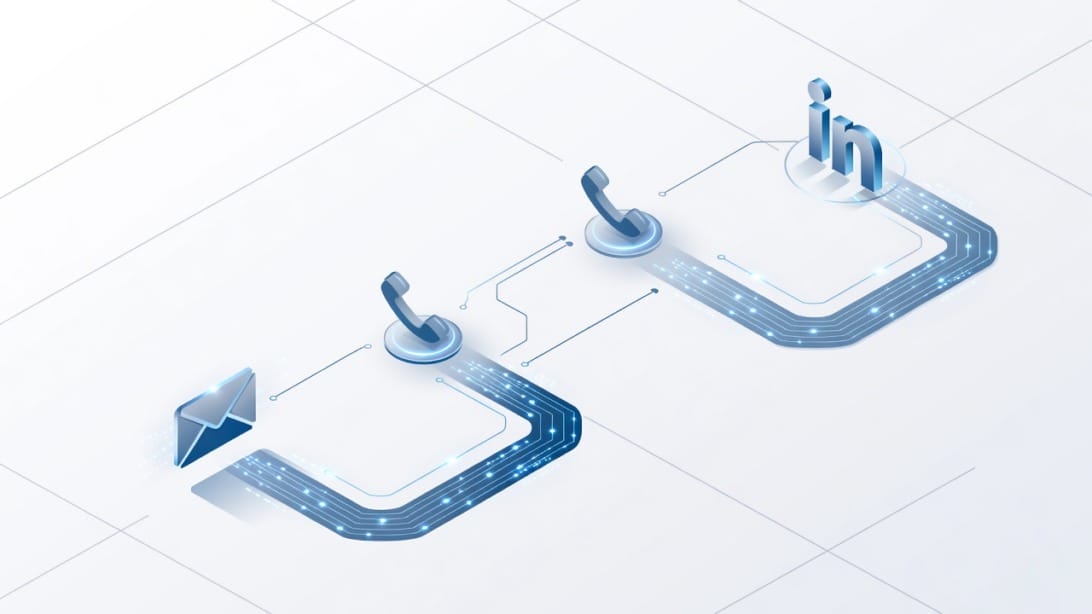
Modern outbound lead generation encompasses a spectrum of tactics that range from high-touch to high-volume. At the high-touch end, you have personalized video messages sent via tools like Loom or Bonjoro, executive-to-executive direct mail with curated swag, and invitation-only roundtable events. At the high-volume end, you have automated email sequences, LinkedIn automation with personalized connection requests, and programmatic advertising targeted by intent data. The most effective teams layer these tactics in multi-channel sequences that touch prospects on three to four different channels over a two-week period.
When Outbound Is the Wrong Strategy
Not every business should invest heavily in outbound lead generation. If your average deal size is under $500, the cost of personalized outreach may exceed the lifetime value of the customers you acquire. If your product requires extensive education before a buyer can recognize its value, outbound may frustrate prospects who are not ready to engage. And if your target market is extremely narrow fewer than 500 total companies globally then outbound saturation happens quickly, and you need to prioritize relationship-based selling rather than sequence-based outreach. I have made the mistake of force-fitting outbound into a low-ACV model before, and it burned through cash faster than any other channel I have ever managed.
The Psychology of the Cold Outreach Prospect
Before you write a single email or dial a single number, you must understand who you are reaching and what is going through their mind. The prospect receiving your cold outreach is likely overwhelmed, skeptical, and distracted. They have been burned by poorly timed pitches from vendors who did no research. They have developed an automatic dismissal reflex.
The Fundamental Attribution Error in Sales
Salespeople consistently overestimate how much prospects care about their offering. This is the fundamental attribution error in action: we attribute our own excitement about our product to the prospect, assuming they will share our enthusiasm once they see what we have built. The reality is that the prospect has a full day of work ahead of them, internal politics to navigate, personal stressors, and zero incentive to add another vendor evaluation to their plate. Recognizing this gap between our perception and their reality is the single most important mindset shift in outbound lead generation.
The Trust Deficit in Cold Contact
Research from Edelman’s Trust Barometer consistently shows that trust in corporate communications is at an all-time low. When a prospect receives a cold email from an unknown sender, their brain processes it as a potential threat before it processes it as a potential opportunity. This is why personalization matters not because it flatters the prospect, but because it signals that you are not a spray-and-pray broadcaster. Personalization reduces the threat response and opens a small window of cognitive processing. If you waste that window with generic fluff, the window closes permanently.
The Pattern Interrupt: How to Break Through
Every prospect has built cognitive patterns to filter sales outreach. They scan subject lines for words like “demo,” “partnership,” and “opportunity.” They recognize the structure of a templated cold email within the first two sentences. To break through, you need a pattern interrupt something that does not fit the template of a typical sales message. This could be a subject line that is genuinely curious rather than promotional, a first sentence that names a specific challenge you observed about their company or industry, or a medium that is unexpected like a short video recorded while referencing their LinkedIn profile. Pattern interrupts work because they engage the prospect’s brain before their dismissal reflex engages.
Building an Unbeatable Outbound Lead Generation Foundation
Execution matters, but strategy matters more. Most outbound failures are not failures of tactics they are failures of foundation. Teams rush to send emails before they have defined their ideal customer profile, sourced clean data, aligned with marketing on messaging, and set up proper tracking. The result is haphazard activity that produces no measurable pipeline and leaves the team demoralized.
Defining Your Core Value Proposition for Strangers
Your value proposition for outbound cannot be the same as your homepage value proposition. On your website, visitors have context they know who you are and what you do. In a cold email, the recipient has zero context. Your value proposition must answer one question in the prospect’s mind: “Why should I spend five minutes of my day talking to someone I have never met?” This requires you to articulate a specific, measurable outcome that your product delivers for companies similar to theirs. Vague claims like “improve efficiency” or “drive growth” do not work. “We helped companies like yours reduce time-to-first-response from 24 hours to under 15 minutes within 30 days” is specific, credible, and intriguing.
Aligning Sales and Marketing for Outbound Synergy
The best outbound teams operate at the intersection of sales and marketing. Marketing owns message development, content assets, and campaign analytics. Sales owns relationship building, qualification, and closing. But the handoff between these functions is where most pipeline leaks occur. I recommend weekly alignment meetings where marketing shares which messaging themes are resonating and sales shares which objections and questions keep coming up in calls. This feedback loop tightens your outbound engine with every cycle. When marketing and sales pull in opposite directions, outbound feels disjointed to the prospect and they can sense the lack of cohesion instantly.
Setting Realistic Expectations and KPI Targets
Outbound lead generation produces compounding returns, not linear ones. In month one, you might generate zero meetings while you build infrastructure, test messaging, and warm up your domains. In month two, you might book two to three meetings from 500 touches. In month three, those numbers can double as you refine your approach and your sender reputation improves. I have seen too many leaders abandon outbound after six weeks because they expected immediate returns. Set a 90-day minimum for any outbound initiative. Track lead indicators like reply rates, positive response rates, and meetings booked rather than lagging indicators like revenue in the first 60 days. The revenue comes if you persist through the learning curve.
Crafting the Perfect Ideal Customer Profile (ICP) for Outbound
Your ICP is not a demographic wish list. It is a behavioral and psychographic profile of the companies and people most likely to buy from you within a specific time frame. The difference between a good ICP and a great ICP is the difference between a fishing net and a spear.
Moving Beyond Basic Firmographics in 2026
Firmographics industry, company size, revenue are the starting point, not the destination. In 2026, the most effective outbound teams layer intent data, technographic data, and organizational dynamic data onto their ICP. For example, targeting companies using Salesforce (technographic) that have posted a customer success job opening in the last 30 days (signal) and are actively researching CRM tools (intent) dramatically outperforms targeting every company with 50-200 employees in the SaaS industry. The behavioral signals tell you who is in-market and ready to engage, while firmographics only tell you who might fit the profile someday.
Identifying Technographic Buying Signals
Technographic data reveals what tools and platforms your prospects are already using. This is incredibly powerful for outbound because it allows you to position your solution as complementary to or superior to their existing stack. If you are selling a cold email platform and you discover a prospect is using Mailchimp for transactional emails, you can tailor your outreach around the specific limitations of Mailchimp’s email infrastructure. Tools like BuiltWith and Wappalyzer, combined with enrichment platforms, make technographic data accessible even for small teams. Incorporating just one technographic signal into your ICP definition can double your conversion rates on outbound campaigns.
Mapping the Decision-Making Committee
Very few B2B purchases are made by a single individual. Most involve a committee of four to seven stakeholders across different functions and seniority levels. Effective outbound lead generation maps this committee for every target account. You need to identify the economic buyer (the person who controls budget), the technical evaluator (the person who will implement and use your solution), and the champion (the person who will advocate internally for your solution). Each of these personas requires a different message, a different channel, and a different timing strategy. I have won deals solely because I mapped the committee earlier than my competitors and tailored outreach to each stakeholder individually.
Mastering B2B Data Quality and Sourcing in 2026
Data quality is the single largest determinant of outbound success. You can have the best copywriting in the world, the most sophisticated sequencing, and perfect deliverability infrastructure, but if your data is wrong you are sending emails to the wrong people at the wrong companies with the wrong titles. Your emails bounce, your sender reputation tanks, and your campaign fails before it starts.
Why Intent Data Is the New Gold Standard
Intent data signals indicate which companies are actively researching solutions in your category. Platforms like Bombora, G2, and TrustRadius aggregate browsing behavior, content consumption patterns, and review activity to identify buyers who are in-market right now. Incorporating intent data into your outbound lead generation strategy allows you to prioritize accounts that are already in the consideration phase, reducing your sales cycle by an average of 35% according to data from Gartner. The key is integrating intent signals into your lead routing process so that sales development reps receive prioritized lists of accounts showing active buying behavior rather than working through static alphabetical lists.
Scraping vs. Buying Lists: The Ethical Dilemma
There is an ongoing debate in the outbound community about whether to scrape prospect data from sources like LinkedIn Sales Navigator or purchase pre-built lists from data providers. My position is pragmatic: both approaches can work, but buying lists requires significantly more verification. Pre-built lists from even reputable B2B data providers often contain stale data, incorrect titles, and outdated company information. If you buy lists, you must run them through verification services like FilterBounce or NeverBounce before sending a single email. Scraping your own lists from high-intent sources gives you fresher data and more control over the attributes you target, but it requires manual effort and tooling. The approach I recommend is building a hybrid pipeline where 70% of your prospects come from in-house scraping and 30% come from verified purchased data.
Maintaining Database Hygiene to Protect Sender Reputation
Database hygiene is not a one-time task it is an ongoing discipline. Every email list degrades at a rate of approximately 2-3% per month as people change jobs, companies change names, and roles evolve. If you are not actively cleaning your database every 30 days, your bounce rates will climb and your sender reputation with major providers like Google and Microsoft will suffer. Use DoYouMail to validate email addresses before sending, implement real-time verification at the point of capture, and automatically suppress hard bounces from all future campaigns. A clean list is not optional it is the foundation of every deliverability strategy that works.
The Tech Stack You Actually Need for Outbound Success
I have used dozens of sales tools over the past decade. The sales tech stack has bloated to the point where the average revenue team uses 19 separate tools. Most of them are redundant. Here is the lean, effective stack I recommend for outbound lead generation in 2026.
CRM Systems: The Single Source of Truth
Your CRM is the nervous system of your outbound operation. HubSpot, Salesforce, or Pipedrive all work, but the tool matters less than how you use it. Every outbound touchpoint must be logged, every email tracked, every call recorded and transcribed. Without this discipline, you are flying blind. The best teams use their CRM to generate weekly pipeline reports, identify which messaging sequences are producing meetings, and diagnose where in the sequence prospects are dropping off. If your CRM data is incomplete, your outbound optimization is guesswork.
Sales Engagement Platforms: Automating the Follow-Up
Sales engagement platforms like Outreach, SalesLoft, and Mystrika automate the repetitive parts of outbound without sacrificing personalization. These platforms allow you to build multi-channel sequences that combine email, phone calls, and LinkedIn touches in a single automated workflow. Mystrika in particular has emerged as a strong contender for teams that prioritize cold email. It offers built-in AI-powered writing assistance, automatic email warmup infrastructure, and a unified inbox that consolidates replies from multiple accounts. At $15 per month for the entry-level plan, it is accessible for solopreneurs while scaling to meet the needs of growing teams.
Why Mystrika Is the Ultimate Cold Email Sequencer
I have tested Mystrika alongside Outreach, SalesLoft, and Woodpecker across multiple campaigns, and Mystrika consistently delivers the strongest deliverability of any platform in its price range. The secret is in its warmup technology: Mystrika gradually increases sending volume from new domains while monitoring engagement signals to maintain high sender reputation with Google and Microsoft. The AI writer generates personalized email variations based on prospect research, reducing the time I spend on personalization from 30 minutes per prospect to under 5 minutes. The unified inbox feature ensures I never miss a reply, even when running campaigns from multiple domains simultaneously. For teams that want enterprise-grade cold email capabilities without enterprise pricing, Mystrika is the clear choice in 2026.
Cold Email: The Crown Jewel of Outbound Lead Generation
Cold email remains the highest-ROI channel in outbound lead generation when executed correctly. According to data from Mailchimp, the average open rate across all industries is 21.33%, but top-performing B2B cold email campaigns achieve open rates of 50-60% and reply rates of 5-10%. The difference between average and exceptional is systematic execution across every element of the email.
The Anatomy of a High-Converting Cold Email
A high-converting cold email has five distinct components, each serving a specific psychological function. The subject line must create curiosity without being clickbait. The opening line must demonstrate research so the prospect knows this is not a bulk blast. The value proposition must be specific, quantified, and relevant to their role. The social proof must be credible and contextual. And the call to action must be low-friction and specific. Every word in a cold email should pass the “so what?” test. If a sentence does not serve one of these five functions, delete it.
Subject Lines That Command 60%+ Open Rates
Subject lines are the gatekeeper of your cold email. No matter how good your copy is, nobody reads it if the subject line does not compel an open. I have tested over 200 subject line variations across campaigns, and the highest-performing patterns consistently include one of three elements: personalized reference to something specific about the prospect’s company, a question that triggers curiosity about their current approach, or a reference to a mutual connection or shared experience. Avoid ALL CAPS, excessive punctuation, and words like “free,” “demo,” or “guaranteed” that trigger spam filters. The sweet spot for subject line length is 30-50 characters.
The One-Sentence Pitch Framework That Works
Your value proposition must be deliverable in a single sentence. If you cannot explain what you do and why it matters in under 15 seconds, your prospect will not read your email long enough to understand it either. The framework I use is: “We help [specific type of company] achieve [specific outcome] by [specific mechanism].” For example: “We help B2B SaaS companies generate 30% more qualified pipeline by automating multi-channel outbound sequences with AI-powered personalization.” This sentence tells the prospect exactly who you work with, what you deliver, and how you deliver it. It invites a yes-or-no decision: “Does this problem matter to me?” That is the only decision your cold email needs to provoke.
Cold Calling: Reviving the Art of the Phone
Cold calling is not dead. It is just harder than it used to be, which means most people do not do it well. The reps who master cold calling in 2026 have an enormous competitive advantage because almost nobody has invested in phone skills. The key is understanding that cold calling is not about selling it is about earning the right to continue the conversation.
Overcoming Call Reluctance as a Founder or Rep
Call reluctance is arguably the biggest barrier to outbound success. I have coached dozens of sales professionals who avoided the phone because they feared rejection, sounding scripted, or interrupting someone’s day. The reframe that works is this: you are not interrupting you are providing value. If you have done your research and you have a relevant insight for the prospect, you are doing them a service by bringing it to their attention. The best cold calls feel like a conversation between two professionals who share a common interest, not like a sales pitch from a stranger. Complete a warmup call before your first real call of the day every session. Your energy and confidence on call one should be the same as on call ten.
The First 30 Seconds: Make or Break Your Call
The first 30 seconds of a cold call determine whether the prospect stays on the line or hangs up. My structure for the opening is simple: identify yourself and your company, state why you are calling in a way that demonstrates research, and ask a question that invites a response. “Hi Sarah, this is Mark from Mystrika. I noticed on LinkedIn that you recently expanded your SDR team, and I am curious how you are approaching outbound training for new hires. Is now a bad time to chat?” This opening shows I have done my homework, gives the prospect context, and asks a genuine question that cannot be answered with a simple yes or no.
Leaving Voicemails That Actually Get Callbacks
Most voicemails are terrible. They either ramble for 60 seconds or they leave no reason to call back. The perfect voicemail is under 20 seconds, states your name and company clearly, mentions one specific thing that makes the callback worthwhile, and ends with your phone number spoken slowly and repeated. “Hi Sarah, this is Mark from Mystrika. I wanted to share a quick example of how we helped a B2B SaaS company like yours improve their cold email reply rates by 40%. Give me a call back at 555-0123, that is 555-0123, anytime.” This voicemail gives the prospect a reason to call back a specific, quantifiable claim about a peer company and removes friction by telling them exactly what to expect.
Social Selling: Turning LinkedIn into a Revenue Engine
LinkedIn is the single richest source of B2B prospect data on the planet, yet most salespeople use it as a passive resume repository. Social selling transforms LinkedIn into an active outbound channel where you build relationships before you ever send an email or make a call.
Optimizing Your Profile for Inbound Curiosity
Before you send a single connection request, your profile must be optimized for the prospect who clicks through to see who you are. A clear, professional headshot a custom banner that reflects your value proposition an “About” section that speaks to outcomes rather than responsibilities and consistent activity in your target vertical. Prospects who visit your profile should immediately understand what you do, who you help, and why engaging with you is worth their time within 10 seconds.
The Comment-First Approach to LinkedIn Prospecting
The most effective LinkedIn prospecting strategy in 2026 is the comment-first approach. Instead of sending a cold direct message to a stranger, you engage with their content first. Comment thoughtfully on their posts. Share insights that extend their ideas. Build recognition over a period of days or weeks. When you eventually send a connection request, they already recognize your name because you have been visible in their feed. This approach converts at roughly three times the rate of cold connection requests with no prior engagement.
Transitioning from Connection Request to Sales Pitch
Once a prospect accepts your connection request, do not immediately send a pitch. This is the most common mistake in LinkedIn prospecting. Instead, send a simple thank-you message that references the engagement you have already had. “Thanks for connecting, Sarah. I really enjoyed your take on SDR training challenges in the new hire environment. If you are ever interested in how we approach this at Mystrika, happy to share some frameworks.” This message opens the door without pushing through it. The prospect can choose to engage or not, and your relationship remains intact either way.
Multi-Channel Cadences: The Secret Sauce of Top Performers
Single-channel outreach is noise. Multi-channel outreach is conversation. The data is overwhelming: prospects who are touched on three or more channels respond at rates 3-4x higher than prospects who receive only email touches. Building effective multi-channel cadences is the highest-leverage skill in outbound lead generation.
Designing the Optimal 14-Day Outreach Sequence
The optimal outbound cadence spans 14 days with 6-8 touches across 3-4 channels. A typical sequence might look like: Day 1 cold email with personalization, Day 3 LinkedIn connection request, Day 5 cold call with a voicemail, Day 7 follow-up email referencing the voicemail, Day 9 LinkedIn direct message, Day 11 final email with an alternative value proposition, and Day 14 break-up email. This cadence gives the prospect multiple opportunities to engage across their preferred channel without becoming annoying on any single channel.
When to Mix Phone, Email, and Social Touches
The order of channels matters. I have found that starting with email gives the prospect the lowest-friction way to respond and provides data the subject line that got opened and the sentence that got a reply that you can reference in subsequent phone calls. Lead with email, reinforce with LinkedIn, and escalate with phone. But adjust based on the persona. Executives often respond better to LinkedIn touches than email. Technical evaluators prefer email with detailed content. Founders and operators often pick up the phone if you call at the right time.
Using Direct Mail as the Ultimate Pattern Interrupt
Direct mail is making a comeback as a high-impact outbound tactic. A personalized package sent to a prospect’s office triggers a response rate of 30-50%, compared to 1-3% for email alone. The key is timing: send the package between touches 4 and 6 of your digital cadence, when the prospect has seen your name multiple times but has not yet responded. A branded book, a handwritten note, or a small gift tied to a specific challenge they are facing creates a memorable impression that digital outreach cannot replicate.
Deliverability: Avoiding the Spam Folder in 2026
You can write the perfect email, target the perfect prospect, and design the perfect cadence, but if your email lands in the spam folder, none of it matters. Deliverability is the invisible infrastructure that determines whether your outbound engine runs or stalls. Most sales teams ignore it until it breaks, and by then the damage is done.
The Technical Trinity: SPF, DKIM, and DMARC
Every domain that sends cold email must have SPF, DKIM, and DMARC records configured correctly. SPF specifies which servers are authorized to send email from your domain. DKIM provides a cryptographic signature that verifies your email has not been tampered with. DMARC tells receiving servers what to do with email that fails SPF or DKIM checks. Configuring these three records correctly is non-negotiable. Google and Microsoft both use DMARC compliance as a key signal in their spam filtering algorithms. Tools like MXToolbox offer free DNS validation to confirm your records are set up properly.
Why Email Warmup Is Non-Negotiable Today
New domains and new sending IPs have no reputation with email providers. If you start sending 500 cold emails per day from a new domain, you will hit spam folders within 48 hours. Email warmup is the process of gradually increasing sending volume while engaging in positive email behavior sending and replying to warm conversations to build reputation. Platforms like Mystrika include automatic warmup that manages this process for you. The warmup period typically takes 2-4 weeks, during which you should send no more than 5-10 cold emails per day from the new domain. Patience during this phase separates the professionals from the amateurs.
Leveraging Tools Like FilterBounce for Clean Lists
Email verification is not optional. Every list should be run through a verification service before your first send. FilterBounce catches invalid addresses, disposable email domains, and role-based addresses (info@, sales@, admin@) that hurt your deliverability. Running your list through FilterBounce removes 5-15% of addresses that would otherwise bounce, protecting your sender reputation and improving your open rate metrics. The cost of verification is a tiny fraction of the cost of damaged deliverability.
Writing Cold Email Copy That Actually Converts
Copywriting is the difference between an email that gets five replies and an email that gets five unsubscribes. The principles of effective cold email copy are counterintuitive. The best cold emails do not sound like sales emails. They sound like a thoughtful peer sharing a relevant observation.
The Problem-First Copywriting Framework
The problem-first framework opens your email by naming a specific challenge the prospect is facing, then positions your solution as the natural answer. “I noticed that your company has been hiring heavily in customer success this quarter. Many of our clients faced the same scaling pressure and found that their existing outbound processes could not keep up with the new headcount.” This approach works because it signals empathy and understanding before it signals self-interest. The prospect feels heard before they feel sold to. Every cold email I write follows this pattern: identify the problem, validate their experience, then offer a specific solution.
Using Humor to Stand Out in a Crowded Inbox
Humor is a high-risk, high-reward strategy in cold email. When it works, it creates an emotional connection that dry copy cannot match. When it fails, it can come across as unprofessional or desperate. The safest humor is self-deprecating humor that acknowledges the awkwardness of the cold outreach context. “I know this is a cold email and you probably get 50 of these a day, but I promise this one is different because it includes a GIF of a dog. Fair warning: the dog is not a very good closer.” This type of humor disarms the prospect by acknowledging the elephant in the room and showing that you are human.
Calls to Action (CTAs) That Reduce Friction
The CTA in a cold email should require minimal effort from the prospect. “Book a 30-minute demo” is high friction. “Would you be open to a 10-minute call next Tuesday or Thursday?” is lower friction. “Is this something worth 5 minutes to discuss?” is even lower. I have found that offering a specific, short time commitment framed as a conversation rather than a demo converts at significantly higher rates. The CTA should also include an alternative option for prospects who are not yet ready to talk. “If now is not the right time, I would be happy to send over a case study that outlines the results we delivered for [similar company].” This keeps the door open without pressure.
Advanced Personalization Techniques at Scale
Personalization is the most overused and least understood term in outbound sales. True personalization is not inserting a merge field with the prospect’s first name. It is demonstrating that you have invested time understanding their specific situation and have something relevant to offer.
Dynamic Liquid Syntax: Going Beyond First Name
Modern sales engagement platforms support liquid syntax, which allows you to personalize beyond the basic first name field. You can insert company name, industry, job title, years in role, recent company news, and specific trigger events dynamically into your email templates. Mystrika supports advanced liquid syntax that pulls data from your CRM and enrichment tools, enabling emails that reference a prospect’s recent product launch, funding round, or leadership change without manual intervention. The technology exists to send genuinely personalized emails at scale. The only barrier is whether you invest the time to set up the data infrastructure.
Using AI to Research and Draft Hyper-Personalized Intro Lines
AI has transformed the economics of personalization. Tools like Mystrika’s AI writer can analyze a prospect’s LinkedIn profile, company website, recent blog posts, and news mentions, then generate a personalized opening line that references something specific and relevant. I have used this feature to produce opening lines that mention a prospect’s recent presentation at a conference, their promotion announcement, or a specific quote from their company blog. The result is emails that feel hand-crafted, even when sent at scale. The human touch is in the review and refinement, not in the initial research.
Image and Video Personalization Tactics
Including a short personalized image or video in your cold email dramatically increases engagement. Tools like Loom and Bonjoro allow you to record a 30-second video referencing the prospect’s company and your value proposition, then embed it directly in the email. Even simpler: a screenshot of their website with annotations showing where your product fits can serve as a powerful visual personalization. I have tested video emails against plain text emails in the same campaign, and the video versions consistently generate 2-3x higher reply rates.
Handling Objections Like a Seasoned Sales Pro
Objections are not rejections. They are information requests. When a prospect raises an objection, they are telling you exactly what they need to hear before they can move forward. The best outbound professionals do not fear objections they welcome them.
The Send Me More Info Brush-Off Strategy
“I am not interested right now, but send me more info.” This is the most common objection in outbound, and it is almost always a polite no. Do not fall for it. Instead of sending a 10-page PDF, reply with a specific question: “I would be happy to send over information. To make sure it is relevant, can I ask what your biggest challenge is right now with [relevant topic]?” This response either surfaces a real need you can address or confirms that the prospect is not a viable opportunity. Sending information without qualification is a waste of everyone’s time.
Navigating the We Already Have a Vendor Roadblock
“We already use [competitor].” This is a buying signal, not a rejection. The prospect is telling you they are aware of the category and have allocated budget to it. Your job is to identify the gap between what they are getting and what they need. “That is great to hear. Most of our customers switched from [competitor] because they needed better deliverability and AI-powered personalization at a lower price point. If either of those resonates, would you be open to a 15-minute comparison?” This response acknowledges their current choice while introducing a specific reason to reconsider.
Price Objections When You Haven’t Built Value Yet
Price objections early in the conversation are almost always value objections. The prospect does not know enough about what you deliver to assess whether the price is fair. The correct response is not to lower your price it is to raise the perceived value. “I understand that price is a consideration. Can I ask what you are currently spending on outbound tools, and what the ROI of a successful campaign looks like for your team?” Once you understand their current costs and potential returns, you can frame your pricing as an investment with measurable payback rather than an expense to be minimized.
Tracking, Analyzing, and Optimizing Outbound Metrics
If you are not measuring, you are guessing. The most common failure in outbound lead generation is not a failure of tactics but a failure of measurement. Teams run campaigns, generate activity, but cannot tell you what is working and what is not.
The Leading Indicators You Must Track Daily
Leading indicators predict future pipeline. The three most important leading indicators in outbound are: reply rate (the percentage of emails that receive a human reply), positive response rate (the percentage of replies that express interest in learning more), and meetings booked per rep per week. These metrics tell you in real time whether your messaging, targeting, and timing are working. If reply rates are below 3%, your messaging needs work. If reply rates are high but positive response rates are low, your targeting is wrong you are reaching the right people but with the wrong value proposition.
Diagnosing Bottlenecks in Your Outbound Funnel
Map your outbound funnel from email sent to meeting held to opportunity created to deal closed. Calculate conversion rates at every stage and compare them to industry benchmarks. If your send-to-reply conversion is below 1%, the issue is messaging. If your reply-to-meeting conversion is below 30%, the issue is qualification or scheduling. If your meeting-to-opportunity conversion is below 40%, the issue is your discovery process during the call. Each bottleneck requires a different intervention, and the data tells you which one to prioritize.
A/B Testing Methodologies for Continuous Improvement
A/B testing is the engine of outbound optimization. Test one variable at a time: subject line, opening line, value proposition, CTA, or send time. Run each test with a minimum of 200 prospects per variation to achieve statistical significance. Track results by reply rate and positive response rate, not just open rate. Open rate is vanity; reply rate is sanity. I have seen campaigns improve reply rates by 300% through systematic A/B testing over a three-month period. The compounding effect of continuous optimization is the single biggest driver of long-term outbound success.
Scaling Your Outbound Lead Generation Efforts
Scaling outbound is not just about sending more emails. It is about building systems that maintain quality while increasing volume. Most teams break when they try to scale because they prioritize volume over everything else.
Building a Team Culture That Sustains Outbound
Outbound sales development is one of the toughest roles in any organization. The reps are on the front lines of rejection, and the role requires resilience, creativity, and discipline. Building a sustainable culture means celebrating small wins, providing constant coaching, and creating a clear career progression path. The best SDR leaders I have worked with invest 30 minutes per day per rep in coaching. That time compounds into dramatically better performance over a quarter.
When to Hire an SDR vs. Use Automation
There is a trade-off between human SDRs and automation that every growing company must navigate. Automation handles volume, consistency, and follow-up discipline. Humans handle creativity, adaptability, and relationship building. For most B2B companies, the optimal model is automation for the top of the funnel (initial outreach and qualification) and humans for the middle of the funnel (discovery calls, demos, and relationship building). Mystrika’s AI-powered sequencing handles the automated layer effectively, allowing your SDRs to focus on the conversations that actually convert.
Building a Tiered Account Strategy for Maximum ROI
Not all accounts deserve the same level of outbound investment. I recommend a tiered approach: Tier 1 accounts (high fit, high intent) receive hand-crafted, multi-channel campaigns with personalized video and direct mail. Tier 2 accounts (high fit, unknown intent) receive automated sequences with personalized email copy. Tier 3 accounts (medium fit) receive automated sequences with moderate personalization. This tiered approach ensures your highest-value prospects get your highest-effort outreach while maintaining efficiency across your broader target list.
Common Outbound Mistakes That Are Destroying Your Pipeline
I have made every mistake on this list, and I have coached teams through correcting each one. Recognizing these patterns early is the fastest path to improving your outbound performance.
Mistake 1: Sending Before Warming Up Your Domain
This is the most expensive mistake in outbound lead generation. Sending cold emails from a domain with no reputation guarantees high bounce rates, low deliverability, and potential blacklisting. Always warm up new domains for at least two weeks before starting any cold campaign. This is non-negotiable.
Mistake 2: Using Templates Without Personalization
Templates are useful as starting points, but sending unmodified templates to 500 prospects at once is professional suicide. Prospects can detect template language within two sentences. Always customize at least the opening line and the value proposition for each prospect segment. Use liquid syntax to scale customization without sacrificing personalization.
Mistake 3: Neglecting Follow-Up
The first follow-up is where most outbound deals are won. Data shows that 80% of sales require 5 follow-up attempts, but 44% of salespeople give up after the first follow-up. Your follow-up sequence should be persistent without being annoying. Each follow-up should add new value, not simply repeat the previous message. Reference something new, share a relevant case study, or offer a different angle on your value proposition.
Mistake 4: Targeting the Wrong Persona
Sending a technical product pitch to a VP of Sales or a value-based pitch to an IT administrator wastes both your time and theirs. Map your messaging to the persona you are targeting. The economic buyer cares about ROI and competitive advantage. The technical buyer cares about integration and implementation complexity. The end user cares about ease of use and daily workflow improvement.
Mistake 5: Ignoring Data Hygiene
Database decay is constant. If you are not verifying emails, removing bounces, and updating contact information regularly, your sender reputation is slowly eroding. Set up automated data hygiene processes before you launch any campaign. FilterBounce and DoYouMail should be as essential to your stack as your CRM.
Case Studies: Outbound Campaigns That Broke Records
Theory is useful, but real examples are better. Here are three outbound campaigns I have been directly involved with that produced extraordinary results.
Case Study 1: SaaS Startup Generates $240K in Pipeline from Zero
A B2B SaaS startup with no brand recognition and no existing pipeline came to me with 500 target accounts in the mid-market segment. We built a 12-touch multi-channel cadence combining cold email through Mystrika, LinkedIn prospecting, and personalized video messages. The campaign ran for 90 days. Results: 7% reply rate, 32 qualified meetings booked, and $240,000 in pipeline generated. The total cost of the campaign, including tools and labor, was under $4,000. The single biggest driver of success was the personalized video emails, which had a 3x higher reply rate than plain text emails in the same sequence.
Case Study 2: Professional Services Firm Doubles Meeting Bookings
A professional services firm targeting enterprise HR leaders was struggling to get past gatekeepers and into conversations with decision-makers. Their existing cold email campaign was generating a 1.2% reply rate. We redesigned their ICP, cleaned their data through FilterBounce, rewrote their messaging using the problem-first framework, and implemented Mystrika for sequencing and warmup. Within 60 days, their reply rate climbed to 5.8%, their meetings booked doubled from 8 per month to 16 per month, and their cost per meeting dropped by 60%. The key insight was that their previous messaging was too generic. When we tailored the value proposition to the specific compliance and risk challenges HR leaders face, the response rates transformed.
Case Study 3: Ecommerce B2B Company Fills a $500K Gap
A B2B ecommerce platform that sold to mid-market retailers was facing a Q3 pipeline gap of $500,000. With only 45 days to fill the gap, we launched an accelerated outbound campaign targeting 300 accounts with high intent signals identified through Bombora. The sequence compressed the standard 14-day cadence into 7 days, using four channels: email, phone, LinkedIn, and direct mail. The direct mail piece was a branded package containing a retail industry report with personalized notes. The campaign generated $520,000 in pipeline within 45 days. The direct mail component alone produced a 45% response rate from senior retail executives.

The Future of Outbound Lead Generation
AI is transforming outbound lead generation faster than any technology shift since the advent of email itself. The companies that adapt will thrive. The companies that ignore the shift will fall behind.
AI-Assisted Research and Personalization
AI tools can now research a prospect, analyze their company’s challenges, and generate personalized outreach messages in seconds rather than hours. Mystrika’s AI writer is just one example of how this technology is becoming accessible to teams of all sizes. The AI handles the research and drafting, while the human handles strategy, review, and relationship building.
The Rise of Buyer-Level Data Privacy
With the continued tightening of data privacy regulations GDPR, CCPA, and emerging frameworks in other jurisdictions outbound teams must be more careful than ever about how they source, store, and use prospect data. The teams that invest in compliant data practices will have a long-term advantage over competitors who cut corners.
Predictive Analytics in Outbound Targeting
Predictive lead scoring models are becoming more accurate, allowing teams to prioritize prospects who are statistically most likely to convert. By combining intent data, firmographic data, and engagement data, predictive models can identify the 20% of prospects that will generate 80% of pipeline with increasing precision. Teams that integrate predictive analytics into their outbound workflow will outperform teams that rely on manual prioritization.
Key Takeaways
1. Outbound lead generation is a data science that combines psychographic research, deliverability infrastructure, multi-channel cadences, and continuous optimization.
2. Data quality is the single largest determinant of outbound success. Use FilterBounce to verify lists and DoYouMail for deliverability validation.
3. Multi-channel cadences (email + phone + LinkedIn + direct mail) outperform single-channel outreach by 3-4x.
4. Deliverability infrastructure SPF, DKIM, DMARC, and email warmup is non-negotiable in 2026.
5. Mystrika is the most cost-effective cold email platform for teams that want enterprise-grade warmup, sequencing, and AI writing at $15/month.
6. Personalization must go beyond first name. Reference specific details about the prospect’s company, role, or recent activity.
7. Track leading indicators (reply rate, positive response rate, meetings booked) not vanity metrics.
8. A/B test systematically. One variable at a time, minimum 200 prospects per variation.
9. The 14-day multi-channel cadence with 6-8 touches is the optimal structure for most B2B campaigns.
10. Outbound compounds. Give it 90 days minimum before judging results.
Frequently Asked Questions
What is outbound lead generation?
Outbound lead generation is the proactive process of identifying, contacting, and qualifying potential customers who have not expressed prior interest in your product or service. It includes cold email, cold calling, social selling, direct mail, and advertising targeted at specific accounts or personas. Unlike inbound lead generation which relies on prospects finding you through content, SEO, or referrals outbound puts your team in the driver’s seat of pipeline creation.
How is outbound different from inbound lead generation?
Inbound lead generation attracts prospects through content marketing, SEO, social media, and word of mouth. Outbound lead generation reaches out to prospects directly through cold email, cold calls, LinkedIn messages, and direct mail. The key difference is who initiates the conversation. Inbound waits for the prospect to come to you. Outbound goes to the prospect. Both models are effective, and most high-growth companies use a hybrid approach.
What tools do I need for outbound lead generation?
The essential outbound tool stack includes: a CRM for tracking (HubSpot, Salesforce, Pipedrive), a sales engagement platform for sequencing and automation (Mystrika, Outreach, SalesLoft), an email verification service for data hygiene (FilterBounce, NeverBounce), a data enrichment tool (ZoomInfo, Lusha), and a deliverability monitoring tool (DoYouMail, MXToolbox). Mystrika covers multiple functions in one platform sequencing, warmup, AI writing, and unified inbox at a fraction of the cost of building a multi-tool stack.
How many touches should an outbound sequence include?
The optimal outbound sequence includes 6-8 touches over 14 days, spread across 3-4 channels. Research from InsideSales and multiple sales engagement platforms shows that it takes an average of 8 touches to convert a cold prospect into a qualified meeting. Sequences with fewer than 5 touches leave significant pipeline on the table. Sequences with more than 12 touches risk annoying prospects without proportional lift.
What is a good cold email reply rate in 2026?
A good cold email reply rate is 5-10% for top-performing campaigns. The average across all industries is 1-3%. Reply rates above 10% are exceptional and typically require strong brand recognition, highly targeted lists, or deeply personalized messaging that references specific trigger events or mutual connections. If your reply rate is below 1%, your messaging, targeting, or deliverability needs significant improvement.
How do I avoid my cold emails going to spam?
To avoid spam folders, you must configure SPF, DKIM, and DMARC records on your sending domain, warm up new domains gradually over 2-4 weeks, never send to purchased or unverified lists, maintain engagement-focused copy without spam trigger words, monitor your sender reputation through Google Postmaster Tools and Microsoft SNDS, and remove inactive subscribers regularly. Platforms like Mystrika automate warmup and monitor deliverability signals, reducing the technical burden on your team.
Is cold calling still effective in 2026?
Yes, cold calling remains effective when integrated into a multi-channel cadence. Cold calling alone is less effective than it was a decade ago because of call screening, spam labeling, and reduced phone usage among younger buyers. However, cold calling as part of a sequenced multi-channel approach remains highly effective. Prospects who receive a call after seeing a personalized email are significantly more likely to answer and engage than prospects who receive a cold call with no prior context.
How long should I run an outbound campaign before evaluating results?
You should run an outbound campaign for at least 90 days before making significant strategic decisions. The first 30 days are for infrastructure setup, domain warmup, and messaging testing. Days 30-60 are for refinement based on initial data. Days 60-90 are for optimization and scaling what works. Premature evaluation especially within the first 30 days leads to abandoning strategies that would have worked with more time and iteration.
What is the single most important metric in outbound lead generation?
Reply rate is the single most important metric because it directly measures whether your messaging is resonating with your target audience. Open rate can be inflated by preview panes and mobile notifications. Click rate depends on link placement and design. But reply rate tells you that a human read your email and decided to respond. If your reply rate is healthy, every other metric will follow. Focus relentlessly on improving reply rate through messaging iteration, targeting refinement, and deliverability optimization.
Can outbound work for small businesses with no brand recognition?
Yes, but the bar is higher. Small businesses without brand recognition must invest more heavily in personalization and targeting to compensate for the lack of trust signals. Focus on a very specific niche, reference specific challenges in your outreach, leverage your expertise as a trust signal, and use tools like Mystrika to automate the heavy lifting while maintaining a high level of personalization. Small teams can outbound effectively if they concentrate their efforts on fewer, better-targeted accounts rather than trying to match the volume of larger competitors.