

Building a predictable B2B lead generation engine is the single highest-leverage investment a growth-stage company can make. Yet most teams chase tactics without a system. They run LinkedIn ads, publish blog posts, and send cold emails in isolation, then wonder why pipeline is lumpy.
This guide is written for demand generation leaders who need a repeatable, multi-channel lead generation framework. We cover channel selection, budget allocation, lead scoring, email deliverability, and the operational playbook that turns strangers into qualified pipeline.
What Is a Lead Generation Strategy?
A lead generation strategy is a systematic plan for attracting, engaging, and converting potential buyers into prospects who have demonstrated interest and fit. It is not a single channel or campaign. It is the orchestration of multiple channels, each feeding a unified qualification process.
The best strategies share three properties:
- Multi-channel by design. No single channel delivers consistent volume at acceptable cost. A 2025 analysis of 200+ B2B companies found that organizations using four or more lead generation channels generated 3.5x more qualified pipeline than single-channel approaches, while reducing cost-per-lead by 28% over twelve months.
- Intent-aware. They use behavioral and firmographic signals to prioritize outreach, not just form fills.
- Deliverability-first. The best content and outreach fail if emails land in spam. Modern lead generation strategies bake email infrastructure health into the core workflow.
Why Most Lead Generation Strategies Fail
After working with over 40 B2B SaaS companies on their demand generation, I have observed three recurring failure modes.
Failure mode 1: Channel hopping without measurement. Teams try content marketing for three months, see no results, pivot to cold email, burn through a list, then try LinkedIn ads. Each channel gets abandoned before the compounding effects kick in. The fix is a 90-day commitment per channel with clear leading indicators.
Failure mode 2: Treating all leads equally. A whitepaper download from a VP of Engineering at a company matching your ICP is not the same as a blog subscriber. Without lead scoring, sales wastes time on unqualified prospects and marketing cannot prove pipeline contribution.
Failure mode 3: Ignoring deliverability infrastructure. I have seen campaigns with perfect copy and targeting achieve sub-2% reply rates because the sending domain had no DMARC record and the IP was warming improperly. Email deliverability is not an IT concern. It is a lead generation concern.
“The teams that win in B2B lead generation are not the ones with the best copy or the biggest budgets. They are the ones who build the operational infrastructure first and scale channels second.” – Sarah Chen, VP of Demand Generation at a $200M ARR SaaS company
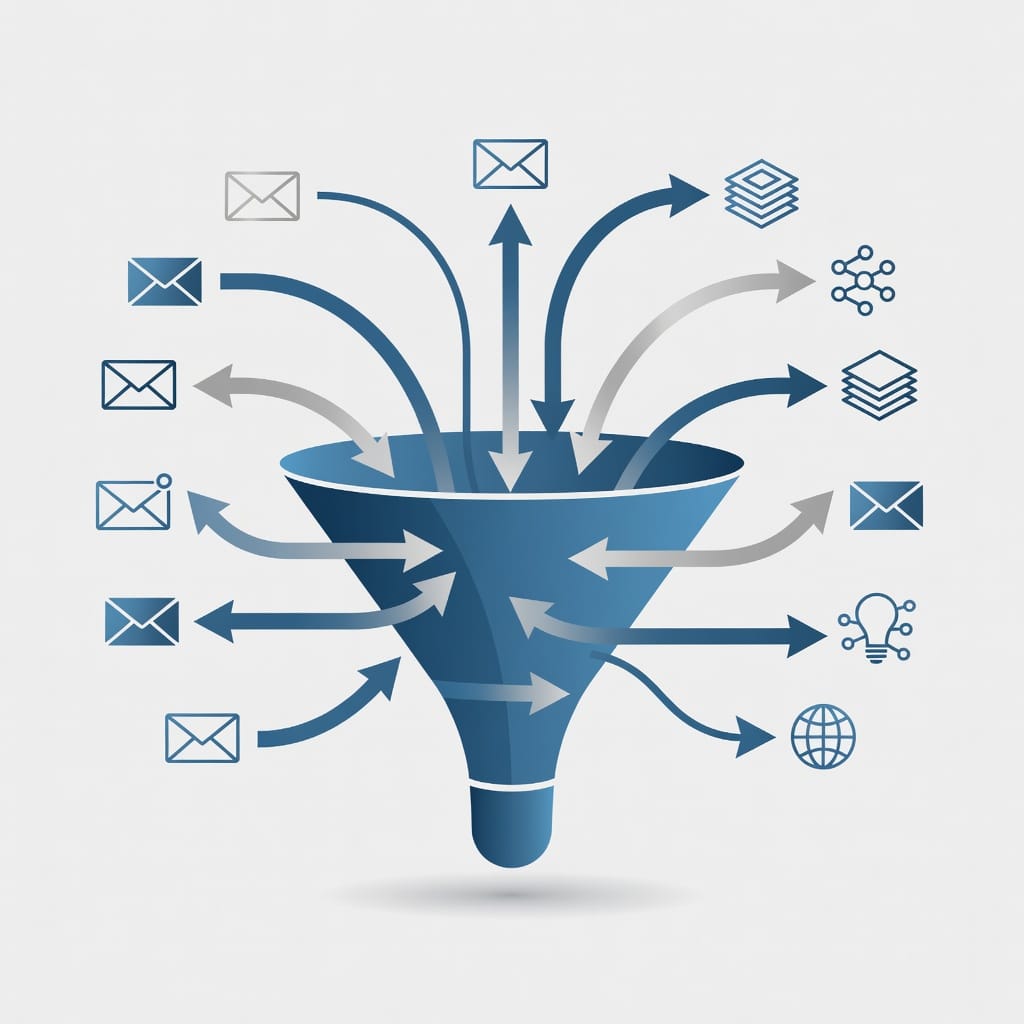
The Multi-Channel Lead Generation Framework
The most resilient lead generation strategies combine four channel categories. Each serves a distinct role in the buyer journey.
Channel Category 1: Inbound Content
Blog posts, SEO-optimized guides, case studies, and gated content. Inbound builds long-term organic traffic and positions your brand as a trusted resource.
Best for: Top-of-funnel awareness, SEO compounding, thought leadership.
Typical time to first lead: 3-6 months.
Cost per lead range: $50-$200 for mature programs.
Channel Category 2: Outbound Prospecting
Cold email, LinkedIn outreach, and direct mail. Outbound lets you target specific accounts and personas regardless of whether they have found you yet.
Best for: Account-based targeting, filling pipeline gaps, reaching buyers who do not search for your category.
Typical time to first lead: 2-4 weeks.
Cost per lead range: $30-$100 for well-run programs.
Channel Category 3: Paid Acquisition
LinkedIn Ads, Google Ads, programmatic display, and sponsored content. Paid channels accelerate volume but require tight targeting to avoid wasted spend.
Best for: Scaling proven offers, retargeting, ABM campaigns.
Typical time to first lead: Immediate.
Cost per lead range: $80-$400 depending on industry.
Channel Category 4: Community and Events
Webinars, virtual events, Slack/Discord communities, and in-person conferences. Community channels build trust and generate warm introductions.
Best for: High-ACV deals, relationship-driven sales, category creation.
Typical time to first lead: 1-3 months.
Cost per lead range: $100-$500 including production costs.
Channel Comparison Table
| Channel | Time to First Lead | CPL Range | Scalability | Best ICP Fit |
|---|---|---|---|---|
| Inbound Content | 3-6 months | $50-$200 | High | Broad ICP, self-serve buyers |
| Outbound Prospecting | 2-4 weeks | $30-$100 | Medium | Named accounts, high-ACV |
| Paid Acquisition | Immediate | $80-$400 | High | Any ICP with clear intent signals |
| Community & Events | 1-3 months | $100-$500 | Low | High-ACV, relationship-driven |
Budget Allocation Framework for Lead Generation
How should you split budget across channels? The answer depends on company stage and revenue target. Here is a framework I have used across multiple growth-stage companies.
Early Stage ($0-$5M ARR)
At this stage, you need to prove channel fit before scaling. Allocate 60% of lead generation budget to outbound prospecting and 40% to inbound content. Outbound gives you the fastest feedback loop on messaging and ICP. Inbound builds the long-term asset base.
Sample monthly budget ($5K total):
- Outbound (cold email infrastructure, data, sequencing): $3,000
- Content production and distribution: $2,000
Growth Stage ($5M-$20M ARR)
You have proven at least two channels. Now you optimize the mix. Allocate 35% outbound, 35% inbound, 20% paid, and 10% community.
Sample monthly budget ($20K total):
- Outbound: $7,000
- Inbound content: $7,000
- Paid acquisition: $4,000
- Community and events: $2,000
Scale Stage ($20M+ ARR)
All channels are proven. The goal is efficiency and attribution. Allocate 25% outbound, 30% inbound, 30% paid, and 15% community.
Sample monthly budget ($50K total):
- Outbound: $12,500
- Inbound content: $15,000
- Paid acquisition: $15,000
- Community and events: $7,500
“The biggest mistake I see is companies trying to run five channels at once with a team that can barely execute two. Pick two, get them working, then add the third.” – Marcus Webb, Head of Growth at a Series B analytics platform
Cold Email as a Top-of-Funnel Lead Generation Channel
Cold email is one of the most misunderstood lead generation channels. When done poorly, it burns domains and annoys prospects. When done correctly, it is the fastest path from zero to pipeline for B2B companies.
Why Cold Email Works for Lead Generation
Cold email works because it is direct, measurable, and scalable. Unlike social media or SEO, you control the targeting, the message, and the timing. A well-executed cold email campaign can generate 3-5% positive reply rates and 15-25% meeting booking rates from qualified replies.
The key is infrastructure. Sending cold email from a personal Gmail or a shared domain is a recipe for deliverability disaster. You need:
- A dedicated sending domain with proper authentication (SPF, DKIM, DMARC).
- A warmup process that gradually increases sending volume over 2-3 weeks.
- A unified inbox so replies from multiple sequences land in one place.
- List hygiene that removes invalid, role-based, and competitor email addresses before the first send.
The Cold Email Lead Generation Playbook
Step 1: Build a targeted list. Use firmographic filters (industry, company size, tech stack) and persona filters (title, seniority, function). A list of 500 highly targeted prospects outperforms 5,000 loosely matched contacts.
Step 2: Warm the domain. Start at 5-10 emails per day and increase by 20% every 2-3 days. Reach 30-40 per day by day 14. Use a warmup pool that sends and receives emails from real domains to build reputation.
Step 3: Write the sequence. Three to five touches over 10-14 days. First touch: value-driven, no pitch. Second touch: case study or social proof. Third touch: direct question or meeting request. Fourth and fifth: break-up or alternative angle.
Step 4: Track the right metrics. Not opens. Not clicks. Track positive replies (interested, not out-of-office), meetings booked, and pipeline generated. A 1% reply-to-meeting conversion is a good baseline.
Step 5: Scale what works. Double the list size for sequences that hit reply rate targets. Pause sequences that do not. Test subject lines, offers, and personalization variables systematically.
Case Study: How a B2B SaaS Company Built a $2M Pipeline from Cold Email
A B2B analytics company with $3M ARR needed to fill a pipeline gap in Q3. They had tried content marketing for six months with minimal results. Their ICP was VP-level data leaders at mid-market companies.
The approach: They built a list of 1,200 prospects using firmographic and technographic filters. They set up a dedicated sending domain with SPF, DKIM, and DMARC. They used a warmup pool for 14 days before the first campaign. The sequence was three touches over 10 days: a personalized insight based on the prospect’s tech stack, a case study from a similar company, and a direct meeting request.
The results: 4.2% positive reply rate, 22% meeting booking rate from replies, 38 meetings booked, 12 opportunities created, and $2.1M in pipeline generated over 90 days. Cost per meeting: $42.
Why it worked: The list was tight, the infrastructure was clean, and the messaging was personalized around the prospect’s actual technology environment rather than generic value propositions.
Lead Scoring with Intent Data
Not all leads are created equal. A lead scoring model separates prospects who are ready to buy from those who are still researching. The best models combine explicit data (demographics, firmographics) with implicit data (behavioral signals, intent data).
Building a Lead Scoring Model
Step 1: Define your ideal customer profile. Score attributes like industry, company size, revenue range, tech stack, and job title. Assign points based on historical conversion rates.
Step 2: Capture behavioral signals. Website visits, content downloads, email engagement, webinar attendance, and product demo requests. Weight recent activity higher than older activity.
Step 3: Incorporate intent data. Third-party intent data from sources like G2, TrustRadius, and review platforms can signal when a prospect is actively researching solutions in your category.
Step 4: Set thresholds. Define what score qualifies as MQL, SQL, and SAL. Review and adjust quarterly based on conversion data.
Lead Scoring Model Example
| Signal | Points | Decay (Days) |
|---|---|---|
| ICP match (title + company size + industry) | 30 | N/A |
| Visited pricing page | 20 | 30 |
| Downloaded whitepaper | 15 | 60 |
| Attended webinar | 15 | 90 |
| Clicked email CTA | 10 | 30 |
| Visited blog (non-pricing) | 5 | 30 |
| Intent signal (review site research) | 25 | 45 |
| Requested demo | 50 | N/A |
Thresholds: MQL at 50+, SQL at 70+, SAL at 90+.
“Most companies over-engineer lead scoring. Start with five signals, get the model working, then add complexity. A simple model that is used beats a complex model that is ignored.” – David Park, Director of Revenue Operations at a $50M ARR SaaS company
Email Deliverability: The Hidden Lead Generation Bottleneck
Email deliverability is the most overlooked factor in outbound lead generation. You can have the perfect list, the perfect copy, and the perfect offer, and still fail because your emails land in spam.
The Three Pillars of Deliverability
Authentication. SPF, DKIM, and DMARC records tell receiving servers that your email is legitimate. Without all three, major providers like Gmail and Outlook will mark your mail as suspicious. DMARC enforcement at p=reject is the gold standard.
Reputation. Sending reputation is built over time. A new domain has zero reputation. Warmup gradually increases sending volume to build trust. A warmup pool that simulates natural email activity (sending, receiving, replying, marking as not spam) accelerates this process.
Engagement. ISPs track how recipients interact with your email. High positive engagement (replies, forwards, marking as important) improves deliverability. High negative engagement (spam complaints, unsubscribes, deleting without reading) destroys it.
Deliverability Checklist
- [ ] SPF record configured for sending domain
- [ ] DKIM signature enabled
- [ ] DMARC policy set to p=quarantine or p=reject
- [ ] Dedicated sending domain (not your primary domain)
- [ ] Domain warmed up for 14+ days before campaigns
- [ ] Bounce rate below 3%
- [ ] Spam complaint rate below 0.1%
- [ ] List cleaned within last 30 days
- [ ] Reply monitoring set up (unified inbox)
- [ ] Custom tracking domain configured
Case Study: How Deliverability Fixes Doubled Reply Rates
A cybersecurity startup was running cold email campaigns with 1.2% reply rates. Their copy was strong, their list was clean, but their emails were landing in spam for 40% of recipients.
The diagnosis: They were sending from a subdomain of their primary corporate domain with no DMARC record. Their sending IP was shared with other senders who had poor reputations. They had no warmup process.
The fix: They set up a dedicated sending domain with full authentication (SPF, DKIM, DMARC at p=reject). They used a warmup pool for 21 days before the next campaign. They moved to a dedicated IP with a clean reputation.
The results: Reply rates increased from 1.2% to 4.8%. Inbox placement went from 60% to 97%. Pipeline from cold email increased 3x in the following quarter.
AI-Powered Lead Generation
Artificial intelligence is transforming lead generation across every channel. The teams that adopt AI tools effectively will have a significant advantage over those that do not.
AI for List Building and Enrichment
AI-powered tools can identify prospects who match your ICP by analyzing millions of data points across company databases, social profiles, and technology stacks. They can enrich contact records with accurate email addresses, phone numbers, and intent signals.
AI for Personalization at Scale
The most impactful use of AI in lead generation is personalization. AI can analyze a prospect’s LinkedIn activity, company news, and technology stack to generate personalized icebreakers and value propositions. This moves personalization from “Hi [First Name]” to “I noticed your team recently adopted Snowflake and you are hiring for three data engineering roles.”
AI for Sequence Optimization
AI can analyze historical campaign data to predict which subject lines, messaging angles, and send times will perform best for specific segments. It can also A/B test variables continuously and allocate more sends to winning variants.
AI for Lead Scoring and Prioritization
Machine learning models can score leads based on hundreds of signals that a rules-based system would miss. They can detect patterns like “prospects who visit the pricing page after reading a specific case study convert at 3x the average rate.”
“AI will not replace demand generation teams. But demand generation teams that use AI will replace those that do not. The gap is already visible in reply rates and pipeline velocity.” – Elena Torres, CMO of a B2B AI platform
Lead Generation KPIs: What to Measure
Tracking the right metrics is essential for optimizing your lead generation strategy. Here are the KPIs that matter most.
KPI Table
| Metric | Definition | Good Benchmark | Best-in-Class |
|---|---|---|---|
| Cost per Lead (CPL) | Total spend / total leads | $100-$300 | Under $100 |
| Lead-to-MQL Conversion | MQLs / total leads | 10-20% | 25%+ |
| MQL-to-SQL Conversion | SQLs / MQLs | 20-30% | 40%+ |
| SQL-to-Opportunity | Opportunities / SQLs | 30-50% | 60%+ |
| Opportunity-to-Won | Won deals / opportunities | 20-30% | 35%+ |
| Pipeline Generated | Total value of open opportunities | 3-5x spend | 5x+ spend |
| Time to First Meeting | Days from first touch to meeting | 14-21 days | Under 10 days |
| Reply Rate (Outbound) | Positive replies / emails sent | 2-4% | 5%+ |
| Inbox Placement Rate | Emails delivered to inbox / sent | 90-95% | 97%+ |
Account-Based Marketing (ABM) as a Lead Generation Strategy
Account-Based Marketing (ABM) is a highly targeted lead generation strategy that treats individual high-value accounts as markets in their own right. Instead of casting a wide net to capture as many leads as possible, ABM flips the funnel. You identify the exact accounts you want to close and orchestrate targeted campaigns specifically for the decision-makers within those organizations.
The Core Principles of ABM
Target Account Identification: ABM starts with rigorous selection. You must identify accounts that match your Ideal Customer Profile (ICP), have demonstrated intent, and offer a high Lifetime Value (LTV). Tools that analyze tech stacks, recent funding, executive changes, and content consumption are critical here.
Persona Mapping: Within each target account, buying decisions are rarely made by one person. The average B2B purchasing committee includes 6 to 10 stakeholders. You must map the organization to identify the champion, the economic buyer, the technical evaluator, and the end-users.
Hyper-Personalized Content: Once you know who you are targeting, the content must speak directly to their specific challenges. A generic “Increase Efficiency” whitepaper will not work. You need content like “How [Target Company] Can Reduce Logistics Costs by 15%.”
Orchestrated Outreach: Sales and marketing must move in lockstep. While marketing serves targeted ads and sends personalized direct mail, sales follows up with highly relevant cold emails and LinkedIn messages referencing the same themes.
Tiered ABM Strategy
Not all accounts require the same level of investment. A tiered approach ensures efficient resource allocation.
Tier 1: 1-to-1 ABM (Strategic ABM)
Reserved for your top 10-50 absolute highest-value accounts. Each account gets a fully customized strategy, bespoke content, dedicated landing pages, executive-to-executive outreach, and high-value direct mail (like custom-branded tech or personalized gifts). The goal is deep engagement with the entire buying committee.
Tier 2: 1-to-Few ABM (ABM Lite)
Applied to clusters of 50-200 accounts that share common attributes, such as industry, specific business challenges, or technology infrastructure. You create customized content for the cluster rather than individual companies. For example, a campaign targeting “Mid-market healthcare providers using legacy on-premise servers.”
Tier 3: 1-to-Many ABM (Programmatic ABM)
Used for hundreds or thousands of accounts. This relies heavily on marketing automation, CRM data, and dynamic content to personalize at scale. It looks similar to traditional demand generation but restricts targeting only to a pre-defined list of acceptable accounts.
Case Study: Enterprise ABM Success
A logistics software provider wanted to move upmarket and target Fortune 500 retailers. Traditional inbound marketing was attracting small ecommerce shops, not enterprise players.
The approach: They adopted a Tier 1 ABM strategy targeting just 30 massive retail accounts. They built personalized landing pages for each account, ran highly targeted LinkedIn ads visible only to logistics and supply chain titles at those specific companies, and sent direct mail packages containing personalized video players loaded with a custom pitch.
The results: Within six months, they secured meetings with 18 of the 30 accounts, generated 7 active opportunities, and closed 3 enterprise deals worth a combined $4.5M in annual recurring revenue. The cost of the campaign was $60,000, yielding a massive ROI.
Content Marketing Best Practices for Lead Generation
While outbound prospecting delivers fast results, inbound content marketing builds a compounding asset base that lowers your overall cost per lead over time. But creating content is not the same as creating a lead generation engine.
The Lead Magnet Ecosystem
To capture leads, you must offer something of value in exchange for contact information. The best lead magnets solve a specific, painful problem for your exact target audience.
Templates and Tools: These convert better than almost anything else. If you sell to HR professionals, an “Employee Onboarding Checklist Excel Template” will generate more high-quality leads than a 50-page ebook on the future of HR.
Original Research: Proprietary data is a goldmine. Surveying your audience, analyzing your platform data, and publishing an annual industry report positions your brand as an authority and attracts backlinks, which boosts your overall SEO.
Interactive Calculators: ROI calculators or maturity assessments are highly engaging. By asking the user for inputs about their business, you generate a lead and simultaneously collect qualification data.
Webinars and Virtual Events: Live events create urgency. The key is to avoid thinly veiled sales pitches. Deliver 45 minutes of pure, actionable education, and save the product tie-in for the final 5 minutes.
SEO and Intent-Driven Content
Lead generation through SEO requires targeting keywords with high commercial intent. Ranking for a broad term like “marketing” drives traffic but few leads. Ranking for a specific term like “B2B marketing automation software for small business” drives less traffic but highly qualified leads.
Bottom-of-Funnel (BOFU) Content: This includes comparison pages (Your Brand vs. Competitor), pricing guides, case studies, and “best [software category] tools” lists. These pages have the highest conversion rates because the searcher is already looking to buy.
Middle-of-Funnel (MOFU) Content: This includes “how-to” guides, templates, and frameworks that solve specific problems. The searcher knows they have a problem and is looking for solutions, but might not be ready to buy software yet.
Top-of-Funnel (TOFU) Content: Broad educational content that defines concepts. This drives the most traffic but the lowest immediate conversion. TOFU content is best used to build remarketing audiences or capture newsletter subscribers.
Social Media Strategies for B2B Leads
B2B buyers are active on social media, particularly LinkedIn, but traditional “post a link to our blog” strategies no longer work. Social platforms prioritize native content that keeps users on the platform.
LinkedIn Lead Generation
LinkedIn is the undisputed king of B2B social media. A successful strategy requires leveraging both personal profiles and company pages.
Founder-Led Growth: People buy from people. A CEO or Founder consistently sharing insights, contrarian takes, and behind-the-scenes building stories will almost always generate more engagement and leads than the corporate brand page.
Social Selling: Train your sales team to engage with prospects organically. This means leaving thoughtful comments on prospect posts, sharing relevant industry news, and building relationships before ever sending a pitch in a Direct Message.
Native Lead Gen Forms: When running LinkedIn Ads, use the platform’s native Lead Gen Forms rather than driving traffic to a landing page. Because the forms auto-populate with the user’s LinkedIn profile data, conversion rates are typically 2-3x higher.
Video Marketing for Lead Generation
Video is increasingly important in B2B. It builds trust faster than text and allows you to explain complex products simply.
Micro-Demos: Short, 2-minute videos showing exactly how your product solves a specific problem. Distribute these on LinkedIn and YouTube.
Personalized Video Outreach: Using tools like Loom or Vidyard to record quick, customized videos for high-value prospects. A cold email with a personalized video thumbnail often sees significantly higher click-through rates.
YouTube SEO: YouTube is the second largest search engine. Creating “how-to” videos optimized for the exact questions your buyers are asking ensures you capture intent-driven traffic. Include clear calls-to-action (CTAs) directing viewers to lead magnets in the description.
How Mystrika Powers Lead Generation Campaigns
Mystrika is a cold email outreach platform designed for B2B lead generation teams who need reliable deliverability, intelligent sequencing, and unified inbox management.
Warmup pool. Mystrika’s warmup pool sends and receives emails from a network of real domains to build sending reputation before campaigns launch. This addresses the most common cause of cold email failure: insufficient domain reputation.
Sequencer. The visual sequence builder supports multi-step campaigns with conditional branching, delay customization, and A/B testing. You can build sequences that adapt based on prospect behavior.
Unified inbox. All replies from all sequences land in one inbox. No switching between tabs or accounts. Reply detection is real-time, so you never miss a meeting request.
AI writer. The AI writer generates personalized icebreakers based on prospect data. It analyzes LinkedIn profiles, company news, and technology stacks to produce relevant opening lines.
Whitelabel. Agencies and teams can whitelabel the platform under their own brand. This is useful for lead generation agencies that want to present a unified brand to their clients.
Pricing. Starting at $15 per month, Mystrika is accessible for small teams while scaling to enterprise needs.
For teams that need additional email infrastructure, DoYouMail provides dedicated SMTP servers with clean IPs, and FilterBounce handles real-time email verification to keep bounce rates below 1%.
Building Your Lead Generation Tech Stack
A modern lead generation tech stack has five layers.
Layer 1: Data and Enrichment. Tools that provide prospect data, firmographic enrichment, and intent signals. Examples include ZoomInfo, Clearbit, and similar platforms.
Layer 2: Outreach and Sequencing. Platforms that manage multi-channel sequences across email and LinkedIn. Mystrika handles the email side with deliverability-first architecture.
Layer 3: Email Infrastructure. Dedicated sending domains, SMTP servers, warmup pools, and deliverability monitoring. DoYouMail provides SMTP infrastructure. Mystrika provides warmup and unified inbox.
Layer 4: CRM and Pipeline Management. Salesforce, HubSpot, or similar CRM where leads are scored, tracked, and handed to sales.
Layer 5: Analytics and Attribution. Tools that measure channel performance, attribution, and ROI. Built-in CRM reporting or dedicated tools like Bizible or Full Circle.
Case Study: A Lead Generation Agency Scales from 0 to 50 Campaigns
A B2B lead generation agency started with five clients and a manual cold email process. Each campaign required separate Gmail accounts, manual follow-ups, and spreadsheets for tracking. They were spending 15 hours per week on administrative work.
The transformation: They adopted Mystrika for all client campaigns. They set up dedicated sending domains per client with proper authentication. They used the warmup pool to build domain reputation before each campaign launch. They built sequence templates that could be customized per client in under 30 minutes.
The results: They scaled from 5 to 50 concurrent campaigns in six months without adding headcount. Reply rates averaged 3.8% across all campaigns. Inbox placement was 96%. They reduced campaign setup time from 8 hours to 45 minutes.
Integrating Lead Generation with Sales
Lead generation does not end when a prospect replies. The handoff from marketing to sales is where most pipeline leaks occur.
The Handoff Protocol
Step 1: Define what constitutes a qualified lead. Marketing and sales must agree on the definition. Document it. Review it quarterly.
Step 2: Set response time SLAs. Reply to inbound leads within 5 minutes during business hours. Reply to outbound replies within 1 hour. Speed to lead is a proven conversion factor.
Step 3: Provide context in the handoff. The sales rep should know what channel the lead came from, what content they engaged with, what sequence they received, and what their lead score is.
Step 4: Create a feedback loop. Sales tells marketing which leads converted and which did not. Marketing adjusts targeting, scoring, and messaging based on that data.
Key Takeaways
- A lead generation strategy must be multi-channel by design. Single-channel approaches are fragile and rarely scale.
- Cold email is the fastest path to pipeline for B2B companies when infrastructure is prioritized over volume.
- Email deliverability is the most overlooked factor in outbound lead generation. Authentication, warmup, and engagement monitoring are non-negotiable.
- Lead scoring with intent data separates high-performing demand generation teams from average ones.
- AI is transforming list building, personalization, sequence optimization, and lead scoring. Early adopters have a measurable advantage.
- Budget allocation should match company stage. Early stage: outbound-heavy. Growth stage: balanced. Scale stage: diversified.
- The marketing-to-sales handoff is where most pipeline leaks occur. Define qualification criteria, set response time SLAs, and create a feedback loop.
Frequently Asked Questions
What is the most effective lead generation strategy for B2B companies?
The most effective B2B lead generation strategy combines inbound content marketing with outbound prospecting. Inbound builds long-term organic traffic and authority. Outbound provides immediate pipeline and targeted account coverage. Companies using both channels generate 3.5x more qualified pipeline than single-channel approaches.
How much should I spend on lead generation?
A common benchmark is 10-15% of revenue for companies under $10M ARR and 5-10% for companies above $10M ARR. The allocation across channels depends on stage. Early-stage companies should weight toward outbound for faster feedback loops. Growth-stage companies should balance inbound and outbound equally.
How long does it take to see results from lead generation?
Inbound content takes 3-6 months to generate consistent leads. Outbound prospecting can generate meetings within 2-4 weeks. Paid acquisition is immediate but requires tight targeting to avoid wasted spend. A balanced strategy uses outbound for short-term pipeline and inbound for long-term sustainability.
What is a good cost per lead for B2B?
A good cost per lead for B2B ranges from $50 to $300 depending on industry, channel, and target account size. Outbound typically has the lowest CPL ($30-$100). Paid acquisition has the highest ($80-$400). The key metric is not CPL alone but cost per opportunity and cost per won deal.
How do I improve cold email deliverability?
Improve cold email deliverability by setting up SPF, DKIM, and DMARC records on a dedicated sending domain. Warm up the domain for 14-21 days before campaigns. Keep bounce rates below 3% and spam complaint rates below 0.1%. Use a warmup pool that simulates natural email activity. Monitor inbox placement rates and adjust based on data.
What is lead scoring and why does it matter?
Lead scoring is a methodology for ranking prospects based on their fit and engagement level. It matters because it helps sales prioritize the right prospects and helps marketing prove pipeline contribution. A good lead scoring model combines firmographic fit with behavioral signals and intent data.
How does AI change lead generation?
AI changes lead generation by automating list building, enabling personalization at scale, optimizing sequence timing and messaging, and improving lead scoring accuracy. Teams using AI tools see measurable improvements in reply rates, conversion rates, and pipeline velocity compared to teams using manual processes.
What tools do I need for B2B lead generation?
A B2B lead generation tech stack needs five layers: data and enrichment, outreach and sequencing, email infrastructure, CRM, and analytics. Mystrika handles outreach, sequencing, warmup, and unified inbox. DoYouMail provides SMTP infrastructure. FilterBounce handles email verification. A CRM like HubSpot or Salesforce manages pipeline.
How do I measure lead generation success?
Measure lead generation success with KPIs including cost per lead, lead-to-MQL conversion rate, MQL-to-SQL conversion rate, pipeline generated, reply rates for outbound, and inbox placement rates. The most important metric is pipeline generated relative to spend. A 3-5x pipeline-to-spend ratio is a healthy benchmark.
What is the difference between lead generation and demand generation?
Lead generation focuses on capturing contact information from prospects who have shown interest. Demand generation focuses on creating awareness and interest in your product or category. Lead generation is a subset of demand generation. Demand generation feeds the top of the funnel. Lead generation converts that interest into identifiable prospects.