
Your follow-up email subject line determines whether your message reaches the inbox or the spam folder. Most cold email sequences fail not because the offer is weak, but because prospects never see the follow-ups that would convert them.
Research indicates that 80% of sales require five or more follow-ups to close, with the majority of conversions happening between touches 5 and 12. Yet nearly half of sales representatives give up after a single follow-up attempt. The gap between these numbers represents millions in lost pipeline.
This guide addresses the specific challenge of crafting follow-up email subject lines that improve open rates, maintain deliverability, and respect prospect attention. You will learn timing strategies, industry-specific approaches, multi-channel coordination, testing methodology, and compliance requirements that separate high-performing sequences from ignored ones.
Why Most Follow-Up Emails Never Get Opened
Follow-up emails fail for reasons that extend beyond subject line copy. Understanding these systemic issues helps you diagnose whether poor performance stems from your subject lines or from infrastructure problems that no amount of clever copy can fix.
Cold email open rates have declined from approximately 36% in 2023 to 27.7% in 2024 across multiple industry benchmarks. This decline reflects increased inbox competition, stricter spam filter algorithms, and prospect fatigue from poorly executed outreach. Your follow-ups compete in this environment, not in a vacuum.
The most common failure mode is not a bad subject line but a sequence that never reaches the inbox. Cold email warmup best practices directly impact whether your follow-ups appear in the primary inbox or the promotions tab. Without proper warmup, even perfectly crafted subject lines land in spam folders where they generate zero opens.
List quality compounds this problem. Sending to unverified or stale email addresses triggers spam filters that penalize your entire domain. Using an email verification service before building sequences prevents the deliverability damage that makes follow-ups invisible regardless of subject line quality.
The “just checking in” problem is real but often misdiagnosed. Prospects ignore these subject lines not because they lack curiosity, but because they signal low-value noise. A follow-up subject line must promise something the recipient values, whether that is new information, a relevant resource, or a question that requires their expertise to answer.
Missing personalization context creates another failure point. Subject lines that reference a previous conversation or specific detail from the initial email perform better than generic follow-ups. The recipient needs a reason to reopen the thread, and that reason must be immediately apparent from the subject line preview.
The Science of Follow-Up Timing and Cadence
Timing affects open rates as much as subject line copy. Sending follow-ups too quickly signals desperation; waiting too long allows the conversation to go cold. Optimal spacing varies by industry, offer value, and prospect engagement signals.
Most successful sequences use 3-5 day gaps between touches 2 through 4, extending to 7-10 day intervals for touches 5 and beyond. This pattern respects the recipient’s processing time while maintaining top-of-mind awareness. However, these are starting points, not universal rules.
Your list’s engagement patterns should determine your actual cadence. If prospects typically open emails within 24 hours of receipt, a 3-day gap makes sense. If your audience engages more slowly, extending the interval prevents the perception of spam while giving each touch time to land.
Industry variation matters. SaaS prospects often respond to faster cadences because they evaluate multiple tools simultaneously and need frequent reminders. Agency prospects may prefer longer intervals because purchasing decisions involve more stakeholders and longer evaluation periods. E-commerce prospects fall somewhere between these extremes depending on purchase cycle length.
Monitor reply rates and engagement signals rather than following rigid timing templates. A prospect who opens your second follow-up but does not reply may need more time before the third touch. A prospect who clicks a link in your initial email but does not convert may benefit from a faster follow-up that addresses the specific content they viewed.
The key insight is that timing and subject line strategy interact. A subject line promising “new case study” performs differently when sent 3 days after the initial email versus 10 days later. The promised value must align with the elapsed time since the previous touch.

40+ Follow-Up Email Subject Line Examples by Scenario
Effective follow-up subject lines promise value, reference context, and create curiosity without triggering spam filters. The examples below are organized by scenario, with each subject line designed to work as part of a threaded conversation rather than a standalone message.
Post-Demo Sales Follow-Ups
After a product demonstration, the prospect has specific questions and objections that need addressing. Your follow-up subject line should reference the demo content while promising next steps or additional information.
1. “Quick question about the [specific feature] we discussed”
2. “Following up on our demo – [specific pain point] solution”
3. “Your [role] asked about [specific topic] during our call”
4. “Demo recap: Next steps for [company name]”
5. “One thing I forgot to mention about [specific capability]”
6. “[Prospect name], here’s the [resource] we discussed”
7. “Addressing your concern about [specific objection]”
8. “Timeline for [implementation goal] we outlined”
9. “Your team’s feedback on [demo element]”
10. “Next steps after our conversation about [topic]”
These subject lines work because they reference specific details from the demo, creating continuity and demonstrating that you listened. Generic “following up” subject lines lack this context and perform poorly.
Cold Outreach Bump Emails
When the initial email receives no response, the follow-up must provide a reason to reopen the thread. The subject line should either add new information or reframe the original value proposition.
11. “Thought this might help with [specific challenge]”
12. “[Company name] just published research on [topic]”
13. “Quick update on [relevant industry development]”
14. “Saw your post about [topic] – relevant to our conversation”
15. “One more data point on [original value proposition]”
16. “[Mutual connection] mentioned you might find this useful”
17. “Updated [resource type] on [topic we discussed]”
18. “Your competitor [competitor name] is doing [specific action]”
19. “New case study: [relevant result] in [timeframe]”
20. “Addressing the [specific concern] you might have”
The pattern here is adding value rather than asking for attention. Each subject line promises something the recipient can use, whether that is new research, a relevant connection, or competitive intelligence.
Re-Engagement and Break-Up Emails
After multiple unanswered follow-ups, the break-up email serves two purposes: it creates one final opportunity for engagement, and it cleans your list of genuinely uninterested prospects. The subject line must be direct without being aggressive.
21. “Permission to close your file?”
22. “Should I remove you from this sequence?”
23. “Last follow-up before I move on”
24. “Closing the loop on [original topic]”
25. “One final resource before I stop reaching out”
26. “Are you still the right person for [topic]?”
27. “Updating my records – still interested in [topic]?”
28. “Final note on [original value proposition]”
29. “Should we keep this conversation open?”
30. “Moving [company name] to inactive – confirm?”
The “Permission to close your file?” subject line has been cited with a 76% response rate in some research, though results vary significantly by list quality and industry. The directness works because it respects the recipient’s time and gives them an easy opt-out that does not require crafting a polite decline.
Value-Add and Resource Sharing Follow-Ups
When your initial email promised a resource or the prospect showed interest in specific content, the follow-up delivers on that promise. The subject line should reference the promised item directly.
31. “The [resource type] I mentioned for [specific use case]”
32. “Here’s that [specific deliverable] we discussed”
33. “Your copy of [resource name] attached”
34. “Following up with the [template/guide/checklist]”
35. “[Prospect name]’s copy of [resource] ready for download”
36. “The [specific solution] for [their stated problem]”
37. “Quick win: [specific tactic] that takes 5 minutes”
38. “Benchmark data on [topic] you asked about”
39. “Your industry comparison: [relevant metric]”
40. “The [tool/resource] that addresses [their goal]”
These subject lines work because they deliver on a previous commitment. The recipient has a reason to open the email that extends beyond your desire to sell something.
Networking and Partnership Follow-Ups
When the goal is relationship building rather than immediate conversion, the subject line should emphasize mutual benefit or shared interest rather than a specific ask.
41. “Loved your take on [topic] – wanted to share”
42. “Fellow [industry/profession] here with a question”
43. “Collaboration opportunity on [shared interest area]”
44. “Your [specific content] helped me with [outcome]”
45. “Connecting [mutual connection] who might help you with [topic]”
46. “Thought you’d find [resource] valuable given your work on [topic]”
47. “Quick intro to [relevant person/resource] for your [goal]”
48. “Following up on our conversation at [event]”
49. “Your [specific achievement] caught my attention”
50. “Potential synergy between [their work] and [your work]”
Networking follow-ups succeed when they position the sender as a helpful connection rather than a salesperson. The subject line must signal that the email contains something useful, not another pitch.
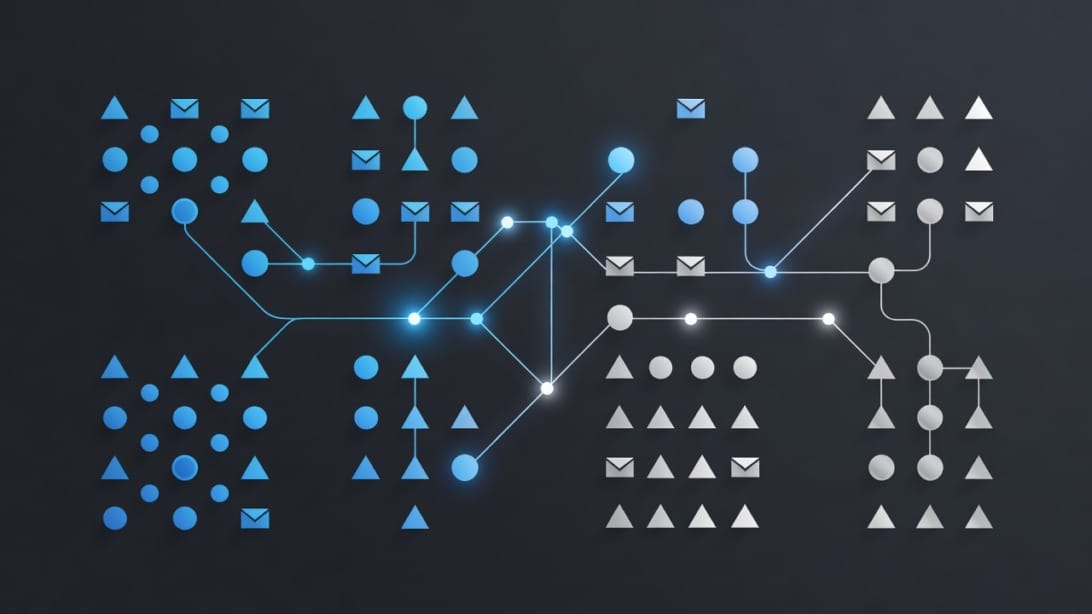
Visualizing Optimal Follow-Up Cadence
[Image: Timeline visualization of optimal follow-up email spacing intervals would appear here, showing abstract representation of touch points with spacing intervals using geometric shapes]
Timing decisions should be data-driven rather than arbitrary. The 3-5 day gap recommendation comes from observing engagement patterns across thousands of sequences, but your specific list may respond differently. Testing timing as a variable alongside subject line copy provides more reliable guidance than following generic templates.
Consider the recipient’s likely workflow. A C-level executive who checks email twice daily needs different spacing than a mid-level manager who lives in their inbox. The goal is to arrive when the previous touch has been processed but not forgotten.
Seasonal and weekly patterns also matter. Emails sent on Monday mornings compete with the weekend email backlog. Tuesday through Thursday generally see higher engagement for B2B outreach. Avoid sending follow-ups on Friday afternoons when recipients are mentally checking out for the weekend.
The interaction between timing and subject line strategy deserves attention. A subject line that worked well for a 3-day follow-up may underperform at a 10-day interval because the context has faded. Conversely, a subject line promising substantial new information may work better after a longer gap when the recipient has had time to encounter the problem again.
Industry-Specific Follow-Up Strategies
Different industries have different evaluation cycles, stakeholder requirements, and communication norms. A follow-up strategy that works for SaaS may fail for enterprise software sales or e-commerce partnerships.
SaaS and Technology
SaaS prospects typically evaluate multiple tools simultaneously and respond to faster cadences. They consume content voraciously and appreciate data-driven follow-ups that help them make comparisons.
Effective SaaS follow-up subject lines often reference:
- Specific feature comparisons
- Integration capabilities with their existing stack
- ROI calculations or time-to-value metrics
- Security and compliance certifications
- Customer success stories from similar companies
SaaS prospects also respond well to follow-ups that address implementation concerns. Subject lines that promise “setup in under 30 minutes” or “migration support included” reduce perceived risk and increase open rates.
Agency and Professional Services
Agency prospects have longer sales cycles and more stakeholders involved in purchasing decisions. They need follow-ups that demonstrate strategic thinking rather than tactical features.
Effective agency follow-up subject lines often reference:
- Strategic frameworks relevant to their challenges
- Industry trend analysis
- Competitive positioning opportunities
- Team structure and collaboration models
- Case studies with measurable business outcomes
The longer evaluation cycle means follow-ups should space further apart, with 7-10 day intervals between touches being more appropriate than the 3-5 day SaaS cadence.
E-Commerce and Retail
E-commerce prospects evaluate based on margins, volume commitments, and operational fit. They need follow-ups that address logistics, not just product features.
Effective e-commerce follow-up subject lines often reference:
- Margin improvement calculations
- Inventory and fulfillment capabilities
- Returns and customer service processes
- Integration with their existing platforms
- Volume pricing and terms
E-commerce prospects may respond to visual follow-ups that include product images or catalog previews, making the email more than just text.

Multi-Channel Follow-Up Sequences
Email alone is rarely the optimal follow-up strategy. Prospects who do not respond to email may engage on LinkedIn, and vice versa. Coordinating these channels requires understanding how each platform’s norms affect response expectations.
LinkedIn + Email Coordination
When a prospect ignores your email follow-ups but engages with your LinkedIn content, the next email follow-up can reference that engagement. The subject line should acknowledge the LinkedIn interaction without being presumptuous.
Example: “Saw you liked my post about [topic] – quick question”
This approach works because it demonstrates that you are paying attention to their signals across channels, not just spraying messages indiscriminately.
Timing Across Channels
LinkedIn messages can be sent more frequently than emails without triggering spam perceptions. A prospect who receives an email follow-up on day 3 might receive a LinkedIn connection request on day 5, with the email subject line referencing the LinkedIn interaction.
The key is maintaining a coherent narrative across channels. The prospect should feel that you are thoughtfully coordinating touchpoints, not that multiple team members are independently reaching out.
Channel-Specific Value Propositions
Different channels support different types of value. Email works well for detailed resources and formal proposals. LinkedIn works well for quick questions, introductions, and social proof through comments and shares.
Your follow-up subject line should match the channel’s strengths. An email subject line promising a detailed case study works because email supports attachments and longer content. A LinkedIn message asking a quick question works because the platform supports rapid back-and-forth.
Testing Methodology: From Guesswork to Data
Subject line testing separates high-performing sequences from mediocre ones. However, most testing approaches lack the statistical rigor needed to produce reliable results. Running valid tests requires understanding sample sizes, significance thresholds, and the difference between directional signals and conclusive evidence.
Sample Size Requirements
Each subject line variant should receive at least 100 sends before you consider pausing it. This threshold ensures that random variation does not drive your conclusions. Variants that receive fewer than 100 sends may show misleading performance that does not replicate.
For conclusive results, aim for 200+ sends per variant before declaring a winner. At this sample size, a 5% difference in open rates between variants is likely to be statistically significant rather than random noise.
Statistical Significance Calculation
A 5% open rate difference between two subject lines may or may not be meaningful depending on your sample size. Use a statistical significance calculator to determine whether your results are reliable or whether you need more data.
The formula for statistical significance in A/B testing accounts for both the absolute difference between variants and the sample size. A small difference with a large sample may be significant, while a large difference with a small sample may not be.
Testing Multiple Variables
Subject line testing works best when you isolate one variable at a time. Testing subject line length, emoji usage, and personalization depth simultaneously makes it impossible to determine which change drove the result.
Run sequential tests rather than trying to optimize everything at once. First test length, then test emoji usage with the winning length, then test personalization with the winning combination of length and emoji approach.
Interpreting Results Over Time
A subject line that spikes opens in week one but drops in week two may indicate novelty appeal without staying power. The initial curiosity boost fades as recipients learn that the subject line overpromised.
Monitor performance over at least two weeks before declaring a winner. Subject lines that maintain consistent open rates across multiple sends are more reliable than those with high initial performance that decays.
Handling Negative Replies and Re-Engagement
Not every prospect response is positive. Negative replies require specific handling that protects your deliverability and reputation while respecting the prospect’s explicit wishes.
Opt-Out Request Handling
Any prospect who explicitly asks to be removed from your sequences must be removed immediately. Do not send a confirmation email or attempt to re-engage. Simply remove them from all active sequences and suppress them from future campaigns.
CAN-SPAM and GDPR both require honoring opt-out requests promptly. Failure to do so exposes you to legal liability and damages your sender reputation with mailbox providers.
Negative But Non-Explicit Replies
Some prospects reply with negative sentiment without explicitly opting out. These replies require judgment. A reply that says “not interested, thanks” should be treated as an opt-out. A reply that says “this is not a priority right now” might warrant a low-pressure re-engagement attempt after 60-90 days.
The distinction matters because treating all negative replies as permanent opt-outs reduces your addressable market unnecessarily. However, re-engaging too aggressively damages your reputation and risks complaints.
Re-Engagement Timing
When attempting to re-engage a prospect who previously expressed disinterest, wait at least 60-90 days before sending any follow-up. This interval respects their previous signal while allowing time for their situation to change.
The re-engagement subject line should acknowledge the previous interaction without being presumptuous. “Following up on our earlier conversation about [topic]” works better than pretending the previous negative reply did not happen.
Reputation Protection
Every negative reply is an opportunity to protect or damage your sender reputation. Responding defensively or arguing with the prospect’s decision triggers complaints and blocks. Responding graciously and honoring their wishes protects your deliverability for future campaigns.
Compliance Requirements for Follow-Up Emails
Follow-up emails must adhere to several key regulations to avoid legal penalties and protect your sender reputation. The primary frameworks governing outreach include CAN-SPAM (US), GDPR (EU), and CASL (Canada), each with distinct requirements around consent, identification, and opt-out mechanisms.
Every follow-up email must include:
- A clear sender identity and physical mailing address
- An honest, non-deceptive subject line that reflects the email’s content
- A visible and functional unsubscribe link that processes opt-outs within 10 business days (CAN-SPAM) or immediately (GDPR)
- Documented proof of consent or legitimate interest, especially for EU-based recipients
- No deceptive headers or misleading “Re:” prefixes if no prior conversation exists
For cold outreach sequences specifically, honor unsubscribe requests across your entire sequence, not just a single email. Suppress opted-out contacts permanently in your mailing list. GDPR additionally requires that you only contact prospects where a legitimate business interest can be clearly justified and documented. Non-compliance can result in fines up to €20 million or 4% of global annual revenue under GDPR.
Mobile Optimization Beyond Character Count
Mobile devices display only 33-43 characters of subject line text before truncation, but optimization extends beyond simply staying under this limit. Different mobile clients render emojis, preview text, and sender names differently, creating additional variables to test.
Preview Text Strategy
The preview text that appears below the subject line in most email clients provides an additional opportunity to communicate value. This text should complement the subject line rather than repeating it, giving recipients two distinct reasons to open.
Effective preview text often includes a question, a specific number, or a time-bound offer that creates urgency without being spammy. The combination of subject line and preview text should tell a complete story about what the email contains.
Emoji Rendering Across Clients
Emojis render differently across iOS, Android, and desktop clients. An emoji that appears professional on one platform may appear unprofessional or even inappropriate on another. Testing emoji rendering across your target audience’s devices prevents surprises.
Use at most one emoji per subject line, and place it at the beginning or end rather than embedded in the middle. This positioning improves rendering consistency and prevents the emoji from breaking the subject line’s readability.
Sender Name Optimization
The sender name often receives more attention than the subject line on mobile devices. Recipients who recognize and trust your sender name will open emails even with mediocre subject lines. Building sender recognition through consistent naming and brand visibility improves open rates across all subject line variations.
Integrating Subject Lines with Email Body Templates
Subject lines and email bodies work together as a system. A subject line that promises specific information must deliver that information in the email body, or the recipient learns to ignore future subject lines from your domain.
Promise-Delivery Alignment
Every follow-up subject line makes an implicit promise about what the email contains. “Quick question about [topic]” promises that the email body contains a single, answerable question rather than a lengthy pitch. “Thought this might help with [challenge]” promises that the email body contains genuinely useful information rather than a thinly disguised sales message.
Breaking these promises trains recipients to ignore your emails. Maintaining alignment between subject line promises and email body delivery builds trust that improves open rates over time.
Thread Context Maintenance
When following up in the same email thread, the email body should reference the previous conversation without requiring the recipient to scroll up to understand the context. This is especially important for follow-ups sent days or weeks after the previous touch.
The email body should restate the key point from the previous message and add new information, rather than assuming the recipient remembers the entire conversation history.

Platform Comparison: Choosing the Right Tool for Follow-Up Optimization
Different cold email platforms offer different capabilities for subject line testing, deliverability management, and sequence automation. Understanding these differences helps you choose a platform that supports your specific follow-up strategy rather than constraining it.
Mystrika’s A/B testing features include centralized test management, statistical significance calculation, and automated winner selection based on your defined success metrics. These capabilities reduce the manual work required to run valid tests and apply learnings across multiple sequences.
The platform also provides warmup automation that directly addresses the deliverability issues that cause follow-ups to land in spam folders. Without this infrastructure, even the best subject line strategy fails because emails never reach the inbox.
DoYouMail offers complementary capabilities for high-volume senders who need to manage multiple domains and sending identities. The platform’s focus on deliverability infrastructure makes it a strong choice for teams running large-scale follow-up campaigns across diverse prospect lists.
Filter Bounce provides email verification that prevents the list quality issues that damage follow-up performance. Verifying emails before building sequences prevents the deliverability penalties that make even well-crafted subject lines invisible.
Key Takeaways
- Follow-up email subject lines must promise specific value rather than generic check-ins, with each subject line earning its place by answering a recipient question or providing new information.
- Timing and cadence affect open rates as much as subject line copy, with optimal spacing varying by industry, offer value, and prospect engagement patterns.
- Industry-specific strategies outperform generic templates, with SaaS, agency, and e-commerce prospects requiring different approaches to subject line content and follow-up frequency.
- Multi-channel coordination between email and LinkedIn improves response rates when touchpoints tell a coherent story rather than appearing as independent outreach attempts.
- Valid A/B testing requires adequate sample sizes (100+ sends per variant minimum, 200+ for conclusive results) and statistical significance verification rather than directional signals alone.
- Negative reply handling protects deliverability and reputation, with explicit opt-outs requiring immediate removal and non-explicit negative replies requiring judgment about re-engagement timing.
- Compliance requirements for follow-up emails include honoring opt-out requests, maintaining records of consent, and respecting jurisdictional differences in cold email regulations.
- Mobile optimization extends beyond character count to include preview text strategy, emoji rendering consistency, and sender name recognition building.
- Subject line promises must align with email body delivery, or recipients learn to ignore future communications from your domain.
- Platform capabilities for testing, warmup, and verification directly impact follow-up performance, making infrastructure choices as important as subject line copy decisions.
Frequently Asked Questions
How long should a follow-up subject line be?
Keep follow-up subject lines under 33 characters for full mobile visibility, though most email clients truncate at 33-43 characters. The goal is ensuring the complete subject line appears in mobile previews, which requires testing across your audience’s devices rather than following a universal character limit.
Does changing the subject line on follow-ups in the same thread affect deliverability?
Yes, changing subject lines mid-thread breaks email threading and risks confusing spam filters that interpret the change as an attempt to evade detection. Keep the same subject line consistent throughout a follow-up sequence to maintain context and protect deliverability.
What is a good open rate for follow-up emails?
Target 40-50% open rates for cold email follow-ups, with anything above 30% considered decent performance. Rates below 20% indicate issues with your subject line strategy, list quality, or deliverability infrastructure that need immediate attention through testing and infrastructure improvements.
How many follow-ups should I send before giving up?
Research indicates that 80% of sales require five or more follow-ups to close, with most conversions happening between touches 5 and 12. However, the optimal number depends on your industry, offer value, and prospect engagement signals. Monitor reply rates and engagement patterns rather than following a rigid number that may not fit your specific situation.
Should I use emojis in follow-up subject lines?
Emojis can increase open rates according to some studies, but results vary significantly by audience and industry. Test emojis with your specific list rather than assuming universal improvement. Use at most one emoji, place it at the beginning or end of the subject line, and ensure it renders correctly across mobile clients before deploying broadly.
How long should I wait between follow-up emails?
Optimal spacing varies by industry and offer, but most successful sequences use 3-5 day gaps between touches 2-4, extending to 7-10 days for touches 5+. Monitor engagement signals and adjust based on your specific audience response patterns rather than following generic timing templates that may not match your list’s behavior.
How do I handle prospects who reply negatively or ask to be removed?
Immediately honor all opt-out requests and remove those prospects from your active sequences. For negative but non-explicit replies, wait 60-90 days before attempting a low-pressure re-engagement email. Never argue with or try to overcome explicit objections in follow-up sequences, as this damages your reputation and risks complaints.
What should I do if my follow-up open rates are consistently below 20%?
Open rates below 20% indicate systemic issues that subject line changes alone cannot fix. Audit your email warmup status, verify that your list contains only valid email addresses, check that your sending domain has proper authentication records, and review whether your offer aligns with your audience’s actual needs before continuing to optimize subject lines.
Can I send follow-ups to prospects who opened but did not reply to my initial email?
Yes, prospects who opened your initial email have demonstrated interest and are appropriate targets for follow-up. However, customize the follow-up subject line to reference the content they viewed rather than sending a generic bump email. This demonstrates that you are tracking engagement and tailoring your approach accordingly.
How do I know if my A/B test results are statistically significant?
A subject line variant needs at least 200 sends to produce conclusive results, with a 5% or greater difference between variants typically required for statistical significance. Use a statistical significance calculator rather than relying on directional signals from small sample sizes that may not replicate in larger tests.