
B2B sales is the process of selling products, services, or software from one business to another. Unlike consumer sales, B2B transactions involve higher price points, longer decision cycles, and multiple stakeholders who must reach consensus before purchasing. In 2026, the B2B sales landscape has shifted dramatically – cold email has become the dominant outreach channel, AI tools are reshaping how reps research and sequence their outreach, and buying committees have grown larger and more fragmented than ever before.
This guide covers everything you need to know about B2B sales in 2026: the step-by-step process, how it differs from B2C, the psychology of modern buying committees, the biggest challenges and how to solve them, and the specific tools and strategies that separate top-performing teams from the rest.
What Is B2B Sales? A Clear Definition
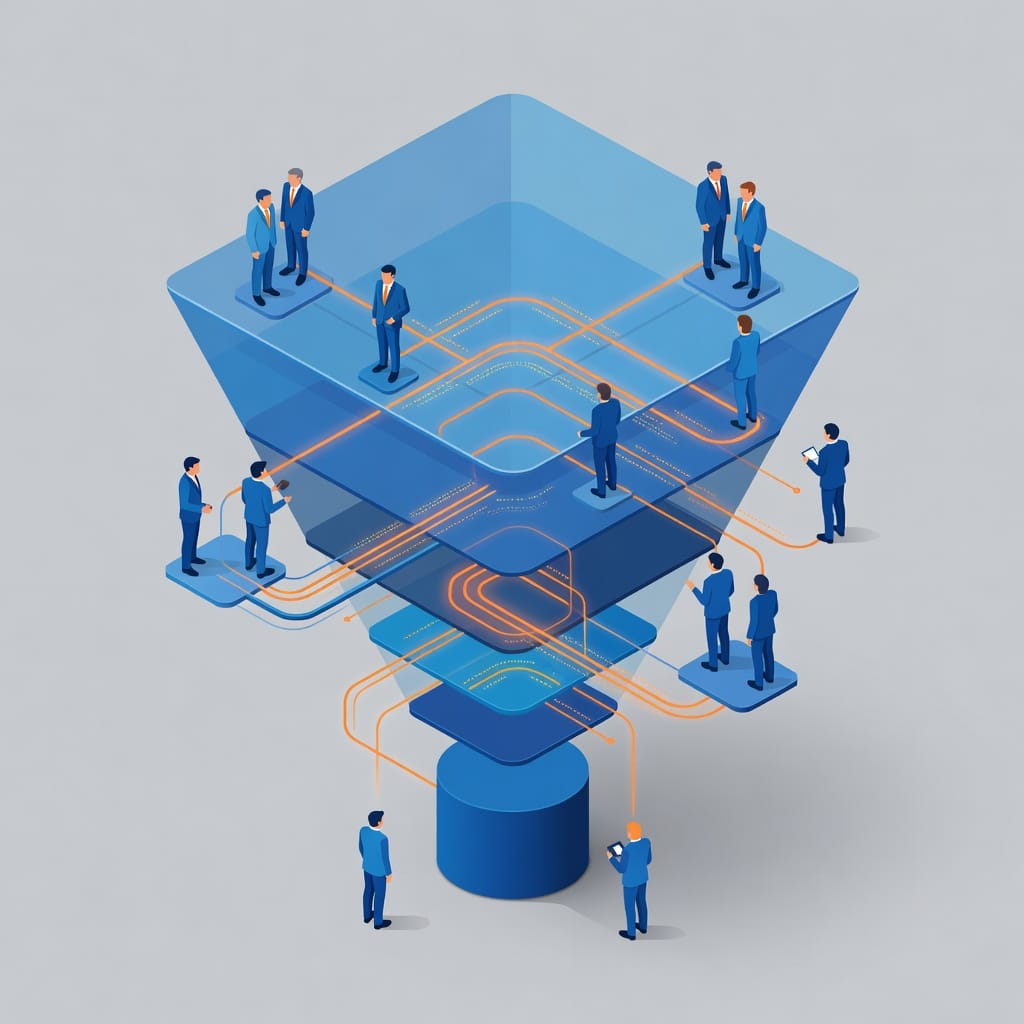
B2B sales (business-to-business sales) refers to any transaction where a company sells its product or service to another organization rather than to an individual consumer. The buyer is acting on behalf of their employer, and the purchase is intended to solve a business problem, improve operations, or generate revenue.
The core distinction is simple: in B2B sales, the person making the purchase is not the end user. They are purchasing for a team, a department, or an entire organization. This changes everything about how you sell – the messaging, the channels, the pricing, and the relationship management.
Key characteristics of B2B sales in 2026:
- Higher average deal sizes. B2B transactions typically range from a few thousand dollars to millions, compared to the relatively low average order value in B2C.
- Multiple decision-makers. Gartner research indicates that the average B2B buying committee now includes six to ten stakeholders, each with different priorities and evaluation criteria.
- Longer sales cycles. Enterprise B2B deals can take three to twelve months from first contact to closed-won, depending on complexity and deal size.
- Relationship-driven. Trust, credibility, and demonstrated expertise matter more than flashy marketing. Buyers want to know you understand their specific industry and pain points.
- Rational purchasing criteria. While emotion plays a role, B2B purchases are ultimately justified by ROI, efficiency gains, cost savings, or competitive advantage.
“B2B sales is not about convincing someone to buy something they don’t need. It’s about helping a professional solve a real business problem they already have. The best salespeople are the ones who understand the buyer’s world better than the buyer does.” – Aaron Ross, author of Predictable Revenue
B2B vs. B2C Sales: The 2026 Comparison
Understanding the differences between B2B and B2C sales is critical because the strategies that work for one rarely translate to the other. Here is a direct comparison:
| Dimension | B2B Sales | B2C Sales |
|---|---|---|
| Buyer | Purchasing for an organization | Purchasing for themselves |
| Decision-makers | 6-10 stakeholders on average | 1-2 individuals |
| Average deal size | $5,000 – $1M+ | $20 – $500 |
| Sales cycle | 3-12 months | Minutes to days |
| Primary channels | Cold email, LinkedIn, referrals, events | Ads, retail, ecommerce, social media |
| Relationship depth | Long-term, ongoing | Transactional |
| Purchase motivation | ROI, efficiency, competitive advantage | Desire, convenience, price |
| Objection handling | Multiple rounds with different stakeholders | One or two objections at most |
| Post-sale support | Dedicated CSM, onboarding, training | Returns policy, customer service |
The most important takeaway from this table: you cannot treat B2B sales like B2C sales. A cold email sequence designed for B2B must account for the fact that your message will be evaluated by multiple people across different departments, each with their own concerns. The CFO cares about ROI. The VP of Engineering cares about integration complexity. The end user cares about ease of use. Your outreach must address all of these perspectives.
The Modern B2B Sales Process: A Step-by-Step Guide
The B2B sales process has evolved significantly. While the classic stages remain relevant, the tactics within each stage have changed. Here is the modern B2B sales process as it works in 2026.
Step 1: Define Your Ideal Customer Profile (ICP)
Before you sell to anyone, you must know exactly who you are selling to. Your ICP is a detailed description of the company that is most likely to buy from you and derive the most value from your product.
Elements of a strong ICP:
- Industry and sub-industry
- Company size (revenue, employee count)
- Geographic location
- Technology stack (for SaaS products)
- Funding stage and growth trajectory
- Specific pain points your product solves
Real-world example: A B2B SaaS company selling sales engagement software defined its ICP as “B2B companies with 50-500 employees, $10M-$200M revenue, headquartered in North America or Western Europe, with an existing CRM but no dedicated sales engagement platform.” This narrowed their addressable market from 500,000 companies to roughly 8,000 – and their conversion rate tripled.
Step 2: Research and Prospect
Once you know your ICP, you need to find specific companies and individuals who match it. Modern prospecting combines data tools, social intelligence, and strategic targeting.
Effective prospecting methods in 2026:
- LinkedIn Sales Navigator – Filter by industry, company size, job function, seniority, and even technology used.
- B2B contact databases – Tools like Cognism, Lusha, and ZoomInfo provide verified contact data.
- Intent data – Identify companies actively researching solutions like yours by tracking content consumption, review site activity, and search behavior.
- Referral prospecting – Ask existing customers for introductions to peers in their network. Referral leads close at 2-3x the rate of cold leads.
- Event and content-based prospecting – Target attendees of industry conferences, webinar registrants, and content downloaders.
Step 3: Outreach and Engagement
This is where the rubber meets the road. Your outreach must cut through the noise and earn a response. In 2026, cold email remains the highest-volume, highest-ROI channel for B2B outreach – but only if you do it correctly.
The anatomy of a high-performing cold email:
1. Personalized subject line – Reference something specific about the prospect’s company, role, or recent activity.
2. Value-first opening – Lead with a relevant insight, not a generic introduction.
3. Clear value proposition – Explain exactly what you offer and why it matters to them.
4. Social proof – Mention similar companies or relevant case studies.
5. Low-friction call to action – Ask for a brief call, not a demo. “Worth a 10-minute conversation?” outperforms “Can I show you a demo?”
Case study: How a $50M SaaS company doubled reply rates
>
A B2B analytics company was sending generic cold emails to 5,000 prospects per month with a 1.2% reply rate. They restructured their outreach around three changes: (1) personalized first lines referencing the prospect’s recent LinkedIn activity, (2) a single, specific insight about their industry, and (3) a low-friction CTA asking for a 10-minute exploratory call. Reply rates increased to 3.8%, and pipeline grew by 140% over the next quarter.
Step 4: Qualification
Not every prospect who responds is worth pursuing. Qualification is the process of determining whether a prospect has the budget, authority, need, and timeline to buy.
The BANT framework (still the gold standard):
- Budget – Does the prospect have allocated budget for this purchase?
- Authority – Are you speaking with someone who can make or influence the buying decision?
- Need – Does the prospect have a clear, urgent problem your product solves?
- Timeline – When does the prospect need to implement a solution?
Modern additions to BANT:
- MEDDIC – Metrics, Economic buyer, Decision criteria, Decision process, Identify pain, Champion.
- CHAMP – Challenges, Authority, Money, Prioritization.
- GPCTBA/C&I – Goals, Plans, Challenges, Timeline, Budget, Authority, Consequences, and Implications.
Step 5: Demo and Proposal
The demo is where you prove your solution works. The proposal is where you justify the investment. Both must be tailored to the specific prospect.
Demo best practices:
- Spend the first 5 minutes recapping the prospect’s stated pain points.
- Show, don’t tell. Let the prospect interact with the product where possible.
- Address the concerns of each stakeholder type (technical, business, financial).
- Leave time for questions. The best demos are conversations, not presentations.
Proposal best practices:
- Tie every feature back to a specific business outcome.
- Include a clear pricing page with options (good, better, best).
- Add a timeline for implementation and expected time-to-value.
- Include case studies from similar companies.
Step 6: Objection Handling
Objections are not rejections – they are requests for more information. The best salespeople welcome objections because they reveal what the prospect needs to hear to move forward.
Common B2B objections and how to handle them:
| Objection | Response Strategy |
|---|---|
| “It’s too expensive.” | Break down the ROI. Show cost-per-day vs. value delivered. Offer a phased implementation. |
| “We’re not ready.” | Ask what would need to change for them to be ready. Create a timeline together. |
| “We already use [competitor].” | Acknowledge their choice. Ask what’s working and what isn’t. Position as complementary or superior on specific dimensions. |
| “I need to think about it.” | Ask what specific questions remain. Offer to address them directly. Set a follow-up date. |
| “We need to involve legal/procurement.” | Offer to provide standard contract terms, security documentation, and compliance certifications proactively. |
Step 7: Negotiation and Closing
Negotiation in B2B sales is about finding a deal structure that works for both parties. The goal is not to win every concession but to reach an agreement that sets the relationship up for long-term success.
Negotiation principles:
- Know your walk-away point. What is the minimum deal you will accept?
- Understand their constraints. Is it budget, timing, or internal politics?
- Trade, don’t give. Every concession should require something in return.
- Involve a champion. Your internal advocate can help navigate objections from other stakeholders.
Step 8: Implementation and Post-Sale
The sale is not over when the contract is signed. Implementation is where value is delivered – or lost. A smooth onboarding process is the single biggest predictor of customer retention and expansion revenue.
Post-sale best practices:
- Assign a dedicated onboarding specialist or customer success manager.
- Set clear milestones for the first 30, 60, and 90 days.
- Measure time-to-value and proactively address delays.
- Schedule regular business reviews to track ROI and identify expansion opportunities.
“The best sales organizations treat the post-sale experience as a competitive advantage. If your customer achieves their desired outcome in the first 90 days, they are 3x more likely to renew and 5x more likely to expand.” – Lincoln Murphy, Customer Success thought leader
The Psychology of the 2026 B2B Buying Committee
This is where most B2B sales guides fall short. They describe the process but ignore the human dynamics that drive – or kill – deals.
In 2026, the average B2B buying committee includes six to ten stakeholders. Here is who they are and what they care about:
The Economic Buyer (CEO, CFO, VP)
- Cares about: ROI, total cost of ownership, strategic alignment.
- Questions they ask: “What is the payback period? How does this compare to other investments we could make?”
- How to sell to them: Speak in business outcomes, not features. Show a clear ROI model.
The Technical Evaluator (CTO, VP Engineering, IT Director)
- Cares about: Integration complexity, security, compliance, scalability.
- Questions they ask: “Does it integrate with our stack? What are the security certifications? How long does implementation take?”
- How to sell to them: Provide technical documentation, security whitepapers, and API references. Be honest about limitations.
The End User (Manager, Team Lead, Individual Contributor)
- Cares about: Ease of use, daily workflow impact, training requirements.
- Questions they ask: “Will this make my job easier or harder? How much training will I need?”
- How to sell to them: Offer a hands-on trial. Show how the product fits into their daily routine.
The Champion (Your internal advocate)
- Cares about: Credibility, career impact, solving a problem they own.
- Questions they ask: “Can I trust this vendor? Will this make me look good to my boss?”
- How to support them: Arm them with internal-facing materials – ROI summaries, competitive comparisons, and implementation timelines.
The Gatekeeper (Executive Assistant, Procurement)
- Cares about: Process compliance, vendor vetting, timeline management.
- Questions they ask: “Is this vendor approved? What is the procurement process?”
- How to work with them: Respect their role. Provide all requested documentation promptly. Never bypass them.
Real-world example: The deal that almost died in procurement
>
A B2B data platform was closing a $120,000 annual deal with a mid-market SaaS company. The CEO and VP of Engineering were both on board. But the deal stalled for six weeks in procurement. The issue? The procurement team required a SOC 2 Type II report, a data processing agreement, and a security questionnaire – none of which had been proactively provided. The sales team lost momentum, and the deal ultimately closed at $95,000 with a 12-month payment term concession. The lesson: anticipate procurement requirements before they ask.
Key Roles in a B2B Sales Team
Understanding the roles within a B2B sales organization helps you build the right team and structure your pipeline effectively.
| Role | Primary Responsibility | Typical Metrics |
|---|---|---|
| SDR (Sales Development Rep) | Outbound prospecting, cold outreach, meeting qualification | Meetings booked, SQLs created |
| BDR (Business Development Rep) | Inbound lead qualification, initial discovery | Inbound conversion rate, meetings set |
| AE (Account Executive) | Demo, proposal, negotiation, closing | Closed-won revenue, win rate, average deal size |
| Sales Manager | Team coaching, pipeline management, forecasting | Team quota attainment, rep ramp time |
| VP of Sales / CRO | Strategy, hiring, revenue operations | Total ARR, growth rate, CAC ratio |
| CSM (Customer Success Manager) | Onboarding, retention, expansion | Net revenue retention, churn rate, NPS |
Team structure options:
- Assembly line model – SDRs prospect and qualify, AEs close, CSMs retain. Best for high-volume, standardized sales.
- Pod model – Small teams (1 AE, 1-2 SDRs, 1 CSM) own a specific segment or territory. Best for complex, relationship-heavy sales.
- Full-cycle model – One rep owns the entire process from prospecting to close. Best for early-stage startups and high-ticket enterprise sales.
Top Challenges in B2B Sales (And How to Overcome Them)
1. Long Sales Cycles
The average B2B sales cycle for enterprise software now exceeds four months. For complex implementations, it can stretch to twelve months or more.
Solution: Break the cycle into defined stages with clear milestones. Use a CRM to track progress and identify stalled deals early. Maintain regular, value-adding contact with prospects even during quiet periods.
2. Reaching Decision-Makers
Gatekeepers, busy schedules, and organizational layers make it difficult to reach the people who can actually say “yes.”
Solution: Multithread your outreach. Connect with multiple stakeholders at the target company simultaneously. Use LinkedIn to identify and engage with decision-makers directly. Leverage warm introductions from existing customers.
3. Email Deliverability
This is the single most underrated challenge in B2B sales. If your emails land in spam, nothing else matters. In 2026, email providers have tightened their filters significantly. Sending from a cold domain without proper infrastructure guarantees a spam folder placement.
Solution: Use a dedicated sending domain with proper authentication (SPF, DKIM, DMARC). Warm up new domains gradually before scaling volume. Monitor bounce rates and spam complaints. Use a platform that handles deliverability infrastructure – including a shared warmup pool, automatic domain rotation, and real-time inbox placement monitoring.
4. Building Consensus Among Multiple Stakeholders
With six to ten stakeholders involved in most B2B purchases, getting everyone aligned is a major challenge. Each stakeholder has different priorities, and any one of them can veto the deal.
Solution: Map the buying committee early. Identify each stakeholder’s role, priorities, and concerns. Arm your champion with materials tailored to each stakeholder type. Schedule group demos and Q&A sessions to address concerns collectively.
5. Differentiating in a Crowded Market
Most B2B categories are saturated. Buyers have more options than ever, and most products look similar on paper.
Solution: Focus on a specific niche or use case where you can be the clear leader. Develop deep expertise in that niche. Use case studies and customer testimonials to prove your differentiation. Invest in content that demonstrates your unique perspective.
6. Scaling Outbound Without Burning Out Your Team
Outbound sales is hard work. Without the right systems and tools, reps burn out, quality drops, and pipeline dries up.
Solution: Automate repetitive tasks (email sequencing, data entry, follow-ups) so reps can focus on high-value activities. Use AI-powered personalization to scale relevance without sacrificing quality. Set realistic activity targets and celebrate wins.
Cold Email: The Engine of Modern B2B Growth
Cold email has become the dominant channel for B2B outbound sales. When done correctly, it is scalable, measurable, and highly effective. When done poorly, it damages your domain reputation and wastes your team’s time.
Why Cold Email Works for B2B
- Scale. A single SDR can send 50-100 personalized emails per day, compared to 10-15 cold calls.
- Measurability. Every open, click, and reply is trackable. You know exactly what works.
- Personalization at scale. AI tools now enable personalized email content for hundreds of prospects without manual effort.
- Non-intrusive. Prospects can respond on their own time. A well-crafted email respects their schedule.
The Cold Email Infrastructure You Need
Before you send a single cold email, you need the right infrastructure. Here is the minimum setup:
1. A dedicated sending domain – Never send cold email from your primary company domain. Use a subdomain or a separate domain.
2. Email authentication – SPF, DKIM, and DMARC records configured correctly.
3. Domain warmup – Gradually increase sending volume over 2-4 weeks to build reputation.
4. Inbox rotation – Use multiple mailboxes to distribute volume and reduce per-mailbox sending limits.
5. Bounce handling – Automatically remove hard bounces and suppress invalid addresses.
6. Spam monitoring – Track spam complaint rates and blacklist status.
Case study: From zero to $2M pipeline with cold email
>
A B2B HR tech startup with no existing pipeline built their entire outbound motion around cold email. They started with one domain, one mailbox, and 20 emails per day. Over six months, they scaled to five domains, 15 mailboxes, and 300 emails per day. Their secret? They used a platform with built-in warmup and deliverability monitoring – Mystrika – which handled the infrastructure so their SDRs could focus on messaging. Within nine months, they had generated $2.1M in pipeline and closed $480,000 in new ARR.
Cold Email Best Practices for 2026
- Keep it short. 50-100 words. Your prospect’s attention is the scarcest resource.
- Personalize the first line. Reference something specific: a recent funding round, a job change, a LinkedIn post, a competitor mention.
- Lead with value. What insight or outcome can you offer in the first two sentences?
- One call to action. Ask for one thing: a 10-minute call, a reply to a question, or a link to a relevant resource.
- Follow up. Most replies come after the third or fourth touch. A 5-7 email sequence is standard.
- Track deliverability. If your open rate drops below 40%, check your domain reputation. Use a deliverability monitoring tool.
Actionable Strategies for B2B Sales Success
Strategy 1: Build a Multi-Channel Outreach Cadence
The most effective B2B outreach combines email, LinkedIn, and phone in a structured sequence. Here is a proven cadence:
- Day 1: Personalized cold email
- Day 3: LinkedIn connection request with a note
- Day 5: Follow-up email with a relevant resource (case study, blog post)
- Day 8: LinkedIn message after connection is accepted
- Day 12: Third email with a specific question or insight
- Day 16: Phone call (if you have the number)
- Day 20: Breakup email – “I’ll assume now isn’t the right time. I’ll check back in 90 days.”
Strategy 2: Use AI to Personalize at Scale
AI has transformed B2B sales personalization. Tools can now research a prospect, identify their pain points, and generate personalized email content in seconds.
What AI does well:
- Researching company news, funding, and leadership changes
- Identifying common connections and shared experiences
- Generating personalized icebreakers based on LinkedIn activity
- Analyzing email performance and suggesting improvements
What AI still needs human oversight for:
- Tone and voice alignment with your brand
- Complex objection handling
- Relationship building and rapport
- Strategic deal management
Strategy 3: Implement a Data-Driven Sales Process
The best B2B sales teams measure everything and optimize continuously. Here are the metrics that matter:
| Metric | What It Measures | Target Benchmark |
|---|---|---|
| Email open rate | Subject line effectiveness, deliverability | 50-70% for warm domains, 40-60% for cold |
| Reply rate | Message relevance and value | 3-10% for cold outreach |
| Meeting booked rate | Qualification and targeting accuracy | 10-20% of replies |
| SQL-to-close rate | Sales process effectiveness | 20-30% |
| Average deal size | Pricing and targeting alignment | Varies by industry |
| Sales cycle length | Process efficiency | 30-90 days for SMB, 90-180 for mid-market |
| CAC (Customer Acquisition Cost) | Efficiency of sales and marketing | Depends on LTV target (3:1 LTV:CAC is healthy) |
| Net Revenue Retention | Customer satisfaction and expansion | 100%+ is good, 120%+ is excellent |
Strategy 4: Invest in Email Deliverability
This cannot be overstated. In 2026, email deliverability is the single biggest differentiator between B2B sales teams that hit their numbers and those that don’t.
The deliverability stack:
- Domain authentication – SPF, DKIM, DMARC (p=quarantine or p=reject)
- Warmup – Gradually increase sending volume from a new domain over 2-4 weeks
- List hygiene – Remove invalid addresses, role-based emails, and known spam traps
- Engagement-based sending – Only send to prospects who have shown interest
- Blacklist monitoring – Check your domain against major blacklists weekly
Mystrika includes a built-in email warmup pool that automatically warms up new domains by exchanging emails with a network of real inboxes. This eliminates the manual warmup process and gets your domains to full sending capacity in days, not weeks.
Strategy 5: Master the Art of Follow-Up
Most B2B sales are lost to follow-up failure, not competition. Research shows that 80% of sales require five follow-up calls after the initial contact, but 44% of salespeople give up after one follow-up.
The follow-up framework:
- Value-add follow-ups – Every follow-up should provide new value: a relevant article, a case study, a new insight.
- Pattern interruption – Change the medium (email vs. LinkedIn vs. phone) and the message angle.
- Timing variety – Send follow-ups at different times and days to increase the chance of being seen.
- The breakup – A well-timed breakup email (“I’ll stop reaching out for now”) often triggers a response.
The Essential B2B Sales Tech Stack for 2026
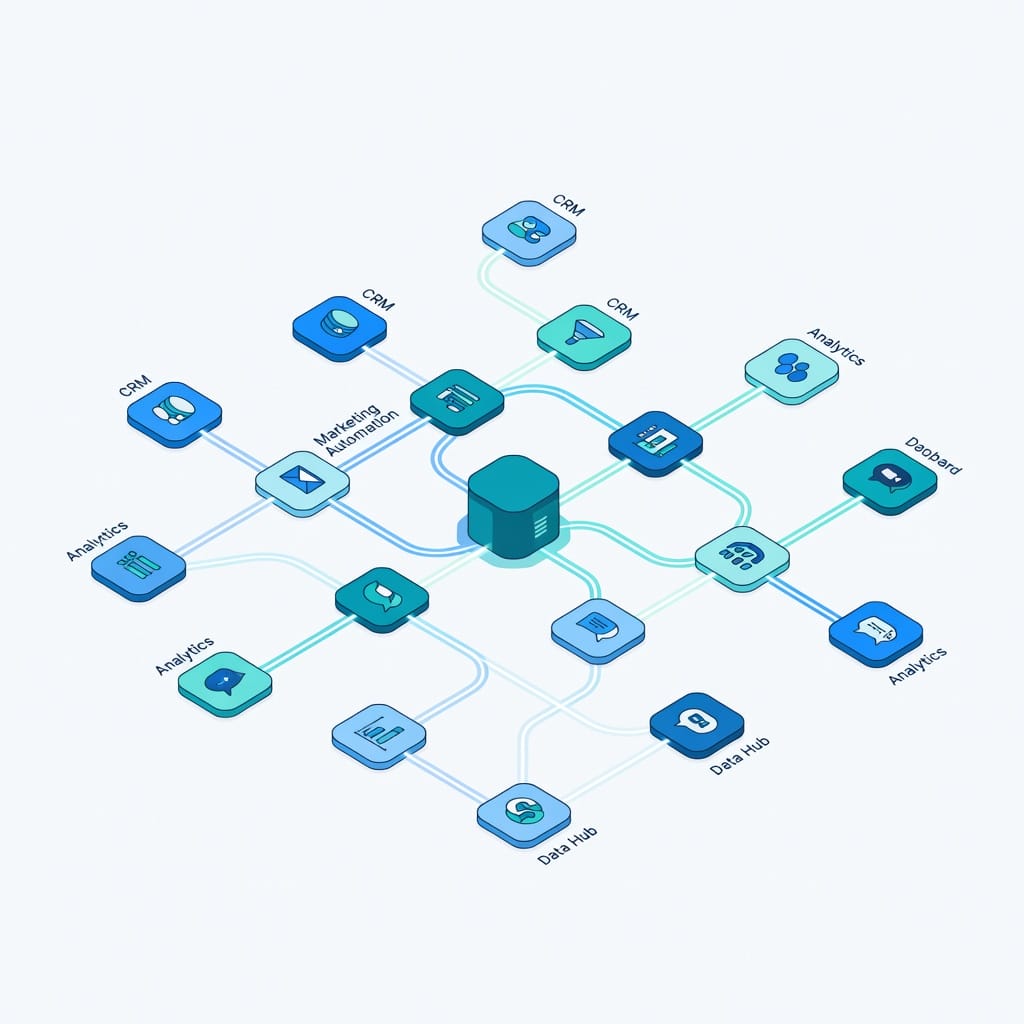
To execute modern B2B sales efficiently, your team needs the right technology infrastructure. The days of relying on a spreadsheet and a basic email client are long gone. The modern B2B sales tech stack is built for scale, automation, and data-driven insights.
Core Components of the Tech Stack:
- Customer Relationship Management (CRM): The central source of truth for all customer data. Essential for tracking deals, managing pipeline, and forecasting revenue. Popular choices include Salesforce, HubSpot, and Pipedrive.
- Sales Engagement Platform (SEP): Software designed to streamline communication and automate outreach cadences across email, phone, and social channels. This allows reps to manage hundreds of prospects simultaneously without dropping the ball.
- B2B Contact Data Provider: Clean, accurate data is the fuel for outbound sales. Providers like Cognism, ZoomInfo, or Apollo offer verified email addresses and direct dials, along with intent data to identify active buyers.
- Email Deliverability and Warmup Infrastructure: As mentioned earlier, reaching the inbox is critical. Tools that offer automated domain warmup, inbox rotation, and deliverability monitoring are non-negotiable for high-volume cold email. Mystrika is a prime example of an all-in-one solution for this.
- Conversation Intelligence: Platforms like Gong or Chorus analyze sales calls using AI to provide feedback on rep performance, identify competitive mentions, and highlight successful objection handling techniques.
Building the right tech stack requires balancing functionality with usability. Complex, disjointed tools lead to low adoption rates among sales reps. The current trend strongly favors consolidated platforms that integrate seamlessly with your CRM and reduce the number of tabs a rep needs to keep open during the day.
Future Trends Shaping B2B Sales in 2026 and Beyond
AI-Native Sales Tools
AI is not replacing salespeople – it is augmenting them. The sales tools of 2026 use AI to research prospects, write personalized emails, score leads, predict deal outcomes, and recommend next actions. The best sales teams are the ones that use AI to free up their reps’ time for high-value activities: strategic conversations, relationship building, and complex negotiation.
The Rise of the Buyer-Controlled Process
Buyers today research solutions extensively before engaging with sales. They read reviews, compare features, and form opinions before ever filling out a contact form. This means your content and online presence are your first – and sometimes only – chance to make an impression.
What this means for sellers:
- Invest in content that answers buyer questions before they ask.
- Make your pricing transparent or at least discoverable.
- Build a strong review presence on G2, Capterra, and TrustRadius.
- Ensure your website clearly communicates your value proposition in under 10 seconds.
Hyper-Personalization at Scale
Generic mass outreach is dead. In 2026, buyers expect every interaction to feel tailored to their specific situation. AI makes this possible at scale, but the human touch still matters for closing. Good email deliverability starts with authentic personalization.
Compliance and Data Privacy
GDPR, CCPA, and similar regulations have made B2B sales more complex. You need consent-compliant data sources, clear opt-out mechanisms, and documented data handling processes. Non-compliance can result in fines and reputational damage.
The Consolidation of the Sales Tech Stack
The average B2B sales team uses 10+ tools. The trend in 2026 is toward consolidation – fewer tools that do more. Platforms that combine email sequencing, deliverability infrastructure, CRM integration, and analytics are winning over point solutions.
Mystrika fits this trend perfectly: it combines cold email sequencing, a unified inbox, AI-powered writing, a shared warmup pool, and whitelabel capabilities in a single platform starting at $15 per month. For B2B sales teams looking to consolidate their outreach stack, it eliminates the need for separate email sending, warmup, and deliverability monitoring tools.
Key Takeaways
- B2B sales is the process of selling products or services from one business to another, involving higher deal sizes, longer cycles, and multiple decision-makers compared to B2C.
- The modern B2B sales process includes eight stages: ICP definition, research and prospecting, outreach, qualification, demo and proposal, objection handling, negotiation and closing, and post-sale implementation.
- The 2026 B2B buying committee averages six to ten stakeholders, each with different priorities. Understanding and addressing each stakeholder’s concerns is critical to closing deals.
- Cold email is the dominant B2B outreach channel, but deliverability infrastructure – domain authentication, warmup, rotation, and monitoring – is the difference between success and spam folder.
- AI tools are transforming B2B sales by enabling personalization at scale, but human judgment remains essential for relationship building and strategic deal management.
- The most effective B2B sales teams use multi-channel cadences, data-driven metrics, and consolidated tech stacks to maximize efficiency and results.
Frequently Asked Questions
What is the average B2B sales cycle length?
The average B2B sales cycle varies by deal size and complexity. For SMB deals ($1,000-$10,000), the cycle is typically 30-90 days. For mid-market deals ($10,000-$100,000), expect 90-180 days. For enterprise deals ($100,000+), cycles of 6-12 months are common. The key is to break the cycle into defined stages with clear milestones and to maintain consistent, value-adding contact throughout.
Is cold email still effective for B2B sales in 2026?
Yes, cold email remains the highest-volume, most measurable B2B outreach channel in 2026. However, its effectiveness depends entirely on deliverability infrastructure and message quality. With proper domain warmup, authentication, and list hygiene, cold email reply rates of 3-10% are achievable. Without these fundamentals, most cold email campaigns fail because emails never reach the inbox.
How do you calculate B2B sales metrics like TAM and CAC?
Total Addressable Market (TAM) is calculated by multiplying the number of potential customers in your target market by the average annual revenue per customer. Customer Acquisition Cost (CAC) is total sales and marketing expenses divided by the number of new customers acquired in a given period. A healthy B2B business typically has an LTV-to-CAC ratio of 3:1 or higher.
What is multithreading in B2B sales?
Multithreading is the practice of building relationships with multiple stakeholders at a target account, rather than relying on a single point of contact. This is critical because if your only contact leaves the company, loses interest, or fails to champion your solution internally, the deal dies. By connecting with 3-5 stakeholders across different functions, you increase your chances of finding a champion and navigating internal politics.
What is the difference between an SDR and an AE?
An SDR (Sales Development Representative) focuses on outbound prospecting – researching leads, sending cold emails, making initial calls, and booking meetings. An AE (Account Executive) takes over after qualification – running demos, handling objections, negotiating terms, and closing deals. In some organizations, the same person handles both roles (full-cycle sales), but the split model allows each role to specialize and scale.
How many follow-ups should you send in B2B sales?
Research consistently shows that most B2B sales require 5-8 touchpoints before a prospect responds. A standard sequence includes 5-7 emails over 2-4 weeks, combined with LinkedIn touches and occasional phone calls. The key is that each follow-up should provide new value – a relevant article, a case study, a new insight – rather than simply asking “Did you get my last email?”
What is the best CRM for B2B sales?
The best CRM depends on your team size, budget, and complexity requirements. Salesforce is the market leader for enterprise organizations. HubSpot is excellent for mid-market teams that want an all-in-one platform. Pipedrive and Close are popular with smaller teams and startups. The most important factor is not which CRM you choose, but how consistently your team uses it to track activities, manage pipeline, and measure results.
How do you handle price objections in B2B sales?
Price objections are almost always value objections in disguise. The prospect is not saying “it costs too much” – they are saying “I’m not convinced the value justifies the cost.” To handle this: (1) quantify the ROI in their specific context, (2) break the cost down to a daily or per-user figure, (3) offer a phased implementation to spread the cost, and (4) provide case studies from similar companies that achieved measurable results.