
B2B sales enablement is the operating system that helps revenue teams sell consistently. It combines buyer insight, sales content, training, tools, coaching, and measurement so reps know who to target, what to say, which assets to use, and how to move deals forward without guessing.
Modern B2B buyers do not wait for a salesperson to educate them. They research independently, compare vendors before talking to sales, involve more stakeholders, and expect every interaction to feel relevant. That makes enablement more than a training function. It is how sales, marketing, RevOps, product marketing, and customer-facing teams turn go-to-market strategy into repeatable execution.
This guide explains what B2B sales enablement is, how it differs from sales training and content marketing, what to build first, which tools matter, how outbound teams should use it, and which metrics show whether your enablement work is improving pipeline quality.
What Is B2B Sales Enablement?
B2B sales enablement is the structured process of giving sales teams the content, knowledge, workflows, tools, and coaching they need to engage business buyers and close qualified revenue. It is not a one-time training event. It is a repeatable system that keeps reps aligned with buyer needs, company messaging, and revenue goals.
A practical definition is simple: sales enablement helps the right seller have the right conversation with the right buyer at the right stage of the deal. In B2B, that usually means supporting longer buying cycles, multiple decision makers, technical objections, procurement reviews, security questions, and internal consensus building.
The word “enablement” can sound broad because it touches many teams. Sales wants better talk tracks and fewer dead-end opportunities. Marketing wants content that sales actually uses. RevOps wants cleaner process adoption. Product marketing wants sharper positioning. Leadership wants predictable pipeline. Enablement sits between those needs and turns them into a usable field system.
For example, a sales enablement program might include:
- Ideal customer profile documentation.
- Buyer persona summaries.
- Discovery call guides.
- Qualification checklists.
- Competitive battlecards.
- Objection handling scripts.
- Email and call sequences.
- Demo narratives.
- ROI calculators.
- Case study libraries.
- Onboarding and certification paths.
- CRM stage definitions.
- Coaching scorecards.
- Deal review templates.
The strongest programs do not create assets for the sake of having assets. They start with seller friction and buyer friction. If reps struggle to explain value to CFOs, enablement creates a CFO-specific business case guide. If prospects keep asking the same security questions, enablement builds a security FAQ and trains reps on when to introduce it. If new hires take too long to ramp, enablement creates onboarding milestones and manager coaching routines.
A good enablement system also prevents random acts of sales. Without it, each rep builds their own pitch, stores files in private folders, qualifies inconsistently, and learns mainly through trial and error. That can work when a team has three experienced sellers. It breaks when the company hires quickly, enters new markets, launches new products, or tries to coordinate inbound, outbound, partners, and customer expansion.
What is the difference between sales enablement and sales training?
Sales training teaches skills; sales enablement makes those skills usable in live selling. Training might cover discovery, negotiation, or objection handling. Enablement includes that training, but also provides content, processes, tools, coaching, reinforcement, and measurement so reps apply the learning consistently after the workshop ends.
Think of sales training as one component inside a broader enablement system. A two-hour session on discovery questions can be useful, but it rarely changes behavior by itself. Reps need call examples, manager coaching, CRM fields that reinforce the discovery process, talk tracks by buyer persona, and feedback loops that show which questions create better opportunities.
Here is the practical distinction:
| Area | Sales training | B2B sales enablement |
|---|---|---|
| Primary focus | Skill transfer | Revenue execution system |
| Typical format | Workshops, courses, role-play | Content, tools, playbooks, coaching, data |
| Time horizon | Event-based or curriculum-based | Continuous and iterative |
| Owner | Enablement, sales leader, trainer | Enablement plus sales, marketing, RevOps, product marketing |
| Success measure | Completion, certification, confidence | Ramp time, win rate, stage conversion, pipeline quality, content usage |
Training answers, “Can the rep do the thing?” Enablement answers, “Does the selling system make the right behavior easy, repeatable, and measurable?” That difference matters because many teams over-invest in training events and under-invest in reinforcement. Reps leave the workshop motivated, return to a messy CRM, cannot find the right assets, and quickly revert to old habits.
For a small B2B team, enablement may begin with a simple onboarding checklist, three core call recordings, a shared asset library, and weekly coaching. For a larger organization, it may include formal certifications, sales methodology governance, content analytics, learning management systems, and revenue intelligence dashboards. The scale changes, but the purpose stays the same: improve seller readiness and buyer relevance.
How does sales enablement differ from content marketing?
Content marketing attracts, educates, and nurtures buyers before and during the sales process. Sales enablement adapts content for seller use inside real conversations. A blog post may create awareness, while an enablement one-pager helps a rep handle a CFO objection during an active deal.
The two functions should work together, but they serve different moments. Marketing content is usually designed for public discovery, SEO, demand generation, social sharing, email nurturing, or brand education. Sales enablement content is designed for deal progression, qualification, stakeholder alignment, objection handling, and internal consensus building.
For example:
| Buyer need | Marketing content | Sales enablement content |
|---|---|---|
| Understand the problem | Educational blog post | Discovery question bank |
| Compare solution categories | Buyer guide | Competitive battlecard |
| Build internal consensus | Webinar or report | Stakeholder-specific business case deck |
| Validate ROI | Case study | ROI calculator and proof points by industry |
| Resolve risk | Security page | Security FAQ and escalation workflow |
| Choose next step | Demo landing page | Mutual action plan template |
The failure mode is letting marketing publish content that sales never uses, or letting sales create one-off decks that drift away from positioning. Enablement bridges that gap. It turns broad content into sales-ready assets, gives sellers guidance on when to use each asset, and sends feedback back to marketing when prospects ask for materials that do not yet exist.
This is especially important in B2B because buyers rarely move in a neat funnel. A champion may read a blog post, forward a case study to finance, ask a technical evaluator for a security review, and then bring procurement into the conversation. Sales enablement makes sure the seller has the right supporting materials for each stakeholder instead of sending the same generic deck to everyone.
Why B2B Sales Enablement Matters More in 2026
B2B sales enablement matters more in 2026 because buyers expect speed, relevance, and proof while sales teams face more channels, more tools, and more internal complexity. Enablement gives teams a shared system for messaging, qualification, content, AI-assisted workflows, and coaching so revenue execution does not depend on individual heroics.
Several changes have made enablement more important than it was a few years ago.
First, buyer education has moved earlier and become more self-directed. Many buyers reach sales after they have already compared vendors, read reviews, discussed options with peers, and formed a shortlist. If a seller opens with generic discovery or repeats information the buyer already knows, the interaction feels low value. Enablement helps reps add insight instead of simply reciting product features.
Second, B2B buying groups have become harder to align. A deal might involve an economic buyer, department head, technical evaluator, security stakeholder, legal reviewer, procurement manager, and day-to-day users. Each person cares about different risks. Enablement gives sellers the materials and talk tracks to support each stakeholder without losing message consistency.
Third, AI has changed the sales workflow. Reps can draft emails faster, summarize calls, research accounts, and generate first-pass follow-ups. But AI also increases the risk of generic outreach, inaccurate messaging, and content sprawl. Sales enablement now needs to define what good AI-assisted selling looks like: approved prompts, reviewed messaging, safe personalization rules, and clear human review points.
Fourth, revenue teams are under pressure to do more with less. Hiring more reps is expensive. Buying more tools can create complexity. Enablement is one of the few levers that can improve output from the team you already have by reducing wasted effort, improving ramp, and increasing deal quality.
Fifth, outbound sales has become more sensitive to relevance and infrastructure. Sending more emails is not enablement. Reps need list quality, persona-specific messaging, deliverability discipline, multi-touch sequencing, reply handling, and feedback loops that connect outbound activity to pipeline. That is why outbound enablement deserves its own section later in this guide.
The practical result: companies can no longer treat enablement as a folder of PDFs and a quarterly training call. In 2026, a capable enablement program should answer six operational questions:
1. Which buyers and accounts are we prioritizing?
2. What business problems do we help them solve?
3. What message should each persona hear at each stage?
4. Which assets and proof points support each conversation?
5. What skills and behaviors must reps demonstrate?
6. How will we measure whether enablement is changing revenue outcomes?
If those questions are unanswered, the sales motion becomes inconsistent. One rep qualifies tightly while another chases poor-fit accounts. One rep uses the latest positioning while another sends outdated slides. One manager coaches discovery while another focuses only on activity volume. Enablement creates the shared operating language that prevents that drift.
The Core Components of a B2B Sales Enablement Strategy
A B2B sales enablement strategy needs five core components: clear buyer and account definitions, sales-ready content, aligned methodology and process, continuous coaching, and measurement. Tools can support these components, but they cannot replace the underlying strategy. Start with what sellers and buyers need, then choose technology to make it repeatable.

The best way to design enablement is to think in systems, not assets. A battlecard is useful only if reps know when to use it, managers coach against it, marketing keeps it current, and CRM data shows whether competitive deals improve. A training course is useful only if it changes behavior in calls and deals. A content library is useful only if sellers can find what they need in seconds.
Sales content and tools that actually convert
Sales enablement content should help a buyer take the next logical step, not merely explain your company. The most useful assets clarify a problem, reduce risk, compare options, quantify value, or help a champion persuade others internally. Content that does not support a real selling moment usually becomes shelfware.
A practical content map starts with deal stages and buyer questions. For each stage, ask what the buyer must believe before moving forward and what the rep needs to prove that belief.
| Deal stage | Buyer question | Enablement asset |
|---|---|---|
| Target account selection | Is this company worth pursuing? | ICP checklist and account scoring rules |
| First conversation | Why should I care now? | Persona pain-point brief and discovery guide |
| Discovery | What problem are we solving? | Qualification framework and call note template |
| Evaluation | Why this solution? | Comparison guide and use-case deck |
| Business case | Is the value worth the cost? | ROI calculator and executive summary template |
| Technical review | Is this safe and feasible? | Security FAQ and implementation overview |
| Procurement | Can we justify and finalize this? | Mutual action plan and legal/procurement checklist |
Notice that the assets are specific. “Product deck” is not enough. A generic deck can help with orientation, but B2B sellers need materials that match stakeholder concerns. A CFO wants cost, risk, and payback. A technical evaluator wants feasibility and integration detail. A VP of Sales wants team adoption and pipeline impact. A day-to-day user wants workflow relief.
Useful enablement content is also opinionated. It should tell reps when to use it and when not to use it. A competitive battlecard should not be a long document nobody reads. It should include a short positioning summary, trigger questions, likely competitor claims, proof points, objection responses, and a clear “do not say” section for risky or unsupported statements.
Sales methodology and process alignment
Sales methodology gives reps a shared way to qualify, diagnose, and move deals forward. Sales process defines the stages and required actions inside your CRM. Enablement connects the two so the methodology shows up in daily workflows instead of living in a training slide deck.
Many B2B teams adopt frameworks such as MEDDIC, Challenger, SPIN, Sandler, BANT, or value selling. The specific methodology matters less than the consistency of application. A lightweight custom framework can outperform a famous methodology if managers coach it weekly and reps use it in every real opportunity.
To align methodology and process, document three layers:
1. Stage definitions: What must be true for a deal to enter or leave each stage?
2. Required evidence: What information proves the deal is real?
3. Rep behavior: What should the seller do next if evidence is missing?
For example, a discovery stage should not be considered complete just because a meeting happened. It may require a documented business problem, confirmed stakeholder map, clear success criteria, next meeting scheduled, and initial urgency signal. Without these rules, pipeline becomes inflated and forecasts become unreliable.
Enablement also prevents process theater. If CRM fields exist only because leadership wants more data, reps will fill them poorly. If each field supports a selling decision, reps are more likely to care. The field “economic buyer” matters because it changes deal strategy. The field “pain point” matters because it shapes messaging. The field “next step” matters because deals without next steps often stall.
Coaching and continuous skill development
Coaching turns enablement from a document library into behavior change. Reps need repeated practice, call review, manager feedback, peer examples, and reinforcement loops. Without coaching, even strong playbooks fade because sellers return to familiar habits under quota pressure.
Effective enablement coaching is specific and observable. “Ask better questions” is not coaching. “In discovery, ask one question about current cost, one about decision process, and one about what happens if the problem remains unsolved” is coachable. The second version gives the manager a behavior to inspect and the rep a behavior to practice.
A basic coaching cadence might include:
- Weekly call reviews using a shared scorecard.
- Monthly role-plays focused on one skill.
- Deal reviews tied to qualification criteria.
- Peer teardown sessions of strong emails or calls.
- New-hire certifications before full quota ownership.
- Manager notes on one behavior to improve per rep per week.
AI tools can help by summarizing calls, highlighting talk-time patterns, identifying competitor mentions, and surfacing objections. But managers still need to interpret the context. A rep may talk too much because they are nervous, because the prospect asked for explanation, or because the discovery structure was weak. Good coaching separates symptoms from causes.
The most effective teams also coach managers. Frontline sales managers often become the bottleneck because they are responsible for forecast, pipeline inspection, hiring, team morale, deal strategy, and coaching. Enablement should give managers simple coaching guides, inspection questions, and meeting templates so they reinforce the same behaviors across the team.
Sales and marketing alignment
Sales and marketing alignment means both teams agree on target accounts, buyer pains, message, content priorities, lead definitions, and feedback loops. Enablement is often the operating layer that turns alignment from a quarterly meeting into daily execution.
Misalignment usually shows up in practical ways. Marketing says sales is not following up. Sales says marketing leads are low quality. Marketing creates content that gets traffic but not sales usage. Sales creates off-brand assets to answer questions marketing has not addressed. Leadership sees pipeline reports but cannot tell whether the problem is demand, qualification, messaging, or follow-up.
Enablement can reduce this friction by creating shared rules:
- A common ICP and disqualification criteria.
- Agreed definitions for lead, MQL, SQL, SAL, opportunity, and closed-lost reasons.
- A content request process based on deal friction, not personal preference.
- A monthly content usage review.
- A closed-lost analysis that includes marketing and sales context.
- A campaign feedback loop so sales knows the promise marketing made.
- A source-of-truth repository for approved messaging and assets.
A useful alignment meeting is not a status update. It should answer: Which content helped deals? Which objections increased? Which personas are engaging? Which campaigns created qualified conversations? Which sales assets are outdated? Which lost deals reveal a message gap?
Alignment also matters for AI-generated content. If marketing and sales both use AI tools independently without shared messaging rules, the market hears inconsistent claims. Enablement should define approved value propositions, prohibited claims, prompt examples, review workflows, and escalation paths for technical or legal topics.
How to Build a B2B Sales Enablement Program: A Step-by-Step Roadmap
Build a B2B sales enablement program in phases: audit the current sales motion, define priorities, create the minimum useful playbook, launch coaching and content systems, measure adoption, and iterate based on deal outcomes. Do not start by buying software. Start by diagnosing where sellers and buyers get stuck.
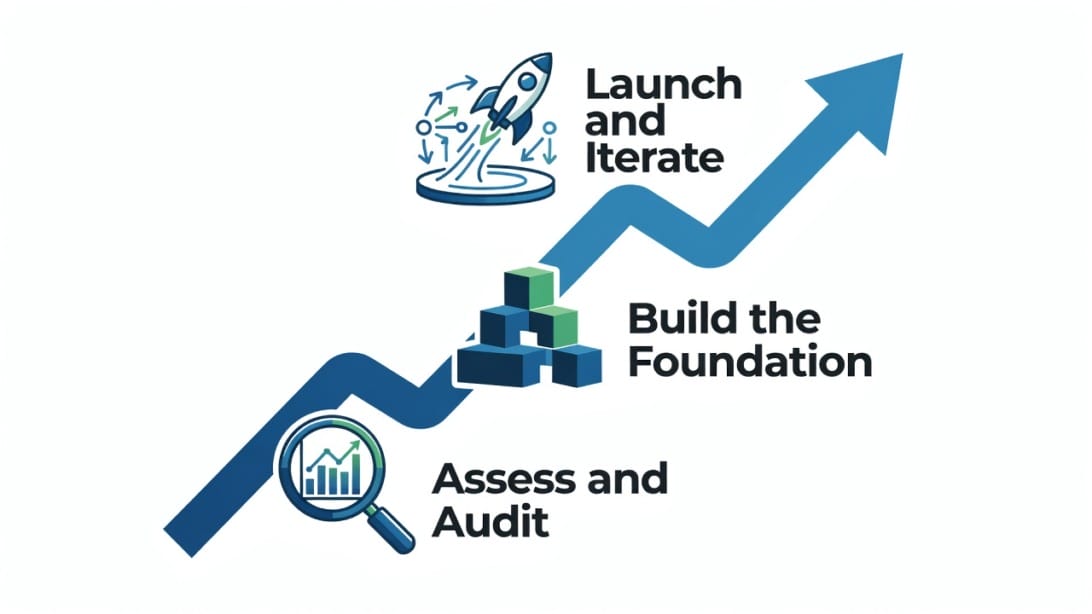
A new enablement program does not need to solve every problem at once. In fact, trying to build a complete enablement universe on day one usually creates more complexity. Start with the revenue motion that matters most: new logo outbound, inbound demo conversion, enterprise expansion, partner sales, or new-hire ramp. Then design around the most expensive friction point.
Here is a practical 16-week roadmap that works for many B2B teams.
Phase 1: Assess and audit (weeks 1-4)
The first phase should identify where sales execution is breaking and which enablement fixes will produce the highest leverage. Interview reps, managers, marketing, RevOps, customer success, and recent buyers. Review calls, CRM stages, lost deals, content usage, onboarding materials, and handoff points before creating anything new.
Start with a simple diagnostic. You are looking for patterns, not isolated complaints.
Ask sales reps:
- Which buyer questions are hardest to answer?
- Which objections appear most often?
- Which assets do you use every week?
- Which assets are missing or outdated?
- Where do deals usually stall?
- What do top reps do that others do not?
Ask managers:
- Which skills separate top performers from average performers?
- Which CRM fields are unreliable?
- Which stage transitions are fuzzy?
- Which coaching topics repeat every week?
- Where do new hires struggle?
Ask marketing and product marketing:
- Which messages are approved and current?
- Which campaigns are generating sales conversations?
- Which content performs in-market, not just in traffic?
- Which product claims require careful wording?
Ask RevOps:
- Which pipeline stages have the biggest conversion drop?
- Which activities correlate with opportunity creation?
- Which reports are trusted?
- Which tool workflows create duplicate work?
By the end of phase 1, produce a one-page enablement diagnosis. It should list the top three revenue problems, the likely causes, the target audience, the first assets/processes to build, and the metrics that will prove improvement.
Example diagnosis:
- Problem: Enterprise discovery calls are inconsistent.
- Cause: Reps ask product questions before business impact questions.
- Enablement fix: Discovery guide, call scorecard, manager review cadence, CRM field updates.
- Metric: Discovery-to-proposal conversion, manager scorecard completion, stage duration.
This keeps the program grounded in execution instead of generic best practices.
Phase 2: Build the foundation (weeks 5-10)
The second phase should create the minimum viable enablement system: core messaging, ICP guidance, stage-based content, onboarding structure, coaching scorecards, and a single source of truth. The goal is not perfection. The goal is a reliable foundation that reps can use immediately.
Build only what solves the highest-priority gaps from the audit. A useful foundation often includes:
1. ICP and account prioritization guide: Who to target, who to avoid, and why.
2. Persona briefs: Pain points, triggers, business priorities, objections, and proof points by role.
3. Sales process definitions: Stage entry/exit criteria and required evidence.
4. Discovery guide: Questions tied to business impact and qualification.
5. Core messaging narrative: Problem, change in market, cost of inaction, differentiated value.
6. Objection handling guide: Common objections, what they usually mean, and how to respond.
7. Content map: Which asset to use at each stage and with each persona.
8. Manager coaching scorecard: Behaviors to inspect in calls and deals.
9. New-hire ramp checklist: Milestones for week 1, week 2, week 4, and first 90 days.
10. Feedback process: How reps request assets and report field insights.
Keep the format lightweight. A five-page playbook reps use is better than a 90-page document they ignore. The best enablement materials are searchable, scannable, and actionable. Use tables, checklists, call snippets, examples, and “when to use this” notes.
This phase is also where ownership matters. If nobody owns content updates, assets decay. If nobody owns manager reinforcement, coaching becomes optional. If nobody owns data definitions, dashboards become noisy. Assign a named owner for each asset or workflow, even if that owner is part-time.
Phase 3: Launch and iterate (weeks 11-16)
The third phase should launch the program with manager reinforcement, rep practice, adoption tracking, and feedback loops. Treat launch as the beginning of enablement, not the end. The first version will reveal gaps, outdated assumptions, and workflow friction that only appear in live selling.
A strong launch has three parts.
First, train managers before reps. Managers need to understand the why, the inspection points, the coaching cadence, and the behavior changes expected. If managers do not reinforce the system, reps will treat enablement as another internal initiative.
Second, launch with a narrow behavior focus. Instead of asking reps to change everything, pick one or two high-value behaviors. For example:
- Use the new discovery guide on every first call.
- Attach the correct persona brief before every demo.
- Log mutual action plan status for opportunities above a defined size.
- Use the outbound sequence framework for target accounts.
Third, measure adoption and outcomes separately. Adoption metrics show whether the team is using the system. Outcome metrics show whether the system is working. You need both. If adoption is low, improve workflow and manager reinforcement. If adoption is high but outcomes do not improve, the content or process may be wrong.
Use a simple iteration rhythm:
- Week 11: Manager training and final asset review.
- Week 12: Rep launch and practice session.
- Week 13: First adoption review.
- Week 14: Call/deal review against scorecard.
- Week 15: Content feedback and cleanup.
- Week 16: Outcome review and next-priority planning.
By the end of this phase, you should know whether the enablement system is easier to use than the old way. If it is not, reps will work around it. That feedback is not failure. It is the information you need to make the system more practical.
Sales Enablement Technology Stack: What You Actually Need
A sales enablement tech stack should make the approved sales process easier to execute and measure. Most teams need a CRM, a content repository, a sales engagement tool, coaching or call review, and reporting. Advanced platforms can help, but buying tools before defining process usually creates more noise.
The right stack depends on team size, deal complexity, sales motion, and budget. A 10-person SaaS team does not need the same system as a 500-rep enterprise organization. Start with the job each tool category must perform.
| Tool category | What it should do | When you need it |
|---|---|---|
| CRM | Store accounts, contacts, opportunities, activities, stages, forecasts | Always |
| Sales engagement | Manage sequences, tasks, calls, emails, and outbound workflows | When prospecting or follow-up is multi-touch |
| Content management | Keep approved assets searchable and track usage | When reps struggle to find or use content |
| Learning management | Structure onboarding, certifications, and courses | When hiring or compliance needs are formal |
| Conversation intelligence | Record, transcribe, analyze, and coach calls | When managers cannot review calls at scale |
| Revenue intelligence | Connect activity, pipeline, and forecast signals | When pipeline complexity exceeds basic CRM reports |
| Data enrichment | Improve account/contact data quality | When targeting or personalization depends on external data |
| AI assistant | Draft, summarize, research, or recommend next actions | When governance and review workflows are clear |
The biggest mistake is assuming a tool will create discipline. If reps cannot define a qualified opportunity, a CRM will not fix that. If messaging is weak, AI will generate weak messaging faster. If content is outdated, a content platform will make outdated content more accessible. Technology amplifies the system you already have.
CRM and sales engagement platforms
CRM is the source of truth for pipeline, while sales engagement platforms operationalize outreach and follow-up. Enablement should define how these systems support seller behavior: required fields, stage rules, sequence governance, task workflows, activity logging, and handoff points.
In CRM, focus on clarity over field volume. Every required field should support a decision. If the field does not help the rep, manager, RevOps, or leadership act differently, it may create compliance work without value.
Key CRM enablement rules include:
- Clear account ownership.
- Standard opportunity stages.
- Stage entry and exit criteria.
- Required qualification evidence.
- Closed-lost reason definitions.
- Next-step requirements.
- Source and campaign attribution rules.
- Handoff criteria between SDR, AE, customer success, and partners.
Sales engagement platforms need similar governance. Reps should know which sequences are approved, which personas they target, when to customize, when to stop, and how to handle replies. For outbound teams, the sequence is part of enablement content. It contains the message, timing, channel mix, personalization rules, and follow-up logic.
A useful sales engagement playbook should include:
- Target account criteria.
- Contact selection rules.
- Personalization requirements.
- Email volume guardrails.
- Call and social touch guidance.
- Reply categorization.
- Opt-out handling.
- Bounce and deliverability monitoring.
- Handoff rules for positive replies.
Content management and enablement repositories
A content repository should help reps find the right asset quickly and trust that it is current. If sellers need to search Slack, Google Drive, old decks, and private folders, the repository has failed. Enablement must manage naming, tagging, ownership, expiration, and usage guidance.
The repository should answer three questions for every asset:
1. Who is this for?
2. When should a rep use it?
3. What outcome should it support?
A file name like “Enterprise-ROI-CFO-Deck-Q3-2026” is more useful than “Final Deck v7.” Tags should reflect buyer role, deal stage, industry, product, competitor, and use case. Each asset should have an owner and a review date. Outdated assets should be archived, not left beside current materials.
Content analytics can help, but do not confuse usage with usefulness. A deck may be used often because it is easy to find, not because it influences deals. Pair usage data with seller feedback and deal outcomes. Ask which assets help unlock next steps, which confuse buyers, and which are missing.
Coaching and conversation intelligence tools
Coaching tools help managers inspect real seller behavior, not just CRM activity. Call recordings, transcripts, scorecards, and AI summaries can reveal whether reps are asking strong discovery questions, handling objections, positioning value clearly, and securing next steps.
The tool is less important than the scorecard. A good scorecard should be short enough for managers to use consistently. It might cover:
- Opened with a relevant reason for the call.
- Confirmed buyer context.
- Asked business impact questions.
- Identified decision process.
- Connected value to buyer pain.
- Handled objections with evidence.
- Confirmed next step and owner.
Do not score everything. Pick the few behaviors that matter for your current enablement priority. If enterprise deals are stalling after demos, score demo structure and stakeholder alignment. If outbound meetings are low quality, score qualification and account relevance. If new hires are struggling, score core talk track fluency.
Analytics and revenue intelligence platforms
Analytics should show whether enablement improves behavior and business outcomes. The best dashboards connect leading indicators such as content adoption, coaching completion, and stage hygiene with lagging indicators such as win rate, cycle length, average contract value, and pipeline quality.
Avoid dashboards that simply report more data. Enablement analytics should trigger decisions. If reps who use the new discovery guide convert more opportunities, scale that behavior. If a battlecard is used often but competitive win rate is flat, review the battlecard. If onboarding completion is high but ramp time is unchanged, inspect manager coaching and live-call performance.
A practical dashboard might show:
- New-hire ramp milestone completion.
- Certification pass rate.
- Asset usage by deal stage.
- Content influence on next-step conversion.
- Call score trends by team.
- Stage conversion rates.
- Average stage duration.
- Win/loss reasons.
- Forecast slippage.
- Pipeline created per rep.
Keep the dashboard focused. A simple scorecard that leadership reviews every month is more useful than a complex dashboard nobody trusts.
Sales Enablement for Outbound and Cold Email Teams
Outbound sales enablement gives reps the targeting, messaging, sequencing, deliverability discipline, and reply-handling workflows needed to create qualified conversations with buyers who did not ask to be contacted. It is different from general sales enablement because relevance, infrastructure, timing, and compliance matter before a rep ever reaches discovery.
Outbound fails when teams treat it as activity volume instead of a coordinated revenue motion. Reps need more than a list and a sequence. They need clear account selection, persona-specific pain points, trigger events, approved messaging, deliverability safeguards, call and email coordination, and a handoff process for positive replies.
Why outbound needs its own enablement workflow
Outbound needs its own enablement workflow because sellers are interrupting buyers, not responding to active demand. That changes the standard of relevance. The message must prove quickly why the account, person, problem, and timing make sense, or the prospect will ignore it.
A good outbound enablement workflow includes:
- ICP and disqualification criteria.
- Account tiering rules.
- Buying trigger definitions.
- Persona-specific pain points.
- Personalization examples.
- Email and call sequence templates.
- LinkedIn or social touch guidance.
- Objection and reply handling.
- Positive reply routing.
- CRM logging rules.
- Bounce and unsubscribe handling.
The key is coherence. If marketing defines one ICP, SDRs target another, and AEs accept any meeting, pipeline quality suffers. Enablement should define what a qualified outbound account looks like, what counts as a relevant trigger, and which meetings are worth booking.
Here is a simple outbound enablement checklist:
- Does the account match the ICP?
- Does the contact have likely influence or decision authority?
- Is there a business trigger or plausible pain point?
- Is the message specific enough to avoid sounding generic?
- Is the sequence length appropriate for the market?
- Is there a clear reason for the rep to call, email, or connect socially?
- Is there a documented path from positive reply to qualified opportunity?
When these rules are clear, reps spend less time guessing and more time having better conversations.
Email deliverability as an enablement concern
Email deliverability is an enablement concern because even strong messaging fails if prospects never see it. Outbound teams need domain setup, authentication, list hygiene, warm sending patterns, bounce monitoring, and reasonable volume controls. Enablement should make these practices part of the sales workflow, not a hidden technical afterthought.
Deliverability connects infrastructure to revenue. If a team sends from poorly configured domains, uses unverified lists, ignores bounces, or scales too quickly, messages can land in spam folders and activity metrics become misleading. Reps may appear busy while actual buyer visibility declines.
Enablement should define baseline rules such as:
- Use authenticated sending domains.
- Avoid sending from the primary corporate domain when testing cold outbound at scale.
- Verify contact data before outreach.
- Monitor bounces and spam complaints.
- Keep early sending volumes conservative.
- Pause sequences when domain reputation indicators decline.
- Use plain, relevant messaging instead of image-heavy or overly promotional copy.
- Respect opt-outs and local compliance requirements.
This is where a cold email outreach platform can support enablement when it helps teams manage sequencing, warmup, personalization, inbox rotation, and reply handling in a controlled workflow. The tool still needs a good enablement strategy behind it: relevant targeting, clear messaging, clean data, and consistent follow-up rules.
Outbound enablement should also include examples of good and bad personalization. “I saw your website” is weak. “Your team is hiring three RevOps roles while expanding into EMEA” is stronger because it connects a public signal to a plausible business problem. Reps need examples like this so AI-assisted personalization does not become fake personalization at scale.
Building outbound sequences that scale
An outbound sequence should guide a buyer through a relevant business idea, not repeat the same ask five times. Each touch should add context, proof, or a different angle. Enablement should define the structure so reps can personalize without rewriting from scratch.
A practical sequence framework might look like this:
1. Email 1: Account-specific reason and problem hypothesis.
2. Call 1: Reference the same business reason and ask for relevance.
3. Email 2: Share a short insight, example, or operational risk.
4. Social touch: Engage with a relevant public post or company update.
5. Email 3: Introduce proof or a sharper use-case angle.
6. Call 2: Ask if the priority belongs to another stakeholder.
7. Email 4: Polite close-out with a useful question.
The sequence should also include exit rules. Stop when the prospect opts out. Pause if emails bounce. Change the message if the account trigger is no longer relevant. Route positive replies quickly. Do not keep pushing the same CTA when the buyer has already signaled a different concern.
For enablement, the sequence is only one part. Reps also need:
- Persona research notes.
- Subject line examples.
- Call opener examples.
- Voicemail guidance.
- Reply classification rules.
- Objection responses.
- Meeting qualification criteria.
- Handoff notes for account executives.
Outbound enablement is successful when activity becomes more focused, not merely higher. The aim is better-fit conversations and cleaner pipeline, not more tasks completed.
Measuring Sales Enablement: KPIs That Matter
Measure sales enablement with a mix of adoption, behavior, pipeline, and revenue metrics. Track whether reps use the assets and processes, whether their selling behavior improves, and whether qualified pipeline outcomes change. Avoid judging enablement only by content downloads or training completions.
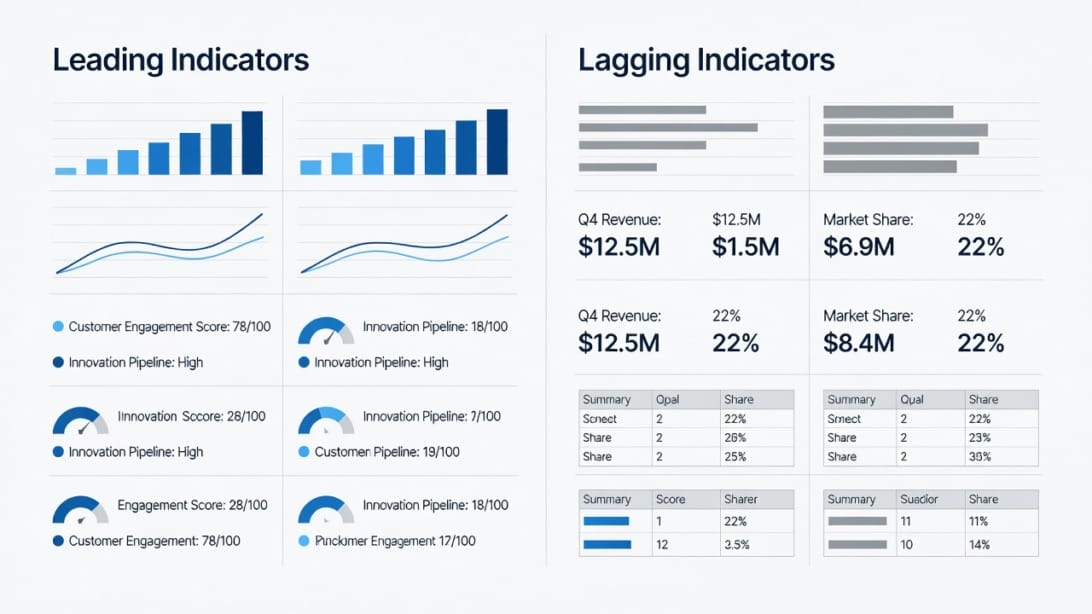
Measurement should start with the enablement objective. If the goal is faster new-hire ramp, measure onboarding milestones, certification quality, first meetings, first opportunities, and time to productivity. If the goal is better enterprise conversion, measure stakeholder mapping, discovery quality, proposal conversion, deal cycle length, and win rate.
Leading indicators vs lagging indicators
Leading indicators show whether enablement behaviors are happening now. Lagging indicators show whether business results improved later. You need both because revenue metrics move slowly, while adoption and behavior metrics help you adjust before a full quarter passes.
Leading indicators include:
- Training completion.
- Certification pass rate.
- Manager coaching sessions completed.
- Asset usage by stage.
- CRM field completion quality.
- Discovery scorecard scores.
- Sequence adoption.
- New-hire milestone progress.
- Content search success.
- Playbook usage.
Lagging indicators include:
- Win rate.
- Sales cycle length.
- Average contract value.
- Pipeline created.
- Opportunity conversion rate.
- Stage progression rate.
- Forecast accuracy.
- Ramp time.
- Quota attainment.
- Retention or expansion for post-sale enablement.
A common mistake is celebrating adoption without outcome analysis. If 90 percent of reps complete a course but discovery quality does not improve, the course was not enough. Another mistake is blaming enablement for revenue metrics without checking adoption. If reps did not use the new playbook, the playbook did not get a fair test.
The best enablement metrics form a chain:
1. Reps completed training.
2. Managers coached the target behavior.
3. Reps used the behavior in live calls.
4. Opportunity quality improved.
5. Stage conversion improved.
6. Revenue outcome improved.
If one link breaks, you know where to investigate.
The enablement scorecard approach
An enablement scorecard turns scattered metrics into a simple monthly view of readiness, adoption, behavior, and business impact. It should be small enough for leadership to read quickly and specific enough to guide decisions.
A practical scorecard can include four categories.
| Category | Example metrics | Why it matters |
|---|---|---|
| Readiness | Certification pass rate, ramp milestone completion, onboarding progress | Shows whether reps have learned the basics |
| Adoption | Asset usage, sequence adoption, CRM process compliance | Shows whether reps use the system |
| Behavior | Call scorecard results, discovery quality, next-step capture | Shows whether selling behavior changed |
| Outcomes | Stage conversion, win rate, cycle length, pipeline quality | Shows whether revenue performance improved |
For each metric, define the decision it supports. If asset usage falls, do you need better repository search, better manager reinforcement, or fewer assets? If call scores improve but win rate does not, are you coaching the wrong behavior? If pipeline created rises but win rate falls, did enablement increase activity without qualification?
Use segments. Compare new hires to tenured reps, enterprise to SMB, inbound to outbound, and teams with different managers. Enablement often works unevenly because manager reinforcement varies. Segmented data helps you find where the system is working and where it is not.
Also include qualitative feedback. Sellers can explain why they avoid an asset. Buyers can reveal which materials helped internal decision making. Managers can identify where playbooks are too complex. Quantitative metrics show what changed; qualitative feedback often explains why.
Common B2B Sales Enablement Mistakes and How to Avoid Them
The most common B2B sales enablement mistakes are creating too much content, training without reinforcement, buying tools before fixing process, ignoring manager coaching, and measuring activity instead of revenue impact. Avoid them by starting with buyer friction, keeping assets practical, and building tight feedback loops.
Enablement programs usually fail from overbuilding or under-reinforcing. Teams launch a portal, upload every deck ever created, run a kickoff training, and assume sales behavior will change. A month later, reps still use old slides, managers coach inconsistently, and leadership cannot connect the program to pipeline.
Mistake 1: Launching without a content audit
Launching enablement without a content audit creates a larger mess in a more official place. Reps already struggle to find current assets. Uploading everything into a new repository without pruning, tagging, and ownership only makes outdated content easier to misuse.
Before launching a content library, audit every asset against four criteria:
1. Accuracy: Is the messaging current?
2. Usefulness: Does sales actually need it?
3. Stage fit: Where in the sales process does it belong?
4. Ownership: Who maintains it?
Archive assets that are outdated, duplicative, off-message, or unused. Combine similar decks. Rename files clearly. Add short usage notes. Assign review dates. A small, trusted library beats a large, confusing library.
A content audit should also reveal missing assets. If reps repeatedly ask for a security overview, a pricing objection sheet, or an implementation timeline, those gaps matter more than another generic product overview. Build based on field friction.
Mistake 2: Training without reinforcement
Training without reinforcement creates short-term confidence but weak long-term behavior change. Reps may understand the concept during the session, but they need practice, manager coaching, call review, and workflow prompts to use it consistently under real selling pressure.
To avoid this, design every training program with a reinforcement plan:
- What behavior should change?
- Where will reps practice it?
- How will managers observe it?
- What scorecard will be used?
- When will feedback happen?
- Which metric will show progress?
For example, if training teaches better discovery, managers should review real discovery calls the following week. The CRM should capture key discovery fields. The team should share strong examples. The next training should address the most common weakness observed in calls.
Reinforcement does not need to be complicated. A 20-minute weekly call review with one clear focus can outperform a long quarterly workshop. Consistency matters more than production value.
Mistake 3: Buying tools before fixing process
Buying enablement tools before fixing process usually automates confusion. A content platform cannot decide which assets matter. A CRM cannot define a qualified deal. AI cannot invent a differentiated message if the company has not clarified positioning.
Before purchasing new technology, answer these questions:
- Which behavior are we trying to make easier?
- Which workflow is currently broken?
- Which data will prove improvement?
- Who will own administration?
- How will managers reinforce usage?
- Which existing tool can be simplified or retired?
Sometimes the answer is not another platform. It may be a cleaner CRM stage definition, a better discovery guide, or a single source-of-truth folder. Start with the lowest-friction fix. Add technology when the manual process works but needs scale, tracking, or governance.
Tool sprawl also hurts reps. If a seller must check six systems before a call, enablement has become a burden. The best stack reduces cognitive load. It brings the right prompt, asset, or next action into the rep’s existing workflow.
Key Takeaways
B2B sales enablement is not a content folder or a training calendar. It is the operating system for consistent revenue execution. Start with buyer friction, define the sales motion, build only the assets reps need, reinforce behavior through managers, and measure whether the system improves pipeline quality.
- B2B sales enablement gives sellers the content, tools, coaching, and processes needed to engage complex buying groups.
- Sales training is part of enablement, but enablement also includes content systems, workflows, technology, reinforcement, and measurement.
- Content marketing attracts and educates buyers; enablement adapts content for sales conversations and deal progression.
- The core components are buyer clarity, sales-ready content, process alignment, coaching, marketing alignment, and measurement.
- A practical program starts with an audit, builds a minimum viable playbook, launches with manager reinforcement, and iterates from real deal feedback.
- Technology should support a defined process, not substitute for one.
- Outbound teams need specialized enablement because targeting, relevance, deliverability, sequencing, and reply handling determine whether outreach creates qualified conversations.
- The best metrics connect adoption, behavior, and revenue outcomes instead of stopping at training completion or asset downloads.
- Most enablement mistakes come from overbuilding content, under-coaching behavior, or buying tools before clarifying process.
Frequently Asked Questions
What is B2B sales enablement?
B2B sales enablement is the structured system that helps revenue teams sell more effectively to business buyers. It includes messaging, content, training, tools, coaching, processes, and measurement so sellers can engage the right accounts with the right conversation at the right time.
In practice, it turns company strategy into field execution. A good program helps reps understand the ideal customer, diagnose buyer problems, use the right proof points, handle objections, manage deal stages, and improve through coaching.
How do I start a sales enablement program from scratch?
Start by auditing the current sales motion instead of creating assets immediately. Interview reps and managers, review calls and lost deals, inspect CRM stage movement, identify the biggest revenue friction, and build the smallest enablement system that addresses that problem.
For most teams, the first version should include an ICP guide, persona briefs, discovery questions, objection responses, core content map, sales stage definitions, and a manager coaching cadence. Launch narrowly, measure adoption, then expand.
What tools do I need for sales enablement?
Most B2B teams need a CRM, a searchable content repository, a sales engagement platform if they run outbound or structured follow-up, a coaching or call review workflow, and basic reporting. Larger teams may add learning management, conversation intelligence, revenue intelligence, and AI assistants.
Do not buy tools before defining process. The tool should make an existing workflow easier, faster, or more measurable. If the workflow is unclear, technology will usually amplify confusion rather than fix it.
How long does it take to see results from sales enablement?
You can often see adoption and behavior signals within 30 to 60 days, but revenue outcomes usually take longer because B2B deals move through multi-stage buying cycles. A realistic first evaluation window is one full sales cycle after launch.
Track early indicators such as asset usage, coaching completion, discovery quality, CRM hygiene, and stage progression. Then compare lagging metrics such as conversion rate, win rate, sales cycle length, and ramp time after enough deals have moved through the new system.
What is the budget for a B2B sales enablement team?
The budget depends on team size, sales complexity, hiring pace, and tool requirements. Small teams can begin with part-time ownership, shared documents, manager coaching, and existing CRM workflows. Larger teams may need dedicated enablement staff, content operations, learning systems, and analytics tools.
A practical rule is to fund the bottleneck first. If new hires ramp slowly, invest in onboarding and coaching. If reps cannot find content, fix the repository. If outbound quality is weak, invest in targeting, messaging, deliverability, and sequence governance.
B2B sales enablement is the structured system that helps revenue teams sell more effectively to business buyers. It includes messaging, content, training, tools, coaching, processes, and measurement so sellers can engage the right accounts with the right conversation at the right time.
Start by auditing the current sales motion. Interview reps and managers, review calls and lost deals, inspect CRM stage movement, identify the biggest revenue friction, and build the smallest enablement system that addresses that problem.
Most B2B teams need a CRM, a searchable content repository, a sales engagement platform if they run outbound or structured follow-up, a coaching or call review workflow, and basic reporting.
You can often see adoption and behavior signals within 30 to 60 days, but revenue outcomes usually take longer because B2B deals move through multi-stage buying cycles.
The budget depends on team size, sales complexity, hiring pace, and tool requirements. Small teams can begin with part-time ownership, shared documents, manager coaching, and existing CRM workflows.
Time needed: 112 days
- Assess and audit
Interview reps, managers, marketing, RevOps, and recent buyers. Review calls, CRM stages, lost deals, content usage, onboarding materials, and handoff points before creating anything new.
- Build the foundation
Create the minimum viable enablement system: ICP guidance, persona briefs, stage definitions, discovery guides, objection handling, content maps, coaching scorecards, and new-hire ramp milestones.
- Launch and iterate
Train managers first, launch with one or two behavior changes, track adoption and outcomes separately, review feedback, and improve the system based on live deal data.