
If you need subject lines for sales tax exemption recovery B2B campaigns, use clear, document-specific language that tells the recipient what is missing, why it matters, and what action is needed. The best subject lines mention the certificate, exemption status, invoice, vendor account, or renewal without sounding like a refund scam or legal threat.
Sales tax exemption recovery emails are not normal sales emails. They sit between finance, tax, procurement, accounts payable, customer success, and sometimes legal. A subject line that would work for a demo request can fail badly when the message is about exemption certificates, resale documentation, overpaid tax, tax-exempt orders, refund support, or audit readiness.
This guide gives you a full B2B playbook: subject lines by scenario, buyer persona, sequence stage, risk level, document type, and deliverability concern. It also explains what to avoid, how to test subject lines without making unsupported claims, and how to place Mystrika, DoYouMail, and Filter Bounce into a practical recovery workflow when your team needs to reach many customers or vendors.

What Are B2B Sales Tax Exemption Recovery Subject Lines?
B2B sales tax exemption recovery subject lines are email subject lines used to obtain, correct, renew, or validate tax exemption documents after a transaction, vendor onboarding, account review, or refund review. They should be specific, calm, and action-oriented because the recipient often needs to involve finance, tax, or procurement before responding.
A sales tax exemption recovery campaign can have several goals:
- Recover a missing exemption certificate.
- Replace an expired certificate.
- Correct a certificate with incomplete, mismatched, or outdated details.
- Ask a customer to confirm tax-exempt status before future orders.
- Request documentation needed to support a credit, refund, or rebill.
- Reduce audit exposure by closing certificate gaps.
- Reconcile exemption status across locations, entities, or states.
- Help an internal team clean up exemption records before month-end, quarter-end, year-end, migration, or audit preparation.
The word “recovery” matters because the sender is not simply asking for a sales meeting. They are trying to recover documentation, tax overpayments, exemption status, or process control. That makes the subject line more sensitive. It has to get attention without using manipulative urgency or language that resembles phishing.
A weak B2B subject line says:
- “Urgent refund available”
- “Action required now”
- “Tax money owed”
- “Final notice”
A stronger B2B subject line says:
- “Missing exemption certificate for your account”
- “Question about tax-exempt status for recent orders”
- “Certificate update needed for [Company]”
- “Can you confirm the resale certificate on file?”
The stronger versions are more believable because they name the operational task. They also give the recipient enough context to forward the email to the right person.

Why Tax Exemption Recovery Subject Lines Need a Different Strategy
Tax exemption recovery subject lines need a different strategy because the recipient is evaluating risk, legitimacy, workload, and financial impact at the same time. The subject line must look credible to a busy finance team, avoid spam-like refund language, and make the requested documentation easy to understand before the email is opened.
Most generic sales subject line advice focuses on curiosity, personalization, and reply generation. That advice is useful, but it is incomplete for exemption recovery. In this context, curiosity can look suspicious. A subject line like “Quick question about money you may be missing” might earn an open in a sales campaign, but it can also resemble a scam when the topic is tax recovery.
Tax exemption recovery requires a more conservative hierarchy:
1. Clarity before curiosity.
2. Specificity before cleverness.
3. Operational relevance before emotional urgency.
4. Proof and context before claims about savings.
5. Deliverability hygiene before scale.
Generic Sales Subject Lines vs. Exemption Recovery Subject Lines
Generic sales subject lines often try to create an open loop. Exemption recovery subject lines should close the loop quickly by identifying the document, account, invoice, state, entity, or process involved.
| Generic sales subject line style | Why it can fail for tax recovery | Better exemption recovery style |
|---|---|---|
| “Quick question” | Too vague for finance teams and easy to ignore | “Quick question about your exemption certificate” |
| “Potential savings for [Company]” | Can sound like a refund scam | “Reviewing tax exemption status for [Company]” |
| “Final notice” | Sounds threatening and may trigger distrust | “Certificate update needed before next order” |
| “Can we talk?” | No operational reason to open | “Can you confirm the certificate on file?” |
| “Found an issue” | Creates anxiety without context | “Exemption certificate mismatch on your account” |
| “Refund opportunity” | High spam and phishing risk | “Documentation needed to review tax credit eligibility” |
The goal is not to make the subject line boring. The goal is to make it safe to open, safe to forward, and easy to act on.
The Best Subject Lines for Sales Tax Exemption Recovery B2B
The best subject lines for sales tax exemption recovery B2B emails identify the document or account issue in plain language. Use the recipient’s company, entity, state, certificate type, invoice reference, or renewal date when it is accurate. Avoid exaggerated refund promises, fake urgency, and vague legal threats.
Use these examples as templates. Replace placeholders only with verified data from your CRM, ERP, billing system, exemption certificate platform, or customer record.
Missing Certificate Subject Lines
Missing certificate subject lines should be direct because the recipient needs to know exactly which document is absent. Mention the account, order, vendor profile, or tax-exempt status when possible, but do not imply a penalty or refund unless your team has verified the situation.
- Missing exemption certificate for [Company]
- Exemption certificate needed for your account
- Tax-exempt documentation missing for [Company]
- Can you send the exemption certificate for [Account Name]?
- Certificate needed to support tax-exempt orders
- Documentation needed for your tax-exempt account
- Missing resale certificate for [Company]
- Quick request: exemption certificate for [Entity]
- Could you confirm who handles exemption certificates?
- Tax documentation request for [Company]
- Certificate not on file for recent order
- Exemption paperwork needed for account review
- Help routing this exemption certificate request?
- Missing certificate for [Invoice Number]
- Tax-exempt status pending certificate on file
Best use: first-touch emails where the issue is simple and the recipient is likely to understand the requested document.
Avoid: “Your exemption is invalid” unless you have already verified that the certificate is invalid. If the document is simply missing, say missing.
Expired Certificate Subject Lines
Expired certificate subject lines should focus on renewal, continuity, and account accuracy. The recipient should immediately understand that an existing document needs an update, not that the sender is making a new sales pitch.
- Exemption certificate renewal for [Company]
- Certificate on file appears expired
- Updated exemption certificate needed for [Account]
- Renewal request for your resale certificate
- Tax-exempt account update needed
- Certificate expiration check for [Company]
- Please update the exemption certificate on file
- Renewal needed before future tax-exempt orders
- Exemption certificate dated [Date] needs review
- Can you confirm your current certificate?
- Certificate renewal request for [State]
- Updated tax exemption documentation needed
- Account review: exemption certificate renewal
- Resale certificate update for [Company]
- Keeping your tax-exempt status current
Best use: renewal campaigns, year-end cleanups, account health reviews, and pre-order checks.
Avoid: “Expired tax certificate problem” because it sounds accusatory and may discourage forwarding.
Invalid or Incomplete Certificate Subject Lines
Invalid or incomplete certificate subject lines need extra care because they can sound like blame. Use neutral language such as “review,” “mismatch,” “update,” or “correction” instead of “rejected” unless the document was formally rejected by a process or authority.
- Certificate correction needed for [Company]
- Exemption certificate details need review
- Question about the certificate on file
- Certificate mismatch for [Account]
- Can you confirm the tax ID on your certificate?
- Address mismatch on exemption certificate
- Entity name mismatch on certificate record
- Certificate update needed for [State]
- Review needed: exemption document details
- Exemption form appears incomplete
- Missing field on your resale certificate
- Can you help correct this exemption record?
- Tax-exempt account record needs cleanup
- Certificate details do not match account record
- Documentation update needed before approval
Best use: second-touch emails when you have a specific correction request.
Avoid: “Your certificate is wrong” because it sounds careless and adversarial.
Refund, Credit, or Overpayment Review Subject Lines
Refund and credit subject lines should avoid promising money. Say “review,” “documentation,” or “eligibility” unless the credit or refund has already been approved. This protects trust and keeps the message from sounding like a phishing hook.
- Documentation needed for tax credit review
- Exemption certificate needed to review tax credit
- Tax overpayment review for [Company]
- Certificate request for possible credit review
- Reviewing tax charged on [Invoice Number]
- Documentation needed before credit can be reviewed
- Exemption support needed for refund review
- Can you confirm exemption status for this invoice?
- Tax credit review pending certificate
- Follow-up on tax charged to [Company]
- Certificate needed to evaluate exemption adjustment
- Exemption record review for recent invoices
- Tax documentation request for credit memo review
- Confirming eligibility for tax adjustment review
- Supporting documents needed for exemption review
Best use: customer service, AR, billing, tax, and account management situations where an exemption may affect a credit or refund.
Avoid: “You are owed money” unless your legal and finance teams have approved that exact claim.
Vendor or Supplier Recovery Subject Lines
Vendor recovery subject lines should focus on onboarding, file completeness, and compliance records. Many vendors route these messages through procurement or AP, so use wording that can survive forwarding.
- Exemption certificate needed for vendor file
- Vendor tax documentation request for [Company]
- Certificate needed to complete supplier record
- Tax-exempt documentation for vendor onboarding
- Updating exemption records for [Vendor Name]
- Supplier file missing exemption certificate
- Can you help route this tax certificate request?
- Certificate required for vendor account review
- Vendor record update: exemption documentation
- Tax documentation request for procurement file
- Exemption certificate needed for AP record
- Supplier compliance record needs certificate update
- Confirming tax-exempt status for vendor file
- Documentation request for supplier tax review
- Vendor account exemption certificate follow-up
Best use: procurement, AP, vendor master data, supplier onboarding, and vendor compliance teams.
Avoid: overly salesy language. Vendor teams care about clean records, not marketing hooks.
Multi-State or Location-Based Subject Lines
Multi-state subject lines should mention the state, location, entity, or jurisdiction only when it is accurate. This makes the request easier to route and reduces back-and-forth across decentralized organizations.
- [State] exemption certificate needed for [Company]
- Certificate update needed for [Location]
- Multi-state exemption review for [Company]
- Exemption certificate request for [State] orders
- Confirming tax-exempt status in [State]
- Certificate needed for [Entity] in [State]
- Location-specific exemption record needs review
- Tax documentation request for [State] account
- Exemption record mismatch for [State]
- Certificate renewal needed for [Location]
- Can you confirm the certificate for [State]?
- Tax-exempt order support for [Location]
- Updating exemption records across locations
- [Company] exemption certificate by location
- Certificate review for multi-state account setup
Best use: enterprise accounts, franchises, decentralized procurement teams, multi-entity buyers, and companies with separate ship-to locations.
Avoid: naming a state unless you know the certificate is state-specific.
Audit Readiness Subject Lines
Audit readiness subject lines should be calm and documentation-focused. Do not imply that the recipient is under audit unless that is true and approved by the right internal stakeholders.
- Exemption certificate support for audit file
- Documentation cleanup for tax-exempt account
- Certificate records review for [Company]
- Exemption support needed for internal review
- Tax documentation needed for account file
- Closing exemption certificate gaps for [Company]
- Certificate backup needed for tax records
- Account documentation review: exemption certificate
- Can you confirm this exemption record?
- Supporting documentation needed for exempt sales
- Certificate record update before file review
- Exemption documentation request for audit readiness
- Tax-exempt account file needs an update
- Please confirm certificate details for records
- Review request: exemption documentation on file
Best use: internal cleanup, pre-audit preparation, certificate management projects, or controller-led record reviews.
Avoid: “Audit risk” in the first touch unless the relationship and context justify that level of seriousness.
Subject Line Formulas That Work for Exemption Recovery
The most reliable formula is: specific document plus specific reason plus low-friction action. A strong subject line tells the recipient what record is involved and what they can do next. Use personalization only when the underlying data is correct.
| Formula | Example | Best for | Why it works |
|---|---|---|---|
| Missing document + account | Missing exemption certificate for [Company] | First touch | Clear and forwardable |
| Document + renewal | Exemption certificate renewal for [Company] | Expired certificates | Avoids blame |
| Question + specific record | Question about your resale certificate | Warm follow-up | Feels human but still clear |
| Invoice + documentation | Certificate needed for [Invoice Number] review | Credit or rebill | Connects request to a business record |
| State + document | [State] exemption certificate needed | Multi-state recovery | Helps routing |
| Role routing | Could you route this tax certificate request? | Unknown owner | Reduces friction |
| Record cleanup | Updating exemption records for [Company] | Compliance cleanup | Professional and non-alarming |
| Confirmation | Can you confirm the certificate on file? | Existing certificate | Invites a simple response |
The Document-First Formula
The document-first formula puts the required certificate or form at the front of the subject line. It works well when the recipient already knows your company or when the email may be forwarded to finance, tax, procurement, or AP.
Formula:
- [Document] needed for [Account/Order/State]
Examples:
- Exemption certificate needed for [Company]
- Resale certificate needed for [State] orders
- Tax exemption form needed for account review
- Updated certificate needed for [Entity]
Use this when clarity matters more than curiosity.
The Review Formula
The review formula is useful when you do not want to overstate the issue. It signals that the email is about a legitimate process rather than a demand.
Formula:
- Reviewing [record/process] for [Company]
Examples:
- Reviewing exemption status for [Company]
- Reviewing tax charged on recent invoices
- Reviewing certificate records for your account
- Reviewing tax-exempt documentation for [Entity]
Use this when the facts are still being checked or when the recipient may dispute the issue.
The Routing Formula
The routing formula is designed for large organizations where the first contact may not own tax documentation. It asks for help routing the request instead of demanding action from the wrong person.
Formula:
- Could you route this [document/process] request?
Examples:
- Could you route this exemption certificate request?
- Who handles resale certificates for [Company]?
- Can you point me to the tax documentation owner?
- Could you connect me with the AP contact for certificates?
Use this when your data does not identify the correct finance or tax contact.
Subject Lines by Recipient Persona
The right subject line depends on who receives the email. A CFO wants risk and financial impact framed cleanly. A controller wants accurate records. A tax manager wants documentation details. AP or procurement wants routing clarity and vendor file completeness.
| Persona | Subject line angle | Example | Avoid |
|---|---|---|---|
| CFO | Financial review, controls, risk | Tax exemption review for [Company] | Vague refund promises |
| Controller | Records, reconciliation, audit file | Certificate record cleanup for [Company] | Overly promotional wording |
| Tax director | Certificate validity, state detail | [State] exemption certificate needs review | Generic “quick question” |
| AP manager | Vendor file, invoice support | Certificate needed for invoice review | Legal threats |
| Procurement | Supplier record, onboarding | Tax documentation needed for supplier file | Sales-demo framing |
| Customer success | Account continuity | Keeping your tax-exempt account current | Technical tax jargon |
| Operations | Workflow and ownership | Who owns exemption certificates for [Company]? | Abstract value claims |
CFO Subject Lines
CFO subject lines should respect executive time. They should connect the request to a financial control, account review, credit review, or documentation gap without exaggerating savings.
- Tax exemption review for [Company]
- Exemption documentation affecting account records
- Certificate support needed for tax review
- Reviewing tax-exempt status and documentation
- Potential tax credit review pending certificate
- Certificate gap in tax-exempt account file
- Documentation needed for exemption review
- Tax records cleanup for [Company]
- Exemption certificate status for recent invoices
- Quick confirmation on tax-exempt account records
Controller Subject Lines
Controller subject lines should emphasize clean books, accurate records, audit support, and invoice reconciliation. These recipients often respond to precise operational language.
- Certificate record cleanup for [Company]
- Exemption certificate missing from account file
- Tax documentation needed for invoice review
- Exemption record mismatch on [Account]
- Certificate renewal needed for account records
- Reviewing tax charged on recent invoices
- Documentation needed to support tax-exempt sale
- Tax exemption account reconciliation request
- Certificate update for audit support file
- Exemption document request for closeout review
Tax Manager Subject Lines
Tax manager subject lines can be more specific because the recipient understands certificate types, state rules, and documentation workflows. Use state, entity, and certificate type when accurate.
- [State] resale certificate needs review
- Exemption certificate mismatch for [Entity]
- Certificate renewal needed for [State]
- Confirming tax-exempt status for [Location]
- Certificate support needed for exempt sale review
- Exemption document missing required detail
- Tax ID mismatch on exemption record
- Multi-state certificate review for [Company]
- Documentation needed for tax-exempt order support
- Exemption certificate validation request
AP, AR, and Procurement Subject Lines
AP, AR, and procurement subject lines should be easy to route. Mention vendor file, invoice, account, supplier record, or customer record.
- Certificate needed for vendor file
- Exemption documentation for invoice review
- Supplier tax documentation request
- Tax certificate needed for AP record
- Customer exemption certificate request
- Vendor record update: tax documentation
- Invoice tax review pending certificate
- Could you route this exemption request?
- Certificate needed to update supplier profile
- Tax-exempt account documentation follow-up
247 B2B Sales Tax Exemption Recovery Subject Lines by Use Case
Use case-based subject lines help your team avoid one-size-fits-all messaging. The best approach is to match the subject line to the exact recovery problem, the recipient’s role, and the stage of the follow-up sequence.
First-Touch Subject Lines
A first-touch subject line should be clear enough for a recipient to understand the request without prior context. Do not assume the person knows there is a certificate issue.
1. Exemption certificate needed for [Company]
2. Tax-exempt documentation request for [Company]
3. Missing certificate for your account
4. Resale certificate needed for [State]
5. Quick request about your exemption certificate
6. Certificate needed to support tax-exempt orders
7. Can you confirm the certificate on file?
8. Tax documentation request for account review
9. Exemption status review for [Company]
10. Certificate update needed for [Account]
11. Could you help with a tax certificate request?
12. Documentation needed for recent order review
13. Exemption certificate request for [Entity]
14. Tax-exempt account needs certificate update
15. Certificate not on file for [Company]
16. Resale documentation request for [Company]
17. Tax certificate needed for [Invoice Number]
18. Exemption record review for your account
19. Certificate support needed for tax-exempt sale
20. Can you route this exemption documentation request?
Follow-Up Subject Lines
Follow-up subject lines should add context or reduce friction. Do not simply repeat the first subject line. Mention routing, a specific record, or the next step.
21. Following up on exemption certificate request
22. Re: certificate needed for [Company]
23. Can you route this to the tax contact?
24. Still missing the certificate for [Account]
25. Quick follow-up on tax documentation
26. Any update on the exemption certificate?
27. Certificate request still open for [Company]
28. Checking on the resale certificate request
29. Who should receive this certificate request?
30. Tax-exempt account review still pending
31. Need help routing this documentation request
32. Follow-up on certificate for [Invoice Number]
33. Can AP help with this certificate request?
34. Checking status of exemption documentation
35. Certificate update still needed for [State]
36. Exemption record remains incomplete
37. Tax documentation follow-up for your account
38. Can you confirm the right tax contact?
39. Follow-up: exemption certificate on file
40. Still reviewing tax-exempt status for [Company]
Breakup or Final Attempt Subject Lines
A final attempt should be professional and non-threatening. The goal is to close the loop or find the right owner, not pressure the recipient with false urgency.
41. Should I close this certificate request?
42. Last check on exemption documentation
43. Closing the loop on your certificate request
44. Should this go to someone else?
45. Final follow-up on tax certificate request
46. Can I update the account as pending?
47. Should we pause tax-exempt status review?
48. Last attempt to route exemption request
49. Closing out the certificate review
50. Before I close this exemption record
51. Should future orders remain taxable?
52. Can you confirm no certificate is available?
53. Final check: exemption certificate for [Company]
54. Should I mark this record incomplete?
55. Last note on certificate renewal
56. Can someone else help with tax documentation?
57. Closing loop on resale certificate
58. Final request for exemption account records
59. Should we remove this from follow-up?
60. Last check before account record update
Customer-Friendly Subject Lines
Customer-friendly subject lines are useful when the relationship matters and the customer may see the request as administrative friction. Keep the tone helpful.
61. Keeping your tax-exempt account current
62. Help us update your exemption certificate
63. Quick certificate update for your account
64. Avoiding tax issues on future orders
65. Making sure your exemption is on file
66. Updating your tax-exempt account records
67. Keeping your exemption documentation current
68. Confirming your certificate for future orders
69. Small update needed for tax-exempt status
70. Help with your exemption certificate record
71. Certificate update to keep records accurate
72. Confirming documentation for your account
73. Tax-exempt account housekeeping request
74. Keeping your account tax records clean
75. Certificate update for smoother order processing
Internal Cleanup Subject Lines
Internal cleanup subject lines help your own teams coordinate. These are useful for tax, AR, customer success, and operations workflows.
76. Certificate gaps in tax-exempt accounts
77. Exemption recovery list for review
78. Accounts missing exemption documentation
79. Certificate cleanup needed before close
80. Tax-exempt account records needing updates
81. Exemption certificate recovery status
82. Open certificate requests by owner
83. Tax documentation cleanup plan
84. Certificate gap review for [Team]
85. Accounts needing exemption follow-up
86. Exemption recovery sequence ready for review
87. Certificate records needing owner assignment
88. Tax-exempt account cleanup backlog
89. Missing certificate list for [Month]
90. Exemption documentation recovery next steps
High-Trust, Low-Pressure Subject Lines
Use these when the recipient relationship is sensitive or when the topic could sound alarming.
91. Question about exemption documentation
92. Can you confirm a tax certificate detail?
93. Checking the certificate on file
94. Small exemption record question
95. Review request for tax documentation
96. Can you verify this certificate record?
97. Exemption account detail to confirm
98. Quick certificate record check
99. Tax documentation detail for [Company]
100. Confirming an exemption record
101. Can you help verify tax-exempt status?
102. Certificate record question for [Account]
103. Tax certificate detail needs confirmation
104. Checking exemption status for account records
105. Can you confirm the correct certificate?
Urgency Without Manipulation
Urgency works only when it is real. Tie urgency to an operational event such as order processing, account review, invoice correction, certificate expiration, or internal close.
106. Certificate needed before next tax-exempt order
107. Exemption update needed before invoice review
108. Certificate renewal needed before account update
109. Tax documentation needed before credit review
110. Certificate needed to complete order review
111. Exemption record update needed this week
112. Certificate needed before billing correction
113. Tax-exempt status pending documentation
114. Certificate update needed before renewal review
115. Documentation needed to finish account cleanup
116. Certificate request tied to [Invoice Number]
117. Exemption review pending your certificate
118. Account update pending tax documentation
119. Certificate needed before vendor file approval
120. Exemption certificate needed before closeout
Subject Lines for Re-Engagement
Use re-engagement subject lines when a certificate request has gone quiet. Reference the previous request and provide a low-friction next step.
121. Is this exemption request still relevant?
122. Should we revisit the certificate request?
123. Checking back on tax-exempt documentation
124. Still need help with this certificate?
125. Is [Company] still tax-exempt for these orders?
126. Should we update the certificate record?
127. Revisiting your exemption certificate status
128. Any change to your tax-exempt status?
129. Can we close this certificate gap?
130. Is there a better contact for tax documents?
131. Returning to the exemption certificate request
132. Should this go to your tax team?
133. Is the resale certificate still available?
134. Reopening the exemption documentation request
135. Can we refresh this certificate record?
Entity, State, and Location Subject Lines
These subject lines work when your data is reliable. If the entity, state, or location is wrong, the email loses trust immediately.
136. [Entity] exemption certificate needed
137. [State] certificate missing from account
138. [Location] exemption record needs review
139. Certificate update for [Entity] orders
140. [State] resale certificate renewal request
141. Tax documentation for [Location]
142. Exemption status for [Entity] in [State]
143. Certificate review for [Ship-To Location]
144. [Entity] tax-exempt account update
145. [State] exemption certificate on file?
146. Multi-location certificate records for [Company]
147. Exemption certificate request for [Branch]
148. Tax documentation for [State] invoices
149. [Location] certificate mismatch
150. Confirming [Entity] exemption documentation
Certificate Type Subject Lines
Use certificate-type subject lines when your audience knows the terminology. They are especially useful for tax teams and controllers.
151. Resale certificate needed for [Company]
152. Direct pay permit update needed
153. Exemption form review for [State]
154. Tax-exempt certificate renewal request
155. Resale documentation missing for account
156. Exemption certificate details need correction
157. Direct pay documentation request
158. Certificate of exemption on file?
159. Resale certificate mismatch on account
160. Updated exemption form needed
161. Tax permit documentation review
162. Exempt-use certificate request
163. Nonprofit exemption documentation needed
164. Manufacturing exemption certificate review
165. Government exemption certificate request
Invoice and Order Subject Lines
Invoice and order subject lines are useful because they attach the request to a concrete business record. They are also easier for AP and AR teams to route.
166. Certificate needed for [Invoice Number]
167. Tax review for [Order Number]
168. Exemption documentation tied to [Invoice Number]
169. Reviewing tax on [Order Number]
170. Certificate needed before invoice correction
171. Exemption status for recent order
172. Documentation needed for [Invoice Number] review
173. Tax-exempt support for [Order Number]
174. Certificate request for recent invoice
175. Tax charged on [Invoice Number]
176. Exemption review for order history
177. Certificate needed to review invoice tax
178. Tax documentation for open invoice
179. Exemption certificate for [PO Number]
180. Reviewing tax-exempt status for [PO Number]
Soft Personalization Subject Lines
Soft personalization adds context without overloading the subject line. Use it when you trust the personalization field.
181. [First Name], question about exemption documentation
182. [Company] certificate update needed
183. [First Name], can you route this tax request?
184. Certificate review for [Company]
185. [Company] exemption record needs review
186. [First Name], quick tax documentation question
187. [Company] resale certificate request
188. [First Name], is this the right tax contact?
189. Updating [Company]’s exemption records
190. [Company] tax-exempt account review
191. [First Name], certificate on file?
192. [Company] invoice tax review
193. [First Name], need help with a certificate
194. [Company] certificate renewal request
195. [First Name], can AP help with this?
Subject Lines for Customer Success or Account Managers
Customer success and account managers can use warmer subject lines because the relationship already exists. The subject still needs to be concrete.
196. Helping keep your exemption status current
197. Small certificate update for your account
198. Keeping future orders tax-exempt where applicable
199. Quick documentation update for your account
200. Certificate renewal for smoother ordering
201. Tax-exempt account update from [Sender]
202. Can we refresh your certificate record?
203. Updating your exemption documentation
204. Avoiding delays on tax-exempt orders
205. Certificate check for your account
206. Helping clean up your tax records
207. Account documentation update needed
208. Tax-exempt order support request
209. Certificate update from your account team
210. Confirming exemption details for future orders
Subject Lines for Outreach at Scale
Scaled campaigns should use conservative personalization and strong list hygiene. These subject lines are broad enough to send across segments while still being relevant.
211. Exemption certificate update needed
212. Tax documentation request
213. Certificate renewal request
214. Exemption account review
215. Tax-exempt status confirmation
216. Resale certificate request
217. Certificate record cleanup
218. Exemption documentation follow-up
219. Tax certificate update
220. Account tax documentation review
221. Certificate on file needs review
222. Exemption records update
223. Tax-exempt documentation needed
224. Certificate request for account file
225. Exemption status check
Subject Lines to Use Only With Verified Context
These can work, but only if the context is true. Do not use them as generic hooks.
226. Tax charged despite exemption on file
227. Credit review pending exemption certificate
228. Certificate expired on [Date]
229. [State] certificate missing for recent orders
230. Refund review needs certificate support
231. Certificate mismatch could affect tax-exempt orders
232. Exemption status changed for [Account]
233. Missing certificate may affect future invoices
234. Tax credit review for [Invoice Number]
235. Certificate issue found in account review
236. Exemption support needed for audit file
237. Certificate missing from vendor master
238. Tax-exempt order blocked pending certificate
239. Credit memo review needs tax documentation
240. Certificate record incomplete for [Entity]
241. Exemption certificate rejected by review process
242. Tax charged on exempt account needs review
243. Certificate renewal due for [State]
244. Tax documentation needed by [Date]
245. Certificate missing for [PO Number]
246. Exemption status pending compliance review
247. Documentation gap found in certificate record
Subject Lines to Avoid in Tax Exemption Recovery
Avoid subject lines that promise refunds, threaten penalties, fake urgency, or hide the purpose of the email. In tax-related B2B outreach, trust is fragile. If the subject line sounds like phishing, the body copy may never get a chance to prove legitimacy.
| Avoid | Why it is risky | Safer alternative |
|---|---|---|
| “You are owed money” | Unsupported financial claim | “Documentation needed for tax credit review” |
| “Final legal notice” | Threatening and likely inaccurate | “Final follow-up on certificate request” |
| “Urgent tax refund” | Scam-like wording | “Exemption certificate needed for refund review” |
| “Open immediately” | Manipulative | “Certificate update needed for account review” |
| “Your tax status is invalid” | Accusatory and possibly wrong | “Exemption certificate details need review” |
| “Free money for your business” | Spam-like | “Reviewing tax charged on recent invoices” |
| “Government tax alert” | Misleading unless sent by a government body | “Tax documentation request for your account” |
| “Penalty risk” | Legal escalation without context | “Certificate support needed for audit file” |
Words and Phrases That Create Trust Problems
These phrases are not always forbidden, but they should be used carefully in tax recovery campaigns:
- Free
- Guaranteed
- Immediate refund
- Act now
- Final warning
- Legal action
- Penalty notice
- Government notice
- Claim your money
- Secret savings
- Risk-free refund
- You are owed
- Tax loophole
- Audit threat
The safest rule is simple: if the body cannot prove the subject line in the first paragraph, rewrite the subject line.
The B2B Exemption Recovery Sequence
A strong recovery sequence usually starts with a clear document request, follows with routing help, adds business context, and ends by closing the loop. Each step should use a different subject line so the recipient sees progression rather than repetition.
| Step | Goal | Subject line | Body angle |
|---|---|---|---|
| 1 | Identify document gap | Exemption certificate needed for [Company] | State the missing document and account context |
| 2 | Reduce routing friction | Can you route this certificate request? | Ask for the correct tax, AP, or procurement owner |
| 3 | Add business reason | Certificate needed for invoice review | Tie request to invoice, order, credit, or account record |
| 4 | Clarify consequence | Tax-exempt status pending documentation | Explain operational impact without threats |
| 5 | Close loop | Should I close this certificate request? | Offer a simple yes, no, or referral response |
Step 1: Initial Request
The first email should make the missing document obvious. The body should explain who you are, what account or transaction is involved, what document is needed, and how the recipient can send it.
Subject line options:
- Exemption certificate needed for [Company]
- Missing certificate for your account
- Tax documentation request for [Company]
Opening line example:
“I am reaching out because our records do not show a current exemption certificate for [Company] connected to [account/order/state]. Could you send the current certificate or point me to the person who manages tax documentation?”
Step 2: Routing Follow-Up
If the first recipient does not respond, the second email should not assume resistance. Many certificate requests stall because they reached the wrong person.
Subject line options:
- Can you route this certificate request?
- Who handles exemption certificates for [Company]?
- Is there a better tax documentation contact?
Opening line example:
“If you are not the right owner for exemption certificates, could you point me to the person who manages tax documentation, AP records, or vendor account records for [Company]?”
Step 3: Business Context
The third email should explain why the document matters. Keep it factual and avoid unsupported legal claims.
Subject line options:
- Certificate needed for invoice review
- Tax-exempt status pending documentation
- Documentation needed for account review
Opening line example:
“We need the certificate to complete our review of the tax-exempt status connected to [invoice/order/account]. Without the document, the record remains incomplete in our system.”
Step 4: Operational Impact
The fourth email can mention operational impact, such as taxable treatment, pending review, or incomplete records. It should still be calm.
Subject line options:
- Account update pending tax documentation
- Certificate needed before future tax-exempt orders
- Exemption record remains incomplete
Opening line example:
“I wanted to flag that the exemption record remains incomplete. If [Company] should continue to be treated as tax-exempt where applicable, we need the current certificate or the correct contact for this request.”
Step 5: Close the Loop
The final email should let the recipient close the request, redirect it, or confirm that no certificate is available.
Subject line options:
- Should I close this certificate request?
- Final check on exemption documentation
- Should this go to someone else?
Opening line example:
“I will close this follow-up unless there is a better contact or a certificate we should add to the account. If someone else owns this, a quick referral is enough.”
How to Personalize Without Breaking Trust
Personalization works only when it is accurate. For sales tax exemption recovery, bad personalization is worse than no personalization because it suggests that your tax records may also be unreliable.
Personalize from verified systems, not guesses. Good data sources include account records, ERP entries, billing systems, vendor master data, exemption certificate software, CRM account ownership, and prior support tickets. Avoid scraping uncertain data into tax-related emails.
| Personalization field | Good use | Risk if wrong |
|---|---|---|
| Company name | Certificate needed for [Company] | Low, if normalized |
| State | [State] exemption certificate needed | High if certificate is not state-specific |
| Invoice number | Certificate needed for [Invoice Number] | High if the invoice is wrong |
| Entity name | [Entity] certificate update needed | Medium to high for multi-entity accounts |
| Contact name | [First Name], can you route this? | Low, but avoid overuse |
| Tax ID | Usually better in body, not subject | High privacy and trust risk |
| Dollar amount | Usually avoid in subject | High phishing and sensitivity risk |
Safe Personalization Examples
- [Company] exemption certificate request
- Certificate needed for [Invoice Number]
- [State] resale certificate renewal
- [First Name], can you route this tax request?
- Exemption record review for [Entity]
Risky Personalization Examples
- Your $[Amount] refund is pending
- Tax ID [Number] mismatch found
- [State] audit risk for [Company]
- You overpaid tax on [Amount]
- Legal exposure on [Invoice Number]
The risky versions may be true in some situations, but they expose sensitive details, create alarm, or make claims that need careful review.
Deliverability Rules for Tax Exemption Recovery Campaigns
Deliverability matters because a certificate recovery campaign often targets finance and operations inboxes that are heavily filtered. Use verified recipient lists, conservative subject lines, authenticated sending domains, warmed sending patterns, and clear body alignment to improve the chance that legitimate tax documentation requests reach the inbox.
A tax recovery campaign can fail even with perfect subject lines if the sending setup looks suspicious. Before scaling, confirm these basics:
- SPF, DKIM, and DMARC are configured for the sending domain.
- The sending domain is warmed before high-volume outreach.
- Bounce-prone contacts are removed before the campaign starts.
- The subject line matches the body exactly.
- The sender name is recognizable and consistent.
- The reply-to address is monitored.
- The body includes a legitimate company identity and reason for contact.
- Attachments are avoided in the first touch unless your recipients expect them.
- Links are limited and clearly related to document submission or support.
- Suppression lists are respected.
If your team runs outbound recovery at scale, Mystrika can help structure AI-assisted sequences, warm sending accounts, manage replies in a unified inbox, and keep follow-ups organized. For teams that need high-volume infrastructure, DoYouMail can support unlimited cold email sending, while Filter Bounce can verify addresses in real time before you contact finance or procurement lists. These tools are useful only when the underlying request is legitimate and your data is clean.
For deeper setup guidance, review Mystrika’s guide to email deliverability before launching a large certificate recovery sequence.
Deliverability Checklist
- Use a dedicated but recognizable sending identity.
- Verify every recipient before sending.
- Segment by scenario instead of blasting one generic subject line.
- Keep the first email short and plain.
- Avoid heavy images, attachments, and link-heavy templates.
- Do not use deceptive “Re:” or “Fwd:” prefixes.
- Keep subject lines aligned with the first sentence of the email.
- Use a real reply path monitored by tax, finance, or operations.
- Pause sending if bounce rates, complaints, or negative replies increase.
- Keep suppression and opt-out handling clear.
A/B Testing Subject Lines Without Misreading Results
A/B testing can help exemption recovery campaigns, but open rate alone is not enough. Measure the full recovery outcome: valid certificate received, correct owner identified, account updated, credit review completed, or documentation gap closed.
For this topic, a subject line that gets fewer opens but more valid certificates may be the winner. Curiosity-based subject lines can inflate opens while lowering trust. Testing should compare operational outcomes, not just top-of-funnel curiosity.
| Test | Variant A | Variant B | Success metric |
|---|---|---|---|
| Clarity vs. routing | Exemption certificate needed for [Company] | Can you route this certificate request? | Correct owner or certificate received |
| Document vs. account | Missing resale certificate | Tax-exempt account review | Valid reply rate |
| State-specific vs. general | [State] certificate needed | Certificate needed for your account | Certificate received for correct state |
| Invoice-specific vs. general | Certificate needed for [Invoice] | Tax documentation request | Invoice issue resolved |
| Renewal vs. update | Certificate renewal request | Certificate update needed | Updated certificate received |
Testing Rules for Finance-Sensitive Outreach
- Test only truthful subject lines.
- Do not test fake urgency.
- Do not test misleading refund claims.
- Keep segments comparable.
- Track replies by quality, not just quantity.
- Document which subject lines produce wrong-contact replies.
- Separate customer, vendor, and internal campaigns.
- Review negative replies for trust issues.
- Stop using a variant if it creates confusion.
- Feed learnings back into your CRM and sequence logic.
Email Body Alignment: What the First Paragraph Must Prove
The first paragraph must prove the subject line immediately. If the subject says a certificate is missing, the first paragraph should name the account, document, order, or review context. If the body opens with a generic pitch, the subject line feels deceptive.
Use this structure:
1. Identify yourself and your company.
2. State the record or account involved.
3. Explain the document needed.
4. Ask for the document or the correct owner.
5. Provide a safe next step.
Example:
Subject: Missing exemption certificate for [Company]
Body opening:
“I am contacting you from [Company] because our records do not show a current exemption certificate for [Company Account]. Could you send the current certificate or point me to the person who manages tax documentation for this account?”
This body works because it does not overpromise, threaten, or bury the request.
Body Copy Mistakes That Undermine Good Subject Lines
- The subject says “certificate” but the body pitches software first.
- The subject mentions a refund but the body cannot prove eligibility.
- The subject uses a state name that the body never explains.
- The body asks for sensitive data without context.
- The email includes an unexpected attachment.
- The sender asks for a tax ID in the first email.
- The message comes from a person the customer does not recognize and gives no company context.
- The email has too many links.
- The CTA is vague, such as “let me know your thoughts.”
- The signature does not include enough identity for a finance recipient to trust the request.
Decision Matrix: Which Subject Line Should You Use?
Choose the subject line based on the state of the record, the certainty of your data, and the recipient’s likely role. When certainty is low, use a routing or review subject. When certainty is high, use a document-specific subject.
| Situation | Data certainty | Recipient | Recommended subject line |
|---|---|---|---|
| Certificate missing | High | Tax or controller | Exemption certificate needed for [Company] |
| Certificate owner unknown | Low | Any contact | Can you route this certificate request? |
| Certificate expired | High | Tax manager | Certificate renewal needed for [State] |
| Invoice tax disputed | Medium | AP or AR | Certificate needed for invoice review |
| Multi-state account | Medium | Tax director | Multi-state exemption review for [Company] |
| Vendor onboarding | High | Procurement | Tax documentation needed for supplier file |
| Possible credit | Medium | Controller | Documentation needed for tax credit review |
| Repeated non-response | Low | Original contact | Should this go to someone else? |
| Internal cleanup | High | Account owner | Accounts missing exemption documentation |
| Sensitive customer | Medium | Customer success | Keeping your tax-exempt account current |
Pros and Cons of Common Subject Line Approaches
Each subject line style has tradeoffs. Use the approach that matches your trust level, data quality, and campaign stage.
Direct Document Request
A direct document request says exactly what is needed, such as “Exemption certificate needed for [Company].”
Pros:
- Clear and easy to forward.
- Works well for tax and finance recipients.
- Reduces confusion.
- Aligns with operational workflows.
Cons:
- May be ignored by non-finance contacts.
- Can feel administrative.
- Requires accurate account context in the body.
Routing Request
A routing request asks the recipient to identify the right owner, such as “Can you route this certificate request?”
Pros:
- Useful when ownership is unknown.
- Lower pressure.
- Encourages helpful replies.
- Good for broad account contacts.
Cons:
- Less direct if the recipient actually owns the document.
- May create an extra step.
- Can underperform when the right owner is already known.
Invoice-Specific Request
An invoice-specific request connects the subject line to a concrete transaction, such as “Certificate needed for [Invoice Number].”
Pros:
- Easy for AP and AR teams to understand.
- Creates a clear business reason.
- Helps with reconciliation.
- Supports credit or rebill workflows.
Cons:
- Risky if invoice data is wrong.
- Can expose sensitive details.
- May not work for broad certificate renewal campaigns.
Credit Review Request
A credit review request frames the email around possible credit or adjustment review without promising money.
Pros:
- Relevant when overpayment may exist.
- Safer than refund promises.
- Encourages document submission.
- Useful for customer service workflows.
Cons:
- Requires careful legal and finance alignment.
- Can attract low-quality replies if phrased poorly.
- Must not imply guaranteed reimbursement.
Subject Line and CTA Pairings
A subject line should set up one clear CTA. If the subject asks for a certificate, the CTA should ask for the certificate or the correct owner. If the subject asks for confirmation, the CTA should allow a simple yes, no, or referral.
| Subject line | Best CTA |
|---|---|
| Exemption certificate needed for [Company] | Please send the current certificate or route me to the owner. |
| Can you route this certificate request? | Who manages exemption certificates for this account? |
| Certificate needed for invoice review | Please send the certificate tied to this invoice, if available. |
| Certificate renewal needed for [State] | Please send the current [State] certificate. |
| Documentation needed for tax credit review | Please provide the exemption certificate so we can complete review. |
| Should I close this certificate request? | Reply with the right contact, the certificate, or confirmation to close. |
A mismatched CTA creates friction. Do not use a subject line about documentation and then ask for a meeting as the primary action. If a meeting is truly needed, explain why after the document request is clear.
Compliance and Legal Caveats for Subject Lines
Tax exemption recovery subject lines should be operational, not legal advice. Avoid implying that a recipient qualifies for a refund, faces a penalty, or has a legal obligation unless your tax, finance, or legal team has approved that exact statement.
Practical safeguards:
- Use “review” when eligibility is not confirmed.
- Use “documentation needed” when the missing item is known.
- Use “may” only when the body explains the condition.
- Avoid statutory deadline claims unless verified for the jurisdiction.
- Avoid penalty claims unless approved.
- Avoid government-like language unless you are a government entity.
- Keep sensitive identifiers out of the subject line.
- Do not ask for unnecessary sensitive data by email.
- Maintain an audit trail of requests and responses.
- Confirm state-specific rules with qualified tax professionals or internal tax counsel.
This is especially important across states, industries, nonprofit entities, manufacturing exemptions, resale exemptions, direct pay permits, and government exemptions. A subject line can be short, but it still carries compliance risk if it overstates the facts.
How Mystrika Fits Into a Tax Exemption Recovery Workflow
Mystrika fits naturally when a team needs to send structured, multi-step B2B recovery emails without losing track of replies. Use it to build segmented sequences, warm sending accounts, draft AI-assisted variations, manage replies in a unibox, and keep follow-ups organized. Keep the message factual and document-driven.
A practical workflow can look like this:
1. Export accounts with missing, expired, or incomplete certificates from your source system.
2. Clean and segment the list by scenario, persona, region, and data confidence.
3. Verify addresses with Filter Bounce before importing.
4. Build a sequence in Mystrika with different subject lines by step.
5. Use Mystrika’s AI support to create body variations, then review every compliance-sensitive line manually.
6. Warm and manage sending accounts before scaling.
7. Route replies through the unibox so tax, finance, or operations can process responses.
8. Use DoYouMail when your team needs unlimited cold email sending infrastructure for high-volume recovery, while still respecting suppression and compliance requirements.
9. Update the certificate status in your source system after each valid response.
10. Stop sequences immediately when the certificate is received or the recipient opts out.
Mystrika starts at $15 per month, which makes it practical for small teams that need disciplined outreach infrastructure without turning tax recovery into a messy spreadsheet process. The tool does not replace tax review. It helps your team send, sequence, warm, and manage the communication layer around that review.
For sequence planning, see this guide to building a cold email sequence and adapt the structure to certificate recovery.
Image Plan for This Article
The article should use three conceptual images with no embedded text. Each image should support comprehension without becoming a fake chart, fake screenshot, or decorative stock filler.
| Image | Placement | Prompt for xai/grok-imagine-image version 3032db31147241f86351f0d7ab1ffd5150dcb482bcb873580f15d8cb8970a812 | Alt text |
|---|---|---|---|
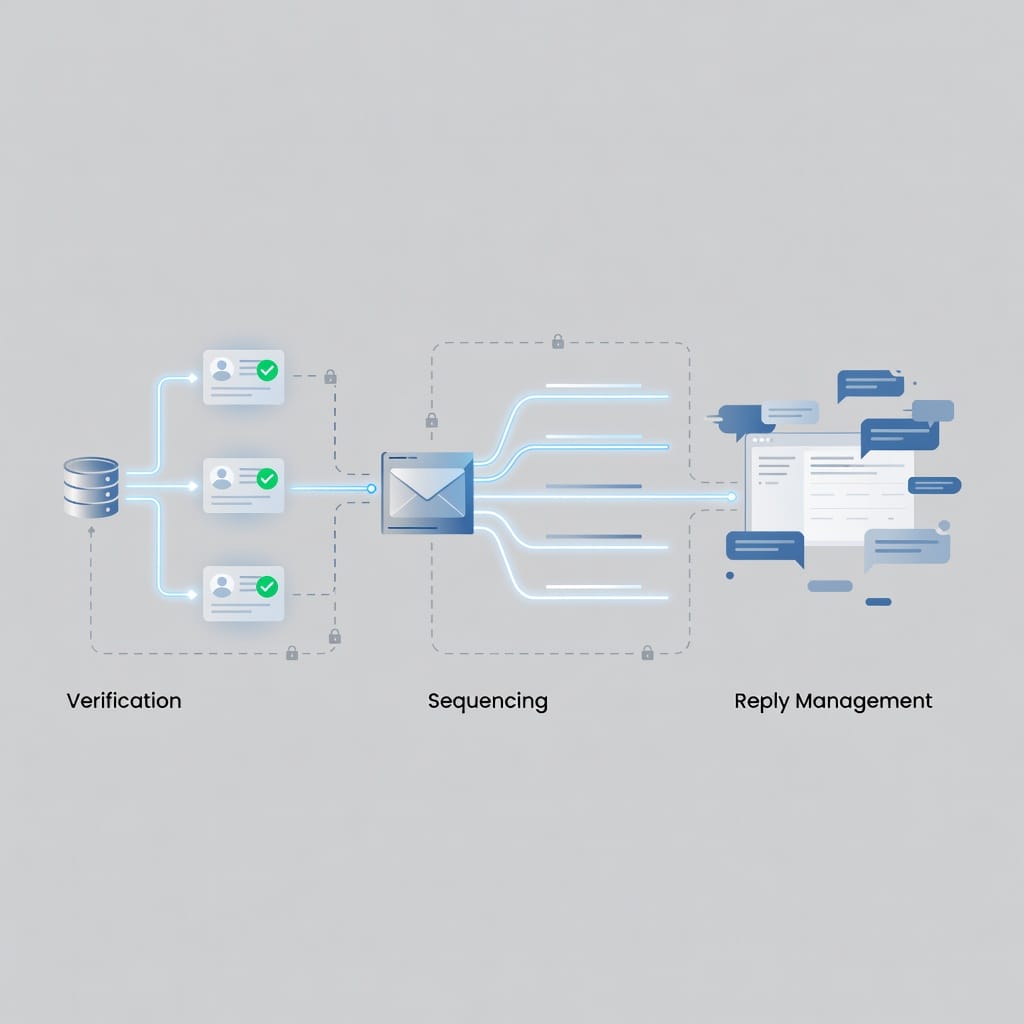
| 1 | Near introduction | Abstract conceptual illustration of organized financial documents flowing into a clean compliance archive, no text, no logos. | Organized financial documents moving into a compliance archive for exemption recovery. |
| 2 | Near sequence section | Conceptual illustration of B2B teams coordinating around tax documentation and email workflows, no text, no logos. | Finance, tax, and operations teams coordinating certificate recovery emails. |
| 3 | Near deliverability section | Abstract illustration of clean inbox signals, verified contacts, and compliant finance communication, no text, no logos. | Verified contacts and clean inbox signals supporting compliant tax recovery outreach. |
Implementation Checklist
Use this checklist before launching any B2B sales tax exemption recovery campaign. It keeps subject lines tied to clean data, useful messaging, and safe follow-up logic.
- Confirm the exact recovery scenario: missing, expired, invalid, incomplete, refund review, vendor file, or audit support.
- Confirm the recipient persona and likely owner.
- Validate company, state, entity, invoice, and certificate fields.
- Choose a subject line formula that matches the scenario.
- Make the first paragraph prove the subject line.
- Avoid refund promises unless approved and verified.
- Avoid penalty or legal language unless approved and verified.
- Keep sensitive numbers out of the subject line.
- Build separate sequences for customers, vendors, and internal stakeholders.
- Verify recipient addresses before sending.
- Authenticate and warm the sending domain.
- Use a monitored reply address.
- Route replies to the team that can process certificates.
- Stop follow-ups when the recipient responds meaningfully.
- Record certificate status updates in the source system.
- Review negative replies for confusion, wording risk, or trust gaps.
- Test subject lines by valid certificates received, not opens alone.
- Maintain a suppression list.
- Keep an audit trail of requests and responses.
- Review state-specific claims with tax professionals or internal counsel.
Key Takeaways
B2B sales tax exemption recovery subject lines should be clear, specific, and document-led. The safest high-performing subject lines name the certificate, account, invoice, state, or routing need without promising refunds, threatening penalties, or hiding the purpose of the email.
- Use “Exemption certificate needed for [Company]” when the document is missing.
- Use “Certificate renewal needed for [State]” when the certificate has expired and the state detail is verified.
- Use “Can you route this certificate request?” when the owner is unknown.
- Use “Documentation needed for tax credit review” instead of promising a refund.
- Use invoice-specific subject lines only when invoice data is accurate.
- Avoid fake urgency, refund hooks, penalty threats, and government-like wording.
- Match every subject line to the first paragraph and CTA.
- Segment by scenario, persona, and data confidence.
- Measure valid certificates received, correct-owner replies, and records updated – not opens alone.
- Use Mystrika for structured sequences, warmup, AI-assisted drafting, and unibox management, with Filter Bounce for verification and DoYouMail for high-volume sending infrastructure where appropriate.
Frequently Asked Questions
What is the best subject line for a missing exemption certificate?
The best subject line is usually “Exemption certificate needed for [Company]” because it is clear, specific, and easy to forward. If you are not sure the recipient owns tax documentation, use “Can you route this certificate request?” instead.
The body should immediately explain which account, order, state, or record needs support. Do not open with a generic pitch or a meeting request.
Should I mention a refund in the subject line?
Mention a refund only if your team has verified that refund review is appropriate and the wording has been approved. In most cases, “Documentation needed for tax credit review” or “Certificate needed for possible credit review” is safer than “You are owed a refund.”
Refund language can resemble phishing and can create an expectation your team may not be able to meet. Use careful review language until eligibility is confirmed.
How long should a B2B tax exemption recovery subject line be?
Keep it short enough to understand quickly, but do not remove the operational detail. A subject line such as “Certificate needed for invoice review” is better than a vague two-word subject like “Quick question.”
Length matters less than clarity, accuracy, and trust. Finance recipients need to know what record or document the email concerns.
Can I use urgency in tax exemption recovery subject lines?
Yes, but only when the urgency is real and specific. “Certificate needed before invoice review” is acceptable if invoice review is actually pending, while “Final warning” is usually too aggressive and may damage trust.
Tie urgency to operational events such as order processing, certificate expiration, account updates, or closeout timelines. Avoid manufactured pressure.
What subject line should I use when I do not know the right contact?
Use a routing subject line such as “Can you route this certificate request?” or “Who handles exemption certificates for [Company]?” These subject lines reduce friction because the recipient can help without owning the document.
The body should ask for the tax, AP, procurement, or vendor records owner. A simple referral can be a successful outcome.
Are invoice numbers safe to use in subject lines?
Invoice numbers can be useful when the recipient expects invoice-level communication, but they should be used carefully. If the invoice number is wrong or sensitive, trust drops quickly.
A safer version is “Certificate needed for invoice review” when you are not certain the exact invoice reference belongs in the subject line. Include details in the body only when appropriate.
How do I avoid sounding like a tax scam?
Use plain operational language, identify your company clearly, avoid refund promises, avoid government-like wording, and make the first paragraph prove the subject line. Do not ask for unnecessary sensitive data in the first email.
Also make sure your sending domain is authenticated and your reply address is monitored. A legitimate request can still look suspicious if the sending setup is poor.
Should sales, finance, or tax send these emails?
The best sender depends on the relationship and the request. Customer success or account management may work for existing customers, while finance, tax, AP, AR, or procurement may be better for formal document recovery.
Whoever sends the email must be able to route replies correctly. If sales sends the email, the body should still sound like a documentation request, not a software pitch.
What metric should I use to judge subject line success?
Use valid certificates received, correct-owner replies, records updated, credit reviews completed, and documentation gaps closed. Open rate can be misleading because curiosity-driven subject lines may get opens while reducing trust.
Track negative replies too. If a subject line creates confusion or suspicion, it is not a good recovery subject line even if it gets opened.
Can Mystrika be used for tax exemption recovery outreach?
Yes. Mystrika can help teams build structured outreach sequences, warm sending accounts, manage replies in a unibox, and use AI assistance for drafting variations. It starts at $15 per month and is useful when outreach needs to be organized across multiple follow-up steps.
Use it as communication infrastructure, not as a substitute for tax judgment. Your tax, finance, or legal team should still approve compliance-sensitive wording and state-specific claims.