
A sales promotion campaign is a coordinated marketing effort that uses time-bound incentives to drive specific customer actions such as purchases, signups, referrals, or repeat engagement. Unlike general advertising which builds awareness over time, sales promotion campaigns create immediate motivation through discounts, contests, loyalty rewards, free samples, bundles, and other structured offers. The most effective campaigns align the promotion type with a clear business goal, target the right audience segment, and include measurement frameworks to track return on investment.
This guide covers everything from campaign planning and budget allocation to execution, email outreach strategies, ROI measurement, and compliance. Whether you run B2B lead generation campaigns or B2C retail promotions, the frameworks and examples here will help you build campaigns that deliver measurable results.
What Are Sales Promotion Campaigns?
A sales promotion campaign is a structured, time-limited marketing initiative designed to influence customer behavior through incentives. These campaigns differ from ongoing marketing programs because they have a defined start and end date, a specific target audience, and a measurable objective such as increasing sales volume, acquiring new customers, clearing inventory, or boosting customer retention.
Sales promotion campaigns sit within the broader promotional mix alongside advertising, public relations, personal selling, and direct marketing. What sets them apart is the use of a tangible incentive that creates urgency. A customer acts now because the offer expires, the discount is limited, or the reward is exclusive.
The scope of sales promotion campaigns extends far beyond retail. B2B companies use them to accelerate deal cycles, generate qualified leads, and encourage contract renewals. SaaS businesses use them to drive trial conversions and annual plan upgrades. Service businesses use them to fill appointment slots and secure long-term retainers.

Types of Sales Promotion Campaigns
Sales promotion campaigns fall into several categories based on the mechanism they use and the behavior they target. Understanding these categories helps you select the right approach for your specific goal.
B2B Sales Promotion Campaigns
B2B sales promotion campaigns focus on lead generation, deal acceleration, and customer retention. The incentives tend to be higher value and the sales cycles longer than in B2C contexts.
Common B2B promotion types include:
- Free trials and extended pilots. Offering a 14-day or 30-day free trial of a software product removes the financial risk for prospects. Some companies extend this to 60 or 90 days for enterprise deals. The goal is to let the product demonstrate its value before a purchase decision.
- Discounts on annual contracts. Offering 15-20% off when a customer commits to an annual plan instead of monthly billing improves cash flow and reduces churn. This is one of the most effective B2B promotion types because it aligns the customer’s incentive with the vendor’s retention goals.
- Referral programs with cash or credit rewards. B2B referral programs typically offer a month of free service, a gift card, or a direct cash payment for each qualified referral that converts. Referral leads close at higher rates because they come with built-in trust.
- Webinar and event attendance incentives. Offering a free consultation, a strategy session, or an exclusive report to attendees of a webinar or trade show booth visit converts passive interest into active leads.
- Volume-based pricing tiers. Offering a discount when a customer purchases a higher tier or commits to a minimum user count encourages expansion within existing accounts.
For example, a B2B SaaS company running a Q4 sales promotion campaign might offer 20% off annual plans for new customers who sign up before December 31, combined with a referral credit for existing customers who refer a qualified lead. The campaign would be promoted through email outreach, LinkedIn ads, and direct sales calls.
B2C Sales Promotion Campaigns
B2C sales promotion campaigns focus on driving immediate purchases, increasing basket size, and building brand loyalty. The incentives are typically lower in value but higher in frequency than B2B offers.
Common B2C promotion types include:
- Percentage or dollar-off discounts. A 15% off coupon or $10 off a $50 purchase is the most straightforward promotion. These work well for clearing inventory, rewarding email subscribers, and reactivating lapsed customers.
- Buy one, get one (BOGO) offers. BOGO deals create strong perceived value. They work best for products with high margins or when the goal is to introduce customers to a new product line alongside an established bestseller.
- Flash sales with countdown timers. A 24-hour flash sale creates urgency that drives quick decisions. Flash sales work well for seasonal products, overstock items, and product launches.
- Loyalty point multipliers. Offering double or triple points during a specific period encourages existing loyalty program members to make additional purchases.
- Free shipping thresholds. Offering free shipping on orders over a certain amount increases average order value. This is one of the lowest-cost promotions because the threshold typically covers the shipping expense.
- Giveaways and contests. Entering customers into a drawing for a prize in exchange for a purchase, email signup, or social share builds engagement and grows your audience.
A B2C apparel brand running a spring sales promotion campaign might offer 25% off sitewide for 48 hours, with an additional 10% off for email subscribers and free shipping on orders over $75. The campaign would be promoted through email, SMS, social media, and website banners.
How to Plan a Sales Promotion Campaign
Planning a sales promotion campaign requires a structured approach that starts with goals and works through budget, audience, and execution details. Skipping any of these steps leads to campaigns that underperform or lose money.
Step 1: Define Your Campaign Goals and KPIs
Every sales promotion campaign needs a primary goal. Without one, you cannot measure success or optimize future campaigns.
Common campaign goals include:
- Customer acquisition. The goal is to bring in new customers who have not purchased before. Key performance indicators include new customer count, cost per acquisition, and first-purchase conversion rate.
- Revenue generation. The goal is to drive a specific amount of revenue within the campaign period. KPIs include total revenue, average order value, and revenue per email sent.
- Inventory clearance. The goal is to sell through specific products. KPIs include sell-through rate, units moved, and days to clear.
- Customer retention. The goal is to encourage repeat purchases or prevent churn. KPIs include repeat purchase rate, reactivation rate, and churn reduction.
- Lead generation. The goal is to collect qualified leads for future sales follow-up. KPIs include lead count, cost per lead, and lead-to-opportunity conversion rate.
Write down your primary goal and the specific number you need to hit before you design the offer. This number drives every other decision in the campaign.
Step 2: Set Your Budget and Timeline
Your budget determines the scope of your campaign. A common mistake is designing a promotion first and then trying to make the numbers work. Instead, start with what you can afford and design the offer to fit.
| Budget Component | Typical Allocation | Notes |
|---|---|---|
| Discount/incentive cost | 40-60% | The actual cost of the offer (margin reduction, free product cost, etc.) |
| Promotion channels | 20-30% | Email platform costs, ad spend, SMS credits |
| Creative and assets | 10-15% | Design, copywriting, landing page development |
| Analytics and tracking | 5-10% | Campaign tracking setup, attribution tools |
| Contingency | 5-10% | Unexpected costs, scaling winning channels |
For the timeline, most sales promotion campaigns run between 3 days and 4 weeks. Shorter campaigns (3-7 days) work best for flash sales and urgency-driven offers. Medium campaigns (1-2 weeks) work for most discount and loyalty promotions. Longer campaigns (3-4 weeks) work for B2B lead generation and complex offers where prospects need time to evaluate.
Build at least 1-2 weeks of preparation time before launch for asset creation, audience segmentation, and testing.
Step 3: Choose the Right Promotion Type
The promotion type must match your goal, audience, and product. A discount that works for a low-cost consumer product may destroy margins on a high-value B2B service.
Consider these factors when choosing:
- Margin impact. How much will the promotion reduce your per-unit profit? If the discount eats into margins too deeply, you may need a higher volume to break even.
- Customer psychology. Some audiences respond to percentage discounts, others to dollar amounts, and others to free gifts. Test different offer structures with small segments before scaling.
- Competitive context. What are your competitors offering? If every competitor runs 20% off, a BOGO offer or a free gift with purchase may stand out more.
- Operational capacity. Can your team handle the volume a promotion will generate? A successful promotion that overwhelms your fulfillment or support team can damage customer relationships.
Step 4: Build Your Audience Segments
Not every customer should receive the same offer. Segmentation improves relevance and protects margins.
Key segments to consider:
- New prospects. These customers need a low-risk entry point. First-purchase discounts, free trials, and free shipping work well.
- Existing customers. These customers already trust your brand. Loyalty rewards, exclusive early access, and referral incentives work better than acquisition-focused discounts.
- Lapsed customers. These customers need a reason to return. Win-back offers with higher discounts and personalized messaging can re-engage them.
- High-value customers. These customers warrant your best offers. VIP early access, exclusive bundles, and loyalty point multipliers reward their loyalty without discounting across the entire customer base.
- Segment by channel preference. Some customers prefer email, others prefer SMS, and others respond better to in-app notifications. Send the offer through their preferred channel for higher conversion rates.
Step 5: Create Your Campaign Assets
Every sales promotion campaign needs a consistent set of assets across channels:
- Email sequence. A launch email, a reminder email (mid-campaign), and a last-chance email (final 24 hours). Each email should clearly state the offer, the deadline, and the call to action.
- Landing page. A dedicated page that explains the offer, includes social proof, and captures conversions. The page should load fast and work on mobile devices.
- Social media graphics. Platform-specific creatives for the channels where your audience is active.
- SMS messages. Short, urgent messages for subscribers who have opted in. SMS works best for flash sales and last-chance reminders.
- Sales scripts or talking points. If your sales team will promote the offer directly, provide them with clear language about the offer terms, expiration, and qualification criteria.
Step 6: Launch and Monitor
On launch day, send your first wave of communications and watch the early signals. Key metrics to monitor in the first 24 hours include open rates, click-through rates, conversion rates, and any technical issues with the offer code or landing page.
If early results are below expectations, you may need to adjust the offer, the messaging, or the channel mix. Build flexibility into your campaign plan so you can make mid-campaign adjustments.
After the campaign ends, compile your results against the goals you set in Step 1. Document what worked, what did not, and what you would change for the next campaign.
Sales Promotion Campaign Decision Matrix
Choosing the right promotion type for your specific situation is easier with a structured decision framework. The table below maps common business goals to the most effective promotion types, with notes on when each works best.
| Business Goal | Best Promotion Types | Best For | Avoid When |
|---|---|---|---|
| Acquire new customers | First-purchase discount, free trial, free gift with signup | Low-commitment products, SaaS, subscription services | High-margin luxury goods, niche B2B services |
| Boost short-term revenue | Flash sale, percentage discount, BOGO | Seasonal products, overstock, end-of-quarter targets | Products with thin margins, services with fixed capacity |
| Increase average order value | Free shipping threshold, bundle discount, tiered pricing | Ecommerce, physical goods, SaaS plans | Low-cost items where shipping is already free |
| Retain existing customers | Loyalty points multiplier, VIP early access, anniversary offer | Subscription businesses, repeat-purchase products | One-time purchase products, long-cycle B2B |
| Re-engage lapsed customers | Win-back discount, personalized offer, exclusive access | Any business with customer churn | Recently purchased customers, high-value accounts |
| Generate leads | Free consultation, content download, webinar incentive | B2B services, consulting, SaaS | Low-intent audiences, price-sensitive consumers |
| Clear inventory | Clearance sale, BOGO, bundle discount | Seasonal goods, overstock, discontinued lines | Best-selling products, limited-edition items |
| Build brand awareness | Contest, giveaway, referral program | New brands, product launches, market expansion | Established brands with loyal followings |
Use this matrix as a starting point, then adjust based on your specific margin structure, audience behavior, and competitive landscape.

Using Email Outreach for Sales Promotion Campaigns
Email is one of the most effective channels for distributing sales promotion campaigns. It allows direct communication with your audience, detailed segmentation, and measurable tracking. Email marketing generates an average of $36 for every $1 spent, making it a high-ROI channel for promotions.
Cold Email Promotion Sequences
Cold email outreach can be an effective channel for B2B sales promotion campaigns when done correctly. The key difference from warm email is that cold recipients have no prior relationship with your brand, so the offer must be compelling enough to overcome the lack of trust.
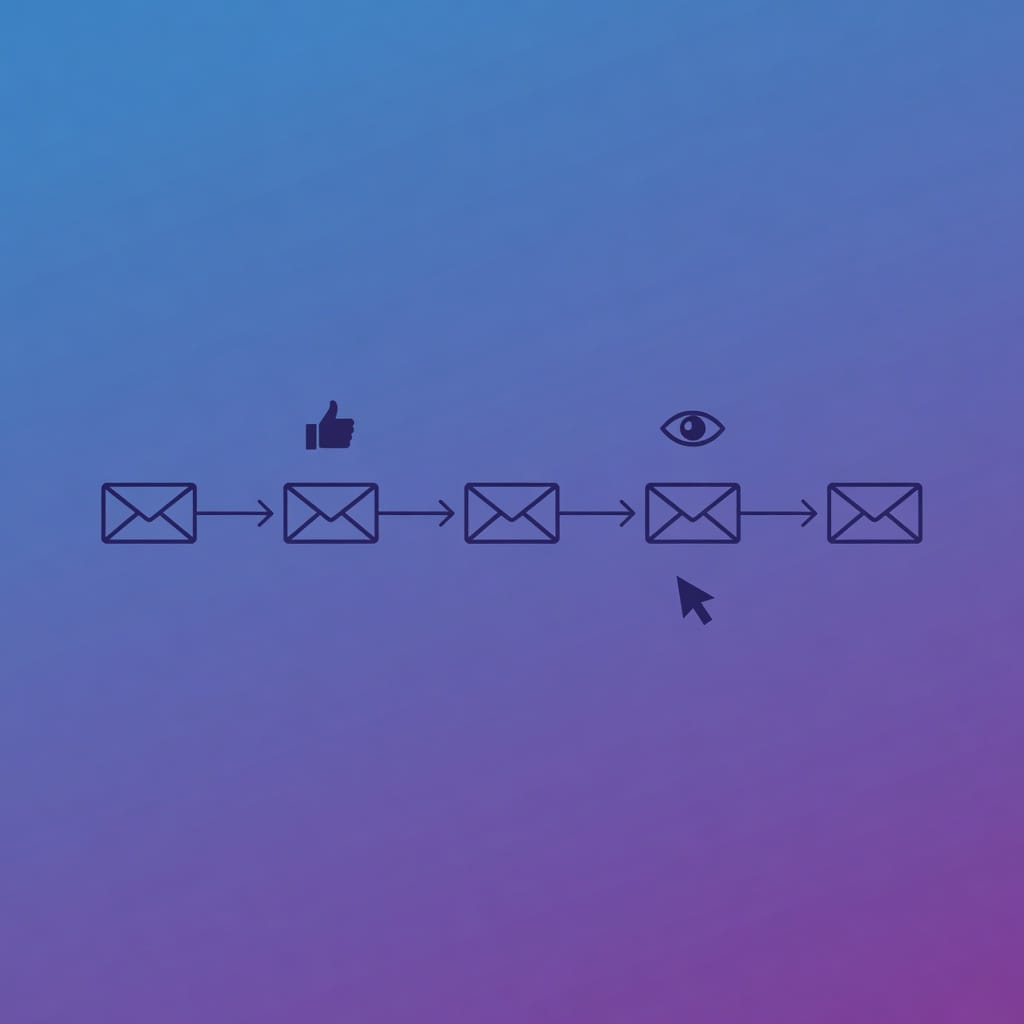
A cold email promotion sequence typically follows this structure:
- Email 1: Value-first introduction. Open with a relevant observation or insight about the prospect’s business. Introduce your offer as a solution to a problem they may have. Include a clear, low-friction call to action such as booking a demo or claiming a free trial.
- Email 2: Social proof and case studies. Follow up with evidence that your offer works for similar companies. Include a brief customer story or a specific result. Reinforce the time-limited nature of the offer.
- Email 3: Direct ask with urgency. State the offer clearly, remind the prospect of the deadline, and make a direct request for a conversation or signup. This email should be shorter and more direct than the first two.
- Email 4: Breakup or last chance. Send a final email acknowledging that you will stop following up. Restate the offer one last time with the expiration date. This email often generates responses from prospects who were interested but procrastinated.
Cold email promotion campaigns require careful attention to deliverability. Use a dedicated sending domain, warm up new sending addresses gradually, and monitor bounce rates and spam complaints. A [cold email outreach platform](https://blog.mystrika.com/cold-email-outreach-tools/) like Mystrika can help manage deliverability, sequencing, and tracking across campaigns, with built-in warmup features that improve inbox placement before your promotion launches.
Warm Email Promotion Campaigns
Warm email campaigns target subscribers, existing customers, and leads who have already engaged with your brand. These audiences are more receptive to promotions and typically convert at higher rates.
A warm email promotion sequence might include:
- Announcement email. Send the offer to your full list with a clear subject line that states the value. Example: “Your 20% off code expires Friday.”
- Segment-specific emails. Send tailored offers based on past purchase behavior, engagement level, or customer tier. High-value customers might get a steeper discount or early access.
- Abandoned cart or browse abandonment. Trigger a promotional offer when a customer leaves items in their cart or browses a product page without purchasing. These automated emails convert at significantly higher rates than broadcast campaigns.
- Post-purchase cross-sell. After a customer makes a purchase, send a promotional offer for a complementary product. This increases customer lifetime value while the purchase experience is still fresh.
- Re-engagement sequence. For subscribers who have not opened emails in 60-90 days, send a win-back offer with a strong incentive. If they do not respond, consider removing them from your active list to protect deliverability.
Warm email campaigns benefit from personalization. Using the recipient’s name, past purchase history, and browsing behavior in the offer increases relevance and conversion rates. Personalized email promotions see approximately 29% higher open rates compared to non-personalized sends.
Measuring the Success of Sales Promotion Campaigns
Without measurement, you cannot know whether your sales promotion campaign generated profit or loss. A structured measurement framework tells you what worked, what did not, and what to change next time.
Key Metrics to Track
| Metric | What It Measures | Target Benchmark | Calculation |
|---|---|---|---|
| Conversion rate | Percentage of recipients who completed the desired action | 2-5% for email campaigns, 10-20% for warm audiences | (Conversions / Total reach) x 100 |
| Average order value (AOV) | Average spend per transaction during the campaign | Varies by industry, target 10-20% above normal AOV | Total revenue / Number of orders |
| Cost per acquisition (CPA) | Cost to acquire one new customer through the campaign | Should be below customer lifetime value (LTV) | Total campaign cost / New customers acquired |
| Redemption rate | Percentage of distributed offers that were used | 15-25% for email, 5-10% for display ads | Offers redeemed / Offers distributed |
| Incremental revenue | Revenue directly attributable to the campaign | Must exceed campaign cost for positive ROI | Campaign period revenue – Baseline revenue |
| Customer lifetime value (LTV) of acquired customers | Long-term value of customers acquired through the promotion | Should be 3x or more of CPA | Average purchase value x Purchase frequency x Average customer lifespan |
| Email metrics | Open rate, click-through rate, unsubscribe rate | Open: 15-25%, CTR: 2-5%, Unsub: below 0.5% | Standard email platform reporting |
ROI Calculation Framework
To calculate the return on investment of a sales promotion campaign, use this formula:
ROI = (Incremental Revenue – Campaign Cost) / Campaign Cost x 100
Where:
- Incremental Revenue is the revenue generated during the campaign period minus the baseline revenue you would have expected without the campaign. Use the same period from the previous month or the same period last year as your baseline.
- Campaign Cost includes the discount or incentive cost, channel costs (email platform, ad spend), creative production, and any additional staffing or fulfillment costs.
For example, if a campaign generated $50,000 in incremental revenue and cost $15,000 to run, the ROI would be ($50,000 – $15,000) / $15,000 x 100 = 233%.
A positive ROI means the campaign generated more than it cost. A negative ROI means you lost money. However, some campaigns with negative short-term ROI may still be worthwhile if they acquire high-LTV customers who generate profit over time.
Track ROI separately for each channel and each audience segment. This tells you where to invest more and where to cut back in future campaigns.
A/B Testing for Sales Promotion Campaigns
A/B testing helps you optimize your sales promotion campaigns by comparing two versions of an element to see which performs better. Test one variable at a time to get clear, actionable results.
Elements to test in promotion campaigns:
| Test Element | Variant A | Variant B | What to Measure |
|---|---|---|---|
| Offer type | 15% off | $10 off | Conversion rate, AOV |
| Discount depth | 10% off | 20% off | Conversion rate, margin impact |
| Urgency level | 7-day offer | 48-hour offer | Conversion rate, redemption timing |
| Subject line | “Your discount inside” | “Last chance for 20% off” | Open rate, CTR |
| CTA text | “Shop now” | “Claim your offer” | Click-through rate, conversion rate |
| Landing page | Short form | Long form with social proof | Conversion rate, time on page |
| Audience segment | All subscribers | Recent purchasers only | Conversion rate, ROI per segment |
Run each test until you have statistically significant results. A minimum of 100 conversions per variant is a good rule of thumb. Document your test results and apply winning variations to future campaigns.
Compliance and Legal Considerations
Sales promotion campaigns must comply with relevant regulations to avoid fines, legal action, and reputational damage. The specific requirements depend on your location, your audience’s location, and the type of promotion.
Key compliance areas:
- CAN-SPAM Act (United States). Commercial emails must include a clear opt-out mechanism, a valid physical postal address, and accurate subject lines. Promotional emails are subject to the same rules as any other commercial email. Each email must include your mailing address and a working unsubscribe link that processes requests within 10 business days.
- GDPR (European Union). If you send promotional emails to recipients in the EU, you need explicit consent to send marketing communications. Consent must be freely given, specific, informed, and unambiguous. You must also provide a clear privacy notice explaining how you will use recipient data.
- CASL (Canada). Canada’s anti-spam law requires express consent for commercial electronic messages. Implied consent (from an existing business relationship) expires after two years. CASL has some of the strictest penalties for non-compliance.
- Truth in advertising. Your promotion terms must be clear and not misleading. If a discount has exclusions, state them. If a free trial auto-converts to a paid subscription, disclose the terms. The Federal Trade Commission and equivalent bodies in other countries can take action against deceptive promotional practices.
- Contest and sweepstakes rules. If your promotion involves a contest, giveaway, or sweepstakes, you may need official rules, no-purchase-necessary alternatives, and compliance with state and federal gambling laws. Consult legal counsel for any promotion that involves chance-based elements.
- Email deliverability compliance. Sending promotional emails in high volume requires proper email authentication (SPF, DKIM, DMARC), a clean sender reputation, and adherence to sending limits. Poor deliverability practices can result in your emails being blocked or sent to spam folders, which undermines the entire campaign. Using [email deliverability tools](https://blog.mystrika.com/email-deliverability-tools/) like Filter Bounce helps maintain inbox placement during high-volume promotion sends by verifying addresses before you send and removing risky contacts from your list.
Sales Promotion Campaign Execution Checklist
Use this checklist to ensure your campaign is ready before launch and properly managed during and after execution.
Pre-launch (1-2 weeks before):
- Define primary campaign goal and target KPIs
- Set campaign budget and allocate across components
- Choose promotion type using the decision matrix
- Build audience segments in your CRM or email platform
- Create email sequence (launch, reminder, last chance)
- Design landing page with clear offer and CTA
- Prepare social media graphics and copy
- Set up SMS messages if applicable
- Create sales scripts for direct outreach
- Test offer codes or discount links end to end
- Verify tracking and attribution setup
- Review compliance requirements for each audience region
- Send test emails to check rendering across devices
- Confirm inventory or capacity can handle expected demand
Launch day:
- Send launch email to primary segment
- Activate landing page and website banners
- Post social media announcements
- Monitor early metrics (open rate, click rate, conversion rate)
- Check for technical issues with offer redemption
- Confirm tracking is capturing data correctly
Mid-campaign (day 2-5 for short campaigns, day 5-10 for longer campaigns):
- Send reminder email to non-openers
- Review performance against KPIs
- Adjust underperforming channels if possible
- Respond to customer questions about the offer
- Monitor inventory or capacity levels
Final 24 hours:
- Send last-chance email to all segments
- Post final social media reminders
- Monitor for last-minute surge in traffic and conversions
- Prepare to extend or end the offer as planned
Post-campaign (1-3 days after):
- Compile final results against goals
- Calculate ROI using the framework above
- Document what worked and what did not
- Segment new customers acquired for future campaigns
- Send post-campaign follow-up to participants
- Update your CRM with campaign engagement data
- Plan next campaign based on learnings
Key Takeaways
- Sales promotion campaigns are time-bound marketing initiatives that use incentives to drive specific customer actions, and they work for both B2B and B2C businesses when properly planned.
- The six-step planning process (goals, budget, promotion type, audience segments, assets, launch and monitor) ensures your campaign has a clear structure and measurable objectives.
- A decision matrix helps match promotion types to business goals, preventing the common mistake of using the wrong offer for the wrong audience.
- Email outreach is a high-ROI channel for promotion campaigns, with cold email sequences for prospect acquisition and warm email sequences for existing customer engagement.
- ROI measurement requires tracking incremental revenue against total campaign cost, with separate analysis for each channel and audience segment.
- A/B testing one variable at a time (offer type, discount depth, urgency level, subject line) provides actionable data for optimizing future campaigns.
- Compliance with CAN-SPAM, GDPR, CASL, and truth-in-advertising laws is non-negotiable for email-based promotion campaigns.
- The execution checklist covers pre-launch, launch, mid-campaign, final hours, and post-campaign phases to ensure nothing is missed.
Frequently Asked Questions
What is a sales promotion campaign?
A sales promotion campaign is a coordinated marketing initiative that uses time-limited incentives such as discounts, coupons, contests, free samples, or loyalty rewards to drive specific customer actions. Unlike ongoing advertising, these campaigns have defined start and end dates, specific target audiences, and measurable objectives like increasing sales, acquiring customers, or clearing inventory.
How do I choose the right promotion type for my campaign?
Use a decision matrix that maps your primary business goal to the most effective promotion types. For customer acquisition, first-purchase discounts and free trials work best. For revenue boosts, flash sales and percentage discounts are effective. For retention, loyalty point multipliers and VIP early access perform well. Consider your margin structure, audience preferences, and competitive context before making a final choice.
What is the best way to promote a sales promotion campaign?
Email marketing is the most effective channel for promoting sales promotion campaigns, with an average ROI of $36 for every $1 spent. Combine email with channel-specific tactics such as SMS for urgency, social media for awareness, website banners for visibility, and paid ads for audience expansion. The best approach uses multiple channels with consistent messaging and a clear call to action.
How do I measure the ROI of a sales promotion campaign?
Calculate ROI by subtracting total campaign cost from incremental revenue, dividing by campaign cost, and multiplying by 100. Incremental revenue is the revenue during the campaign period minus your baseline revenue. Track ROI separately for each channel and audience segment to identify what works best. Also track customer acquisition cost and compare it to customer lifetime value to understand long-term profitability.
What are the most common mistakes in sales promotion campaigns?
The most common mistakes include running promotions without a clear goal, choosing a promotion type that does not match the target audience, offering discounts that destroy profit margins, failing to segment audiences, neglecting to measure results, and ignoring compliance requirements. Another frequent error is running promotions too frequently, which trains customers to wait for discounts instead of buying at full price.
How long should a sales promotion campaign run?
Campaign duration depends on the promotion type and audience. Flash sales work best at 24-72 hours. Standard discount campaigns perform well at 5-14 days. B2B lead generation campaigns may need 3-4 weeks to accommodate longer decision cycles. The key is to create genuine urgency without making the window so short that your audience does not have time to act.
Can I use cold email for sales promotion campaigns?
Yes, cold email can be effective for B2B sales promotion campaigns when done correctly. The sequence should start with a value-first introduction, follow up with social proof, make a direct ask with urgency, and end with a last-chance email. Cold email requires careful attention to deliverability, including proper authentication, gradual sending volume increases, and regular list cleaning to maintain inbox placement.
What compliance rules apply to email promotion campaigns?
In the United States, the CAN-SPAM Act requires a valid opt-out mechanism, a physical mailing address, and accurate subject lines. In the European Union, GDPR requires explicit consent for marketing emails. In Canada, CASL requires express or implied consent with specific expiration rules. All regions require truth in advertising, meaning promotion terms must be clear and not misleading.
How do I segment my audience for a promotion campaign?
Segment your audience by relationship stage (new prospects, existing customers, lapsed customers), value tier (high-value, standard, low-value), purchase behavior (category preferences, average order value, frequency), and channel preference (email, SMS, in-app). Each segment should receive an offer tailored to their relationship with your brand. New prospects need low-risk entry offers, while existing customers respond better to loyalty rewards and exclusive access.
What metrics should I track during a sales promotion campaign?
Track conversion rate, average order value, cost per acquisition, redemption rate, incremental revenue, and email-specific metrics such as open rate, click-through rate, and unsubscribe rate. Compare each metric against your baseline and industry benchmarks. Track these metrics separately for each channel and audience segment to identify the highest-performing combinations for future campaigns.