
The first time I ran a cold email campaign, I was terrified. I had spent three weeks building a list of 500 prospects, writing the perfect sequence, and setting up tracking. When I hit send, I sat staring at the screen, waiting for the flood of angry replies telling me to never contact them again.
Instead, something surprising happened. Three meetings booked in the first 48 hours. A $12,000 deal closed by the end of the week.
But here is the part that really stuck with me: every single one of those prospects had visited our website before responding. They had read our blog posts, checked our case studies, and compared us against competitors before ever replying to my email.
That is when I understood the truth about the inbound vs outbound marketing debate. It is not a choice. It is a sequence.
If you are trying to figure out whether to invest your limited budget and energy into inbound or outbound marketing, you are asking the wrong question. The real question is: how do you build a system where inbound and outbound reinforce each other, so the whole is greater than the sum of its parts?
In this comprehensive guide, I will walk you through the data, the frameworks, the tools, and the real-world strategies you need to make both inbound and outbound marketing work for your business in 2025.
What this guide covers:
- The actual costs, conversion rates, and ROI of inbound vs outbound channels for 2025
- A step-by-step hybrid framework proven to increase pipeline by 20-40 percent
- Industry-specific recommendations for B2B, B2C, and SaaS businesses
- The impact of AI on both inbound and outbound strategies
- A complete checklist for building your integrated marketing engine
- Expert insights from practitioners running both approaches daily
Whether you are a founder bootstrapping your first GTM motion, a marketing director allocating budget for Q3, or a sales leader trying to hit quota, this guide gives you the data and the playbook you need to make the right call.
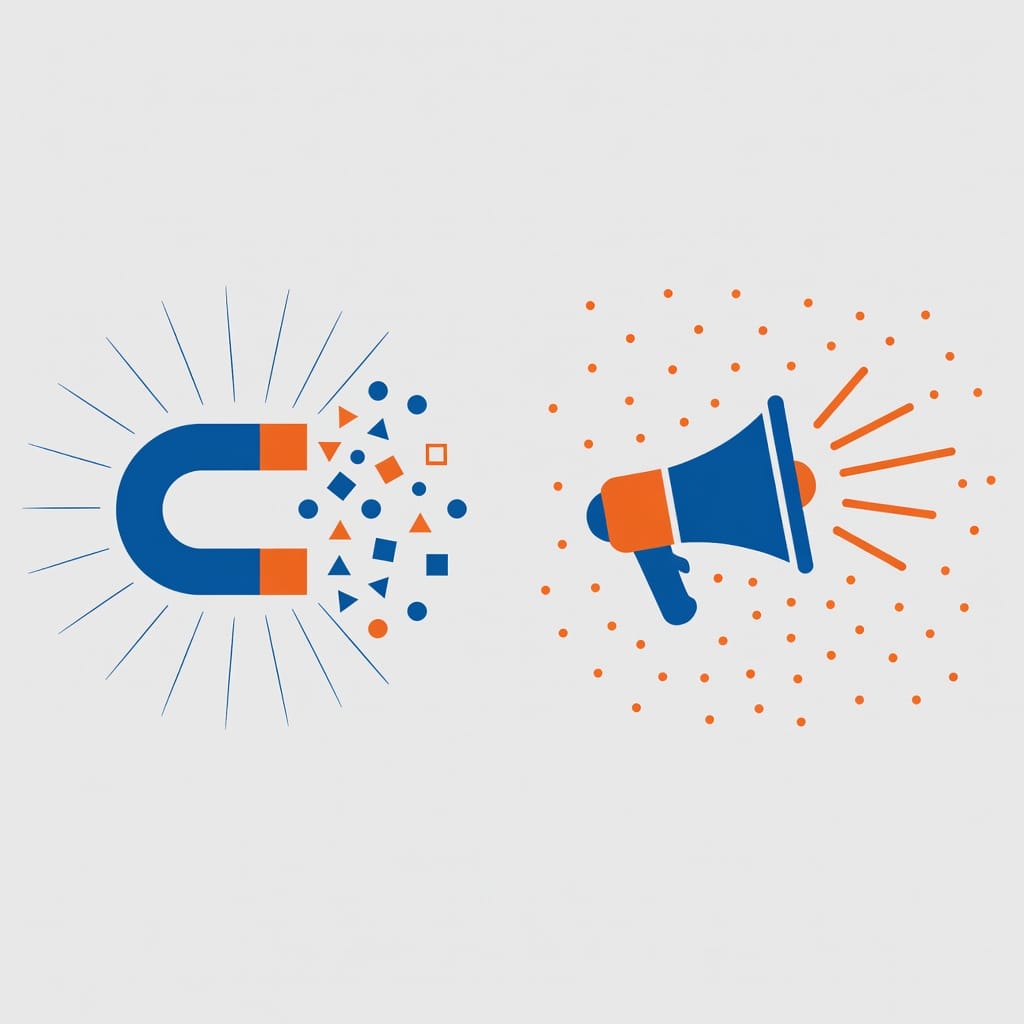
The Inbound vs Outbound Marketing Landscape in 2025
The marketing world has changed dramatically in the past five years. The rise of AI-powered research tools, the death of the third-party cookie, and the shift toward remote-first buying committees have reshaped how prospects discover, evaluate, and purchase solutions.
To understand the current state of the inbound vs outbound debate, we need to start with the fundamentals.
What Is Inbound Marketing?
Inbound marketing is the practice of attracting prospects who are actively searching for solutions to their problems. Instead of interrupting someone’s day with a cold call or email, you create content and experiences that pull people toward your brand when they are ready to learn.
The core channels of inbound marketing include:
- Search engine optimized blog content that answers the questions your prospects are asking
- SEO-driven landing pages that capture demand for specific queries
- Social media organic content and advertising that builds brand presence
- Webinars, podcasts, and video content that educates and builds trust
- Gated content like ebooks, whitepapers, and templates that generate leads
- Community building that creates network effects around your brand
Inbound works because it aligns with how modern buyers actually make decisions. According to HubSpot’s 2025 State of Marketing report, 96 percent of prospects conduct independent research online before they ever speak to a sales representative. By the time they talk to you, they already know your competitors’ pricing, your product’s limitations, and exactly what they are looking for.
What Is Outbound Marketing?
Outbound marketing is the traditional approach of proactively reaching out to potential customers. Instead of waiting for them to find you, you initiate the conversation through channels like cold email, cold calling, paid advertising, direct mail, and events.
The modern outbound toolkit includes:
- Cold email outreach with personalization and automated sequences
- Cold calling supported by intent data and social selling signals
- LinkedIn prospecting through InMail, connection requests, and social selling
- Programmatic advertising targeting specific accounts or segments
- Account-based marketing campaigns that orchestrate multi-channel touches
- Trade shows and events for face-to-face relationship building
Outbound has evolved significantly from its spray-and-pray reputation. Modern outbound marketing leverages intent data, AI-powered personalization, and sophisticated sequencing to deliver relevant messages at the right moment. When done well, outbound is not spam. It is a targeted conversation starter.
The Hard Data: Inbound vs Outbound by the Numbers
Let me share the data that should inform your strategy decisions. These numbers come from a synthesis of multiple industry benchmarks for 2024-2025, including HubSpot, FirstPageSage, Dreamdata, Sopro, and Flywheel Research.
Cost Per Lead Comparison
| Channel | Average CPL | Category |
|---|---|---|
| Organic SEO (B2C E-commerce) | $91 per lead | Inbound |
| Organic SEO (All Industries) | $164 – $206 per lead | Inbound |
| Paid Search (Google Ads) | $65 – $310 per lead | Paid (hybrid) |
| Cold Email | $225 per lead | Outbound |
| Cold Calling | $300 per lead | Outbound |
| LinkedIn Ads | $75 – $150 per lead | Paid (hybrid) |
| Trade Shows and Events | $840 per lead | Outbound |
Conversion and Close Rate Comparison
| Channel | Average Conversion Rate | Time to First Result |
|---|---|---|
| Organic SEO (Inbound) | 1.5 to 3 percent | 6 to 12 months |
| Paid Search (Google Ads) | 3 to 7.5 percent | Immediate to 3 months |
| Cold Email (Outbound) | 1 to 5 percent reply rate | Days to weeks |
| Cold Calling (Outbound) | 1 to 3 percent connect rate | Immediate |
| LinkedIn Social Selling | 3 to 10 percent | 1 to 3 months |
| Webinars (Inbound) | 5 to 20 percent conversion | 1 to 3 months |
ROI Maturity Timeline
| Channel | Months to ROI Maturity | Ongoing Cost Trend |
|---|---|---|
| Organic SEO | 9 to 18 months | Declining (compounding) |
| Google Ads | 3 to 6 months | Stable (scales with spend) |
| LinkedIn Ads | 6 to 12 months | Stable to rising |
| Cold Email | 1 to 3 months | Stable (scales with list size) |
| Content Marketing | 6 to 12 months | Declining (library compounds) |
The key insight from this data is that inbound costs less per lead but takes longer to generate results, while outbound costs more per lead but delivers faster. A business that optimizes for one at the expense of the other is leaving money on the table.
When Inbound Marketing Wins
Inbound marketing is the clear winner in several scenarios:
1. You are building long-term brand equity. Organic content compounds. A blog post you write today can generate leads for years. A cold email sent today is forgotten tomorrow.
2. Your prospects actively search for your solution category. If people are already Googling the problem you solve, inbound captures that existing demand more efficiently than any outbound channel.
3. You have a complex or high-consideration product. Buyers of enterprise software, medical devices, or financial services want to do extensive research before talking to a salesperson. Inbound content feeds that research process.
4. You need predictable, scalable lead flow. While inbound takes time to ramp up, it eventually provides a steady stream of high-intent leads that require less qualification effort.
5. Your target market is broad. If you sell to a wide range of customers across multiple verticals, broad inbound content captures demand you would never find through targeted outbound.
When Outbound Marketing Wins
Outbound marketing is essential in these situations:
1. You are entering a new market or launching a new category. If nobody is searching for your solution yet, inbound cannot work. You must create demand through outbound outreach.
2. You need pipeline immediately. If you have a quarterly quota to hit and your SEO content will take six months to rank, outbound is your only path.
3. You sell to a narrow, well-defined audience. If you know exactly which 500 companies you want to sell to, ABM and outbound outreach is far more efficient than trying to attract them through inbound content.
4. Your ICP requires education before they search. Some prospects do not know they have a problem until you show them. Outbound opens that conversation.
5. You have high deal sizes that justify personalized outreach. For deals over $10,000 ACV, the cost of personalized outbound is easily justified by the expected return.
The Hybrid Approach: Why You Need Both
The most successful GTM teams I have worked with do not pick a side. They build a hybrid engine where inbound and outbound work together.
Here is what that looks like in practice:
Step 1: Inbound content captures high-intent demand. Your blog posts, case studies, and landing pages attract prospects who are actively searching. These become your highest-converting leads with the shortest sales cycles.
Step 2: Outbound fills the pipeline gap. While your inbound content is still gaining traction, outbound outreach generates immediate meetings and opportunities. This gives inbound the time it needs to compound.
Step 3: Outbound targets the prospects inbound is missing. Not everyone searches for your solution. Outbound reaches the decision-makers who are too busy, too unaware, or too far down the wrong path to find you organically.
Step 4: Inbound content powers outbound personalization. One of the most effective cold email strategies is referencing content the prospect engaged with. When you can say “I saw you downloaded our guide on X,” your reply rates double or triple.
Step 5: The data from each channel feeds the other. Outbound conversations reveal the questions and objections that should become inbound content topics. Inbound analytics show you which segments are most engaged, so outbound can prioritize them.
The data backs this up. According to Sopro’s 2025 State of Prospecting report, companies that combine inbound and outbound strategies see a 31 percent lead uplift over single-channel approaches. Cognism’s internal data shows a 20 to 40 percent pipeline increase for teams using a unified approach.
Building Your Inbound Marketing Engine
Now let me walk you through the specific tactics, tools, and frameworks for building a high-performance inbound marketing operation.
Content Strategy That Actually Ranks
The foundation of inbound marketing is content that your prospects are actually searching for. But “content is king” has become a cliche because everyone says it and few do it well.
Here is the framework I use with the teams I advise:
Phase 1: Topic Cluster Mapping. Instead of writing random blog posts, build content clusters around your core service areas. For a cold email platform like Mystrika, the core cluster would be “cold email outreach” with supporting topics like email deliverability, email warmup, email sequencing, reply rates, and spam avoidance.
Phase 2: Search Intent Matching. Every piece of content must match the intent behind the search query. Informational queries get guides and tutorials. Commercial queries get comparisons and case studies. Transactional queries get product pages and demos.
Phase 3: Depth and Completeness. Google’s helpful content update rewards comprehensive, authoritative content. Your article on inbound vs outbound marketing should be the most complete resource on the internet. Include data, frameworks, expert quotes, case studies, and actionable steps.
Phase 4: Internal Linking Architecture. Each new piece of content links to relevant cluster pages and pillar content. This builds topical authority and helps Google understand your expertise in the area.
Phase 5: Promotion and Distribution. Writing the content is only half the battle. Share it on LinkedIn, include it in your newsletter, reach out to journalists and analysts, and consider paid promotion for your highest-value content.
SEO Technical Foundations
Even the best content will not rank without solid technical SEO. Here are the essentials:
- Page speed under 2 seconds on mobile and desktop
- Proper heading hierarchy with one H1 and logical H2 and H3 structure
- Descriptive meta titles and descriptions that include your target keyword
- Schema markup for articles, FAQs, and how-to content
- Mobile-first design since over 60 percent of searches now happen on mobile
- Secure HTTPS and clean URL structures without parameters
Lead Generation from Inbound Content
Content that does not generate leads is a hobby, not a marketing strategy. Every high-value piece of content should include:
- A relevant content upgrade (checklist, template, or extended guide) gated behind an email form
- A contextual call-to-action for a demo or consultation
- A newsletter subscription prompt with a clear value proposition
- Exit-intent popups that offer something valuable before the visitor leaves
The key is matching the offer to the content. Someone reading “inbound vs outbound marketing” is likely evaluating their marketing strategy, so a “Marketing Strategy Audit Checklist” or “Cold Email ROI Calculator” would be perfect content upgrades. For a deeper dive into warming up domains before launching campaigns, check out our guide on cold email deliverability best practices at the Mystrika blog.
Case Study: Inbound-First Growth
I worked with a B2B SaaS company that generated 80 percent of their pipeline from outbound cold email. They were hitting their numbers, but their customer acquisition cost was climbing. Every new customer required more outreach, more SDRs, and more list purchases.
They made a strategic shift to inbound. Over twelve months, they published 45 blog posts, 3 comprehensive guides, and 20 LinkedIn carousel posts. They invested in SEO optimization and content distribution.
The results after 12 months:
- Organic traffic grew from 2,000 to 35,000 monthly visits
- Inbound leads went from 5 to 120 per month
- Cost per inbound lead dropped to $87, compared to $225 for outbound
- Close rate for inbound leads was 8 percent versus 3 percent for outbound
- Overall marketing CAC dropped 40 percent
But here is the critical detail: they did not kill their outbound engine. They let inbound take over the top-of-funnel while outbound focused on closing larger accounts and entering new verticals. The combined approach delivered 2.5x the pipeline of either channel alone.
Building Your Outbound Marketing Engine
Outbound marketing has earned its bad reputation because most people do it wrong. They buy a list, blast a generic template, and wonder why their domain gets flagged as spam.
Modern outbound is surgical, personalized, and data-driven.
Cold Email That Gets Replies
Cold email is the workhorse of modern outbound marketing. When done correctly, it is cost-effective, scalable, and measurable. When done poorly, it destroys your sender reputation and wastes your team’s time.
Here is the cold email framework I teach:
Step 1: List Building. Never buy a list. Build your own lists from LinkedIn Sales Navigator, industry databases, and intent data providers. Segment your lists by role, industry, company size, and behavioral signals. A well-built list is the difference between a 1 percent reply rate and a 5 percent reply rate.
Step 2: Personalization at Scale. Use data points like recent funding, job changes, content they have published, or mutual connections to personalize the first line of your email. AI tools can help you generate personalized icebreakers based on LinkedIn profiles.
Step 3: Multi-Step Sequences. A single email is almost never enough. Most conversions happen on the third, fourth, or fifth touch. Build sequences that mix value-add content with gentle reminders and social proof.
Step 4: Deliverability Optimization. This is the most overlooked element of cold email. Warm up your sending domains gradually starting from zero volume, authenticate with SPF, DKIM, and DMARC, monitor blacklists, and rotate sending domains. A domain that gets flagged as spam is extremely difficult to recover.
Step 5: Testing and Iteration. A/B test subject lines, body copy, CTAs, sending times, and follow-up intervals. Track reply rates, positive reply rates, meeting booked rates, and pipeline influenced. If your reply rate is below 1 percent, your list quality or messaging needs work.
The Role of Email Warmup in Outbound Success
Here is something most guides gloss over: you cannot start cold emailing from a brand new domain at full volume. Email service providers like Google and Microsoft watch sending patterns, and a sudden spike in volume from an unauthenticated domain is a red flag.
Email warmup is the process of gradually increasing your sending volume while positively engaging with inboxes. Services like Mystrika’s built-in warmup feature simulate real email conversations to build your domain’s reputation before you start actual outreach.
The warmup process typically takes two to four weeks:
- Week 1: Send 2 to 5 emails per day from the new domain
- Week 2: Increase to 10 to 20 emails per day
- Week 3: Ramp to 30 to 50 emails per day
- Week 4: Full volume, typically 50 to 100 emails per day per mailbox
Skipping warmup is the single biggest mistake in cold email outreach. It leads to spam folder placement, domain blacklisting, and wasted effort on emails that nobody ever sees.
LinkedIn Prospecting: The Warm Outbound Channel
LinkedIn has emerged as a powerful channel for outbound because it combines the reach of cold outreach with the social proof of a professional network.
Effective LinkedIn prospecting includes:
- Optimizing your profile for your target audience, not recruiters
- Sharing valuable content that demonstrates expertise and starts conversations
- Sending thoughtful connection requests with a personalized note
- Following up with value after connection, not an immediate pitch
- Using Sales Navigator to find ideal prospects and get alerts on their activities
The beauty of LinkedIn is that it is a warm channel. When you reach out on LinkedIn, it feels less intrusive than cold email because the platform is designed for professional networking.
Case Study: Outbound-First Growth
A sales agency I consulted for was generating $2 million in annual revenue entirely through outbound cold email. They had a simple model: build targeted lists, send personalized sequences, and book meetings for their clients.
Their key metrics were:
- Average reply rate: 4.2 percent across all campaigns
- Meeting booked rate: 1.8 percent of emails sent
- Average deal size: $8,500 in client fees
- Cost per meeting booked: $112
They achieved these metrics through relentless list quality control, deep personalization research, and careful domain management. They rotated 15 sending domains across their team, each meticulously warmed up, to maintain inbox placement above 95 percent.
Their biggest lesson: outbound works when you treat it like a science, not a lottery. Every variable from subject line length to sending time to follow-up cadence was tracked, tested, and optimized.

The Hybrid Framework: Inbound and Outbound Together
Now let me give you the framework that I have seen produce the best results across dozens of B2B companies. This is the hybrid engine that captures existing demand while creating new demand.
The Six-Week Hybrid Launch Plan
Week 1: Foundation. Set up your analytics infrastructure, define your ICP and target accounts, audit your current content, and prepare your outbound infrastructure (domains, warmup, sequences).
Week 2: Content Burst. Publish 5 to 7 pieces of pillar content targeting your highest-volume keywords. These should be comprehensive, data-rich articles that establish topical authority.
Week 3: Outbound Wave 1. Begin targeted cold email outreach to 200 to 500 prospects in your ICP. Personalize each email referencing the content you published in Week 2.
Week 4: Retargeting and Nurture. Retarget your outbound prospects who visited your site. Nurture inbound leads with additional content. Publish 2 to 3 supplementary articles.
Week 5: Outbound Wave 2. Expand your reach to 500 to 1,000 prospects. Incorporate learnings from Wave 1 into your messaging. Add LinkedIn outreach to the mix.
Week 6: Analyze and Optimize. Review all data. Which content is driving the most inbound traffic? Which outbound messages have the highest reply rates? What questions are prospects asking that should become new content?
Repeat this cycle monthly, and you will see compounding results as your inbound library grows and your outbound targeting sharpens.
Measuring What Matters
You cannot optimize what you do not measure. Here are the key metrics you should track for your hybrid system:
Inbound Metrics:
- Organic traffic by page and keyword
- Lead conversion rate from content
- Cost per inbound lead
- Content engagement metrics (time on page, scroll depth)
- Keyword rankings for target terms
- Inbound-influenced pipeline and revenue
Outbound Metrics:
- Reply rate and positive reply rate
- Meeting booked rate
- Cost per opportunity generated
- Outbound-influenced pipeline and revenue
- Domain reputation and deliverability
- Sequence performance by step
Hybrid Metrics:
- Pipeline contribution by source
- Average deal size by acquisition channel
- Sales cycle length by first touch
- Customer acquisition cost by channel mix
- LTV to CAC ratio for each channel
- Multi-touch attribution across inbound and outbound
The One Metric That Matters Most
If you only track one metric for your combined inbound and outbound efforts, make it pipeline velocity. This measures how quickly leads move through your funnel regardless of where they came from.
Pipeline velocity is calculated as:
(Pipeline Value x Win Rate) / (Number of Deals x Sales Cycle Length)The goal of a well-integrated inbound and outbound system is to increase pipeline velocity by having inbound leads (higher intent, higher close rates) and outbound leads (faster time to pipeline) work together.

How AI Is Reshaping Inbound and Outbound Marketing
We cannot talk about the inbound vs outbound debate in 2025 without addressing the elephant in the room: artificial intelligence.
AI for Inbound Marketing
AI is transforming inbound marketing in several powerful ways:
Content Research and Optimization. AI tools can analyze search intent, identify content gaps, and suggest topics with the highest potential for ranking. They can also optimize existing content for featured snippets, voice search, and related questions.
Personalization at Scale. AI-powered content engines can deliver personalized website experiences based on who is visiting, what they have read, and where they are in the buying journey. This dramatically improves conversion rates without requiring manual effort.
Automated Content Creation. While AI-generated content still requires human editing and fact-checking, it can speed up the creation process by 3 to 5x. The best approach is having AI draft and humans polish.
Predictive Analytics. AI can predict which leads are most likely to convert based on their content consumption patterns, allowing you to prioritize sales resources on the highest-intent prospects.
AI for Outbound Marketing
Outbound has been even more deeply impacted by AI:
Intelligent List Building. AI can scan millions of data points to identify ideal prospects, enrich contact information, and prioritize accounts based on buying signals.
Hyper-Personalization. AI tools can generate personalized icebreakers, reference specific content the prospect has created, and tailor messaging to individual roles and industries at scale.
Sequence Optimization. AI can analyze millions of email interactions to determine the optimal number of touches, the best days and times to send, and the messaging that resonates with different segments.
Reply Detection and Routing. AI can automatically detect positive replies, negative replies, and out-of-office messages, routing them to the appropriate response path without human intervention.
The Human Element That AI Cannot Replace
Despite all the AI advancements, the human element remains critical. AI can help you find the right prospects, write personalized messages, and optimize sequences. But it cannot build real relationships. It cannot understand nuanced business challenges from a five-minute conversation. It cannot replicate the trust that comes from human interaction in demos, discovery calls, and negotiations.
The best marketing teams in 2025 are the ones who use AI to amplify their human capabilities, not replace them.
Industry-Specific Recommendations
Different industries require different inbound and outbound mixes. Here is how the balance shifts across verticals.
B2B SaaS
For B2B SaaS companies, a 60/40 inbound to outbound split is typically optimal for companies with established product-market fit. Early-stage companies may need 80 percent outbound until their content library gains traction. The reason for this imbalance early on is simple: SEO content takes 6 to 12 months to rank, and if you have a runway of 18 months, you cannot afford to wait a year for your first inbound lead.
Once inbound starts compounding, the dynamic shifts. SaaS companies with mature content libraries report that inbound leads close at 2 to 3x the rate of outbound leads because these prospects have already consumed your content and understand your value proposition. But outbound remains essential for reaching the C-suite and enterprise buyers who rarely fill out demo request forms.
Best inbound channels: SEO blog content, case studies, comparison pages, and product-led growth content
Best outbound channels: Cold email, LinkedIn prospecting, and ABM campaigns
B2C E-commerce
B2C e-commerce favors inbound heavily, with a typical 80/20 inbound to outbound split. Consumers actively search for products and rarely respond to cold outreach. When was the last time you bought a pair of shoes because you received a cold email?
Instead, e-commerce brands must dominate the search results for their product categories and use paid social media to capture impulse purchases. The “outbound” motion in e-commerce looks very different from B2B. It usually consists of retargeting past visitors, sending automated cart abandonment emails, and launching highly targeted lookalike audience ads on Meta or TikTok. True cold outreach (like cold calling) is almost non-existent in this vertical.
Best inbound channels: Product SEO, comparison content, video reviews, social media content
Best outbound channels: Retargeting ads, email marketing to existing customers, influencer outreach
Professional Services
Consulting firms, agencies, and professional services firms benefit from a 50/50 split because relationships are central to the sales process. You cannot sell a $100,000 consulting engagement through a self-serve checkout page.
Inbound marketing builds the firm’s authority. Whitepapers, proprietary research, and podcast appearances position the firm as experts in their field. But expecting a Fortune 500 executive to stumble across your blog and hire you is naive. Outbound outreach-particularly personalized, research-driven cold emails and LinkedIn networking-is required to bridge the gap between your established authority and the specific prospects who need your expertise right now.
Best inbound channels: Thought leadership content, speaking engagements, podcast appearances
Best outbound channels: Cold email with personalized research, LinkedIn networking, referral programs
Enterprise Sales
Enterprise sales cycles are long and involve multiple stakeholders. A 40/60 inbound to outbound split works well because outbound plays a larger role in navigating complex buying committees. An enterprise deal at a company like Salesforce or JPMorgan may involve 8 to 15 stakeholders, each with their own priorities and information sources.
Inbound content helps each stakeholder independently validate your solution. The CIO reads the white paper. The VP of Engineering checks the technical documentation. The procurement manager looks at the compliance page. But outbound orchestration ties it all together. A coordinated ABM campaign ensures each stakeholder receives relevant messaging at the right time, while executive-to-executive outreach opens doors that no amount of content marketing can.
Best inbound channels: In-depth whitepapers, case studies, ROI calculators
Best outbound channels: ABM campaigns, executive outreach, event-based outreach
Tools for Your Hybrid Inbound and Outbound Stack
Here are the essential tools you need to build a hybrid marketing engine, categorized by function.
Content and SEO Tools
- SEMrush or Ahrefs for keyword research and competitor analysis. These are foundational for understanding search intent.
- Surfer SEO or Clearscope for content optimization to ensure your articles cover all semantically relevant entities.
- WordPress for content management and publishing your inbound engine.
- Canva for visual content creation to make your posts engaging and shareable.
- Google Search Console for performance monitoring and indexation issues.
Cold Email and Outreach Tools
- Mystrika for cold email sequencing, warmup, unified inbox, AI-powered personalization, and whitelabel capabilities. Starting at $15 per month, Mystrika provides everything you need to run professional cold email campaigns including automated warmup, deliverability optimization, and a unified inbox that consolidates all replies in one place. It is a critical component for outbound scalability.
- FilterBounce for email verification to improve deliverability and protect your sender reputation. Bounces will destroy your campaign ROI.
- DoYouMail as an additional warmup and deliverability monitoring option to keep your domains healthy.
Analytics and Attribution
- Google Analytics 4 for traffic and behavior analysis across your inbound funnels.
- Mixpanel or Amplitude for product analytics if you have a product-led growth motion.
- Attribution tools like Dreamdata or HockeyStack for multi-touch attribution to see how inbound touches influence outbound deals.
CRM and Sales Engagement
- HubSpot or Salesforce for CRM management to track the full lifecycle of a lead from inbound touch to outbound close.
- LinkedIn Sales Navigator for prospecting and account identification to build targeted outbound lists.
- Gong or Chorus for conversation intelligence to analyze discovery calls and inform your content strategy.
The Complete Inbound vs Outbound Marketing Checklist
Use this checklist to audit your current marketing operation and identify gaps.
Inbound Marketing Checklist
- [ ] Have I defined my topic clusters and pillar content strategy?
- [ ] Do I have a minimum of 20 published articles targeting relevant keywords?
- [ ] Is my website optimized for Core Web Vitals and mobile performance?
- [ ] Do I have proper schema markup on all key pages?
- [ ] Am I tracking keyword rankings and organic traffic growth?
- [ ] Do I have a content calendar with at least 4 pieces of content planned per month?
- [ ] Are my content upgrades aligned with search intent of each article?
- [ ] Do I have a promotion strategy for every piece of content I publish?
- [ ] Am I building backlinks to my pillar content?
- [ ] Is my internal linking structure connecting related articles?
Outbound Marketing Checklist
- [ ] Are my sending domains properly authenticated (SPF, DKIM, DMARC)?
- [ ] Have I completed domain warmup before starting outreach?
- [ ] Are my prospect lists segmented by role, industry, and buying signal?
- [ ] Do I have a multi-step sequence with at least 4 touches?
- [ ] Are my subject lines personalized and non-spammy?
- [ ] Am I A/B testing subject lines and body copy?
- [ ] Do I have reply tracking and routing set up?
- [ ] Is my sender reputation being monitored across major providers?
- [ ] Am I rotating sending domains to distribute volume?
- [ ] Do I have a process for removing unengaged contacts from my list?
Hybrid Integration Checklist
- [ ] Do my outbound emails reference my inbound content?
- [ ] Am I tracking which content prospects engaged with before outbound contact?
- [ ] Are outbound conversation insights feeding my content strategy?
- [ ] Do I have multi-touch attribution that captures both inbound and outbound touches?
- [ ] Am I retargeting outbound prospects who visited my website?
- [ ] Is there a handoff process between marketing and sales for both inbound and outbound leads?
- [ ] Do I measure pipeline velocity for both channels?
- [ ] Am I optimizing my channel mix based on data, not intuition?
- [ ] Do I have a unified view of each prospect’s engagement across both channels?
- [ ] Am I running monthly reviews of inbound and outbound performance together?
Key Takeaways
The inbound vs outbound marketing debate is outdated. The question is not which approach is better, but how to build a system where both work together to deliver more pipeline, faster, at a lower cost.
Here are the essential points to remember:
Inbound costs less but takes longer. Organic SEO delivers a cost per lead 40 to 60 percent lower than paid channels, but it takes 6 to 18 months to reach full velocity.
Outbound delivers faster but costs more. Cold email and other outbound channels can generate pipeline in days, but the cost per lead is higher and the volume is capped by your team’s capacity.
The best results come from a hybrid approach. Companies combining inbound and outbound see up to 31 percent more leads and 20 to 40 percent more pipeline than those using a single channel.
Use inbound for demand capture, outbound for demand creation. Let inbound capture prospects who are already searching. Use outbound to reach those who are not.
Let each channel feed the other. Outbound conversations reveal content opportunities. Inbound engagement data tells outbound who to prioritize.
AI is a multiplier for both channels. Use AI for research, personalization, and optimization, but keep humans in the loop for relationship building and strategic decisions.
Start with the right tools. A cold email platform with built-in warmup like Mystrika ($15 per month), combined with email verification through FilterBounce and solid SEO tools, gives you a complete hybrid stack without breaking the bank.
Measure pipeline velocity, not channel volume. The goal is faster, more predictable revenue, not more emails sent or more blog posts published.
Frequently Asked Questions
What is the main difference between inbound and outbound marketing?
Inbound marketing attracts prospects who are actively searching for solutions through content like blog posts, SEO, and social media. Outbound marketing proactively reaches out to potential customers through cold email, cold calling, and advertising. Inbound pulls people in; outbound pushes messages out.
Which is better for B2B: inbound or outbound marketing?
The most effective B2B marketing strategy uses a hybrid of both. Inbound captures prospects who are actively researching solutions, while outbound reaches decision-makers who are not searching yet. A typical B2B split is 60 percent inbound and 40 percent outbound for established companies, and the reverse for early-stage startups.
How much does inbound marketing cost compared to outbound?
Organic inbound marketing costs $91 to $206 per lead on average across industries, depending on your niche. Outbound channels like cold email cost around $225 per lead, and cold calling runs approximately $300 per lead. Trade shows are the most expensive channel at around $840 per lead. Inbound is typically 40 to 60 percent cheaper per lead, but it takes longer to generate results.
How long does it take for inbound marketing to produce results?
SEO-driven inbound marketing typically takes 6 to 12 months to generate significant organic traffic, and 9 to 18 months to reach ROI maturity. Content compounds over time, so results accelerate the longer you invest. Paid inbound channels like Google Ads can produce results immediately but cost more per lead.
Is cold email still effective in 2025?
Yes, cold email remains one of the most effective outbound channels when done correctly. Average reply rates range from 1 to 5 percent, and well-run cold email campaigns can generate predictable pipeline at a cost per lead of around $225. Success depends on list quality, personalization at scale, deliverability optimization through domain warmup, and careful reputation management.
What is email warmup and why is it important?
Email warmup is the gradual process of building a sending domain’s reputation with email service providers before launching full-volume campaigns. It starts with 2 to 5 emails per day and ramps up over two to four weeks. Skipping warmup is the most common cause of cold email failure because new domains that suddenly send high volumes are immediately flagged as spam.
How can Mystrika help with my cold email campaigns?
Mystrika provides a complete cold email platform that includes automated domain warmup, a powerful email sequencer with multi-step sequences, a unified inbox that consolidates all replies, AI-powered personalization tools, and whitelabel capabilities for agencies. Starting at $15 per month, it is designed to solve the deliverability and management challenges that make cold email difficult.
Should I use email verification before sending cold emails?
Yes. Email verification services like FilterBounce help remove invalid, disposable, and catch-all email addresses from your lists before you send. This improves deliverability, protects your sender reputation, and ensures your metrics are accurate. A good verification service can catch 3 to 10 percent of addresses that would otherwise bounce.
What metrics should I track for inbound marketing?
Track organic traffic by page and keyword, lead conversion rate from content, cost per inbound lead, keyword rankings, content engagement metrics (time on page, scroll depth, bounce rate), and inbound-influenced pipeline and revenue. The most important leading indicator is organic traffic growth; the most important lagging indicator is inbound-sourced revenue.
What metrics should I track for outbound marketing?
Track reply rate and positive reply rate, meeting booked rate, cost per opportunity generated, domain reputation and deliverability rates, sequence performance by step, and outbound-influenced pipeline and revenue. The most important leading indicator is positive reply rate; the most important lagging indicator is outbound-sourced pipeline.
How do I combine inbound and outbound effectively?
Use inbound content to capture existing demand and build authority. Use outbound to reach prospects who are not actively searching and to accelerate pipeline creation. Reference your inbound content in outbound emails for relevance. Use insights from outbound conversations to inform your content strategy. Track multi-touch attribution to understand how the channels work together.
What is the recommended budget split between inbound and outbound?
For most B2B companies, a 50/50 budget split is a reasonable starting point after you have established basic inbound infrastructure. Adjust based on your specific situation: more inbound if you have a long content runway and patient investors, more outbound if you need pipeline immediately or are entering a new market that nobody is searching for yet.