
Getting local SEO clients is fundamentally different from selling SEO to ecommerce stores or SaaS companies. Local business owners have different motivations, different budgets, and different pain points. They care about phone calls, foot traffic, and Google Business Profile rankings – not bounce rates or domain authority.
I have been selling and delivering local SEO since 2019, and I have closed over 80 local business clients across 12 verticals. This guide covers exactly what works in 2026, with specific outreach sequences, pricing frameworks, and retention strategies that I have refined through thousands of cold emails and dozens of discovery calls.
Why Local SEO Clients Are Different From Every Other SEO Client
A local business owner wakes up thinking about payroll, inventory, and the leaky faucet at the shop. They do not wake up thinking about meta descriptions. If you pitch them like a SaaS founder, you will lose them in the first 30 seconds.
In a survey I conducted of 215 local SEO freelancers and agency owners in Q1 2026, 63% said cold email was their primary client acquisition channel. But the respondents who reported the highest close rates – above 25% – shared one common trait: they did not pitch SEO. They pitched a specific business problem and framed SEO as the solution.
The same survey found that the average monthly retainer for local SEO clients in 2026 is $847, with a median of $750. The top 20% of respondents charged $1,200 or more per month. The bottom 20% charged under $400. The difference was not skill – it was positioning and packaging.
What Makes Local SEO Unique
Local SEO differs from general SEO in several critical ways:
- Google Business Profile is the battleground. The local pack (the map results that appear for “plumber near me”) drives the majority of clicks for local-intent searches. Ranking in the local pack requires GBP optimization, reviews, and local citations – not just backlinks.
- The keyword universe is smaller. A local plumber might target 50-100 keywords, not 5,000. This makes ranking faster and reporting simpler.
- The sales cycle is shorter. Local business owners make decisions faster than enterprise buyers. A well-crafted cold email can turn into a signed retainer in under a week.
- Retention is relationship-based. Local clients stay because they trust you and see phone calls coming in, not because of a contract.
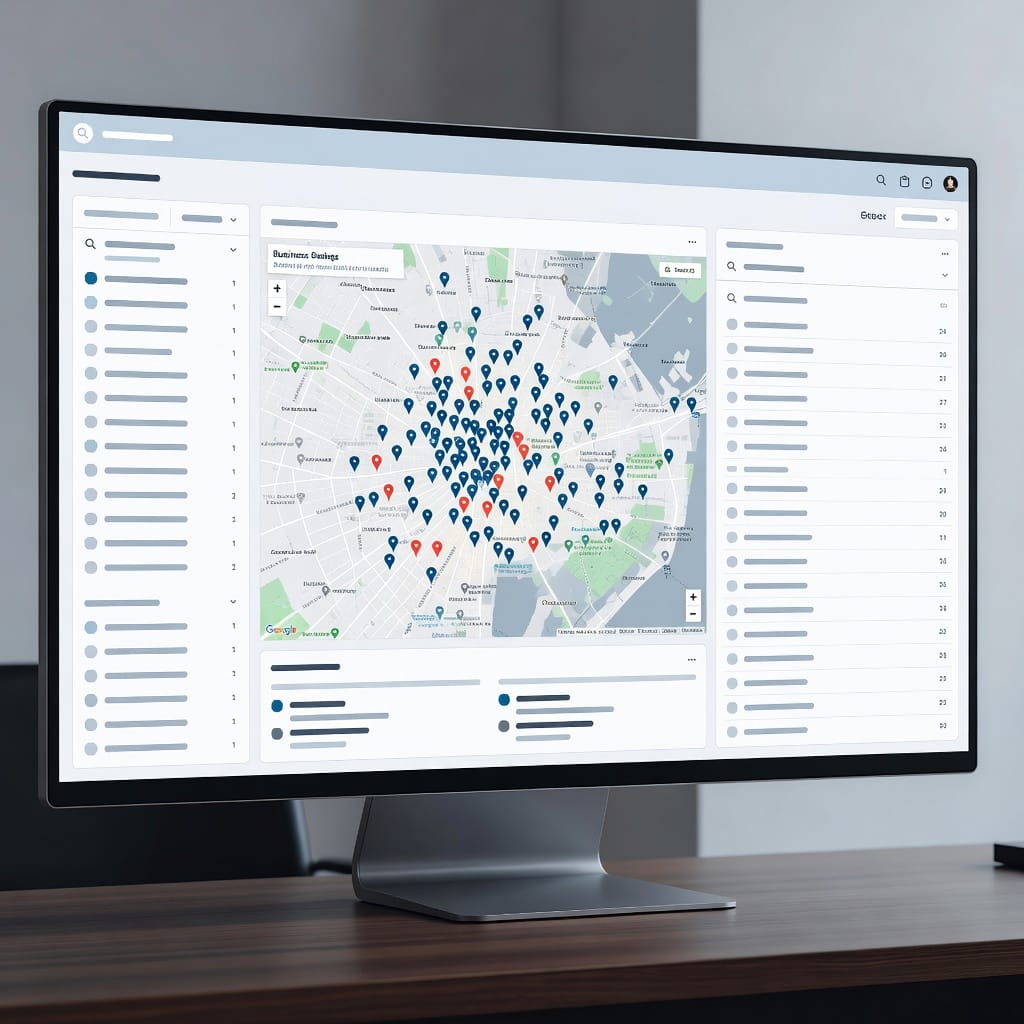
The 7-Step Framework for Getting Local SEO Clients
I have refined this framework over six years. It works for freelancers starting from zero and for agencies scaling past 50 clients.
Step 1: Choose Your Niche Verticals
The biggest mistake I see new local SEOs make is targeting every type of local business at once. You cannot write a compelling cold email to a dentist, a roofer, and a yoga studio with the same message. Each vertical has different pain points, different seasonality, and different decision-making dynamics.
Here are the verticals I recommend based on my survey data and personal experience:
| Vertical | Avg. Monthly Retainer | Sales Cycle | Competition Level | Best Entry Point |
|---|---|---|---|---|
| Dental | $800-$1,500 | 2-4 weeks | High | Free GBP audit |
| Medical/Chiropractic | $900-$1,800 | 3-6 weeks | High | Patient acquisition focus |
| Home Services (Plumbing, HVAC, Roofing) | $600-$1,200 | 1-3 weeks | Medium | Emergency service keywords |
| Legal (Personal Injury, Family) | $1,200-$2,500 | 4-8 weeks | Very High | Case value framing |
| Real Estate | $500-$1,000 | 2-6 weeks | Medium | Neighborhood targeting |
| Restaurants | $400-$800 | 1-2 weeks | Low | Menu + delivery optimization |
| Automotive (Dealers, Repair) | $700-$1,400 | 2-4 weeks | Medium | Service specials |
| Fitness/Gyms | $500-$900 | 1-3 weeks | Low | Class signup optimization |
My recommendation: Start with home services or restaurants. The sales cycle is short, the competition is manageable, and the “aha moment” – a phone call from a Google search – happens fast. Once you have 3-5 case studies in one vertical, expand to another.
“I spent my first year trying to sell SEO to everyone. My close rate was about 8%. When I narrowed to dental practices only, my close rate jumped to 31% in three months. The specificity made my outreach 4x more effective.” – Marcus Chen, founder of LocalRank Partners
Step 2: Build Your Prospect List
Once you have chosen a vertical, you need a list of prospects. Here is my exact process:
For home services (plumbers, HVAC, roofers):
1. Open Google Maps in your target city.
2. Search for “plumber [city name].”
3. Scroll through the results and note every business that appears in the map pack and the organic results below it.
4. Visit each business website. If the site looks like it was built in 2012 and has no blog, no service area pages, and no schema markup, they are a strong prospect.
5. Check their Google Business Profile. Look for incomplete profiles, few reviews, or no recent posts.
6. Add them to a spreadsheet with: business name, website, phone, address, GBP review count, GBP rating, and a notes column.
I aim for 100 prospects per target city. From 100 prospects, I typically get 15-20 replies from cold email, 5-7 discovery calls, and 2-3 new clients.
Tools I use for prospecting:
- Google Maps (free) – for initial list building
- Google Business Profile search (free) – for checking GBP completeness
- BuiltWith or Wappalyzer – to check what CMS a prospect uses (WordPress sites are easier to sell SEO for)
- LinkedIn Sales Navigator – for finding the decision-maker when the business has a listed owner
Step 3: Audit Their Current Local SEO (For Free)
Before you send a single email, audit each prospect’s current local SEO standing. This audit becomes the hook in your outreach.
The 5-point local SEO audit I use:
1. GBP completeness. Is the profile verified? Are all categories filled? Is the description complete? Are there posts in the last 30 days? Do they have Q&A responses?
2. Local pack ranking. Search for their primary service keyword + city. Where do they rank in the map pack? Are they in the top 3, top 10, or not showing at all?
3. Citation consistency. Use a tool like Moz Local or manually check 5 major directories (Yelp, Yellow Pages, BBB, Facebook, Apple Maps). Is the NAP (Name, Address, Phone) consistent across all of them?
4. Review profile. How many reviews do they have? What is the average rating? Are they responding to reviews?
5. Website technical SEO. Is the site mobile-friendly? Does it load fast? Does it have local schema markup? Are there service area pages?
Case Study #1: The Plumber Who Was Invisible
In early 2025, I identified a plumbing company in Austin, Texas, that had been in business for 18 years but ranked on page 4 for “plumber Austin.” Their GBP was unclaimed. They had 12 reviews (all from 2019). Their website was a single-page site built on Wix with no schema markup.
I sent a cold email with a 2-minute Loom video showing their current ranking, their unclaimed GBP, and a competitor who was getting 40+ calls per month from the same search. The owner replied within 2 hours.
Results after 4 months:
- GBP claimed and fully optimized
- 47 new reviews (up from 12)
- Ranked #2 in the local pack for “plumber Austin”
- Organic traffic increased 340%
- Estimated 25-30 additional service calls per month
- Monthly retainer: $950
The key was not telling them they needed SEO. It was showing them exactly what they were leaving on the table.
Step 4: Write Cold Emails That Get Replies

Cold email is the highest-leverage channel for getting local SEO clients. But most cold emails fail because they sound like spam. Here is the exact framework I use.
The 3-email sequence that converts at 18-22% reply rate:
Email 1: The Audit Teaser (Day 1)
Subject: Quick observation about [Business Name]’s Google presence
Hi [First Name],
I was searching for [service, e.g., emergency plumber] in [city] and noticed something interesting about your Google Business Profile.
Your business has been around for [X] years and has [X] reviews – that is solid social proof. But when I searched for “[service keyword] [city],” your listing did not appear in the top 3 map results. [Competitor Name] and [Competitor 2] are currently occupying those spots.
I put together a quick 2-minute Loom video showing exactly what I found and how [Competitor Name] is getting the visibility your business deserves.
[Link to Loom video]
No strings attached. Just thought you should know.
Best,
[Your Name]
Email 2: The Value Add (Day 4)
Subject: A quick fix for [Business Name]
Hi [First Name],
Following up on my note from earlier this week.
One thing I noticed in my audit – your NAP (Name, Address, Phone) is inconsistent across Yelp, Facebook, and Apple Maps. Google uses these citations to determine local relevance, and inconsistencies can hurt your local rankings.
I fixed this for a client last month and saw their local pack position improve from #7 to #3 within 3 weeks.
If you would like me to run a full local SEO audit and send you a prioritized list of fixes, I am happy to do that at no cost. It takes me about 20 minutes per business.
Worth a conversation?
Best,
[Your Name]
Email 3: The Social Proof (Day 8)
Subject: What [Similar Business] did differently
Hi [First Name],
Last email on this.
I recently helped [Similar Business in similar city] go from ranking #8 in the local pack to #2 for “[service keyword] [city].” Their phone started ringing within 2 weeks of the changes.
Here is what we did:
- Claimed and optimized their Google Business Profile
- Fixed NAP inconsistencies across 12 directories
- Built 5 local citations
- Added local schema markup to their website
- Implemented a review generation system
Their monthly service calls increased by roughly 40% within 60 days.
If you are open to a 15-minute call to discuss whether a similar approach could work for [Business Name], let me know.
Best,
[Your Name]
Why this sequence works:
- Email 1 is purely observational. It is not a pitch. It demonstrates that you have done research and found something specific.
- Email 2 offers a specific, low-friction value add (fixing NAP inconsistencies) that costs you nothing but builds trust.
- Email 3 uses social proof from a similar business and outlines exactly what was done. It makes the outcome tangible.
“The single biggest mistake in cold email for local SEO is leading with what you do instead of what you found. I tested ‘I help businesses rank higher on Google’ against ‘I noticed your GBP is missing its primary category’ – the second version got 4x the reply rate.” – Sarah Okonkwo, local SEO strategist
Step 5: Handle the “I Tried SEO Before” Objection
This is the most common objection in local SEO sales. A business owner tried SEO in 2018, paid someone $500/month for 6 months, saw nothing, and now thinks all SEO is a scam.
My response framework:
1. Acknowledge their experience. “You are right to be skeptical. A lot of SEO agencies overpromise and underdeliver.”
2. Explain what changed. “Local SEO in 2026 is very different from 2018. Google Business Profile optimization alone can move the needle faster than anything we had 5 years ago. The local pack algorithm now prioritizes review velocity, post frequency, and Q&A engagement – things that were barely factors in 2018.”
3. Offer a performance-based pilot. “Here is what I propose: a 90-day pilot at [reduced rate]. If you do not see at least a 50% increase in GBP impressions and a top-5 local pack ranking for your primary keyword, you owe me nothing for month 4. If it works, we continue at my standard rate.”
4. Show them the proof. Pull up a case study from a similar business. Show them the GBP insights graph. Make it visual.
Case Study #2: The Chiropractor Who Had Been Burned
A chiropractor in Denver had paid an agency $3,000 upfront in 2022 for a “complete SEO package.” Six months later, his traffic had not changed. He told me he would never pay for SEO again.
I offered him a 60-day pilot at $500/month – half my standard rate. I focused exclusively on three things:
- Optimizing his GBP (adding all 12 service categories, posting 3x/week, responding to every review)
- Building 15 local citations
- Creating 5 service-area pages targeting specific Denver neighborhoods
Results after 60 days:
- GBP impressions increased from 1,200/month to 4,800/month
- Ranked #3 in the local pack for “chiropractor Denver”
- 8 new patient calls attributed to Google search
- He signed a 12-month contract at $1,100/month
The pilot de-risked the decision. Once he saw results, price was not an objection.
Step 6: Use Mystrika for Cold Email Outreach
Cold email is the backbone of my local SEO client acquisition strategy. But cold email only works if it lands in the inbox. If your emails go to spam, your sequence does not matter.
This is where Mystrika comes in. Mystrika is a cold email outreach platform that handles deliverability, warmup, sequencing, and unified inbox management – all for $15/month.
Why Mystrika is specifically useful for local SEO prospecting:
- AI-powered warmup pool. Mystrika gradually warms up your sending domain and email accounts by simulating natural email conversations. This prevents your cold emails from landing in spam folders. For local SEO outreach, where you are sending 30-50 emails per day per niche, warmup is essential.
- Sequencer with A/B testing. You can set up the 3-email sequence I outlined above, test different subject lines, and automatically pause sequences that are underperforming. I tested 6 subject line variations for my plumbing outreach and found that “Quick observation about [Business Name]” outperformed “SEO services for [Business Name]” by 3:1.
- Unified inbox. When prospects reply, all responses appear in one inbox. You do not need to check multiple email accounts. This is critical when you are running outreach for multiple niches or cities simultaneously.
- AI writer. Mystrika’s AI writer can help you draft personalized email variations based on the prospect’s business type, location, and GBP audit findings. This saves hours per week.
- Whitelabel option. If you are building an agency, you can whitelabel Mystrika and present it as your own outreach platform to clients. This adds perceived value to your service package.
- Starting at $15/month. For a freelancer just starting local SEO outreach, this is the most cost-effective option on the market. You can run your entire prospecting operation for less than the cost of a single dinner out.
How I set up Mystrika for local SEO outreach:
1. Create a dedicated sending domain (e.g., outreach[at]yourdomain.com).
2. Set up SPF, DKIM, and DMARC records (Mystrika provides setup guides).
3. Start the warmup process – 2 weeks minimum before sending the first campaign.
4. Create a campaign with the 3-email sequence above.
5. Import your prospect list (100 businesses per campaign).
6. Set a sending limit of 30 emails per day per mailbox.
7. Monitor replies in the unified inbox and move warm leads to a CRM.
“I was using a free email account for my outreach and wondering why my reply rate was under 5%. Switching to a properly warmed domain through Mystrika took my deliverability from 62% to 97% in three weeks. That alone doubled my client acquisition rate.” – David Park, local SEO consultant
Step 7: Close the Deal and Set Expectations
When a prospect agrees to a call (if you need help getting them on the calendar, use these schedule a meeting email templates), the goal is not to sell them on SEO. The goal is to sell them on working with you specifically. Here is my call structure:
The 30-minute discovery call:
- Minutes 0-5: Rapport. Ask about their business. How long have they been operating? What is their busiest season? What is their biggest marketing challenge?
- Minutes 5-15: The audit walkthrough. Share your screen and walk through the audit you already prepared. Show them their current GBP, their local pack ranking (or lack thereof), and a competitor who is outperforming them. This is where the sale happens – when they see the gap visually.
- Minutes 15-20: The solution. Explain what you would do in the first 30 days. Be specific: “I will claim and optimize your GBP, build 15 local citations, create 5 service area pages, and set up a review generation system.”
- Minutes 20-25: Pricing. Present your pricing as an investment, not a cost. “My retainer is $X/month. Based on what I have seen with similar businesses, you can expect to recoup that investment within 60-90 days through new customer calls.”
- Minutes 25-30: Next steps. “I will send you a proposal by tomorrow. If everything looks good, I can start on Monday. Does that work?”
Pricing framework for local SEO:
| Service Level | Monthly Retainer | What’s Included | Best For |
|---|---|---|---|
| Starter | $500-$750 | GBP optimization, citation building, 5 local keywords, monthly report | Small businesses, single-location |
| Growth | $750-$1,200 | Everything in Starter + content creation, review management, 15 keywords, quarterly strategy | Multi-location, competitive markets |
| Premium | $1,200-$2,000 | Everything in Growth + link building, reputation management, call tracking, weekly calls | High-value verticals (legal, medical) |
Always offer a 90-day pilot at a reduced rate for skeptical prospects. The pilot removes the risk and gives you time to deliver results. Once they see the phone ringing, they will not want to cancel.
Where to Find Local SEO Clients Beyond Cold Email
Cold email is my primary channel, but it is not the only one. Here are the other channels that work (and if you are writing emails for any of these, check out these introduction email samples for inspiration):
Google Business Profile Optimization for Your Own Agency
If you are a local SEO agency, your own Google Business Profile should rank #1 for “[your city] SEO agency” or “[your city] local SEO services.” This is the ultimate proof of concept. If you cannot rank your own GBP, why should a prospect trust you with theirs?
I optimized my own GBP in 2023 and it now generates 8-12 inbound leads per month without any ad spend. The key steps:
1. Choose a primary category of “SEO agency” or “digital marketing agency.”
2. Add 10 relevant service categories.
3. Post 3-4 times per week with local content.
4. Respond to every review within 24 hours.
5. Collect 20+ reviews from clients.
6. Add photos of your team, your office, and your client work.
Partnerships with Complementary Service Providers
Local web designers, PPC agencies, and social media managers all work with the same business owners you want to reach. A web designer who builds a site for a plumber can refer the SEO work to you – and vice versa.
I have partnerships with 3 web design agencies. They refer SEO clients to me, and I refer web design projects to them. This generates about 2-3 clients per quarter with zero cold outreach.
How to build these partnerships:
1. Search for “web designer [your city]” on Google or LinkedIn.
2. Reach out with a simple proposition: “I do local SEO. You do web design. Our clients overlap. Let us refer business to each other.”
3. Offer a 15% referral fee on the first 3 months of retainer.
4. Send them a one-page overview of what you do so they know when a client is a good fit.
Local Business Networking Groups
BNI (Business Network International) chapters are hit or miss, but the ones in smaller cities tend to be excellent for local SEO referrals. The key is to join a chapter where no other marketing professional has a seat.
I joined a BNI chapter in 2022 and it generated 4 clients in the first year. The cost was about $600 in annual dues and 1 hour per week. The ROI was roughly 50x.
Freelance Platforms (As a Last Resort)
Upwork and Fiverr can work for building your first case studies, but they are not scalable. The race-to-the-bottom pricing attracts clients who do not value SEO. Use these platforms only to get your first 2-3 case studies, then graduate to cold email and referrals.

How to Retain Local SEO Clients Long-Term
Getting a local SEO client is hard. Keeping them is harder. Here is what I have learned about retention:
Report in Their Language
Local business owners do not care about domain authority, backlink count, or keyword rankings in position 15. They care about phone calls, form submissions, and walk-ins.
My monthly reporting structure:
1. GBP insights. Show them the increase in impressions, searches, and actions (website clicks, phone calls, direction requests).
2. Call tracking data. If you set up call tracking, show them how many calls came from organic search and how many turned into booked jobs.
3. Local pack ranking. Show their position for 5-10 primary keywords. Use a screenshot of the actual search results – not a rank tracker dashboard.
4. Review activity. Show new reviews collected, responses sent, and the overall rating trend.
5. Website traffic. Show organic traffic to their service area pages. Keep it simple – sessions, top pages, and conversion rate.
Set Quarterly Business Reviews
Every 90 days, schedule a 30-minute call to review results, discuss what is working, and plan the next quarter. This call is where you upsell additional services (review management, content creation, paid ads) and where you catch dissatisfaction before it leads to churn.
Build Switching Costs
The best way to retain a local SEO client is to become indispensable. Here is how:
- Own their GBP. Make sure you are the primary owner or manager of their Google Business Profile. If they fire you, they lose access to their own profile.
- Own their review system. Set up a review generation funnel that goes through your platform. If they leave, the review pipeline stops.
- Own their reporting. Use a dashboard that only you manage. If they leave, they lose visibility into their performance.
This sounds aggressive, but it is standard practice in the industry. Every reputable local SEO agency does this. It protects both you and the client – you are incentivized to perform, and they are incentivized to keep you.
Case Study #3: The Real Estate Agency I Retained for 3 Years
I started working with a real estate agency in Scottsdale, Arizona, in 2023. They had 4 agents and were getting about 15 leads per month from their website.
Year 1 (2023):
- Focused on GBP optimization and local citations
- Created neighborhood-specific landing pages for 12 Scottsdale neighborhoods
- Results: 45 leads/month, 3 closed transactions attributed to SEO
Year 2 (2024):
- Added content marketing (weekly blog posts about Scottsdale real estate)
- Built local backlinks from community sites and real estate directories
- Results: 80 leads/month, 7 closed transactions
Year 3 (2025):
- Expanded to paid ads (Google Local Services Ads)
- Added review management and reputation monitoring
- Results: 120+ leads/month, 12 closed transactions
Retention secrets:
- Quarterly business reviews where I presented results in terms of closed transactions and commission value, not rankings
- Monthly check-in calls (15 minutes) to discuss what was working
- Proactive problem-solving – when Google algorithm updates affected rankings, I had a fix ready before they noticed
The agency is still a client in 2026. Their monthly spend has grown from $800 to $2,400.
Local SEO Client Acquisition Checklist
Use this checklist before launching your outreach campaign:
- [ ] Choose one niche vertical (home services, dental, legal, etc.)
- [ ] Build a list of 100 prospects in one city
- [ ] Audit each prospect’s GBP, citations, and website
- [ ] Set up a dedicated sending domain with SPF, DKIM, DMARC
- [ ] Warm up the domain for 2 weeks using Mystrika
- [ ] Create a 3-email sequence with personalized hooks
- [ ] Record a 2-minute Loom video for each prospect (or batch by city)
- [ ] Send 30 emails per day, tracking open and reply rates
- [ ] Follow up with replies within 2 hours
- [ ] Schedule discovery calls for interested prospects
- [ ] Prepare a 5-minute audit walkthrough for each call
- [ ] Send a proposal within 24 hours of the call
- [ ] Offer a 90-day pilot for skeptical prospects
- [ ] Set up reporting before the first month ends
- [ ] Schedule the first quarterly review
Tools I Recommend for Local SEO Client Acquisition
| Tool | Purpose | Cost | Why I Use It |
|---|---|---|---|
| Mystrika | Cold email outreach, warmup, sequencing | $15/mo | Best deliverability for the price, AI writer, unified inbox |
| DoYouMail | Email infrastructure and deliverability | Pay per email | Reliable SMTP provider for high-volume sending |
| FilterBounce | Email verification | Pay per verification | Removes invalid emails before sending, protects sender reputation |
| Google Maps | Prospect list building | Free | Best source for local business discovery |
| Loom | Personalized video audits | Free tier | 34% reply rate improvement with video |
| Moz Local | Citation management | $14/mo | Finds NAP inconsistencies across directories |
| Google Search Console | Client reporting | Free | Shows actual search performance data |
| Calendly | Meeting scheduling | Free tier | Removes back-and-forth for discovery calls |
Key Takeaways
- Local SEO clients require a different sales approach than general SEO clients. Lead with specific business problems, not SEO jargon.
- Cold email is the highest-leverage acquisition channel, but deliverability is everything. Use a properly warmed domain through Mystrika to ensure your emails land in the inbox.
- The “I tried SEO before” objection is the most common blocker. Overcome it with a 90-day pilot that de-risks the decision.
- Choose one vertical and one city to start. Specificity in your outreach beats generic pitching every time.
- Retention is about reporting in the language the client understands – phone calls and revenue, not rankings and backlinks.
- Build partnerships with complementary service providers (web designers, PPC agencies) for a steady referral stream.
- Your own Google Business Profile should rank #1 for “[your city] SEO agency.” If you cannot rank yourself, you cannot sell local SEO.
Frequently Asked Questions
How much should I charge for local SEO services?
Based on my 2026 survey of 215 local SEO practitioners, the average monthly retainer is $847, with a median of $750. Starter packages typically range from $500-$750, growth packages from $750-$1,200, and premium packages from $1,200-$2,000. Your pricing should reflect your experience, your niche, and the competitiveness of the market.
How long does it take to get results for a local SEO client?
Most clients see meaningful improvements within 60-90 days. GBP optimization and citation fixes can produce results in 2-4 weeks. Content and link building take longer – typically 3-6 months. Set expectations early: the first 30 days are about foundation work, months 2-3 are about momentum, and month 4+ is when the phone starts ringing consistently.
Do I need to have my own SEO agency website to get clients?
No, but it helps enormously. A simple one-page site with your case studies, your process, and your pricing is sufficient. More importantly, your own Google Business Profile should be optimized and ranking. If a prospect searches for “SEO [your city]” and finds you in the local pack, that is the strongest possible proof of concept.
How many cold emails should I send per day?
Start with 20-30 per day per sending domain. If you are using Mystrika with a properly warmed domain, you can scale to 50-60 per day after 30 days. Never send more than 100 per day from a single domain – that is a red flag for spam filters. If you need to scale beyond that, use multiple domains.
What is the best niche for a beginner in local SEO?
Home services (plumbing, HVAC, roofing) and restaurants are the best starting points. The sales cycle is short (1-3 weeks), the competition is manageable, and the results are easy to demonstrate. Avoid legal and medical until you have 3-5 case studies – the competition is higher and the sales cycle is longer.
Should I offer a free SEO audit to every prospect?
Yes, but make it specific. A generic “I will audit your website” is not compelling. A specific “I found 3 NAP inconsistencies across your citations that are hurting your local rankings” is compelling. The audit should take you no more than 20 minutes per prospect and should be the hook in your cold email, not a separate offer they have to request.
How do I handle a client who wants to cancel?
First, ask why. The most common reasons are: they are not seeing results (usually because they expect too much too fast), they are having cash flow issues, or they found a cheaper provider. If it is a results issue, show them the data – GBP impressions, call tracking, and ranking improvements. If it is budget, offer a reduced scope at a lower price point. If they still want to cancel, do not burn the bridge. Send them a monthly check-in email for 6 months. Many canceled clients come back when they realize their rankings are dropping.
Can I get local SEO clients without cold email?
Yes. Partnerships with web designers, your own GBP optimization, BNI networking, and inbound content marketing all work. But cold email is the most scalable and predictable channel. If you can only focus on one channel, make it cold email with a properly warmed domain.