
What Is B2B Telemarketing?
B2B telemarketing is the practice of one business proactively calling another business to generate leads, qualify prospects, book appointments, conduct market research, or nurture existing relationships. Unlike outbound email or social selling, telemarketing uses live voice conversations to build rapport, handle objections in real time, and move prospects through the sales pipeline with speed and personalization.
In a B2B context, telemarketing typically targets decision-makers such as CEOs, VPs of Sales, Marketing Directors, Operations Leaders, IT Directors, and Procurement Managers. The calls are consultative rather than transactional. A single B2B call can be worth thousands or tens of thousands of dollars in closed revenue if handled correctly, because the prospect is often buying for a department, a budget line, or an entire company rather than for personal use.
The most useful way to define B2B telemarketing is this: it is a controlled conversation system for creating commercial conversations at scale. The goal is rarely to close the full deal on the first call. The goal is usually to confirm fit, surface pain, identify buying authority, and book the next step. That next step might be a discovery call, product demo, technical review, pricing discussion, webinar registration, or account-based marketing follow-up.
Despite the rise of cold email, LinkedIn automation, intent data, and AI-driven outreach, telemarketing remains one of the highest-context outbound channels for complex B2B sales. Email can start the conversation, but voice reveals urgency, hesitation, budget friction, political dynamics, and objections that a prospect may never write down. That is why the strongest outbound teams do not treat telemarketing as an old-school channel. They treat it as the human layer inside a broader outbound system.
A practical B2B telemarketing program usually includes five activities. First, list building and segmentation so the right people are contacted. Second, pre-call research so the opening line is relevant. Third, live calling with a clear script and qualification framework. Fourth, post-call email follow-up that recaps the conversation. Fifth, CRM logging and analytics so managers can improve the program with data instead of guesswork.
The best B2B telemarketing teams are not the loudest or most aggressive. They are the most prepared. They know the buyer’s industry, have a reason for calling, ask focused questions, listen carefully, and make the next step easy. When that discipline is combined with verified data, compliant dialing, and a thoughtful email sequence, telemarketing becomes a predictable pipeline lever rather than a random dialing exercise.
B2B vs. B2C Telemarketing: Key Differences
B2B telemarketing and B2C telemarketing both involve outbound phone calls, but they are not the same discipline. B2B telemarketing targets professional buyers inside organizations, while B2C telemarketing targets individual consumers. That distinction changes the tone, compliance model, decision cycle, script structure, and measurement system.
| Dimension | B2B Telemarketing | B2C Telemarketing |
|---|---|---|
| Audience | Company decision-makers, influencers, and budget owners | Individual consumers or households |
| Typical buyer motive | ROI, efficiency, revenue, compliance, risk reduction | Personal benefit, savings, convenience, lifestyle |
| Sales cycle | Multi-touch and multi-stakeholder | Often single decision-maker |
| Average deal size | Higher, often recurring or contract-based | Lower, often transactional |
| Call style | Consultative and problem-led | Offer-led and urgency-driven |
| Data required | Company, role, industry, tech stack, buying signals | Demographic, geographic, and consumer preference data |
| Compliance risk | Business lines may be treated differently, but privacy laws still apply | Consumer consent and DNC rules are usually stricter |
| Success metric | Qualified meetings, opportunities, pipeline, revenue | Orders, subscriptions, appointments, donations |
The most important operational difference is context. A B2B telemarketer cannot rely on a generic offer. The caller must understand why the conversation matters to that company at that moment. If you call a CFO, the conversation should sound different than a call to a VP of Sales. If you call a manufacturing company, the example should not sound like it was written for a SaaS startup. Relevance is the cost of entry.
The second major difference is the buying committee. A consumer can say yes alone. A business buyer often cannot. Even if the person on the phone likes the offer, they may need approval from finance, security, procurement, legal, or an executive sponsor. A strong B2B call therefore maps the buying process instead of forcing a premature close.
The third difference is compliance. In the United States, the Telephone Consumer Protection Act treats some business calls differently from consumer calls, but that does not mean B2B callers can ignore consent, mobile phone rules, caller identification, or do-not-call requests. In the European Union and United Kingdom, professional contact data can still be personal data under GDPR and UK GDPR. That means B2B telemarketing teams need a documented lawful basis, clear opt-out process, and defensible data sourcing.
A simple way to remember the difference is this: B2C telemarketing sells to a person in a moment. B2B telemarketing creates a business case across a buying process. That is why B2B scripts need better research, deeper questions, and more patience.
Why B2B Telemarketing Still Works
B2B telemarketing still works because business buyers are busy, inboxes are saturated, and complex offers often require conversation before conversion. A live call gives the seller a chance to clarify relevance quickly, uncover hidden objections, and build enough trust for a next step.
It Creates Real-Time Feedback
Email analytics can show opens, clicks, and replies, but they cannot reveal tone. A phone call reveals whether the prospect is confused, skeptical, curious, rushed, blocked by budget, loyal to a competitor, or actively searching. That feedback is valuable even when the call does not convert. It helps marketing refine messaging, helps sales understand objections, and helps leadership see what the market actually says.
For example, if ten prospects in one week say they already use a competitor but hate the reporting, that insight should shape the next email sequence, website copy, demo flow, and sales enablement deck. Telemarketing is not just a lead generation channel. It is a voice-of-customer channel.
It Cuts Through Email Saturation
Most B2B decision-makers receive dozens or hundreds of sales emails per week. Even a relevant email can be missed. A respectful phone call gives the message a second chance. The call does not need to replace email. It should reinforce it.
A common high-performing opener is: “I sent you a short email yesterday about [specific business issue], and I wanted to see if it was relevant enough to discuss for 60 seconds.” This works because it gives the call context. The prospect is not being ambushed with a random pitch. They are being asked to evaluate a topic already introduced in writing.
It Speeds Up Qualification
A five-minute conversation can answer questions that might take two weeks of email back-and-forth. Is the prospect the right buyer? Do they have the problem? Is timing real? Is budget likely? Who else is involved? What would block the deal? A caller can learn all of that quickly if they ask focused questions.
This matters because sales teams do not just need more leads. They need fewer bad leads. Telemarketing can disqualify poor-fit accounts before an account executive wastes time on them.
It Builds Trust Faster Than Text Alone
Voice carries nuance. A calm, prepared caller who listens well can build credibility faster than a perfectly written email. This is especially important in industries where trust, compliance, security, or operational risk matters. Buyers want to hear how the seller responds under pressure.
That does not mean every buyer wants a call. Many do not. But for high-value accounts, the upside of a live conversation is large enough to justify careful, compliant outreach.
Essential B2B Telemarketing Compliance: TCPA, GDPR, and Beyond
Compliance is the line between professional outreach and legal exposure. B2B telemarketing teams must understand the rules before dialing, because penalties can apply per call and reputational damage can last long after a campaign ends.
This section is not legal advice. It is an operational checklist to help sales and marketing teams ask better questions, build safer processes, and know when to involve counsel.
TCPA Compliance for United States B2B Calls
The Telephone Consumer Protection Act regulates certain calls and texts in the United States, especially calls using automated technology, prerecorded messages, or calls to mobile numbers. B2B callers often assume they are exempt because they call companies. That assumption is dangerous.
A safer TCPA checklist for B2B teams includes:
- Identify whether the number is a business landline, direct business line, or mobile number.
- Avoid using auto-dialing or prerecorded messages to mobile numbers unless you have appropriate consent.
- Scrub against relevant do-not-call lists where applicable.
- Maintain an internal do-not-call suppression list.
- Honor verbal opt-out requests immediately.
- Display accurate caller ID information.
- Call only during reasonable local business hours.
- Document your data source and campaign purpose.
The biggest practical risk is mobile numbers. Many B2B databases include direct mobile numbers for executives and sales leaders. Those numbers may be valuable, but they increase compliance obligations when automated dialing technology is involved.
GDPR and UK GDPR for B2B Telemarketing
Under GDPR and UK GDPR, professional contact information can be personal data. A work email address like [email protected] and a direct dial tied to a named employee are both personal data if they identify a person. That means B2B telemarketing teams need a lawful basis for processing.
Many B2B teams rely on legitimate interest, but legitimate interest is not a magic phrase. It requires a balancing test. The company should document why the call is relevant, why the recipient could reasonably expect the contact, and how opt-out rights are respected.
A practical GDPR process includes:
1. Record the source of every contact.
2. Define the business relevance for the segment.
3. Complete a legitimate interest assessment for the campaign.
4. Provide a simple opt-out path on the call and in follow-up email.
5. Suppress opted-out contacts across phone and email channels.
6. Retain only the data needed for the campaign.
7. Delete or refresh stale data on a documented schedule.
If your telemarketing campaign also sends email, your email tool and calling workflow must share suppression data. Otherwise a prospect might opt out by phone and still receive automated emails, creating compliance and brand risk.
PECR, CASL, and Other Regional Rules
In the UK, Privacy and Electronic Communications Regulations (PECR) sit alongside UK GDPR and apply to direct marketing by phone, email, and other channels. In Canada, CASL and telemarketing rules create additional consent and identification requirements. Australia, Singapore, and several EU member states have their own telemarketing restrictions.
International campaigns should not use a single global script or compliance checklist. Segment by country, apply the strictest relevant rule when uncertain, and keep country-specific suppression logic inside your CRM or outreach platform.
Compliance Checklist Before a Campaign Goes Live
Use this pre-launch checklist before any B2B telemarketing campaign:
- Has the target segment been defined by business relevance, not just job title?
- Is the contact data source documented?
- Has the data been verified recently?
- Are mobile numbers flagged separately from landlines?
- Has the campaign been screened for do-not-call requirements?
- Does the script include identity, company, reason for calling, and opt-out language?
- Is there a process for logging opt-outs during or immediately after calls?
- Are phone opt-outs synchronized with email suppression lists?
- Are call recordings compliant with local consent rules?
- Has legal reviewed any campaign targeting regulated markets?
FilterBounce is useful in this workflow because verification should happen before records reach the dialer. If a record fails verification or appears risky, it should be suppressed before a rep wastes time or creates compliance exposure.
Data Quality: The Hidden Driver of B2B Telemarketing ROI
Data quality determines whether your telemarketing team spends the day selling or chasing dead records. Bad data raises cost per conversation, lowers morale, creates compliance risk, and makes performance analysis unreliable.
What Good B2B Telemarketing Data Includes
A complete B2B telemarketing record should include more than a name and phone number. At minimum, it should include:
- First name and last name.
- Job title and department.
- Company name and domain.
- Company size and industry.
- Direct phone number or verified main line.
- Mobile phone flag if applicable.
- Work email address.
- Country and time zone.
- Source of data.
- Date last verified.
- Consent or lawful basis notes where required.
- CRM owner and sequence status.
The “date last verified” field is often missing, but it matters. People change jobs, companies restructure, phone systems change, and numbers get reassigned. If your list is older than six months, assume a meaningful portion is stale.
The Cost of Bad Data
Imagine a rep makes 70 dials per day. If 25% of numbers are wrong, that is 17 wasted dials per day. Across a team of 10 reps, that is 170 wasted dials per day. Across 20 working days, that is 3,400 wasted dials per month. If each wasted dial consumes even 45 seconds of searching, dialing, waiting, dispositioning, and logging, the team loses more than 42 hours per month.
That time loss is only one cost. Bad data also damages reporting. If a campaign has a low connect rate, is the message bad, the segment bad, the caller bad, or the data bad? Without data-quality fields, managers cannot diagnose the real problem.
Verification Workflow
A practical verification workflow looks like this:
1. Import raw records into a staging table, not directly into the dialer.
2. Standardize names, company domains, country, and phone format.
3. Verify email addresses through a service such as FilterBounce.
4. Flag risky phone numbers, mobile numbers, and invalid records.
5. Enrich missing firmographic fields.
6. Push only clean records into CRM and sequence tools.
7. Re-verify records older than 90-180 days before reuse.
Verification is not glamorous, but it is one of the fastest ways to improve ROI. Cleaner data produces more connects without increasing headcount.
How to Build a B2B Telemarketing Campaign
A good B2B telemarketing campaign is built backward from the business outcome. Do not start by buying a list or writing a script. Start by defining what a qualified conversation looks like.
Step 1: Define the Campaign Goal
The campaign goal determines the list, script, metrics, and follow-up. Common B2B telemarketing goals include:
- Book discovery calls for account executives.
- Qualify inbound leads that have gone cold.
- Reactivate closed-lost opportunities.
- Invite target accounts to a webinar or event.
- Validate demand before launching a new market.
- Conduct customer research for product messaging.
- Drive renewals or expansion conversations.
A campaign that books demos should not sound like a campaign that conducts research. A webinar invite should not use the same qualification framework as a closed-lost reactivation campaign. One of the easiest ways to fail is using one generic script for every campaign type.
Step 2: Select the Right Segment
Segmentation should combine firmographic, technographic, behavioral, and trigger-based criteria. Firmographics include company size, industry, revenue, geography, and growth stage. Technographics include tools already in use. Behavioral signals include website visits, content downloads, webinar attendance, product usage, and email engagement. Trigger signals include funding, hiring, leadership changes, compliance deadlines, vendor contract renewals, or market expansion.
The best segment is not always the largest segment. A smaller segment with urgent pain and clear business fit will outperform a broad list with weak relevance.
Step 3: Write the Call Hypothesis
Before writing a script, write the call hypothesis in one sentence:
“We believe [persona] at [type of company] is likely struggling with [problem] because [trigger], and we can help by [specific outcome].”
Example: “We believe VPs of Sales at 50-200 person SaaS companies are struggling with declining cold email reply rates because their domains are under-warmed and their email sequences are disconnected from phone follow-up, and we can help by combining warmup, sequencing, and unified inbox management in Mystrika.
This hypothesis keeps the script specific. It prevents generic openings like “I wanted to tell you about our solution.”
Step 4: Build the Sequence
A telemarketing campaign should include multiple touches. A single call is rarely enough. Build a sequence that includes at least two emails, two calls, and one social touch over 10-14 business days.
The first email creates context. The first call tests urgency. The second email adds proof. The second call changes the angle. The final touch gives the prospect a graceful way to say no or ask for later follow-up.
Step 5: Create the Disposition Map
A disposition map tells reps how to categorize every call outcome. Common dispositions include:
- Connected – qualified meeting booked.
- Connected – interested, follow-up required.
- Connected – not a fit.
- Connected – call back later.
- Gatekeeper – no transfer.
- Voicemail left.
- No answer.
- Wrong number.
- Do not call.
Each disposition should trigger a defined next action. For example, “interested, follow-up required” should trigger a personalized email and a callback task. “Wrong number” should trigger data cleanup. “Do not call” should trigger suppression across all channels.
How to Create a Multi-Channel Outreach Sequence
A multi-channel sequence combines phone calls, email, and social touches over a defined period. This is the most effective structure for B2B telemarketing because it gives the prospect multiple ways to recognize, evaluate, and respond to the message.

A 14-Day Sequence Blueprint
Here is a practical sequence for a mid-market B2B offer:
| Day | Channel | Action | Goal |
|---|---|---|---|
| 1 | Personalized problem-led email | Create context | |
| 2 | View profile or send connection request | Increase recognition | |
| 3 | Phone | First call referencing email | Test relevance |
| 4 | Follow-up with proof point | Add credibility | |
| 6 | Phone | Second call with different angle | Reach missed prospect |
| 8 | Engage with a relevant post | Build familiarity | |
| 10 | Short case-study email | Show outcome | |
| 12 | Phone | Third call focused on timing | Identify buying window |
| 14 | Breakup email | Close loop respectfully |
This sequence works because each touch has a job. The email gives context. The call creates conversation. LinkedIn adds recognition. The case-study email adds proof. The final email prevents endless pestering.
Where Mystrika Fits
Mystrika is useful when telemarketing is paired with cold email because reps need follow-up to be fast, personal, and deliverable. The platform includes warmup, cold email sequencing, AI writing, personalization, and a unified inbox starting at $15 per month. A rep can call a prospect, mark the call outcome, and use the email sequence to send the next message without losing the thread across tools.
If your sending infrastructure needs dedicated private IPs, DoYouMail can support SMTP and IMAP infrastructure with unlimited email IDs at $39 per month. This is especially useful for teams that want to separate infrastructure from campaign management while still bringing their own domain.
For more on the email side of outreach, see Mystrika’s guide to cold email sequencing, because phone performance improves when email touches are structured instead of improvised.
Crafting a Winning B2B Telemarketing Script
A B2B telemarketing script should be a decision tree, not a word-for-word monologue. The caller needs structure, but the prospect needs a conversation. The best script gives reps the opening, qualifying questions, proof points, objection responses, and close options without forcing robotic delivery.
The 30-Second Opener
The opener should answer four questions quickly: who are you, why are you calling, why should the prospect care, and are you asking for a reasonable amount of time?
A strong opener:
“Hi [first name], this is [name] from [company]. I sent you a short email yesterday about [specific problem or trigger]. The reason I am calling is that teams like yours are usually trying to [business outcome], and I wanted to see if this is worth a 60-second conversation.”
This opener works because it is specific, short, and permission-based. It does not start with fake familiarity. It does not ask “How are you?” as a trap. It connects the call to a prior email and gives the prospect an easy way to say yes or no.
A BANT Qualification Framework
BANT stands for Budget, Authority, Need, and Timeline. It is not perfect, but it remains useful for telemarketing because it prevents reps from booking meetings with people who have curiosity but no buying path.
Use these questions naturally:
- Budget: “Is solving this already part of a funded initiative, or would budget need to be created?”
- Authority: “Who would need to be involved if this looked useful?”
- Need: “What is the biggest issue with your current process?”
- Timeline: “Is this something you are looking at now, this quarter, or later in the year?”
The key is not to interrogate. Ask one question, listen, and follow the answer. A caller who asks all four BANT questions mechanically will sound like a form.
Objection Handling Cheat Sheet
| Objection | Better Response |
|---|---|
| “Not interested.” | “Understood. Usually that means either timing is off or the problem is not painful enough. Which is closer?” |
| “Send me an email.” | “Happy to. So I do not send something generic, should I focus on [pain A] or [pain B]?” |
| “We already have a provider.” | “That makes sense. Most teams we speak with do. What is the one thing you wish your current setup did better?” |
| “No budget.” | “Fair. Is this a hard no for the year, or something that could be revisited if the business case was clear?” |
| “Call me next quarter.” | “I can do that. What will change between now and then that makes next quarter better?” |
| “How did you get my number?” | “It came from our business contact database for professional outreach. I can remove it immediately if you prefer.” |
The Appointment-Setting Close
The close should reduce friction. Do not ask, “Would you like a demo?” That gives the prospect too much room to defer. Instead, summarize the pain and propose a specific next step.
Example:
“Based on what you shared, the biggest issue is that your outbound team is getting replies but follow-up is scattered across tools. It probably makes sense to look at a 20-minute workflow review rather than a full demo. I have Tuesday at 10:30 or Wednesday at 2:00. Which is easier?”
A strong close is specific, relevant, and calendar-based.
Technology Stack for B2B Telemarketing
Modern B2B telemarketing requires more than a phone and spreadsheet. The right stack reduces wasted dials, improves coaching, protects compliance, and ensures follow-up happens automatically.
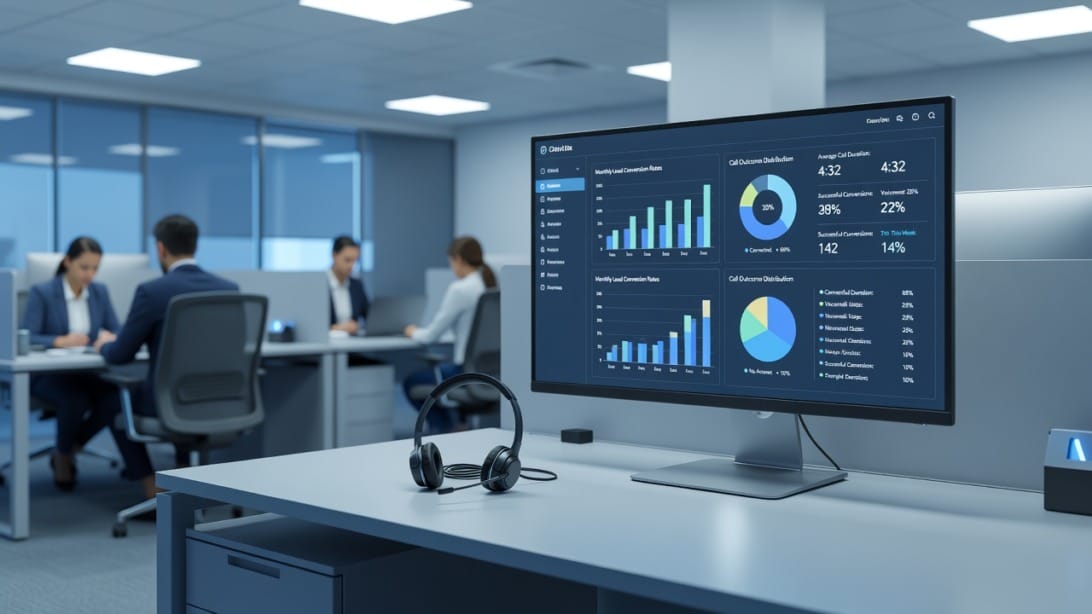
Power Dialer or Predictive Dialer
A power dialer calls one number at a time and moves to the next number when the previous call ends. A predictive dialer uses algorithms to dial multiple numbers based on answer rates and rep availability. Predictive dialers are efficient, but they require careful compliance review because automated dialing rules can apply differently by country and number type.
For most B2B teams, a power dialer is safer and sufficient until call volume becomes large. If you use predictive dialing, separate business landlines from mobile numbers and review TCPA exposure with counsel.
CRM Integration
Every call should log automatically to the CRM. The log should include timestamp, rep, duration, recording link, disposition, notes, next task, and sequence status. If reps must enter this manually, data quality will deteriorate quickly.
A strong CRM integration also prevents duplicate outreach. If one rep marks a contact as do-not-call, every other rep should see the suppression immediately. If an account executive is already working an opportunity, the telemarketing team should not call another stakeholder at the same account without coordination.
Conversation Intelligence
Conversation intelligence tools record, transcribe, and score calls. They identify common objections, competitor mentions, talk-to-listen ratios, and coaching moments. For managers, this turns call review from anecdotal coaching into pattern recognition.
A simple use case: if the tool shows that top reps speak 42% of the time while low performers speak 68% of the time, the team has a coaching opportunity. The issue may not be product knowledge. It may be listening.
Email Sequencing and Inbox Management
Phone calls create follow-up work. If a prospect says “send me the details,” the email should go out quickly and should reference the call. If that follow-up is delayed by hours, momentum is lost.
Mystrika helps here by combining cold email sequencing, warmup, AI writer, personalization, and a unified inbox. For agencies or teams managing multiple client brands, the whitelabel option is useful because it allows the outreach operation to keep its own brand experience while using Mystrika underneath.
Verification and Deliverability Tools
FilterBounce supports list verification through CSV and API workflows, helping teams validate email addresses before sequences launch. DoYouMail supports SMTP and IMAP infrastructure for cold email sending with dedicated private IPs and unlimited email IDs at $39 per month. Together, these tools support the email and data infrastructure that make phone follow-up more effective.
Managing a B2B Telemarketing Team
Telemarketing performance depends heavily on management discipline. A weak manager can turn a good script into bad calls. A strong manager can take average reps and create consistent pipeline.
Hiring Profile
The best B2B telemarketers are not the people who talk the most. They are the people who can listen, adapt, and recover quickly from rejection. Look for candidates who show:
- Clear verbal communication.
- Emotional resilience.
- Curiosity about business problems.
- Fast note-taking ability.
- Comfort with CRM tools.
- Coachability during roleplay.
- Respect for compliance requirements.
Roleplay should be part of the hiring process. Give the candidate a short script and an objection. Watch whether they panic, argue, read, or ask a thoughtful question.
Training Plan
A four-week onboarding plan works well:
| Week | Focus | Output |
|---|---|---|
| 1 | Product, ICP, compliance, CRM | Certification quiz and script read-through |
| 2 | Shadowing and call analysis | 50 observed calls and written notes |
| 3 | Live calls with coaching | 100 live calls with manager review |
| 4 | Independent calling | Daily dashboard and weekly scorecard |
Do not rush new reps onto the phone without compliance training. One confident but untrained caller can create legal risk, brand damage, and poor data.
Call Review System
Review at least five calls per rep per week. Score each call on:
1. Opening relevance.
2. Discovery question quality.
3. Listening and interruption control.
4. Objection handling.
5. Compliance language.
6. CRM note quality.
7. Next-step clarity.
Compliance should be pass/fail. A rep can have a great conversation and still fail the call if they ignore an opt-out request or misrepresent the company.
Remote Team Controls
Remote telemarketing teams need more process, not less. Managers should use recorded calls, daily scorecards, shared call blocks, and async coaching clips. Reps should have clear working hours by time zone, quiet calling environments, secure systems, and documented data-handling rules.
Remote work also creates call-recording consent complexity. A rep calling from one state or country to a prospect in another may trigger different recording rules. Build recording consent language into your workflow and check local requirements.
Top B2B Telemarketing Metrics to Track
Metrics should measure quality, not just activity. A team can make many dials and create little pipeline if the data is bad, the script is weak, or the follow-up process is broken.
Core KPI Table
| Metric | Formula | Healthy Benchmark | What It Tells You |
|---|---|---|---|
| Connect rate | Connected calls / total dials | 8-15% | Data quality and timing |
| Decision-maker connect rate | Decision-maker conversations / total dials | 3-8% | List quality and routing |
| Meeting rate | Qualified meetings / connected calls | 8-15% | Script and offer relevance |
| Opportunity rate | Opportunities / meetings | 40-70% | Qualification quality |
| No-show rate | Missed meetings / booked meetings | Under 20% | Meeting quality and confirmation process |
| Do-not-call rate | Opt-outs / connected calls | Under 5% | Message-market fit and targeting |
| Average talk time | Total talk time / connected calls | 2-6 minutes | Call depth |
| Follow-up speed | Time from call to email | Under 10 minutes | Operational discipline |
Benchmarks vary by industry, list quality, price point, and brand recognition. Treat these numbers as ranges, not universal laws. The most important metric is trend direction over time.
Daily Dashboard
A practical daily dashboard should show:
- Total dials by rep.
- Connects by rep.
- Decision-maker conversations.
- Meetings booked.
- Meetings held.
- Opportunities created.
- Pipeline value created.
- Opt-outs.
- Wrong numbers.
- Top objections.
- Follow-up tasks overdue.
Managers should review opt-outs and wrong numbers every day. Rising opt-outs may signal poor targeting or aggressive scripting. Rising wrong numbers signal data decay.
Attribution Model
B2B telemarketing often assists deals rather than sourcing them alone. A prospect might receive an email, take a call, attend a webinar, and then book through the website. If attribution gives all credit to the last touch, telemarketing may look weaker than it is.
Use multi-touch attribution where possible. At minimum, tag opportunities influenced by telemarketing so leadership can see assisted pipeline as well as sourced pipeline.
Case Study: Turning a Cold Email List Into Phone Pipeline
Consider a 40-person B2B SaaS company selling a $9,000 annual contract to operations leaders. The team had a list of 6,000 target accounts and sent cold email campaigns, but reply rates dropped below 1.5%. The sales team believed the market was saturated.
Instead of buying more data, they redesigned the workflow. First, they cleaned the list with verification. Second, they segmented accounts by industry and company size. Third, they built a 14-day sequence that combined email and phone. Fourth, they used call dispositions to trigger personalized follow-up emails.
The first month looked modest: 3,200 dials, 310 conversations, 37 meetings booked, and 21 qualified opportunities. But the insight came from call recordings. Prospects were not rejecting the problem. They were confused by the email’s value proposition. The team rewrote the opening email around the language prospects used on calls. In month two, email replies increased to 3.4%, call connect rates improved because prospects recognized the message, and meetings rose to 58.
The lesson is simple. Telemarketing did not just create meetings. It improved the entire outbound message. A phone channel can be a feedback system for email, landing pages, ads, and sales decks.
Common Mistakes to Avoid in B2B Telemarketing
Mistake 1: Calling Without Context
Calling without context is the fastest way to sound like spam. Before dialing, the rep should know the prospect’s role, company, industry, and likely business issue. Even 60 seconds of research can improve the opening line. Use recent hiring, funding, product launches, regulatory deadlines, technology stack changes, or content engagement to create relevance.
Mistake 2: Using One Script for Every Segment
A CFO and a Sales Director do not care about the same outcome. A healthcare company and a cybersecurity startup do not speak the same operational language. One universal script guarantees weak relevance. Create script variants by persona and industry.
Mistake 3: Reading Instead of Conversing
A script should guide the call, not imprison it. Prospects can hear when a rep is reading. Train reps to memorize the structure, not the exact words. The best calls feel natural while still hitting the required points.
Mistake 4: Mishandling Gatekeepers
Gatekeepers are not obstacles. They are information sources and relationship points. Treat them respectfully. Ask for help. Do not deceive them. A simple line often works: “I am hoping you can point me in the right direction. Who handles [problem area] at your company?”
Mistake 5: Giving Up Too Early
Most B2B decision-makers do not answer the first call. A realistic sequence needs 6-8 attempts across channels. Persistence should be structured and respectful, not random and aggressive.
Mistake 6: Ignoring Data Hygiene
Bad data destroys productivity. Wrong numbers, stale titles, invalid emails, and duplicate records waste rep time and pollute reporting. Use verification before campaigns, not after campaigns fail.
Mistake 7: Measuring Only Dials
Dials are activity, not value. If compensation and dashboards overemphasize dials, reps will optimize for volume instead of quality. Measure connects, qualified conversations, meetings, opportunities, and pipeline.
Mistake 8: Forgetting Suppression Across Channels
If a prospect opts out by phone, they should not continue receiving automated emails. Suppression must sync across dialer, CRM, and email sequencer. This is both a compliance issue and a trust issue.
Mistake 9: Skipping Post-Call Follow-Up
A good call can still fail if follow-up is slow or generic. Send the promised email within 10 minutes. Reference the specific pain, next step, and agreed timeline. Mystrika’s AI writer and unified inbox are useful here because they help reps produce relevant follow-ups quickly while keeping replies in one place.
Mistake 10: Over-Automating the Human Moment
Automation should remove busywork, not remove judgment. Predictive dialing, AI writing, and CRM triggers are powerful, but the call itself still requires human listening. The more expensive or complex your offer, the more important judgment becomes.
Key Takeaways
- B2B telemarketing is a structured business conversation system for generating qualified meetings, opportunities, customer research, and pipeline.
- B2B telemarketing differs from B2C because the buyer is professional, the deal is higher-value, the sales cycle is longer, and compliance requirements are more complex.
- The best telemarketing programs combine calls with email and LinkedIn touches inside a 10-14 day sequence instead of relying on one-off cold calls.
- Compliance must be built before dialing. TCPA, GDPR, UK GDPR, PECR, CASL, do-not-call rules, mobile number rules, opt-outs, and call recording rules all matter.
- Data quality is a major ROI lever. Verified records, clean suppression lists, and accurate dispositions create more conversations without hiring more reps.
- Scripts should work as decision trees. Use a short opener, thoughtful qualification, objection responses, and a specific next-step close.
- Mystrika supports the email layer of a telemarketing workflow with warmup, cold email sequencing, AI writing, personalization, a unified inbox, whitelabel options, and pricing from $15 per month.
- DoYouMail is useful when teams need cold email infrastructure with SMTP, IMAP, unlimited email IDs, dedicated private IPs, and bring-your-own-domain setup at $39 per month.
- FilterBounce fits the data-quality layer with email verification through CSV and API workflows, helping teams clean lists before campaigns launch.
Frequently Asked Questions
Is B2B telemarketing still effective?
Yes, B2B telemarketing is still effective when it is targeted, compliant, and connected to a broader outreach sequence. It works because a live conversation can qualify intent, handle objections, and build trust faster than email alone. It fails when teams dial stale lists with generic scripts and no follow-up process.
What is the difference between B2B telemarketing and cold calling?
Cold calling is one tactic inside B2B telemarketing. B2B telemarketing also includes warm calls, appointment setting, lead qualification, event follow-up, customer research, win-back campaigns, and post-email follow-up calls. A mature program uses different call types for different stages of the buyer journey.
How many calls should a B2B telemarketer make per day?
A healthy range is usually 50-80 quality dials per day for a full-time B2B telemarketer. The right number depends on call length, research requirements, deal complexity, and CRM logging burden. If reps are making 120 calls per day but booking poor-fit meetings, activity is being optimized at the expense of pipeline quality.
What is a good B2B telemarketing connect rate?
A reasonable connect rate is 8-15% for clean B2B lists, with higher rates possible for warm inbound or event lists. If connect rates fall below 5%, check data quality, call timing, caller ID reputation, geographic targeting, and whether direct dials are stale. Do not assume the script is the problem until you verify the data.
Do I need consent to call B2B prospects?
It depends on the country, number type, technology used, and data source. United States rules differ for business lines and mobile numbers, while GDPR and UK GDPR treat professional contact data as personal data in many cases. Use legal review for high-volume campaigns, document your lawful basis, honor opt-outs, and maintain suppression lists.
What should a B2B telemarketing script include?
A script should include a short opener, reason for calling, qualification questions, proof points, objection responses, compliance language, and a next-step close. It should not be a long monologue. The best scripts help reps listen and adapt while keeping the call focused.
How does cold email support B2B telemarketing?
Cold email creates context before the call and gives prospects a written record after the call. A prospect who has seen a relevant email is more likely to recognize the caller and understand the reason for the outreach. Tools like Mystrika help teams manage this sequence with warmup, personalization, AI writing, and a unified inbox.
What tools do I need for B2B telemarketing?
At minimum, you need a CRM, dialer, clean contact data, call recording or conversation intelligence, an email sequencing platform, and a verification workflow. Mystrika covers the cold email sequencing and inbox layer. DoYouMail can handle SMTP and IMAP sending infrastructure. FilterBounce can verify email lists before outreach begins.
Can B2B telemarketing be outsourced?
Yes, B2B telemarketing can be outsourced, especially for appointment setting, event follow-up, and market research. Outsourcing works best when the provider receives detailed ICP guidance, scripts, compliance rules, CRM access, call review requirements, and clear qualification criteria. Do not outsource without reviewing call recordings and suppression processes.
What is the best time to make B2B telemarketing calls?
The best time is usually Tuesday through Thursday during local business hours, especially mid-morning and mid-afternoon. Early mornings and late afternoons can work for senior executives, but teams must respect local time restrictions and business norms. The best time for your market should be measured from your own connect-rate data.
How do I handle gatekeepers in B2B telemarketing?
Treat gatekeepers as helpful professionals, not barriers. Be polite, use their name, explain the business reason for the call, and ask for guidance. A respectful line like “I am hoping you can point me in the right direction” is more effective than trying to trick your way through.
What should I do after a successful telemarketing call?
Send a personalized follow-up email within 10 minutes, log the call disposition in the CRM, create the next task, and confirm any meeting details. The follow-up should reference the specific problem discussed, the agreed next step, and any promised resources. Fast, specific follow-up is often the difference between a good conversation and a real opportunity.