
Content marketing for lead generation is no longer about publishing blog posts and hoping people fill out a form. By 2026, the gap between brands that generate predictable, high-quality leads from content and those that do not has become a chasm. The difference comes down to strategy, distribution, and precision targeting — not volume.
This playbook covers the exact frameworks, content types, distribution channels, and measurement systems that turn content into a reliable lead generation engine. It includes specific decision matrices, step-by-step processes, conversion benchmarks, and the operational setup you need to make it all work.
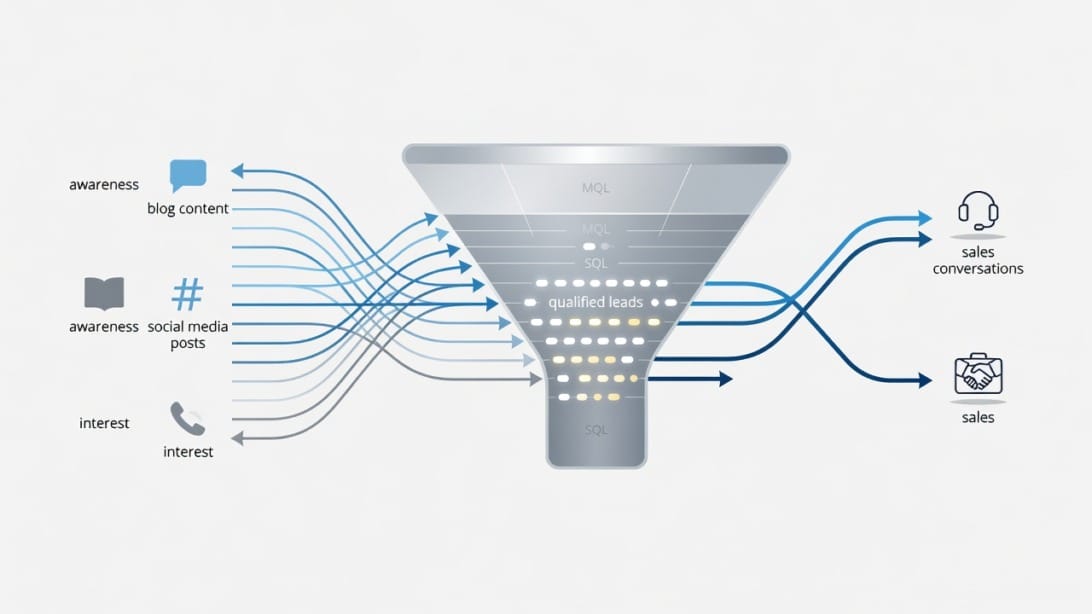
What Is Content Marketing for Lead Generation?
Content marketing for lead generation is the practice of creating and distributing valuable, relevant content designed specifically to capture contact information or initiate a direct conversation with potential buyers. Unlike brand awareness content, lead generation content includes a clear conversion mechanism — a form, a CTA, an email opt-in, or a direct outreach trigger — that moves a reader from anonymous visitor to identifiable prospect.
The key distinction in 2026 is context. Converting a reader into a lead requires understanding where they are in their decision process and serving content that matches that intent. A buyer who searches for “cold email deliverability best practices” has a different content need than one who searches for “cold email software pricing.” Serving the right content at the right intent stage is the core skill.
Effective content marketing for lead generation operates on three inputs: the offer (what you give), the mechanism (how you capture), and the distribution (how you get it in front of the right people). All three must function together. A valuable offer on a poorly distributed page generates zero leads. A well-distributed offer with a weak conversion mechanism wastes traffic.
How B2B Lead Generation Has Changed Since 2020
The landscape for B2B content marketing has shifted dramatically since 2020. Three structural changes have redefined what works.
The Death of Spray-and-Pray Content Marketing
Publishing 20 blog posts per month and scattering them across social media no longer produces reliable lead flow. Google’s search algorithm now prioritizes topical authority over keyword density. AI-generated content has flooded the internet, making it harder for generic blog posts to rank or generate trust. B2B buyers have become resistant to overly promotional content that feels like a sales pitch wrapped in a guide. In short, volume-based content strategies produce diminishing returns.
The Rise of Multi-Channel Content Distribution
Organic search remains the largest single source of B2B content traffic, but it is no longer sufficient. In 2026, effective content distribution spans search, email, LinkedIn, YouTube, podcasting, and direct outreach. The brands that generate the most leads from content are those that repurpose a single high-quality piece across multiple channels, tailoring the format to each platform.
Content used in cold email outreach has emerged as one of the highest-converting distribution channels. Sending a relevant article or case study as part of a cold email sequence dramatically increases reply rates compared to a standard sales pitch. This is a gap that most content marketers overlook.
The same principle applies to ebook marketing for B2B lead generation. A well-designed ebook distributed through a combination of organic landing pages and targeted cold outreach consistently generates higher conversion rates than blog posts alone, because the format signals deeper research and more actionable insights.
The AI Content Trust Problem
By 2026, more than 60 percent of all web content is AI-generated or AI-assisted. This has created a trust deficit. Readers are increasingly skeptical of generic content that lacks specific data, named sources, verifiable case studies, and real operational detail. Content marketing for lead generation now requires a higher bar for specificity. Generic advice no longer converts. Detailed, experience-backed, data-rich content does.
Gated vs. Ungated Content: The 2026 Decision Matrix
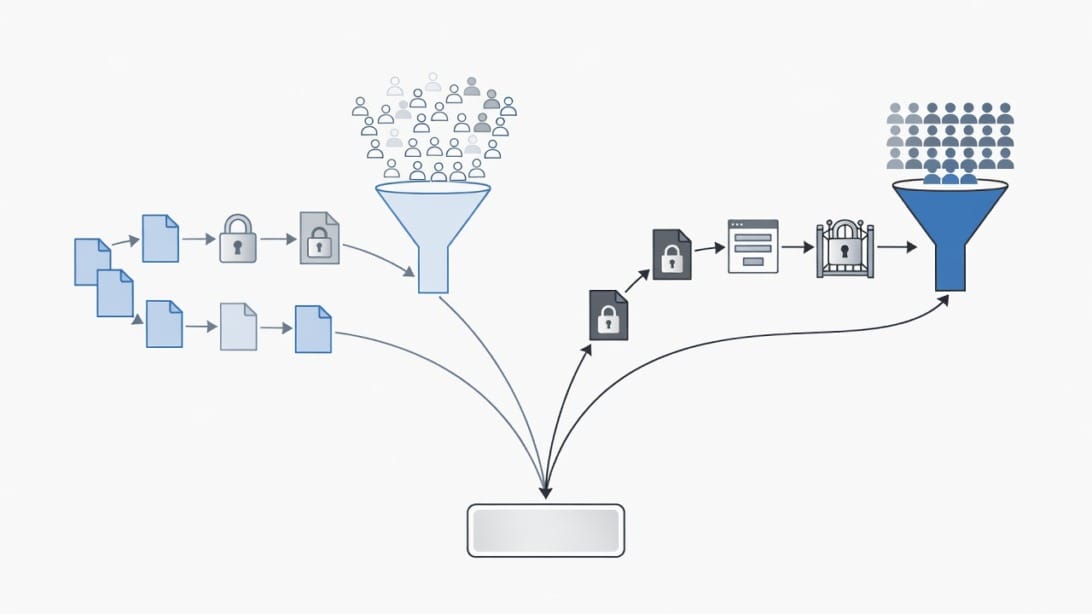
The gate vs. ungated debate has evolved. The answer is no longer “always gate everything” or “never gate anything.” It depends on content type, audience intent, and where the buyer is in the funnel.
When to Gate Content
Gate content when the asset provides enough value that a buyer willingly trades their contact information to access it. This typically applies to detailed comparison reports, proprietary data studies, interactive assessment tools, and comprehensive templates or frameworks. Gating works best for bottom-of-funnel content where the reader already has a clear problem and is evaluating solutions.
Gating also works when you have a strong outbound follow-up process. A downloaded white paper followed by a timely, relevant cold email sequence can convert a content consumer into a sales conversation within days. This is where content marketing and cold outreach intersect most effectively.
When to Keep Content Ungated
Keep content ungated when it targets top-of-funnel informational queries. Blog posts, how-to guides, explainer videos, and educational content should remain freely accessible. Ungated content builds trust, generates search traffic, and reinforces topical authority. The goal of ungated content is not immediate conversion but establishing the credibility that makes future gated offers more effective.
The Hybrid Approach
The most effective content programs use a hybrid model. A high-value ungated blog post includes inline CTAs for a related gated asset — “Download the full B2B cold email template pack” within a post about email personalization. This captures leads without blocking the reader’s primary intent. The hybrid approach respects the reader’s context while creating natural conversion points.
| Content Type | Best Approach | Reason |
|---|---|---|
| How-to blog posts | Ungated | Builds trust, generates SEO traffic |
| Industry data reports | Gated | High perceived value, reader willing to trade info |
| Case studies | Ungated with soft CTA | Builds credibility, CTA can offer related template |
| Comparison guides | Gated | Bottom-funnel intent, captures evaluation-stage leads |
| Checklists and templates | Gated | Immediate utility, high conversion rates |
| Video tutorials | Ungated | Broad audience, low-intent formats |
12 High-Converting Content Types for Lead Generation
Not all content drives leads equally. Based on conversion benchmarks across B2B industries, these twelve content types produce the highest lead generation results when executed well.
Detailed How-To Guides and Tutorials
Comprehensive guides that teach a specific skill or process generate strong organic traffic and establish topical authority. The key to making them generate leads is strategic placement. Include a download offer for a related template or checklist within the guide itself.
Original Research and Data Reports
Publishing proprietary survey data or industry benchmarks is one of the highest-converting content formats for lead generation. Data reports are highly linkable, attract media coverage, and justify gating because the information is unique. Even a survey of 100 practitioners in your space can produce a data point that gets cited for years.
In-Depth Case Studies with Real Metrics
Case studies convert because they provide social proof and specific results. The most effective case studies include concrete numbers: percentage improvements, time saved, revenue generated. A case study that shows a company generating 40 percent more leads from their content within 90 days is worth more than ten generic blog posts.
Comparison Guides
Comparison content captures buyers who are actively evaluating solutions. A thorough, fair comparison that acknowledges both your solution’s strengths and honest limitations builds trust. Buyers in comparison mode are high-intent and more likely to convert.
Interactive Assessments and Calculators
Tools that provide personalized results — a deliverability score calculator, a content audit analyzer, or an email warmup ROI estimator — capture leads because the output is immediately valuable. Interactive content typically converts at 40 to 60 percent, significantly higher than static content.
Templates and Playbooks
Pre-built templates that save the reader time have high conversion rates. An email sequence template, a content calendar template, or a lead scoring framework gives the reader immediate utility in exchange for their contact information. Templates compress the time between reading and taking action.
Webinars and Live Training
Live content creates urgency and real-time engagement. Webinars that teach a specific skill with actionable takeaways generate qualified leads because attendees have self-selected as interested in the topic. The key is avoiding overly sales-heavy webinar content and focusing on education.
Email-First Content Assets
Content designed explicitly for cold email outreach represents a high-conversion gap in most content strategies. A case study summary designed to fit within a three-sentence cold email, or a one-page PDF that answers a specific prospect question, works as a conversation starter. Pairing content with a cold email sequence through platforms like Mystrika allows you to distribute content directly to targeted leads and track engagement at the individual level.
Video Walkthroughs and Demos
Short video content that demonstrates a specific process or solves a common problem often outperforms text for lead generation. Video builds trust through face-to-face communication. The CTA within a video — offering a free resource or a consultation — captures leads at peak interest.
Checklists and Cheat Sheets
Actionable checklists convert because they reduce cognitive load. The reader recognizes that a checklist saves them time and prevents mistakes. A “Content Lead Generation Audit Checklist” that helps a marketer evaluate their current efforts has immediate perceived value.
Curated Resource Lists
A well-organized list of tools, books, courses, or industry resources performs well for lead generation because it positions you as a curator of quality information. The trust established through curation makes readers more receptive to your offers.
Podcast Episodes
Podcasting generates leads through relationship building and authority establishment. Featuring industry experts builds your network and creates content that can be repurposed into social posts, email sequences, and show notes with conversion CTAs.
How to Build a Content-Driven Lead Generation Engine
Building a system that consistently generates leads from content requires more than writing good articles. It requires a repeatable process from research through distribution.
Define Your Conversion Paths
Every piece of content should have a defined conversion path before you start writing. The conversion path is not always a form fill. It could be a CTA to book a call, subscribe to a newsletter, download a related asset, or receive a follow-up cold email with additional resources. Define the specific action you want the reader to take and design the content to lead naturally to that action.
Map Content to the Buyer Journey
Content that generates leads matches the stage of the buyer journey. Top-of-funnel content addresses broad problems and introduces your solution as one possibility. Middle-of-funnel content compares solutions and provides evaluation criteria. Bottom-of-funnel content addresses specific objections and demonstrates proof.
Use keyword research to identify which intent bucket each topic falls into. Informational keywords like “how to improve email deliverability” map to top-of-funnel content. Commercial keywords like “best cold email platform for agencies” map to middle or bottom-of-funnel content.
Build Content Clusters Around Revenue Topics
Organize your content into topic clusters centered on themes that directly relate to your product or service. The cluster model — a pillar page covering a broad topic with multiple supporting articles linking back to it — signals topical authority to search engines and creates multiple entry points for lead generation.
For a cold email platform, a pillar page on “cold email deliverability” would be supported by articles on SPF/DKIM/DMARC setup, IP warmup strategies, email list cleaning, and inbox placement optimization. Each supporting article includes a relevant CTA that captures leads at different intent levels.
Implement Content Upgrades at Scale
A content upgrade is a bonus asset relevant to the specific page a reader is viewing. Unlike a generic newsletter signup CTA, a content upgrade offers something directly related to what the reader just consumed. If someone reads an article about B2B email personalization, the content upgrade is a 5 personalized email template pack.
Content upgrades convert at 2 to 5 times the rate of generic CTAs because the relevance is immediate.
Build a Lead Scoring System
Not all content-generated leads are equal. A visitor who downloads a pricing comparison guide is more valuable than one who reads a generic “what is cold email” post. Build a lead scoring model that assigns points based on content consumed, time on site, and engagement behavior. Track whether the lead came from organic search, social, email distribution, or cold outreach, and score accordingly.
Use Cold Email as a Content Distribution Channel
One of the highest-leverage strategies in 2026 is using cold email to distribute content directly to targeted prospects. Rather than waiting for leads to find your content, you send it to them. A personalized cold email that includes a relevant article, case study, or template generates reply rates of 5 to 15 percent, far above the industry average for standard sales cold emails.
Platforms like Mystrika make this approach scalable. Mystrika combines an AI-powered cold email sequencer with a unified inbox, warmup automation, and whitepaper-grade deliverability infrastructure. You can build a sequence that sends a relevant content piece to a prospect, tracks whether they open it and click the link, and triggers a follow-up based on engagement. Mystrika’s AI writer helps craft personalized email copy that references the content naturally, and the platform starts at just $15 per month with whitelabel options for agencies.
The warmup feature is particularly important for content distribution via cold email. Sending content to large prospect lists requires high domain reputation. Mystrika’s automatic warmup gradually increases sending volume and engagement signals, keeping your deliverability healthy throughout the campaign.
Combine Content with Email Verification
Sending content via email only works if the email addresses are valid. Invalid addresses waste your content and harm deliverability. FilterBounce provides high-accuracy email verification through CSV upload and API integration. Cleaning your prospect list before sending ensures your content actually reaches inboxes and your engagement metrics reflect real behavior.
Content Formats and Their Conversion Benchmarks
Understanding which content formats produce the best lead generation results helps prioritize your efforts. The following benchmarks reflect industry averages across B2B organizations.
| Content Format | Average Conversion Rate | Typical Lead Quality | Best For |
|---|---|---|---|
| Interactive tools and calculators | 40-60% | Medium | Middle-of-funnel engagement |
| Gated research reports | 15-30% | High | Bottom-of-funnel capture |
| Webinars (live) | 20-40% | High | Mid-to-bottom conversion |
| Case studies | 5-15% | Very high | Sales enablement and closing |
| Templates and checklists | 20-40% | Medium | Top-to-middle funnel |
| Blog posts with content upgrades | 2-5% | Low-to-medium | Top-of-funnel capture |
| Videos with CTAs | 3-8% | Medium | Top-to-middle funnel |
| Cold email content distribution | 5-15% | High | Direct outreach conversion |
| Comparison guides | 10-25% | Very high | Evaluation-stage capture |
| Newsletters | 0.5-2% | Medium | Ongoing nurturing |
The data shows a clear pattern: interactive and high-specificity formats convert at higher rates than passive, general content. The formats that require the most effort to produce — calculators, research reports, live webinars — also generate the highest-quality leads.
Advanced Distribution Strategies for B2B Content
Distribution determines whether content generates leads or sits unread. Most content marketing efforts fail because distribution is an afterthought.
Owned Distribution Channels
Your email list is your most valuable distribution asset. Segment your list by content topic and send relevant content to the subscribers who are most likely to engage. A segment of users who downloaded a deliverability guide should receive follow-up content about SPF/DKIM setup, not general product announcements.
LinkedIn is the highest-performing organic distribution channel for B2B content. Share article summaries with a personal insight, not the link alone. Content that generates discussion in the comments typically sees 3 to 10 times the click-through rate of content shared as a link post.
Content Repurposing Across Formats
A single research report can become ten distribution assets: a blog post, a LinkedIn carousel, a tweet thread, a podcast episode, a YouTube video, an email series, a slide deck, an infographic, a cold email sequence, and a webinar. Each format reaches a different audience segment. The cost of repurposing is a fraction of the cost of creating original content for each channel.
Cold Email Distribution
Cold email is the most underutilized content distribution channel in B2B. Most content marketers publish on their blog and social channels and stop there. Sending content directly to targeted prospects via cold email bridges the gap between content marketing and sales development.
The key to making this work is personalization and relevance. Do not blast a link to your latest blog post to 500 generic addresses. Identify 20 to 50 prospects who would genuinely benefit from the content, write a personalized email referencing their specific situation, and include a brief context-rich description of the content and why it matters to them.
Paid Distribution with Retargeting
Paid content distribution through LinkedIn Sponsored Content, native advertising platforms, and search retargeting can scale lead generation significantly. The most efficient approach is to promote your highest-performing organic content and retarget visitors with a gated offer. This two-step approach filters for intent before conversion.
Set a budget floor of at least $500 per month for paid content distribution to generate statistically meaningful data. Below this threshold, the sample size is too small to identify which content, audiences, and creative combinations drive conversions. Use LinkedIn’s Matched Audiences to retarget blog visitors with a related gated offer within 7 days of their initial visit, when intent is highest.
Email Infrastructure and Deliverability for Content Distribution
If you are using email as a content distribution channel, deliverability is non-negotiable. Sending content through a shared IP with poor reputation guarantees your emails land in spam folders, making your content invisible.
Dedicated Sending Infrastructure
DoYouMail provides dedicated private IP addresses and full SMTP/IMAP access for content distribution at scale. For $39 per month, you get unlimited email IDs on your own domain with a dedicated private IP. This means your sending reputation is entirely under your control. It is not affected by other users on shared infrastructure.
Having dedicated infrastructure is especially important when sending content to cold prospects. A warm domain with clean reputation delivers content at rates of 97 to 99 percent. A shared IP with mixed reputation can drop inbox placement to 50 percent or lower.
SMTP and IMAP Configuration
DoYouMail supports standard SMTP and IMAP protocols, making it compatible with any email sending platform. You can configure it to work with Mystrika for automated content sequences, use it with your CRM for triggered content sends, or integrate it through API for custom workflows. The bring-your-own-domain model means your content always comes from your brand’s domain, not a generic subdomain.
List Hygiene and Verification
Clean your prospect list before every content distribution campaign. FilterBounce verifies email addresses in real time through API or batch processing via CSV upload. Removing invalid, risky, and catch-all addresses before sending improves deliverability, protects domain reputation, and ensures your engagement data reflects real human behavior.
The combination of Mystrika for sequencing and automation, DoYouMail for infrastructure, and FilterBounce for verification creates an end-to-end content distribution pipeline that delivers content to real inboxes and tracks engagement accurately.
Measuring Content Marketing Lead Generation ROI
Without measurement, you cannot optimize. An effective content marketing measurement system tracks four levels of performance.
Content Consumption Metrics
Page views, time on page, scroll depth, and social shares indicate whether your content is resonating. These metrics are not lead generation metrics themselves, but they identify which content has the potential to generate leads if distribution improves.
Dig deeper by segmenting consumption data by traffic source. Content that performs well in organic search but poorly in email may need a different format for email distribution. Content that drives high engagement on LinkedIn but low blog traffic may work better as a LinkedIn-native article. Cross-referencing consumption by channel reveals which formats work where.
Lead Scoring Based on Content Consumption
Assign point values to specific content interactions to quantify lead readiness. A visitor who reads three blog posts and downloads a case study scores higher than one who reads one post and leaves. Configure your CRM to trigger notifications when a lead crosses a threshold score, indicating they are ready for a sales conversation. This bridges the gap between content marketing and sales follow-up.
Conversion Metrics
Conversion rate, cost per lead, and lead quality score are the primary metrics for content lead generation. Track conversions at every stage: email signups, content downloads, webinar registrations, and demo requests. Attribute each conversion to the specific content piece and distribution channel that drove it.
Define lead quality score on a simple 1-to-5 scale based on the content consumed. A visitor who downloads a pricing comparison scores a 5. A visitor who reads a top-of-funnel guide scores a 2. This scoring feeds into your CRM and prioritizes follow-up activity.
Pipeline and Revenue Metrics
Lead-to-opportunity conversion rate, opportunity-to-customer rate, and customer acquisition cost tell you whether content-generated leads are turning into revenue. Content that generates high lead volume but low pipeline conversion may be attracting the wrong audience.
Attribution Models
Single-touch attribution (first touch or last touch) understates content marketing’s impact. Multi-touch attribution models that assign partial credit to content interactions throughout the buyer journey provide a more accurate picture. The simplest approach is a linear model that distributes credit equally across all touches in the conversion path.
Use UTM parameters on every content link, track content engagement in your CRM, and build dashboards that show which content assets appear at each stage of your best-performing deals.
Set up a minimum reporting cadence of weekly for consumption metrics, monthly for conversion metrics, and quarterly for pipeline and revenue attribution. This cadence balances the need for timely optimization against the long-cycle reality of B2B content marketing, where a lead generated today may not convert to revenue for 60 to 90 days.
Tools and Technology Stack for Content Lead Generation
Building the right technology stack amplifies your content marketing efforts. The essential components include content creation, distribution, email infrastructure, verification, and measurement.
| Function | Recommended Tools | Purpose |
|---|---|---|
| Content creation and AI writing | Mystrika AI writer | Generates personalized email copy and content drafts |
| Cold email sequencing | Mystrika | Automated multi-step content distribution sequences |
| Email warmup | Mystrika | Protects sender reputation for content outreach |
| Unified inbox | Mystrika | Tracks replies from content recipients in one place |
| Email infrastructure | DoYouMail | Dedicated private IP, SMTP/IMAP, unlimited email IDs |
| Email verification | FilterBounce | CSV and API-based list cleaning |
| Analytics | Google Analytics 4, CRM dashboards | Performance and attribution tracking |
Content Marketing for Lead Generation Checklist
Use this checklist before launching any content lead generation campaign.
- [ ] Defined conversion path before writing the content
- [ ] Content matched to specific buyer journey stage
- [ ] Keyword research completed for the topic
- [ ] Content includes at least one contextual internal link
- [ ] Related content upgrade created for gating
- [ ] Distribution channels identified (organic, email, social, paid)
- [ ] Cold email sequence built and tested
- [ ] Email list verified with FilterBounce
- [ ] Dedicated sending infrastructure configured via DoYouMail
- [ ] Warmup cycle complete before sending
- [ ] UTM parameters attached to all links
- [ ] Lead scoring rules defined for this content piece
- [ ] Analytics dashboards set up to track conversions
- [ ] A/B test variations ready for headlines and CTAs
- [ ] Reply monitoring configured in unified inbox
Common Content Lead Generation Mistakes and How to Fix Them
Writing for Everyone
Content that targets everyone targets no one. Generic advice fails to generate leads because the reader does not feel the content is specifically about their situation. Fix this by defining a specific audience segment for each piece of content and writing directly to that segment’s pain points.
Weak or Confusing CTAs
A CTA that says “Click here” or “Learn more” does not create urgency or clarity. Fix this by making every CTA specific about what happens next: “Download the 12-email sequence template,” “Get your cold email deliverability score,” or “Book a 15-minute audit call.”
No Follow-Up Process
Content that generates a lead but receives no follow-up within 24 hours wastes the conversion. A lead that downloads a case study is signaling evaluation intent. A timely, personalized follow-up email can convert that signal into a sales conversation.
Neglecting Email Infrastructure
Sending content to a list of unverified addresses through a shared IP with poor reputation guarantees low engagement and high bounce rates. This fix involves two steps: verify every address with FilterBounce, and send through dedicated infrastructure like DoYouMail.
The compounding effect of poor infrastructure is often underestimated. A single campaign sent through a low-reputation IP can reduce subsequent campaign deliverability by 20 to 30 percent, even if you switch to a different list. Once a mailbox provider marks your domain as low quality, recovering inbox placement takes weeks of gradual warmup.
Ignoring Content Repurposing
Creating a single blog post and publishing it once ignores the distribution leverage available. The fix is systematic repurposing: every piece of content becomes an email, a social post, a video script, and a cold outreach asset.
The Future of Content Marketing for Lead Generation
Several trends will shape content marketing for lead generation over the next 18 months.
AI-Powered Personalization at Scale
AI enables personalization that was impossible five years ago. Mystrika’s AI writer already crafts email copy that adapts to prospect behavior and preferences. The next evolution is content that dynamically adjusts based on who is reading it — different examples, different case studies, and different CTAs depending on the reader’s industry, role, and stage.
Voice and Conversational Content
Voice search and AI assistants are changing how people discover content. Content optimized for voice queries and structured for direct answers will capture leads from this growing channel. Structured data, FAQ schema, and concise answer blocks that AI assistants can extract and cite are becoming essential.
First-Party Data as the Primary Conversion Asset
With third-party cookies deprecated and tracking restrictions increasing, first-party data collected through content interactions has become the most valuable asset for lead generation. Content that collects preference data, intent signals, and behavioral information creates proprietary audience segments that cannot be replicated by competitors.
Integration of Content and Outbound
The line between content marketing and outbound sales is blurring. Cold email sequences that distribute content as the primary value proposition represent the leading edge of this integration. Platforms like Mystrika that combine content sequencing, deliverability, and engagement tracking enable this unified approach.
Key Takeaways
- Content marketing for lead generation in 2026 requires a structured system that spans creation, distribution, and measurement. Generic blog volume no longer works.
- The gate versus ungated decision depends on content type, audience intent, and pipeline stage. Use a hybrid approach that matches the conversion mechanism to the reader’s context.
- Interactive tools, original research, and detailed case studies generate the highest lead conversion rates across B2B content formats.
- Cold email is the most underutilized content distribution channel. Sending relevant content directly to targeted prospects generates reply rates of 5 to 15 percent.
- Email infrastructure determines whether content distribution succeeds or fails. Verified lists, dedicated IPs, and proper warmup are prerequisites for content-based outreach.
- The combination of Mystrika for sequencing and automation, DoYouMail for dedicated sending infrastructure, and FilterBounce for email verification creates a complete content distribution pipeline.
- Measurement must extend beyond page views to pipeline and revenue attribution. Multi-touch models provide an accurate picture of content marketing ROI.
Frequently Asked Questions
What is content marketing for lead generation?
Content marketing for lead generation is the practice of creating and distributing content specifically designed to capture contact information or initiate a sales conversation with potential buyers. It differs from general content marketing because every piece includes a defined conversion mechanism, such as a form fill, email opt-in, or direct outreach trigger.
How do I choose between gated and ungated content?
Gate content when the asset provides unique, high-value information that a reader willingly trades their contact information for. Ungate content when the primary goal is building trust, generating search traffic, or establishing authority. Use a hybrid approach where ungated content includes inline CTAs for related gated offers.
What type of content generates the most leads in B2B?
Interactive tools and calculators generate the highest conversion rates at 40 to 60 percent, followed by templates and webinars at 20 to 40 percent and original research reports at 15 to 30 percent. Case studies and comparison guides produce the highest-quality leads for bottom-of-funnel conversion.
How do I generate leads from a blog post without gating the entire article?
Use content upgrades. Create a bonus asset specifically related to the article topic and offer it through an inline CTA. Content upgrades convert at 2 to 5 times the rate of generic newsletter signups because the offer directly matches the reader’s immediate context.
Can I use cold email to distribute content for lead generation?
Yes. Cold email is one of the highest-converting content distribution channels when done correctly. Send relevant content to targeted prospects with personalized messaging. Use Mystrika to build automated sequences and track engagement, DoYouMail for dedicated sending infrastructure, and FilterBounce to verify addresses before sending.
What metrics should I track for content lead generation?
Track content consumption metrics (page views, time on page), conversion metrics (form fills, download rate, cost per lead), pipeline metrics (lead-to-opportunity rate), and revenue attribution. Multi-touch attribution models that assign credit across the buyer journey provide the most accurate picture.
How do I measure content marketing ROI for lead generation?
Measure ROI by tracking the full path from content consumption to closed revenue. Use UTM parameters on every link, track content engagement in your CRM, and build dashboards that show which content assets appear at each stage of your best-performing deals. Assign monetary value to content-generated leads based on average deal size and conversion rates.
What email infrastructure do I need for content distribution via email?
You need a dedicated private IP for consistent deliverability, SMTP/IMAP access for integration with your sending platform, and unlimited email IDs for scalability. DoYouMail provides all of this at $39 per month with a bring-your-own-domain model that preserves your brand’s sending reputation.
How often should I publish content for lead generation?
Quality matters more than frequency. Publishing one well-researched, data-backed piece per week that is systematically distributed across all channels outperforms publishing five thin pieces per day. Focus on content that addresses specific prospect questions and includes clear conversion paths.
What is the most common mistake in content marketing for lead generation?
The most common mistake is creating content without a defined conversion path or distribution strategy. Many teams publish content and hope it generates leads. The correct approach is to define the specific conversion mechanism and distribution channels before writing a single word.