
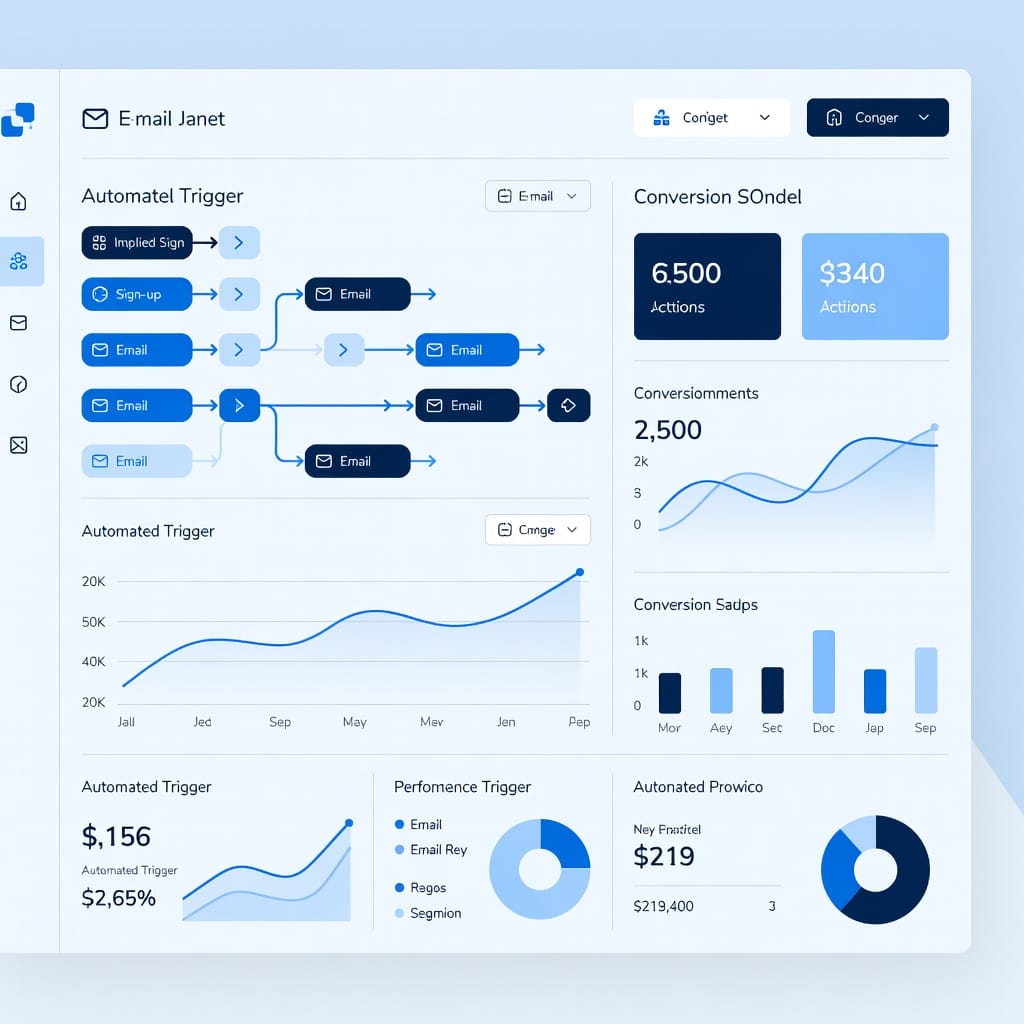
If you are still sending the same newsletter to everyone on your list every Tuesday at 10 AM, you are leaving massive revenue on the table. Trigger marketing is the single highest-ROI shift you can make in your outreach strategy, and in this guide, we will walk through real-world examples across B2B, e-commerce, and SaaS, with exact copy, timing, and automation rules you can steal.
Trigger marketing turns your campaigns from static broadcasts into living, breathing conversations that respond to what your prospects actually do. Every click, every page visit, every abandoned cart, every job change becomes a signal. And when you act on those signals with the right message at the right moment, you win.
What Is Trigger Marketing?
Trigger marketing, also called event-driven marketing or behavioral automation, is the practice of sending a marketing message in direct response to a specific action, event, or condition. Instead of pushing out mass communications on a fixed schedule, trigger marketing waits for a signal and then delivers a hyper-relevant message automatically.
The Psychology Behind Trigger Marketing
The core psychological principle at work here is the mere-exposure effect meets right-time relevance. When a prospect performs an action, they are cognitively primed for content related to that action. If they just downloaded a white paper on cold email deliverability and then receive a follow-up email with a case study about improving inbox placement rates, the message feels serendipitous rather than invasive. This state of cognitive fluency increases the likelihood of a positive response by up to 400 percent compared to cold, unsolicited outreach.
Beyond the mere-exposure effect, trigger marketing leverages the Zeigarnik effect, which is the brain’s tendency to remember incomplete tasks. When a prospect abandons a cart or starts a trial but does not finish, their brain holds that loop open. A well-timed trigger message helps close that loop, which the brain receives as a relief signal rather than an interruption. This is why abandoned cart emails routinely see open rates above 45 percent while standard promotional emails struggle to hit 20 percent.
Why Timing Trumps General Marketing Efforts
Timing is not just a nice-to-have in marketing. It is the single highest-leverage variable you control. Research published by the Direct Marketing Association showed that trigger-based emails achieve 497 percent higher transaction rates and 247 percent higher unique click rates compared to batch-and-blast campaigns. The reason is straightforward. When you send a message at the moment of peak intent, your prospect has not yet cooled off, gotten distracted, or forgotten why they cared. Every second counts. A study from the e-commerce consultancy SeeWhy found that sending an abandoned cart email within one hour of abandonment captures 6.4 percent of otherwise lost revenue. Waiting 24 hours drops that capture rate to under 2 percent.
Traditional Blasts vs. Trigger-Based Campaigns
The difference between a traditional broadcast campaign and a trigger-based campaign is the difference between fishing with a net and fishing with a spear. A broadcast blast casts a wide net across your entire database and hopes something sticks. It segments only by surface-level demographics like job title or industry. The messaging is generic. The timing is arbitrary.
A trigger-based campaign, on the other hand, targets only the people who have demonstrated intent through a specific behavior. It segments dynamically based on real-time actions. The messaging references that specific action. The timing is immediate or near-immediate. This shift from batch-and-blast to behavioral automation is not incremental. It is transformational. Companies that implement trigger marketing at scale see average revenue increases of 33 percent within six months, according to McKinsey research on marketing personalization.
The Tangible Benefits of Marketing Triggers
Exponentially Higher Engagement Rates
Triggered emails dramatically outperform standard marketing emails across every engagement metric. According to Campaign Monitor, triggered emails see open rates of nearly 50 percent, compared to 18 percent for standard bulk sends. Click-through rates average 8.4 percent for triggered campaigns, more than double the 3.8 percent average for business-as-usual broadcasts. This is not because the copy is inherently better in triggered emails. It is because the context and timing align so precisely with the recipient’s current frame of mind that the message feels like a helpful nudge rather than an interruption.
Streamlined Resources and Better ROI
Trigger marketing operates on autopilot once the logic is set up. A single well-built trigger sequence can run for months or years without manual intervention. A cart abandonment flow with three emails typically continues converting customers at a steady rate long after the marketing manager who built it has moved on to other projects. The ROI calculation is brutally simple. If you spend eight hours building a trigger campaign that generates $50,000 in incremental revenue over the next year, your effective hourly return is over $6,000. That is a return that virtually no other marketing channel can match.
Creating Authentic Personalization at Scale
Personalization used to mean adding a first name token to the subject line. Real personalization means shaping the entire message around what the recipient has done. A trigger-based approach allows you to personalize at scale without manually crafting hundreds of individual emails. You define the conditions and the message, and the automation engine handles the rest. The result is a communication stream where every recipient feels like the email was written specifically for them, even though it was assembled from modular components by software.
Reducing Friction in the Customer Journey
Friction is anything that slows or stops a prospect from moving to the next stage of the buying process. Trigger marketing reduces friction by providing exactly the information the prospect needs exactly when they need it. A prospect who just signed up for a free trial does not need a general brand awareness email. They need a quick-start guide and a welcome walkthrough. A prospect who just hit the pricing page but did not convert needs social proof and a limited-time incentive. By aligning the message with the prospect’s current position in the journey, trigger marketing removes the guesswork and keeps the momentum going.

Types of Marketing Triggers by Category
Event-Based Triggers
Event-based triggers fire in response to specific occurrences that are typically recorded in your CRM, marketing automation platform, or third-party data sources. Common event triggers include webinar registration and attendance, product demo requests, form submissions, content downloads like white papers and case studies, and meeting bookings. These are high-intent signals that indicate the prospect is actively evaluating a solution. When you respond to an event trigger, your response window should be measured in minutes, not days. The hotter the lead, the faster you need to strike.
Behavioral and Engagement Triggers
Behavioral triggers fire based on how a prospect interacts with your digital properties. These include visiting a specific pricing page, viewing a product feature page multiple times, spending above a threshold of time on your website, scrolling to a particular depth on a key page, clicking a specific link in a previous email, and engaging with social media posts. Behavioral triggers are particularly powerful because they reveal intent without the prospect having to explicitly raise their hand. Someone who visits your pricing page five times in a week is clearly in evaluation mode, even if they have not filled out a demo form.
Emotional and Psychological Triggers
Emotional triggers target feelings like anxiety, ambition, FOMO, social proof pressure, and the desire for validation. In B2B marketing, the most effective emotional trigger is often the fear of being caught unprepared. An email that asks “What would happen if your CEO had to explain a security breach to the board next quarter?” taps into a deep well of professional anxiety. Emotional triggers are delicate and must be used with genuine empathy. When deployed correctly, they can generate response rates that blow rational-value propositions out of the water.
Milestone and Time-Based Triggers
Milestone triggers fire based on dates and time intervals. Common examples include customer anniversaries and loyalty milestones, contract renewal dates, subscription expiration dates, birthday or founding day messages, and inactivity alerts after a defined period of silence. These triggers are the easiest to implement because the data lives in your existing CRM or billing system. They are also among the highest-performing because they feel distinctly human. A “happy work anniversary” email from a platform you use every day builds an emotional connection that a promotional blast never could.
Account-Based and Segment Triggers
Account-based triggers operate at the company level rather than the individual level. They look at signals from multiple contacts within a single account and fire when the aggregate behavior reaches a threshold. Examples include a founding round or major funding announcement at a target account, a leadership change like a new VP of Sales or CTO being appointed, a hiring push in a specific department, a trigger event from intent data tools showing the account is researching your category, and competitor mentions from news or social monitoring. These are the backbone of modern account-based marketing strategies.
Cold Email Trigger Marketing Examples
The Job Change or Promotion Trigger
When a senior executive moves to a new company, the first 90 days are a window of maximum receptivity. They are assessing their new team, looking for quick wins, and open to new vendors that can help them establish credibility. This trigger is especially potent because the executive has already been sold on the value of category solutions in their previous role. You are not educating them from scratch. You are reminding them of a solution they already trust.
Email Copy Example:
Subject: Congrats on the new role at Acme Corp
Hi [First Name],
Saw that you moved over to Acme Corp as VP of Sales. Congratulations. That is a big move.
At your previous company, your team was using [relevant tool]. Now that you are building out your tech stack at Acme, I wanted to share how we have helped other enterprise sales leaders get their teams ramped 40 percent faster.
Would a 10-minute walkthrough this week make sense, or should I check back in a few weeks?
Best,
[Your Name]
The key to this trigger is speed. If you reach out within seven days of the announced job change, your response rate will be roughly three times higher than if you wait 30 days. Data from Cognism shows that job-change triggered outreach achieves a 39 percent higher response rate than standard cold email.
The New Funding Round Trigger
When a company announces a funding round, they are almost certainly going on a hiring spree and investing in new tools and infrastructure. The Series A or B inflection point is the single best time to reach out to a new prospect at that company. They have budget, they have urgency, and they are actively looking for solutions that can scale.
Email Copy Example:
Subject: Scaling sales at [Company] after the [Series X]
Hi [First Name],
Congrats on the [Series X] round. That is a big milestone.
With [Amount] in new funding, I imagine you are planning to double the sales team in the next 6 to 12 months. That kind of growth usually puts pressure on existing outreach processes.
We help high-growth B2B companies scale their cold email without damaging domain reputation. Our sequencer handles automated warmup dynamically, and the unified inbox keeps your whole team aligned on every reply.
Would you be open to a 15-minute call to see if this would fit with your growth plans?
Best,
[Your Name]
Funding data is available from tools like Crunchbase, PitchBook, and increasingly from B2B intent data platforms. Set up a daily alert for new funding rounds in your target account list and automate the initial outreach.
The Hiring Push Trigger
When a company posts multiple job openings in a specific department, it signals a strategic initiative in that area. Twelve new sales development rep job listings mean the company is building an outbound sales engine. That creates an immediate need for sales engagement platforms, data providers, and email infrastructure.
Email Copy Example:
Subject: Building out SDR team at [Company]
Hi [First Name],
Noticed you are hiring heavily in the sales development team. With that kind of ramp, I imagine deliverability and reply management are top of mind.
We built a cold email platform designed specifically for scaling teams. Automated warmup, advanced personalization with AI, and a unified inbox so no reply falls through the cracks. Starting at $15 a month.
Want to see a quick demo of how it works?
Best,
[Your Name]
The Competitor Dissatisfaction Trigger
This is one of the highest-converting triggers in B2B, but it requires monitoring third-party signals. When a prospect’s company is using a competitor and that competitor has a public outage, a price hike, a negative product review flood, or a major feature deprecation, they become receptive to switching.
Email Copy Example:
Subject: Saw the [Competitor] announcement
Hi [First Name],
I noticed [Competitor] announced they are sunsetting their [key feature]. That has to be frustrating for your team, especially if you have built workflows around it.
Just wanted to let you know that we handle [alternative capability] natively, and migrating your data over takes about two hours with our automated import tool.
Happy to walk you through it if you are exploring alternatives.
Best,
[Your Name]
The Content Engagement Trigger
When a prospect downloads a specific piece of content from your site, they are signaling a specific pain point or area of interest. This trigger allows you to tailor your follow-up to that exact topic, making the outreach feel remarkably relevant.
Email Copy Example:
Subject: Your download of [Whitepaper Title]
Hi [First Name],
Saw you downloaded our white paper on improving cold email deliverability. Hope you found it useful.
If you are actively working on improving deliverability, I would be happy to show you how our platform handles SPF, DKIM, and DMARC configuration automatically, along with dynamic warmup that adapts to your sending volume.
Available for a quick chat this week?
Best,
[Your Name]
The Website Visitor Identification Trigger
With modern website identification tools, you can know when a specific company visits your site and even which pages they viewed. This is a powerful trigger because it tells you the prospect is already in a research phase before they have filled out any form.
Email Copy Example:
Subject: Your visit to our pricing page
Hi [First Name],
I saw that someone from [Company] visited our pricing page earlier this week. If that was you, I wanted to make sure you have everything you need to evaluate us.
A few things that might help:
- We offer a 14-day free trial with full features
- Our onboarding team sets up your first campaign in under an hour
- We provide whitelabel support if you are an agency
Would you like a personalized walkthrough?
Best,
[Your Name]
E-Commerce Trigger Marketing Examples
The Abandoned Cart Sequence
The abandoned cart email is the most well-known trigger marketing example, and for good reason. The Baymard Institute reports that the average cart abandonment rate across e-commerce is 69.8 percent. An effective three-email abandoned cart sequence can recover 10 to 15 percent of that lost revenue, representing a direct revenue lift with zero additional traffic generation costs.
A best-practice abandoned cart sequence includes three emails sent over 72 hours. The first email goes out one hour after abandonment, is friendly and helpful, reminds the customer what they left behind, and includes a direct link back to the cart. The second email goes out 24 hours later, adds social proof in the form of customer reviews or testimonials about the product, and creates mild urgency with a time element. The third email goes out 72 hours after abandonment, offers a small incentive like free shipping or a 10 percent discount, and frames the offer as a last chance before the cart expires.
The Product Restock Notification
For e-commerce businesses with inventory-driven models, the product restock notification is a revenue goldmine. When a high-demand product comes back in stock, the customers who previously expressed interest through a waitlist or out-of-stock page view are highly motivated to buy. The key is to make the restock email feel exclusive and urgent. Use language like “You requested first access” and “Stock is limited.” Include a direct buy button rather than a link back to a general product page. This trigger routinely achieves conversion rates above 20 percent because the audience is self-selected for high purchase intent.
The Post-Purchase Onboarding Series
Most e-commerce brands send a single order confirmation and then go silent until the next promotion. This is a missed opportunity. A post-purchase onboarding sequence turns a one-time buyer into a repeat customer. The first email confirms the order and sets expectations about delivery timelines. The second email arrives three days after delivery, thanks the customer and asks for a review. The third email arrives seven days after delivery, surfaces complementary products based on the purchased item, and offers a first-time buyer discount for the next purchase.
The VIP Customer Anniversary
Recognizing a customer’s anniversary with your brand builds loyalty and drives repeat purchases. This trigger is simple to implement. One year after a customer’s first purchase, send them an email celebrating the milestone. Include their purchase history highlights, a personalized recommendation based on past behavior, and an exclusive VIP discount. This trigger consistently drives 15 to 25 percent higher average order values compared to standard promotional emails because the customer feels recognized and valued rather than marketed to.
The Cross-Sell and Upsell Trigger
Cross-sell triggers fire when a customer’s purchase history suggests they would benefit from a complementary product. The trigger logic should be based on real product affinity data rather than guesswork. For example, if a customer buys a camera, the cross-sell trigger for a camera bag or extra lens fires immediately after purchase. This is distinct from the post-purchase series because it is product-driven rather than time-driven. The cross-sell trigger waits for the specific purchase event, and the message is tailored to that specific product combination.
SaaS and Software Trigger Marketing Examples
The Free Trial Activation Trigger
SaaS companies spend heavily on acquiring free trial users, and then a shocking number of those users never activate. The free trial activation trigger fires when a user signs up but does not complete the key activation event within the first 24 hours. For most SaaS products, the activation event is something like connecting a data source, creating a first project, or inviting a team member. The trigger email should be a walkthrough that removes the primary friction point.
Email Copy Example:
Subject: Need help getting started?
Hi [First Name],
I noticed you signed up for [Product] but have not connected your data source yet. That first step is usually the trickiest part, so I put together a three-minute walkthrough video that walks you through it.
Once your data is connected, you can run your first analysis in about five minutes.
If you get stuck at any point, just reply to this email and I will jump on a call with you personally.
Best,
[Your Name]
The Feature Adoption Nudge
Feature adoption triggers fire when a user has been active in your product but has not used a specific high-value feature that correlates with long-term retention. For example, a project management tool might trigger an email about their automation rules feature when a user has created ten tasks manually without using any automations. The email should highlight the time-saving benefit of the feature with a concrete example. “We noticed you are still assigning tasks one at a time. Did you know you can set up rules to auto-assign any task tagged with design to your design team? Users who enable this feature save an average of four hours per week.”
The Inactivity Re-Engagement Campaign
Churn is inevitable, but it does not have to be permanent. An inactivity re-engagement trigger fires when a user has not logged in for a specified period, typically 30, 60, or 90 days depending on the product’s natural usage cadence. The sequence should escalate in urgency. The first email, at 30 days, is a gentle check-in. “Haven’t seen you in a while. Here is what you have missed this month.” The second email, at 60 days, includes a testimonial or case study from a similar user who got value from the product. The third email, at 90 days, offers a personal onboarding call or a discount to return.
The Upgrade Threshold Alert
This trigger fires when a user hits the limits of their current plan, such as storage, contacts, or seats. Instead of simply blocking the user, a well-designed upgrade threshold alert proactively notifies them with a message that frames the upgrade as the natural next step rather than a penalty. “You are approaching your plan’s contact limit of 500. Here is what the next tier includes and how much it costs. Upgrade now to keep your workflows running without interruption.” Including a side-by-side comparison of the current versus next plan makes the decision frictionless.
The Subscription Renewal Reminder
Renewal reminders should not be a single email sent the day before a subscription expires. A proper renewal trigger sequence starts 30 days before expiry with a value-recap email. “Here is what you accomplished with [Product] this year.” At 14 days before expiry, send a more direct reminder with renewal instructions and pricing. At 7 days before expiry, include a testimonial about the value of continued use. At 1 day before expiry, send the final notice. This sequence reduces involuntary churn dramatically, which for most SaaS companies accounts for 20 to 40 percent of total churn.
Essential Tools for Trigger Marketing
Building a trigger marketing engine requires the right infrastructure. Cold email triggers in particular depend on three layers working together: the email sending platform, the infrastructure layer that ensures deliverability, and the data quality layer that keeps your list clean.

Mystrika: The Ultimate Cold Email Sequencer
When your trigger marketing involves cold email, which it should in B2B, you need a platform that handles the complexity of timing, personalization, and deliverability. Mystrika is built for exactly this use case. The platform includes an AI-powered cold email sequencer that supports dynamic trigger conditions. You can set up rules that automatically enroll a prospect into a specific sequence based on their behavior, such as visiting a pricing page or clicking a specific link in a previous email.
What sets Mystrika apart is the automated warmup system. When you add a new domain or email address, Mystrika automatically begins warming it up by gradually increasing sending volume and engaging in natural conversation patterns with a network of real mailboxes. This dramatically improves deliverability for your trigger-based campaigns. The unified inbox ensures that every reply to your triggered emails is visible across your team, so no response gets buried. Mystrika also offers whitelabel options for agencies, AI-powered personalization that goes beyond merge tags, and pricing that starts at just $15 per month. It is a complete trigger marketing platform for cold email, not just a sender.
DoYouMail: Bulletproof Email Infrastructure
Trigger marketing campaigns depend on deliverability. If your emails do not land in the primary inbox, the most perfectly timed trigger in the world is wasted. DoYouMail provides the cold email infrastructure that ensures your triggered messages actually arrive. For $39 per month, you get a dedicated private IP address, unlimited email IDs, and full SMTP and IMAP access. You bring your own domain, which means the domain reputation you build is yours to keep.
The dedicated private IP is the critical feature for trigger marketing at scale. Shared IPs are at the mercy of every other sender on that IP. One bad actor in your IP neighborhood can drag down your deliverability for weeks. With a DoYouMail dedicated IP, your deliverability depends entirely on your own sending practices. Combine DoYouMail for infrastructure with Mystrika for sequencing and you have a deliverability stack that consistently achieves inbox placement rates above 97 percent.
FilterBounce: Keeping Your Lists Pristine
The third critical layer in the trigger marketing stack is data quality. Sending triggered emails to invalid or risky addresses damages your domain reputation and reduces deliverability across all your campaigns. FilterBounce handles email verification with high accuracy, verifying your list before every trigger campaign. You can upload lists via CSV or integrate via API, and FilterBounce will categorize every address as valid, risky, or invalid.
FilterBounce is particularly important for cold email triggers because the data sources you use to identify triggers, like intent data platforms or LinkedIn prospecting tools, often have higher-than-average bounce rates. Running every list through FilterBounce before you send removes up to five percent of addresses that would otherwise damage your reputation. At the scale of trigger marketing, that data quality improvement translates directly into better deliverability and more responses.
Creating Your First Trigger Marketing Campaign
Identifying the Right Buying Signals
Not every action is a trigger worth building a campaign around. The first step is identifying which signals in your sales and marketing data actually correlate with closed deals. Start by analyzing your existing closed-won data. Look for common behaviors that occurred in the 30 days before a deal closed. Did most buyers view the pricing page multiple times? Did they download a specific case study? Did they attend a product demo? These patterns become your trigger conditions.
A methodical approach is to score every lead interaction on a scale of one to ten based on its correlation with eventual conversion. Interactions that consistently score above seven become candidates for trigger campaigns. Interactions that score below three are noise. This analysis typically reveals that 80 percent of trigger value comes from 20 percent of possible trigger conditions.
Segmenting Your Audience by Intent
Once you have identified your trigger conditions, you need to segment your audience so that each trigger fires against the right subset of contacts. Intent segmentation is different from demographic segmentation. A prospect who visited your pricing page is in a different intent bucket from a prospect who downloaded a white paper, even if they have the same job title and company size.
Build separate campaign maps for each intent segment. Create a pricing intent campaign that assumes the prospect is close to making a decision. Create a content intent campaign that assumes the prospect is still in the education phase. Create an event intent campaign that assumes the prospect needs a follow-up while the event is still fresh. Each intent segment gets different messaging, different timing, and different success metrics.
Crafting the Perfect Triggered Message
The triggered message must accomplish three things within the first two seconds. It must acknowledge the trigger event to prove relevance. It must deliver immediate value that matches the prospect’s current intent level. And it must have a single call to action that moves the conversation forward.
A common mistake is making the triggered message look like a standard marketing email. Trigger emails should be plain text or minimal HTML, they should come from a real person’s name, and they should avoid overly salesy language. The tone should be helpful and direct. Here is a formula that consistently performs well: acknowledge the trigger event in one sentence, add value with a relevant insight or resource in two sentences, and make a specific offer in one sentence.
Setting Up Automation Rules
The automation rule is the logic engine of your trigger campaign. In your marketing automation platform or CRM, you need to define the condition, the action, and the timing. The condition is the trigger event. “When a contact visits the pricing page and has visited the pricing page at least three times in the last seven days.” The action is the enrollment into a specific email sequence. The timing is the delay before the first message sends.
Most platforms allow for sophisticated multi-condition rules. You can require that multiple triggers fire before an action occurs, which reduces false positives. You can set exclusion criteria to prevent a contact from being enrolled if they are already in a different sequence. You can define suppression windows to prevent over-messaging the same contact. A well-built automation rule should feel invisible to the recipient. The only thing they notice is the perfect timing and relevance of the message.
A/B Testing Your Trigger Campaigns
Trigger campaigns should be tested just as rigorously as any other marketing channel. The difference is that trigger campaigns have smaller sample sizes at any given time because they fire only when specific conditions are met. This means you need to run A/B tests for longer periods to reach statistical significance.
Test one variable at a time. The highest-impact variables in trigger campaigns are the delay before the first email, the subject line that references the trigger event, the offer or call to action, and the tone of the acknowledgement. Run each test for at least 200 conversions per variant before declaring a winner. Document every result so you can build a playbook of what works for each trigger type.
Advanced Trigger Marketing Strategies
Merging Multiple Triggers for Precision
The most sophisticated trigger marketers combine multiple signals into a single trigger event. Instead of firing a campaign when someone visits a pricing page, wait until they also visit a case study page and spend more than 60 seconds on the site in a single session. This multi-signal approach dramatically increases the precision of your targeting and reduces the risk of sending a message to someone who was just browsing casually.
Building multi-signal triggers requires a data infrastructure that can track and correlate events across sessions. Mystrika’s automation engine supports conditional branching that checks for multiple criteria before enrolling a contact. You can set up rules like “if contact visited pricing page AND visited case study page AND spent more than three minutes on site in last 24 hours, then enroll in high-intent sequence.”
Leveraging AI for Predictive Triggers
Traditional triggers are reactive. They fire in response to something that has already happened. Predictive triggers use machine learning to identify patterns that suggest a prospect is about to take an action, and they fire based on the prediction rather than the confirmed event. This is the cutting edge of trigger marketing.
For example, an AI model might analyze a prospect’s email engagement patterns, website visit frequency, and demographic data to predict that they are likely to enter a buying cycle within the next two weeks. A predictive trigger campaign would begin warming up that prospect before they take the high-intent action, rather than waiting for the action to occur. Mystrika’s AI-powered personalization engine can incorporate predictive scoring into your trigger logic, automatically adjusting the sequence based on the prospect’s predicted likelihood to convert.
Multichannel Trigger Orchestration
The most powerful trigger campaigns do not live in a single channel. They orchestrate across email, LinkedIn, SMS, and even direct mail. An abbreviated purchase sequence might trigger an email within one hour, a LinkedIn connection request from the sales rep within 24 hours, and a direct mail sample within 72 hours.
Multichannel orchestration requires a central automation platform that can coordinate actions across different tools. Mystrika’s webhook and API integrations allow you to connect your email triggers to LinkedIn automation tools, SMS platforms, and even CRM task creation. A trigger condition in Mystrika can automatically create a task for a sales rep to follow up on LinkedIn, all without manual intervention.
Handling Privacy and Compliance
Trigger marketing operates on data. And data means compliance responsibility. Under GDPR, you need a lawful basis for processing personal data, which typically means consent or legitimate interest. Under CAN-SPAM, every triggered email must include a clear unsubscribe mechanism. Under CCPA, prospects have the right to know what data you have collected about them and how it is being used.
The safest approach is to obtain explicit consent for behavioral tracking at the point of data collection, provide a clear privacy notice that explains how trigger data is used, honor opt-out requests immediately across all channels, and regularly audit your trigger conditions to ensure they comply with evolving regulations. Mystrika includes built-in compliance features like automatic unsubscribe link insertion and consent tracking.
Continuous Optimization Framework
Trigger marketing is not a set-it-and-forget-it discipline. Your triggers should be continuously optimized based on performance data. Set up a monthly review cycle where you analyze each active trigger campaign. Measure the trigger-to-enrollment rate, enrollment-to-action rate, and action-to-conversion rate. Identify the drop-off points and optimize the messaging or timing at those specific stages.
Also do a quarterly trigger discovery exercise where you surface new trigger candidates. Ask your sales team what behaviors they are seeing from their hottest deals. Comb through your CRM notes for mentions of trigger events that prospects mentioned during sales calls. Add three to five new trigger campaigns each quarter and retire any that are not producing meaningful results.
Key Takeaways
Trigger marketing is not a buzzword. It is a fundamental shift from spamming audiences to serving them at the moment of maximum intent. The examples and frameworks in this guide give you everything you need to start building your own trigger campaigns across B2B cold email, e-commerce, and SaaS. Here are the core principles to remember.
First, timing is the highest-leverage variable you control. Triggered emails achieve 497 percent higher transaction rates than batch-and-blast campaigns, but only when the timing is tight. Second, cold email triggers work best when they reference a specific, real-world event like a job change, funding round, or content download. Generic behavioral triggers underperform event-specific ones by a wide margin. Third, the infrastructure matters as much as the message. Mystrika handles sequencing and warmup, DoYouMail provides the dedicated email infrastructure, and FilterBounce keeps your data clean. Fourth, start with three triggers and scale from there. Pick the highest-signal events in your sales data, build campaigns for those events, and expand as you learn what works. Fifth, compliance is not optional. Build your trigger data collection and messaging practices on a foundation of consent and transparency.
The companies that win in the next decade will be the ones that treat every prospect action as a signal worth acting on. Trigger marketing is how you operationalize that principle.
Frequently Asked Questions
What is the difference between drip marketing and trigger marketing?
Drip marketing sends messages on a fixed schedule regardless of recipient behavior. Trigger marketing sends messages in response to specific recipient actions. The difference is timing and relevance. Drip campaigns are time-based. Trigger campaigns are event-based. Drip marketing is best for onboarding sequences where every user should get the same steps. Trigger marketing is best for responding to behaviors that indicate interest, intent, or risk of churn. Most mature marketing operations use both approaches in combination.
How quickly should a triggered email be sent?
The optimal delay depends on the trigger type. For high-intent triggers like a pricing page visit or demo request, send within one to five minutes. For content download triggers, within 30 to 60 minutes. For event-based triggers like webinar attendance, within 24 hours but ideally within the same day. For inactivity triggers, a 24 to 48 hour delay is fine. The general rule is that the higher the intent signal, the faster your response should be. Abandoned cart campaigns see the highest conversion rates when the first email goes out within one hour.
Can trigger marketing be used in B2B sales?
Absolutely. B2B trigger marketing is arguably more effective than B2C because B2B buying cycles are longer and involve more signals. Job changes, funding announcements, hiring trends, content consumption, and website visits are all powerful B2B triggers. The key difference is that B2B triggers often require multiple signals to confirm intent, and the sequences tend to be longer with more educational content. Mystrika is specifically designed for B2B cold email triggers, with automated warmup and personalization that are critical for enterprise outreach.
How does Mystrika help with trigger-based cold emails?
Mystrika provides the automation platform that turns trigger events into cold email sequences. When you identify a trigger event, Mystrika can automatically enroll the prospect into a targeted sequence with the right messaging. The platform handles automated warmup to protect your domain reputation, personalization with AI that goes beyond basic merge tags, and a unified inbox that keeps every reply visible to your team. It starts at $15 per month and includes whitelabel options for agencies.
How does FilterBounce improve trigger marketing results?
FilterBounce verifies email addresses before they enter your trigger campaigns. This prevents bounces that damage your domain reputation and skew your campaign metrics. The verification service handles CSV uploads and API integration, making it easy to incorporate into automated workflows. By removing invalid and risky addresses upfront, FilterBounce ensures that your trigger campaigns only reach real people, which improves both deliverability and response rates.
How does DoYouMail support trigger marketing infrastructure?
DoYouMail provides the dedicated sending infrastructure that trigger marketing campaigns need for consistent inbox placement. For $39 per month, you get a dedicated private IP address, unlimited email IDs, and full SMTP and IMAP access with your own domain. This infrastructure layer works with Mystrika to ensure that every triggered message lands in the primary inbox rather than the spam folder.
What are the most profitable marketing triggers?
Across industries, the most profitable triggers are abandoned cart recovery for e-commerce, trial activation for SaaS, job change alerts for B2B, funding announcements for enterprise sales, content download follow-ups for content marketing, website retargeting for demand generation, and post-purchase cross-sell for customer expansion. The profitability of any specific trigger depends on your industry, average deal size, and conversion rate at each stage of the funnel. Run your own data analysis to find the triggers that correlate most strongly with revenue in your specific business.
This article was originally published on Mystrika Blog. For more insights on cold email, trigger marketing, and sales automation, visit the Mystrika Blog.