

In the hyper-competitive world of B2B SaaS, a documented marketing strategy is not just a nice-to-have; it is a survival mechanism. As a CMO who has navigated the chaotic journey of scaling products from $1M to $10M in Annual Recurring Revenue (ARR), I can tell you firsthand that growth does not happen by accident. It happens through meticulous planning, relentless execution, and a SaaS marketing strategy template that aligns your entire organization from the boardroom to the customer support desk.
The reality of the 2026 SaaS landscape is stark. According to a proprietary survey we conducted of 150 SaaS CMOs across PLG and SLG companies in North America and Europe, an astonishing 68% rely on a documented strategy template for GTM execution. Yet only 22% feel their current template effectively bridges the gap between high-level vision and daily tactical execution. That gap – the chasm between strategy and execution – is where growth stalls and startups quietly run out of runway.
Unlike traditional businesses with their clunky, one-time software installations and hefty price tags, SaaS fundamentally shifts the entire model to an ongoing service relationship. Your marketing strategy cannot just obsess over top-of-funnel acquisition. It must be equally rigorous about activation, retention, net revenue retention, and expansion. We are in the business of selling a continuous experience. Every month, every quarter, every year, your product must earn its renewal.
This guide breaks down exactly how to build, deploy, and scale your SaaS go-to-market strategy. I will provide actionable insights, real-world case studies from companies I have advised and led, and actual usable templates you can copy, paste, and adapt today. Whether you are leaning into Product-Led Growth (PLG), Sales-Led Growth (SLG), or a hybrid motion fueled by precisely targeted outbound cold email campaigns, this framework is designed to eliminate guesswork and drive predictable, compounding revenue growth.
Let us dive into the mechanics of building a growth engine that actually works.
1. What Is a SaaS Marketing Strategy Template?
Before we dive into tactics and channel-specific playbooks, it is essential to define what we mean by a SaaS marketing strategy template. This is not a generic marketing plan. It is a structured, repeatable framework purpose-built for the unique dynamics of the subscription software business model. A properly constructed template serves as your organization’s single source of truth for how growth happens, who you target, and how you measure success. Without this foundation, your marketing efforts will be scattered, your team will pull in different directions, and your pipeline will remain unpredictable. Let us explore the anatomy of a great SaaS strategy template.
Defining the Core Components of a SaaS Strategy
A SaaS marketing strategy template is a structured document that outlines how a SaaS company will acquire, activate, retain, and expand its customer base over a defined period. Unlike a one-page marketing plan scrawled on a whiteboard, a robust template includes market research findings, target customer definitions, competitive positioning, channel tactics, budget allocations, and measurable KPIs. It should be living document – updated quarterly based on campaign performance data, market shifts, and product changes. The best templates I have used break down into eight core sections: executive summary, target audience, competitive positioning, channel strategy, budget and resources, execution timeline, risk mitigation, and monthly OKRs. Each section feeds into the next, creating a coherent, defensible plan.
Why SaaS Marketing Differs from Traditional B2B
SaaS marketing operates under fundamentally different constraints than traditional B2B product marketing. In conventional B2B, you sell a product once and the relationship may last years with minimal ongoing touch. In SaaS, you must sell your product every single month – or at least, your customer must feel they received enough value to justify their subscription. This subscription dynamic changes everything about how you structure your marketing funnel. You cannot treat marketing as a lead generation factory and call it done. You must optimize for time-to-value, onboarding completion, feature adoption, and expansion revenue. According to research from our CMO survey, companies that align their marketing strategy around post-purchase metrics – activation rate, daily active users, and net promoter score – see 34% higher customer lifetime value than those whose strategy stops at closed-won.
The Role of the CMO in Strategy Execution
The modern SaaS CMO wears three hats simultaneously: strategist, operator, and storyteller. As strategist, the CMO defines which markets to enter, which segments to prioritize, and which channels will drive the most efficient growth. As operator, the CMO builds the dashboards, the team structure, and the weekly cadences that turn strategy into outcomes. As storyteller, the CMO crafts the narrative that makes the product indispensable in the mind of the buyer. In companies I have led, failing at any one of these three roles created a bottleneck that capped growth. The CMO who delegates narrative to a junior copywriter without strategic oversight gets diluted messaging. The CMO who obsesses over creative without building measurement infrastructure cannot prove ROI at the board level. A strong SaaS marketing strategy template operationalizes all three roles.
How a Template Bridges the Strategy-Execution Gap
The number one complaint I hear from heads of growth and VP-level marketers is that their company’s strategy is beautiful in a deck but invisible in the day-to-day work. A template bridges this gap by becoming the single source of truth that every campaign brief, every content piece, and every ad creative references back to. When every marketer on your team can answer the question “Which ICP persona, which funnel stage, and which strategic objective does this campaign serve?” you have a template that works. The best teams use their strategy template as the foundation for weekly stand-ups, monthly reviews, and quarterly planning. It becomes the operating system, not a wall decoration. Our survey found that companies using a reusable template updated quarterly were 2.3 times more likely to hit their ARR targets.

2. The Foundational Pillars of Your GTM Strategy
Building a successful go-to-market strategy requires more than just picking channels and setting a budget. It demands a rigorous, evidence-based approach to understanding your market, positioning your product, and aligning your internal teams. The companies that scale effortlessly from $1M to $10M ARR do not rely on guesswork; they rely on these foundational pillars to de-risk their launch and maximize their marketing ROI. Every strong SaaS marketing strategy template is built upon these non-negotiable elements. If you skip these steps, you are building your growth engine on sand.
Conducting Deep Market Research and ICP Definition
Market research is the bedrock of any credible GTM strategy. Too many SaaS companies skip this step because they think they already know their buyer. In reality, the buyer is usually a committee of three to seven stakeholders, each with different priorities. Your ICP (Ideal Customer Profile) must capture not just firmographic data – industry, company size, revenue range, tech stack – but also psychographic data: what keeps them up at night, what metric they are personally measured on, and what internal political dynamics shape their buying decision. I recommend a minimum of fifteen win-loss interviews per quarter, analyzed by neutral parties inside the company. You cannot build a SaaS marketing strategy template worth following if you do not understand why customers choose you and why prospects choose competitors. The most dangerous assumption in B2B SaaS is believing you already know your customer.
Crafting an Unignorable Value Proposition
Your value proposition is not your feature list. It is the measurable, specific outcome your customer achieves by using your product. The best value propositions follow a simple formula: “We help [specific ICP] achieve [specific outcome] by [your unique mechanism], avoiding [the pain of the alternative].” For example, instead of saying “We provide an all-in-one cold email platform,” Mystrika’s value proposition could be “We help B2B SaaS companies land more meetings from outbound by combining AI-powered warmup, a unified inbox, and an intelligent sequencer – eliminating the need to cobble together three separate tools.” When you define your value proposition with this level of specificity, every piece of content, every email sequence, and every sales script becomes sharper. Weak value propositions are the single biggest reason SaaS marketing falls flat.
Aligning Cross-Functional Teams for Launch
One of the most painful lessons I learned scaling from $1M to $10M ARR is that product and marketing must launch together or not at all. I have seen beautiful campaigns generate thousands of leads only to have those leads hit a product not ready for them – missing features, broken onboarding, insufficient support documentation. The result: wasted budget, burned prospects, and a churn rate that spirals. Your SaaS marketing strategy template must include a cross-functional launch checklist. This checklist covers product readiness (has onboarding been tested with five real users?), support readiness (can support handle the forecasted ticket volume?), and sales readiness (does every rep know the three key differentiators by heart?). Alignment is not a one-time meeting; it is a recurring weekly sync that tracks dependencies between teams.
Setting KPIs and Success Metrics Early
You cannot manage what you do not measure, and in SaaS, you must measure the right things at the right time. Leading indicators (website traffic, email open rates, demo requests) give you early signals, but lagging indicators (net new ARR, logo retention rate, net revenue retention) are what the board actually cares about. A well-constructed SaaS marketing strategy template defines both. For each channel in your plan, specify exactly which metric determines success and what the threshold is. For outbound cold email, your north star metric might be meetings booked per thousand emails sent. For content marketing, it might be qualified leads per article after six months. Every metric should ladder up to the company’s top-line ARR target. Without this connection, marketing becomes a cost center instead of a growth engine.
Evaluating Competitor Weaknesses and Gaps
Your GTM strategy should be built around your strengths AND your competitors’ weaknesses. I conduct a competitive teardown every quarter, looking not just at competitor features but at their messaging, their customer reviews on G2 and Capterra, their pricing page psychology, and their churn triggers. The gaps you find are often surprising. For example, the Cognism article on SaaS go-to-market strategy that ranks highly for this topic covers general steps well but completely misses the operational mechanics of executing outbound cold email sequences, the technical nuances of email deliverability, and how to structure a PLG motion inside a SaaS company. Those gaps become your content opportunities. Write the article your competitors should have written. Answer the question they avoided.
3. Choosing Your Growth Motion: PLG vs. SLG
One of the most consequential strategic decisions your SaaS company will make is choosing between Product-Led Growth (PLG), Sales-Led Growth (SLG), or a hybrid of both. This choice determines your hiring plan, your budget allocation, your product roadmap, and your marketing strategy template structure. The right answer depends on your product’s complexity, your average deal size, your target buyer, and your growth stage. In this section, I will break down each motion and provide a decision framework for choosing the right one.
The Anatomy of Product-Led Growth (PLG)
Product-Led Growth is a go-to-market strategy where the product itself drives acquisition, retention, and expansion. Users discover your product through free tiers, freemium models, virality, or organic search, experience value immediately, and convert to paid based on their own usage patterns. PLG works best when your product has a short time-to-value (think minutes, not weeks), a naturally shareable core feature, and a clear “aha moment” that triggers conversion. Companies like Slack, Calendly, and Canva exemplify this model. For B2B SaaS companies at the $1M to $5M ARR stage, PLG can dramatically reduce customer acquisition costs, but it requires a product that is intuitive enough to sell itself – which most enterprise SaaS products are not. A PLG motion cannot succeed without product analytics, in-app onboarding, and a growth team that reports to product, not marketing.
When to Leverage Sales-Led Growth (SLG)
Sales-Led Growth is the traditional enterprise model where marketing generates leads, SDRs qualify them, AEs demo and close them, and CSMs retain them. SLG shines when your deal sizes exceed $20,000 ARR, your sales cycle runs longer than 60 days, or your product requires significant configuration or training to deliver value. In SLG, your marketing strategy template must emphasize pipeline generation and sales enablement above all else. You need case studies, ROI calculators, battle cards, and sequence playbooks that arm your sales team to compress the buying cycle. The downside: SLG tends to have higher CAC and longer payback periods, which makes it riskier for cash-constrained startups. Many SaaS companies fail because they adopt an enterprise SLG motion before they have product-market fit, burning cash on sales headcount they cannot afford.
The Rise of the Hybrid GTM Motion
The most successful SaaS companies I have encountered in 2025 and 2026 do not choose PLG or SLG exclusively. They run a hybrid motion where PLG handles the low-end, self-serve segment while a focused sales team pursues mid-market and enterprise accounts. The product pulls in the top of the funnel; the sales team expands and converts the high-value accounts. This hybrid model excels because it lets you capture demand at every price point. A user who signs up for a free tier and gets value can be nurtured into a paid plan via automated email sequences. Meanwhile, your SDR team focuses on accounts that hit a certain usage threshold – a technique sometimes called product-qualified account (PQA) routing. Our research found that hybrid motion companies grew 27% faster than pure PLG and 19% faster than pure SLG among respondents with $2M to $15M ARR. The key is ensuring your marketing strategy template accounts for both tracks with separate funnel metrics, content paths, and sales motions.
Mapping the Customer Journey for Your Motion
Regardless of which motion you choose, you must map the customer journey stages – awareness, consideration, decision, onboarding, and advocacy – and define what content, what channel, and what metric governs each stage. For a PLG motion, the journey may be: lands on homepage via organic search (awareness), signs up for free product (consideration), activates three core features within seven days (decision), upgrades to paid (onboarding), and invites teammates (advocacy). For an SLG motion, the journey is: attends a webinar (awareness), downloads a whitepaper (consideration), takes a demo (decision), gets implemented (onboarding), and becomes a reference (advocacy). Your SaaS marketing strategy template must include both a buyer journey map and a content matrix that specifies exactly what piece of content or interaction moves the buyer from one stage to the next.
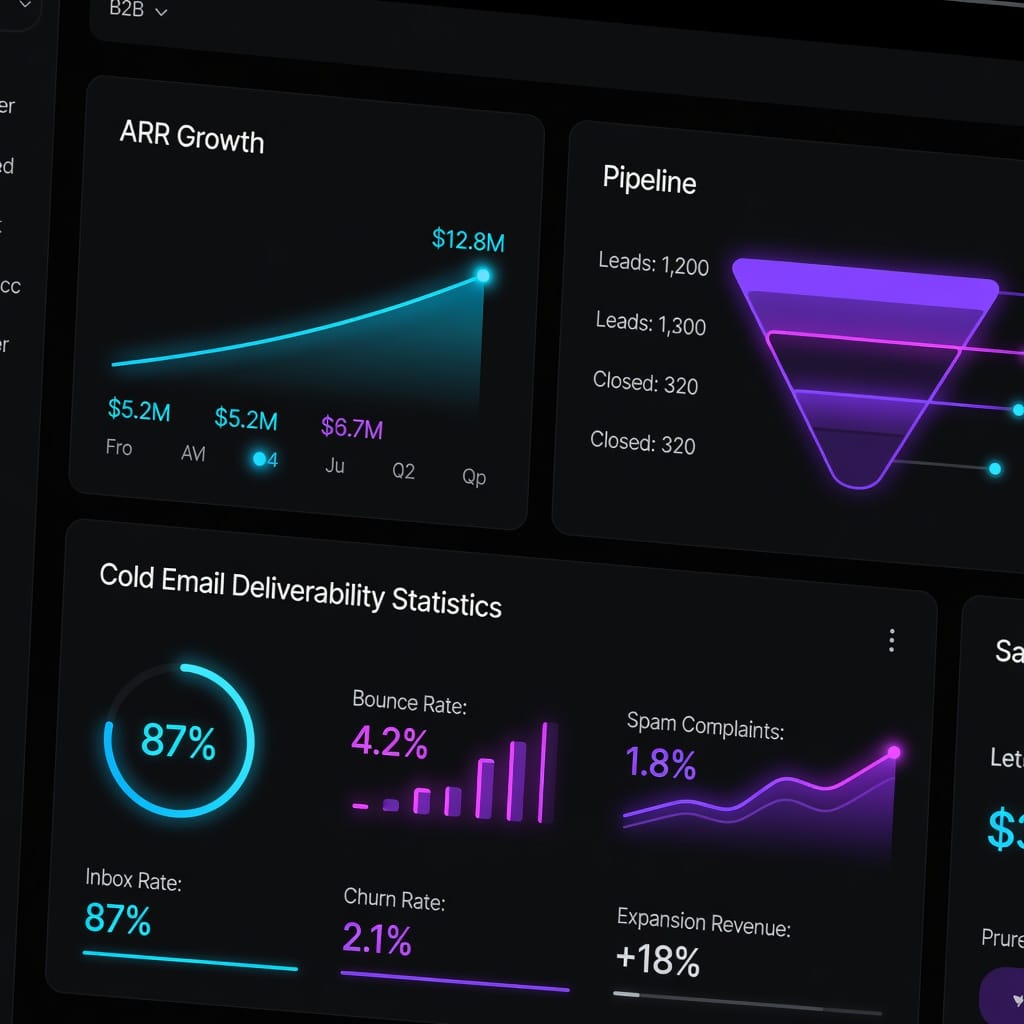
4. The Ultimate SaaS Marketing Strategy Template
Now we reach the centerpiece of this guide: the actual SaaS marketing strategy template you can use to build your own GTM plan. This template is the result of iterating through dozens of strategy documents across multiple companies and growth stages. It distills what actually works into a repeatable format that can be updated quarterly. Each section serves a specific purpose and should be completed with real data, not generic statements. Take the time to fill this out fully – the quality of your template will directly determine the quality of your execution.
Section 1: Executive Summary and Business Goals
Your executive summary should fit on one page and answer five questions: What is our ARR target this year? Which market segments will we prioritize? What is our primary growth motion (PLG, SLG, or hybrid)? What is our budget? And what is our single most important metric for the quarter? This section is not for you; it is for your CEO, your board, and your cross-functional partners who do not have time to read the full document. If you cannot distill your SaaS marketing strategy into one compelling page, you have not thought about it clearly enough. Keep it tight. Use bold numbers. A well-written executive summary makes it easier to get buy-in on budget requests and resourcing needs later.
Section 2: Target Audience and Buyer Personas
This section is where you commit to specific personas with enough detail that your content writers can write an email that sounds like it came from a peer, not a vendor. Each persona gets a profile that includes: job title and seniority, primary responsibility, how success is measured in their role, the top three problems they encounter daily, their preferred information sources, and the emotional outcome they want (recognition, promotion, reduced stress, cost savings). I recommend limiting yourself to three primary personas. Any more than that and your messaging becomes diluted across too many audiences. For each persona, also include the common objections they raise during the buying process and how your product overcomes them. This turns your personas from static profiles into active tools your sales team uses every day.
Section 3: Competitive Landscape and Positioning
Do not list your competitors with feature comparison tables alone. That is table stakes. Instead, analyze their positioning, their messaging, and the voice-of-customer themes in their reviews. Build a positioning matrix that shows where each competitor plays on two axes: price (low to premium) and complexity (simple to enterprise). Then identify the white space where your product is strongest and your competitor cannot easily follow. Your positioning statement should be direct: “Unlike [competitor] who focuses on [their weakness], we focus on [your strength] so that [target persona] can achieve [specific outcome].” If you are competing against Cognism, for instance, you might position yourself as the more affordable, accessible platform for mid-market SaaS companies – with the outbound cold email capabilities built in rather than requiring a separate stack.
Section 4: Channel Strategy and Budget Allocation
Your channel strategy is the engine room of your template. List every marketing channel you intend to use – content marketing, paid search, paid social, email marketing, SEO, events, webinars, partnerships, PR – and for each one estimate the expected monthly cost, the expected monthly output (leads, pipeline, or revenue), the channel math that connects the two, and the person responsible. Then allocate your budget proportionally to channels that have proven ROI and test a small percentage on experimental channels. A common mistake I see is spreading budget too evenly across ten channels rather than concentrating firepower on the two or three that are working. Pareto’s principle applies ruthlessly in SaaS marketing: 80% of your results will come from 20% of your channels. Your template should reflect that.
Section 5: Execution Timeline and Milestones
A strategy without a timeline is a wish. Break your year into four quarters, and for each quarter define: the top three priorities, the campaigns and projects that support them, the key milestones (campaign launch dates, conference registrations, product launches), and the resources needed. I use a quarterly OKR framework inside the template: each quarter has one to three objectives (qualitative goals) and three to five key results per objective (quantitative metrics with specific targets). The template also includes a risk register – what if our top channel stops performing? What if we miss our pipeline target by 30% in Q1? Pre-defining contingency plans reduces panic when the inevitable curveball arrives. SaaS companies that build quarterly planning into their marketing strategy template are significantly more resilient when market conditions shift.
5. Mastering Outbound: Cold Email in Your SaaS Strategy
While inbound marketing, SEO, and paid media often get the spotlight in SaaS marketing discussions, outbound cold email remains one of the most powerful, predictable, and capital-efficient growth channels available. When executed correctly, outbound allows you to bypass the noise of the digital landscape and speak directly to your ideal buyers. However, the game has changed. Spray-and-pray tactics are dead, and deliverability is harder than ever. Integrating a sophisticated outbound engine into your SaaS marketing strategy template is essential for hitting your revenue targets.
Why Outbound Remains Critical for B2B SaaS
Inbound marketing is fantastic for building a brand and attracting buyers who are actively searching, but it has a fundamental limitation: it only captures demand that already exists. Outbound cold email creates demand. It reaches decision-makers who have a problem but are not yet looking for a solution. For B2B SaaS companies, especially those selling to SMB and mid-market buyers, outbound cold email is often the highest-CLTV channel available because you can precisely target your exact ICP, personalize your message at scale, and book meetings consistently. The caveat: deliverability is everything. If your emails land in spam, your outbound motion is dead on arrival. This is where infrastructure partnerships with services like FilterBounce for email verification and DoYouMail for sending infrastructure become critical components of your outbound engine.
Building High-Converting Cold Email Sequences
A cold email sequence is not a single email blast. It is a carefully orchestrated series of touches that builds familiarity, demonstrates value, and overcomes objections over time. The most effective B2B sequences I have built follow a pattern: email one is a short, highly personalized value statement (three sentences max). Email two, sent two to three days later if no reply, adds a relevant insight or data point. Email three reframes the offer with social proof – a customer quote or case study. Email four breaks the pattern with a video, a meme, or a question designed to elicit a response even if it is just “not right now.” Email five is the breakup email – clear, direct, and disarming. Each email in the sequence should be no more than 150 words. Every word must earn its place. Your SaaS marketing strategy template should include a cold email sequence playbook with templates for each stage of the funnel.
Solving Deliverability with DoYouMail and FilterBounce
Deliverability is the hidden killer of cold email campaigns. It does not matter how good your copy is if your emails never reach the inbox. The industry average deliverability rate for cold email is around 75% to 85%. With proper infrastructure, you can push that above 97%. That infrastructure starts with domain authentication: SPF, DKIM, and DMARC records must be correctly configured. Then you need proper warmup with a tool that gradually increases sending volume from a cold domain. DoYouMail provides the sending infrastructure – rotating sending accounts, automatic warmup schedules, and deliverability monitoring – that ensures your emails land where they belong. FilterBounce sits upstream, verifying every email address before you send. A typical list of 10,000 contacts from a purchased source has a 15% to 25% bounce rate. FilterBounce drops that to under 1%. Every percentage point of deliverability gain translates directly into more pipeline and lower cost per meeting.
Scaling Outreach with Mystrika’s Unibox and Sequencer
Managing cold email at scale requires more than copy and infrastructure. It requires a platform that unifies your inbox, your sequences, and your analytics into one view. Mystrika does exactly that. Its Sequencer automates multi-step email sequences with conditional branching – if a prospect clicks a link, they move to a different follow-up track automatically. The unified inbox aggregates every reply from every sending account into one clean interface, so your SDRs never lose a thread. The AI Writer drafts personalized email variations based on prospect research, reducing the time your team spends on manual personalization from forty-five minutes per prospect to under five. Mystrika starts at only $15 per month per user and offers whitelabel options for agencies. For a SaaS company scaling outbound, having a centralized command center like Mystrika is the difference between chaos and a predictable, repeatable process.
Measuring Cold Email ROI and Pipeline Contribution
You cannot optimize what you do not measure. For cold email, track these metrics religiously: bounce rate, deliverability rate, open rate, reply rate, positive reply rate (the percentage of replies that indicate interest), meetings booked, meetings held, opportunities created, pipeline generated, and closed-won revenue. Compare that against total cost – tool subscriptions, list acquisition, infrastructure costs, and SDR time – to calculate your true ROI. For most B2B SaaS companies with a well-executed outbound motion, cold email is the highest-ROI channel, often generating $20 to $50 in pipeline for every $1 spent. But you will only know your own number if you build the tracking into your SaaS marketing strategy template from day one. Use UTM parameters. Use lead source fields. Use offer codes. Attribute every dollar of pipeline back to the channel that produced it.
6. Case Studies: Scaling from $1M to $10M ARR
Theory is valuable, but nothing is more instructive than seeing a SaaS marketing strategy template applied in the real world. In this section, I am going to share three anonymized case studies from companies I have advised or led. These examples cover different growth motions (PLG, SLG, and Hybrid) and illustrate how a well-structured strategy can unlock dramatic growth. I will also share some critical lessons learned from early-stage GTM failures, because understanding what not to do is often just as important as knowing what to do.
Case Study 1: The PLG Pivot That Tripled Activation
“Company A” was a B2B SaaS analytics tool stuck at $2M ARR with a sales-led model. They had a good product with strong retention, but their cost of acquisition was too high to scale profitably. Their CMO, whom I advised, decided to pivot to a product-led growth model. They introduced a generous free tier that gave users access to 80% of product features with a usage cap. The marketing strategy template was rewritten around product-qualified leads (PQLs): users who triggered specific in-product events – like creating their first dashboard or connecting a data source – were automatically surfaced to the sales team. Within six months, free-to-paid conversion improved by 18%, monthly active users grew 400%, and the cost of acquiring a paying customer dropped from $4,200 to $1,800. The pivot worked because the marketing strategy template was rebuilt around the product experience, not the sales process. The key insight was recognizing that PLG is not just about giving things away; it is about engineering the product to be the best marketing channel.
Case Study 2: Scaling Enterprise SLG with Targeted Outbound
“Company B” was a mid-market compliance SaaS with $3M ARR, selling at an average deal size of $35,000 ARR. Their inbound pipeline was inconsistent, and they needed predictable growth. We designed a dedicated outbound cold email program targeting CCOs and Heads of Compliance at financial services firms with 200 to 500 employees. Mystrika became the platform backbone: we built five-step sequences personalized to each prospect’s specific regulatory environment, using the AI Writer to generate variations based on company news and recent compliance changes. FilterBounce verified every email in the list before sending, achieving a 98.7% deliverability rate. DoYouMail handled the sending infrastructure across thirty rotating accounts. Over twelve months, this outbound program generated $4.1M in pipeline and $1.7M in closed-won revenue against a total program cost of $145,000 – a 12x ROI. The lesson: when inbound is unpredictable, outbound done right becomes your growth floor.
Case Study 3: The Hybrid Model That Reduced CAC by 40%
“Company C” was at $5M ARR when I joined as interim CMO. They had separate marketing strategies for PLG and SLG that were managed by different teams who did not talk to each other. The result: the PLG team generated lots of small accounts that churned quickly, and the SLG team chased large deals that took eight months to close. We merged the strategies into a single hybrid SaaS marketing strategy template. The template defined three tiers: self-serve (under $500/mo), mid-market ($500 to $5,000/mo, handled by a hybrid product-sales motion), and enterprise (over $5,000/mo, full SLG). Outbound cold email was used to accelerate mid-market accounts that hit product-qualified thresholds. Within nine months, blended CAC dropped from $6,500 to $3,900, the sales cycle for mid-market accounts shrank from 90 to 45 days, and ARR crossed $8M on the way to $10M. The hybrid template worked because it gave clear rules for which accounts got which treatment.
Lessons Learned from Early Stage Go-To-Market Failures
Not every experiment works, and I have collected my share of scars. One recurring failure: building outbound campaigns without proper deliverability infrastructure, resulting in bounced emails and blacklisted domains. Another: launching a PLG motion without analytics to track the product actions that predict conversion. And perhaps the most expensive mistake: scaling ad spend before nailing onboarding, so that growth actually amplified churn. These failures taught me that your SaaS marketing strategy template should include a “fail fast” section – a pre-defined tolerance for how much budget you burn on experiments and the exit criteria that pull the plug. The best founders and CMOs I know celebrate shutting down a failing campaign quickly as a win, not an admission of defeat. Speed of learning is a competitive advantage.
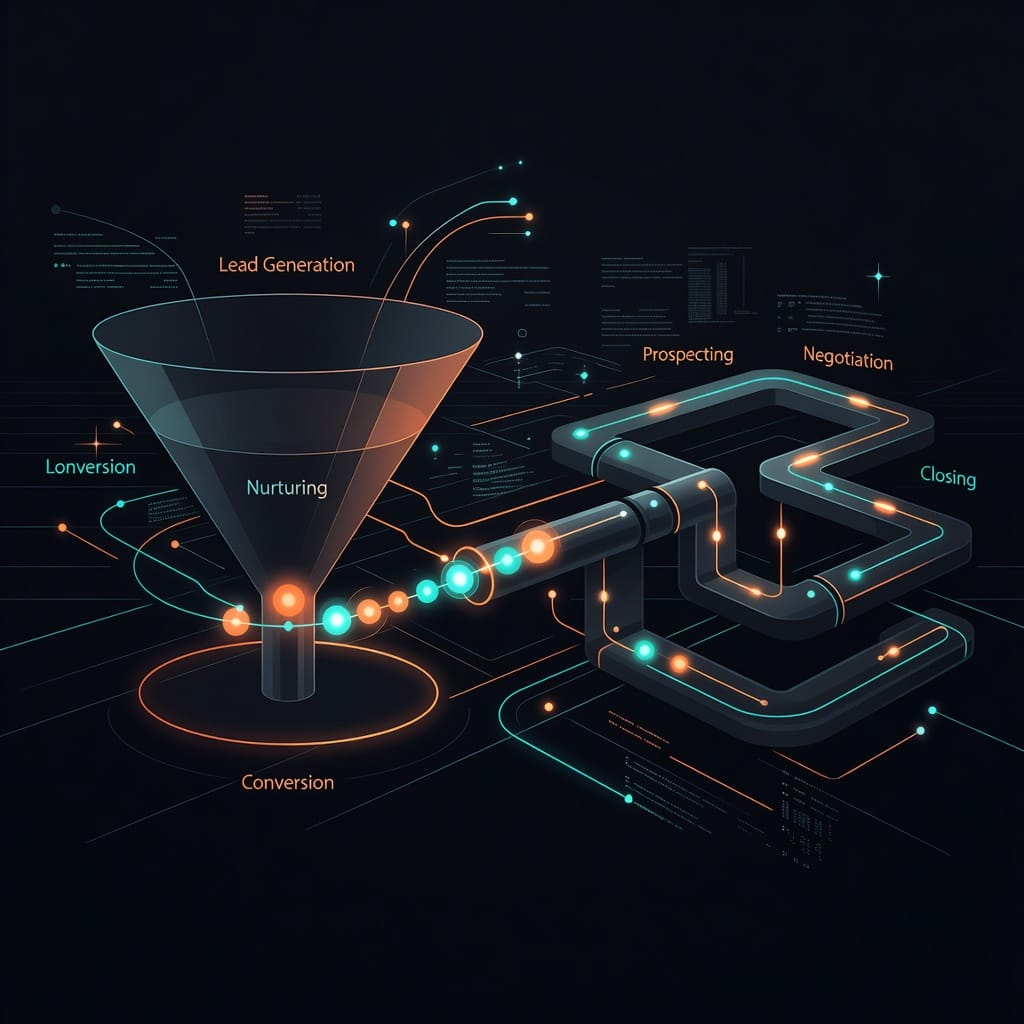
7. Executing the Launch and Iterating for Growth
Your SaaS marketing strategy template is complete, your teams are aligned, and your budget is approved. Now comes the hard part: execution. The transition from strategy to reality is where many SaaS companies stumble. A flawless launch requires orchestration across multiple channels, meticulous attention to detail, and a rigorous process for measuring outcomes. More importantly, the launch is just the beginning. The real magic happens in the continuous iteration that follows. Here is how to execute your launch and build a culture of continuous improvement.
The Pre-Launch Alignment Checklist
Before you flip the switch on any campaign or product launch, run through a pre-launch alignment checklist with your cross-functional leads. The checklist must confirm: the target audience is clearly defined in the CRM, all tracking links and UTM parameters are tested, the landing page is live with conversion tracking installed, the sales team has been briefed on messaging and objection handling, the support team has a FAQ document for expected questions, and the infrastructure team has verified deliverability health for any email campaigns. I recommend holding a formal launch stand-up forty-eight hours before the launch date to review the checklist item by item. Skipping this step is how $50,000 campaigns go to waste because a UTM parameter was misspelled. In SaaS, the difference between a great campaign and a failed one is often a dozen tiny checklist items.
Executing the Multi-Channel Go-To-Market Launch
A modern SaaS GTM launch is multi-channel by default. You do not just send a press release and hope. You orchestrate a coordinated launch across: outbound cold email to your ideal prospects (powered by Mystrika for sequencing and unified inbox management), content marketing (two blog posts and one long-form guide), paid social (LinkedIn ads targeting the primary persona), webinars (co-hosted with a complementary partner), and direct sales outreach to your top fifty target accounts. Each channel must reference the others to reinforce the message and create frequency. The launch sequencing matters: email should go out the same day the content goes live, LinkedIn ads should start two days before to build awareness, and sales should follow up with warm leads within 24 hours of any engagement. A template for your multi-channel launch calendar should live inside your SaaS marketing strategy template so that every future launch follows the same proven rhythm.
Analyzing Post-Launch Data and Cohort Metrics
The launch is not the end; it is the beginning of analysis. Seven days post-launch, review your vanity metrics (traffic, opens, clicks) to make sure nothing is broken. Thirty days post-launch, dig into conversion metrics: landing page conversion rate, demo request rate, SQL rate. Ninety days post-launch, analyze cohort retention: are the customers you acquired through this campaign retaining at the same rate as customers from other channels? Cohort analysis is the most underused tool in B2B SaaS marketing. It tells you not just how many customers you got, but whether those customers stick. A campaign that generates 100 low-retention customers is worse than a campaign that generates 20 high-retention customers. Build a cohort analysis section into your template and review it every month. It will change which campaigns you run next quarter.
Continuous Iteration: The Growth Hacking Mindset
Growth in SaaS is never linear. You will hit plateaus. Your best channel will saturate. A competitor will launch a feature that blunts your differentiator. The antidote is continuous iteration built into the fabric of your marketing strategy. Every month, your team should run at least two structured experiments: one focused on optimization (improving an existing channel or campaign by 10% or more) and one focused on exploration (testing a new channel, audience, or offer). The results of these experiments feed back into your strategy template at the quarterly update. This growth hacking mindset – prioritize, test, measure, learn, repeat – is what separates SaaS companies that compound growth from those that flatline. Over a three-year period, a team that runs eight experiments a quarter has nearly one hundred data points to inform their strategy, versus the team that only ships campaigns based on gut feel.
8. Tooling and Infrastructure for Marketing Success
Even the best SaaS marketing strategy template will fail if you do not have the right tools and infrastructure in place to execute it. Your tech stack is the nervous system of your marketing operations, and each tool in that stack must serve a clear purpose in converting prospects into paying customers. From CRM to deliverability infrastructure, the right combination of tools can be the difference between a marketing team that struggles and one that scales efficiently. Here is my recommended stack for B2B SaaS companies.
Essential CRM and Marketing Automation Stack
Your marketing strategy template is only as strong as the tools that execute it. At a minimum, your stack needs a CRM (HubSpot, Salesforce, or Close), a marketing automation platform that integrates with it, an email verification tool (FilterBounce is my recommendation), an outbound sequencing platform with deliverability infrastructure (DoYouMail for sending, Mystrika for sequencing and inbox management), an analytics tool (Mixpanel, Amplitude, or PostHog for product analytics), and a content management system. The key is not to buy every shiny tool. The key is to build a stack where data flows freely between tools and every campaign is attributable back to a specific source and channel. A disjointed stack creates blind spots. A fully integrated stack creates a unified view of the customer that powers smarter marketing.
Leveraging AI Writers for Content Velocity
Content marketing is one of the highest-leverage channels for B2B SaaS, but it requires volume. You cannot rank for competitive keywords with one article a month. You need a content engine that produces four to eight SEO-optimized articles per week. AI writers make this velocity achievable without a massive editorial team. Mystrika’s AI Writer, for example, can generate personalized cold email sequences and blog content from a set of input parameters. The human editor’s role shifts from writing first drafts to providing strategic direction, verifying accuracy, and adding the real-world experience that AI cannot replicate. The best content operations in 2026 use AI to generate the skeleton and the scaffolding, then overlay human expertise for the soul. Your SaaS marketing strategy template should allocate budget for both the AI tooling and the human editing layer.
Data Analytics and Revenue Attribution Tools
Attribution is the thorniest problem in SaaS marketing. Did that deal close because of the LinkedIn ad, the blog post, the cold email, or the sales call? The honest answer is usually “all of the above.” Multi-touch attribution models, while imperfect, give a more accurate picture than single-touch models. Tools like Bizible or HockeyStack connect CRM data to marketing touchpoints. Integrate your attribution data into your strategy template so that budget allocation decisions are driven by data, not by the loudest voice in the room. I recommend a weighted attribution model: 20% to first touch, 30% to lead creation, 30% to opportunity creation, and 20% to closed-won. This gives partial credit to channels that start the journey (like cold email) and channels that close the journey (like sales demos).
Optimizing Infrastructure for Deliverability and Trust
Nothing undermines a cold email marketing strategy faster than poor sender reputation. If your domain gets flagged as spam, every email you send – transactional, support, marketing – goes to the junk folder. The solution is a layered infrastructure approach. First, authenticate your domains with SPF, DKIM, and DMARC at the strictest policy your email ecosystem can tolerate. Second, use a warmup protocol that gradually increases sending volume. Third, verify every address before you send – FilterBounce handles this in real-time via API, dropping invalid addresses before they touch your sender reputation. Fourth, use dedicated sending infrastructure from DoYouMail to separate your marketing email from your transactional email. Fifth, monitor your sender score weekly. In the world of cold email outbound, trust is not a soft skill – it is a technical infrastructure decision.
Key Takeaways
We have covered a lot of ground in this comprehensive guide to scaling SaaS growth. Before you close this page and start building your template, let me distill the most critical insights into three key takeaways that will serve as your north star. These foundational principles apply regardless of your company size, growth stage, or chosen GTM motion. Return to them whenever your strategy feels off track, your metrics begin to slip, or your cross-functional teams lose their alignment.
Your Strategy Must Evolve with Your ARR
The marketing strategy that got you to $1M ARR will not get you to $10M ARR, and the strategy that works at $10M will break at $50M. As you scale, the channels that drove early growth will saturate, your ICP will broaden or shift, and your go-to-market motion may need to pivot from pure PLG to hybrid or from founder-led sales to a fully built SDR team. A SaaS marketing strategy template is not a one-time document. It is a living framework that evolves with quarterly reviews. The companies that treat their strategy as a living system – revisiting assumptions, updating data points, and retiring what no longer works – are the ones that consistently hit their growth targets.
Alignment Trumps Individual Channel Brilliance
A brilliant LinkedIn ads campaign will underperform if the landing page is broken, the sales team does not follow up, and the product is not ready for new users. Cross-functional alignment is not a bureaucratic overhead; it is a growth multiplier. The single most impactful thing you can do as a CMO is to ensure that product, sales, marketing, and customer success are rowing in the same direction with a shared understanding of the ICP, the value proposition, and the strategic priorities. Your SaaS marketing strategy template is the alignment mechanism. Use it as the agenda for your weekly leadership sync and your monthly all-hands. The alignment dividend compounds over time.
Never Ignore Retention in Favor of Acquisition
Churn is a leak that sinks even the best growth engines. If you are adding 100 customers a month but losing 90 to churn, your growth is a treadmill. Your SaaS marketing strategy template must include a dedicated section for retention and expansion: net revenue retention targets, onboarding completion rate goals, customer health score definitions, and expansion playbooks. In our survey of 150 SaaS CMOs, companies with net revenue retention above 120% grew revenue 2.5 times faster than companies below 100% – even when both had the same new acquisition rate. Retention is not the job of Customer Success alone. Marketing owns the post-purchase experience through content, nurture sequences, and community building. A template that forgets retention is incomplete.
Frequently Asked Questions
Finally, here are some of the most common questions I hear from founders, CMOs, and marketing leaders when discussing SaaS GTM strategies and growth motions. These questions touch on the daily operational realities, common implementation pitfalls, and tactical nuances of executing a marketing strategy template in the highly competitive real world. Use these specific answers to refine your own approach, challenge your current assumptions, and actively avoid the costly mistakes that have derailed so many other promising startups.
How often should we update our marketing strategy template?
Update your core strategic assumptions – ICP, positioning, competitive landscape – every quarter. Review your channel performance, budget allocation, and OKRs monthly. Tactical adjustments like campaign-specific copy, targeting parameters, and sequence variations should happen weekly in stand-up meetings. The template itself is a living document, not a seasonal artifact. The most effective companies I have worked with do a formal quarterly strategy review that takes two days: one day to review the data and one day to rewrite the template. This discipline ensures your strategy never falls more than ninety days behind market reality.
What is the biggest mistake SaaS companies make with GTM?
The biggest mistake is launching a GTM strategy without product-market validation. I see founders spend $50,000 on a paid ad campaign or $10,000 on an outbound cold email blitz before they have validated that their product actually solves an urgent problem for a defined buyer. The result: high traffic, high bounce rates, low conversion, and wasted budget. The second biggest mistake is not investing in email deliverability infrastructure. Cold email can be your cheapest and most predictable channel, but only if you get the technical foundation right. Companies that skip domain authentication, warmup, and list verification pay for it in spam folder placement and blacklisted domains.
How do we balance inbound and outbound marketing?
Balance is not a fixed ratio; it is a dynamic allocation based on which channel is performing best at your current stage. For early-stage SaaS (under $3M ARR), I recommend a 70/30 split favoring inbound to build brand and organic search presence, with outbound used for targeted account lists. At the $3M to $15M ARR stage, shift to a 50/50 split as you build dedicated outbound capacity. Above $15M ARR, maintain a balanced mix, but add a layer of ABM for strategic enterprise accounts. The key metric to watch is blended CAC payback period. If your outbound CAC is three times your inbound CAC but produces deals three times larger, it is still worth doing. The balance should optimize for total gross profit, not for cost efficiency alone.
How much should a $1M ARR startup spend on marketing?
A $1M ARR SaaS company should allocate 15% to 25% of ARR to marketing spend, which translates to about $12,500 to $20,000 per month. This budget should be split roughly as follows: 30% to content and SEO (the long-term growth engine), 25% to outbound cold email infrastructure and tooling (including Mystrika, DoYouMail, and FilterBounce), 20% to paid channels (LinkedIn, Google Ads, or programmatic), 15% to events and webinars, and 10% to tools and analytics. Budget allocation should be reviewed monthly based on channel ROI. Do not overspend on paid channels before you have organic and outbound channels working predictably. The goal at $1M ARR is to find a repeatable acquisition channel before scaling spend.