
B2B marketing data is the structured and unstructured information that organizations collect, analyze, and act upon to understand their target accounts, personalize outreach, and measure campaign effectiveness. It is the raw material that powers every decision in a modern go-to-market engine – from which ICP segments to prioritize, to what messaging resonates, to when a prospect is actually ready to buy.
In practice, marketing data sits at the intersection of three domains: who you are trying to reach (account and contact data), what they are doing (behavioral and intent signals), and how your efforts are performing (engagement and conversion data). Without all three, your marketing machine runs on assumptions.
Why It Matters More Than Ever
The B2B buying committee now averages 11 decision-makers, and 70% of the buyer’s journey happens before a prospect ever talks to sales. You cannot build pipeline on guesswork. Marketing data is what replaces intuition with signal.
Here is a number that should stop any marketing leader cold: data decay costs organizations an estimated 21% of their marketing budget annually. That is not a rounding error. When email addresses bounce, phone numbers change, job titles shift, and companies merge, every dollar spent targeting that stale record is lost. For a company spending $1M on marketing, that is $210,000 vanishing into dead contacts and misdirected campaigns.
I have seen this firsthand. In my years running marketing operations at a mid-market SaaS company, we ran a quarterly data hygiene audit and discovered that roughly 30% of our “active” contact database had changed roles or companies within the previous 12 months. We were scoring and sequencing leads that had already left the building. Fixing that single gap – implementing real-time enrichment and a data freshness SLA – improved our connect rate by 40% and reduced cost-per-meeting by 22% in one quarter.
Data Sources: Public vs. Private
Every piece of marketing data comes from one of two buckets: public sources or private sources. Understanding the distinction is critical because it determines accuracy, legality, cost, and competitive advantage.
| Feature | Public Data | Private Data |
|---|---|---|
| :– | :– | :– |
| Accessibility | Available to everyone | Proprietary to you or licensed |
| Cost | Usually free or low-cost | Requires investment (tools, time, purchase) |
| Competitive Advantage | None (baseline intelligence) | High (unique insights) |
| Examples | SEC filings, LinkedIn profiles | CRM activity, 1st-party intent, surveys |
| Best Used For | Initial ICP filtering, broad research | Scoring, personalization, trigger events |
Public Data Sources
Public data is information that is openly available, often through government filings, public databases, or web scraping. Common public sources include:
- SEC filings (EDGAR): Financial statements, material events, executive changes for public companies
- Crunchbase and similar aggregators: Funding rounds, acquisitions, key personnel
- LinkedIn (public profiles): Job titles, tenure, skills, company pages
- Company websites and press releases: Product launches, partnerships, leadership changes
- Government databases: Business registrations, patents, import/export records
- Review sites (G2, Capterra): Product usage signals, sentiment, competitive intelligence
Public data is accessible to everyone. That is both its strength and its weakness. It is great for broad market intelligence and initial prospecting, but it provides zero differentiation. If your competitor is looking at the same SEC filing, you have no information advantage.
Private Data Sources
Private data comes from proprietary sources – your own systems, purchased data sets, or data shared through partnerships. This is where competitive moats are built.
- Your CRM and MAP: Historical engagement, pipeline velocity, win/loss data
- First-party intent data: Website visits, content consumption, product usage
- Purchased third-party data: Firmographic append services, intent data providers, technographic databases
- Customer surveys and interviews: Qualitative insights, sentiment, buying triggers
- Co-registration and partner data: Shared audiences from complementary vendors
The key insight: private data is the only source of defensible advantage. Public data tells you what everyone knows. Private data tells you what only you know.
The Blended Approach
The best marketing organizations blend both. They use public data to build initial account lists and identify surface-level fit, then layer private data to score, prioritize, and personalize. A typical workflow looks like this:
1. Use public firmographic data (industry, revenue, employee count) to define an ICP
2. Overlay private intent data to find accounts in active research mode
3. Enrich with first-party behavioral data from your own website and product
4. Validate and append with a third-party data provider for phone numbers and direct emails. (Ensure your outreach infrastructure, like your Mystrika unibox , is primed to handle the influx of validated contacts.)
Each layer increases precision. Each layer also increases cost. The art is knowing where to stop.
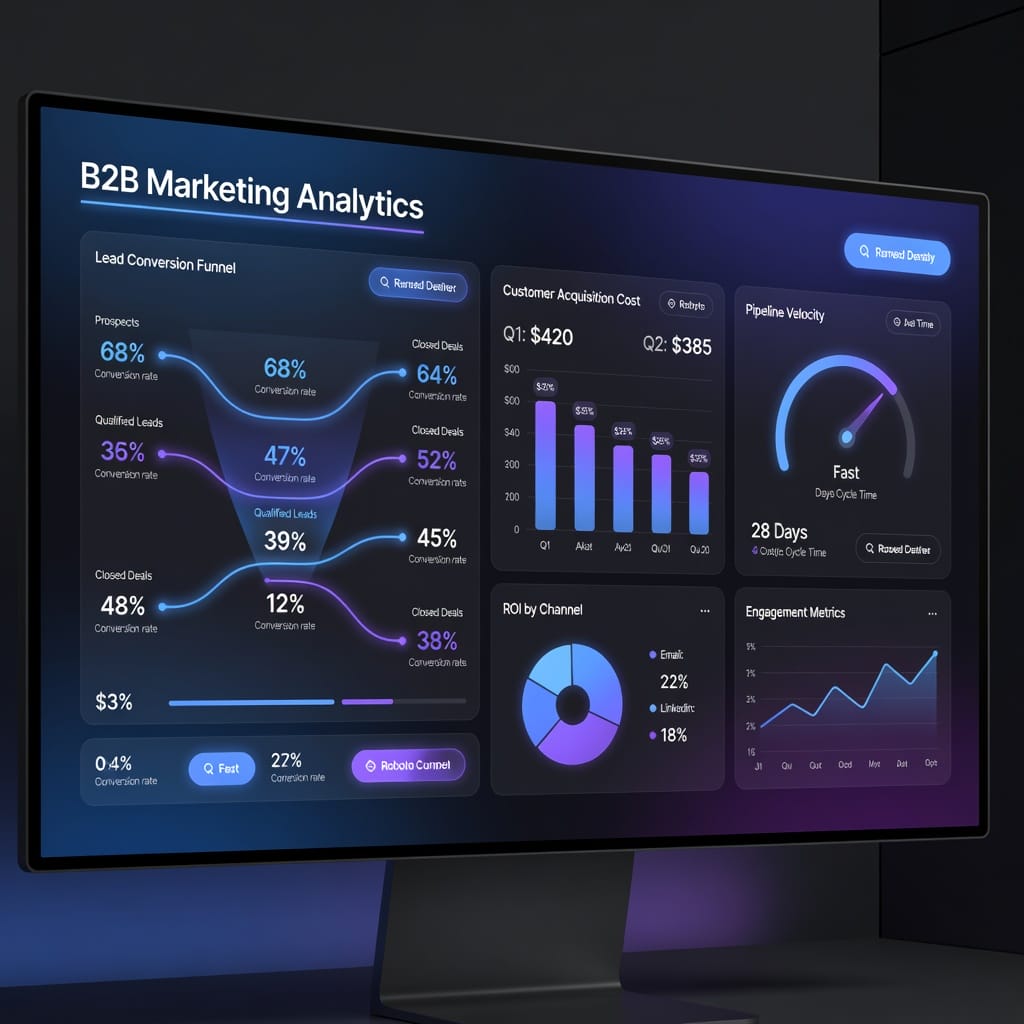
Types of Marketing Data
Marketing data is not a monolith. There are at least ten distinct categories, and each serves a different purpose in the go-to-market stack.
Zero-Party Data
Zero-party data is information that a prospect intentionally and proactively shares with you. It includes preferences, purchase intentions, personal context, and feedback. Examples include:
- A prospect filling out a “what matters to you” survey on your pricing page
- A buyer selecting their role and company size in a lead capture form
- A customer telling their CSM what feature they want next
This is the highest-quality data you can collect because it is voluntarily provided and explicitly accurate. There is no inference, no modeling, no decay risk. The trade-off is scale: you have to earn it through trust and value exchange.
First-Party Data
First-party data is information you collect directly from your audience through your own channels. This includes:
- Website analytics (page views, time on site, referral source)
- Email engagement (opens, clicks, replies, unsubscribes)
- Product usage (feature adoption, login frequency, session duration)
- CRM activity (meeting history, deal stage changes, support tickets)
- Content consumption (whitepaper downloads, webinar attendance, video views)
First-party data is proprietary, compliant (when collected properly), and highly relevant. It reflects actual behavior, not stated intent. The limitation is scope: you only see what happens on your owned properties.
Third-Party Data
Third-party data is collected by an entity that does not have a direct relationship with the data subject. It is aggregated from multiple sources and sold or licensed to you. Common examples include:
- Intent data from providers like Bombora, G2 Buyer Intent, or TechTarget
- Firmographic enrichment from Dun & Bradstreet, ZoomInfo, or Lusha
- Technographic data from BuiltWith or Datanyze
- Demographic append services
Third-party data fills the gaps in your first-party view. It tells you what accounts are researching topics you care about, even if they have never visited your site. The trade-offs are cost, accuracy (data can be 60-90 days stale), and compliance risk under GDPR and CCPA.
Demographic Data
Demographic data describes the attributes of individual people. In B2B, this typically includes:
- Job title and function
- Seniority level (individual contributor, manager, director, VP, C-suite)
- Years of experience
- Education and certifications
- Location and timezone
- Gender (where relevant and compliant)
Demographic data is the foundation of personalization. Knowing that you are talking to a VP of Engineering versus a Director of Marketing changes everything about your messaging, channel, and offer.
Firmographic Data
Firmographic data is the B2B equivalent of demographics – it describes the organization, not the individual. Key attributes include:
- Industry (NAICS/SIC codes)
- Company size (revenue, employee count)
- Location (HQ, regional offices, global footprint)
- Growth rate (YoY revenue growth, headcount growth)
- Funding stage (bootstrapped, Series A, PE-backed, public)
- Technology stack (ERP, CRM, marketing automation, cloud provider)
Firmographic data is the primary filter for ICP definition. Most B2B organizations start with firmographic fit and then layer other data types on top.
Technographic Data
Technographic data reveals what technology a company uses. This is powerful because technology choices often indicate pain points, budget, and buying readiness.
- CRM system (Salesforce, HubSpot, Dynamics)
- Marketing automation (Marketo, Pardot, ActiveCampaign)
- Sales engagement platform (Outreach, SalesLoft)
- Data stack (Snowflake, Databricks, Fivetran)
- Cloud provider (AWS, Azure, GCP)
- Security tools (CrowdStrike, Okta, Zscaler)
If you sell a data integration tool, knowing a company runs Snowflake and Fivetran is a much stronger signal than knowing they are in the “software” industry. Technographic data lets you target by tech stack adjacency.
Chronographic Data
Chronographic data tracks timing and lifecycle events. It answers the question: “Why now?” Key chronographic signals include:
- Funding announcements (new round = hiring and building)
- Executive changes (new CRO = likely vendor evaluation)
- IPO or acquisition (integration needs, compliance shifts)
- Product launches (new category entry, competitive response)
- Contract expirations (renewal windows for competitive takeout)
- Website changes (new job postings, pricing page updates)
Chronographic data is the most underutilized category in most B2B marketing stacks. It is the difference between reaching out at the right time versus the wrong time. A company that just raised a Series B is hiring aggressively and needs new tools. A company that just laid off 15% of staff is in preservation mode. Chronographic data tells you which is which.
Intent Data
Intent data captures signals that a prospect or account is actively researching a topic, product category, or solution. It comes in two flavors:
- First-party intent: Behavior on your own properties (visiting your pricing page, reading a comparison guide, attending a demo webinar)
- Third-party intent: Behavior across the wider web (consuming content on industry publications, visiting competitor sites, searching for specific keywords)
Intent data is the closest thing to a “buying signal” that exists in B2B marketing. When an account that fits your ICP suddenly starts researching your category, you want to know immediately. The challenge is noise: intent data can flag a researcher writing a report just as easily as a buyer evaluating vendors. The best practitioners combine intent with engagement scoring to separate signal from noise.
Quantitative Data
Quantitative data is numerical, measurable, and structured. It is what lives in your dashboards and spreadsheets:
- Number of MQLs, SQLs, and opportunities
- Conversion rates at each funnel stage
- Cost per lead and cost per acquisition
- Email open rates, click-through rates, reply rates
- Pipeline velocity and win rates
- Campaign attribution (first-touch, last-touch, multi-touch)
Quantitative data tells you what is happening. It is objective, comparable, and essential for reporting. But it rarely tells you why.
Qualitative Data
Qualitative data captures the “why” behind the numbers. It is unstructured, contextual, and often collected through:
- Win/loss interview transcripts
- Sales call recordings and notes
- Customer survey open-ended responses
- Social media mentions and community discussions
- Support ticket themes and sentiment analysis
Qualitative data is harder to scale and harder to measure, but it is where the deepest insights live. A 10% drop in conversion rate (quantitative) might be caused by a pricing page change that confuses buyers (qualitative). You need both to act effectively.
The Case Study: How a B2B SaaS Company Cut Cost Per Lead by 35% Using Better Data
Let me walk through a real engagement from my time leading marketing operations.
The company: A Series B B2B SaaS company selling an analytics platform to mid-market and enterprise accounts. They had a 50-person sales team, a 12-person marketing team, and were spending roughly $80,000 per month on paid media and content syndication.
The problem: Cost per lead had crept from $85 to $210 over 18 months. Pipeline volume was flat, but spend was up. The marketing team was generating more leads than ever, but sales was rejecting 60% of them as “not a fit.” The CRM was a mess: 40% of contacts had no firmographic data populated, and 25% of the email addresses in the database had been bouncing for over six months.
The diagnosis: The team was buying third-party contact lists from a data broker and running them through a lead-gen machine without any firmographic or intent filtering. They were generating volume, not pipeline. The data decay problem alone – 25% bounce rate – meant they were paying for impressions that never reached a human.
The fix, in three phases:
Phase 1 – Data hygiene. We ran a full database cleanse. Removed 18,000 stale contacts. Enriched the remaining 42,000 with current firmographic data (industry, revenue, employee count) and verified email addresses. Cost: $4,200 for enrichment credits. Result: bounce rate dropped from 25% to 3%.
Phase 2 – ICP scoring. We built a firmographic scoring model. Every account got a 0-100 fit score based on industry, company size, and tech stack match to our ideal customer profile. Accounts below 50 were excluded from all paid campaigns. This cut the addressable universe by 40% but increased lead-to-opportunity conversion by 3x.
Phase 3 – Intent overlay. We layered third-party intent data on top of the ICP-scored accounts. Only accounts that showed active research in the analytics category AND had a fit score above 70 were passed to SDRs. Everything else went into a nurture track.
The results (six months later):
- Cost per lead: $210 to $136 (35% reduction)
- Lead-to-opportunity conversion: 8% to 24% (3x improvement)
- Sales acceptance rate: 40% to 78%
- Pipeline generated: flat in raw count, but 2.2x in value (higher-quality deals)
- Data decay costs: reduced from an estimated 21% of budget to under 5%
The lesson was simple: more data is not better. Better data is better. The team was drowning in volume and starving for signal. By cleaning what they had, filtering by fit, and layering intent, they turned a broken demand generation engine into a predictable pipeline machine.
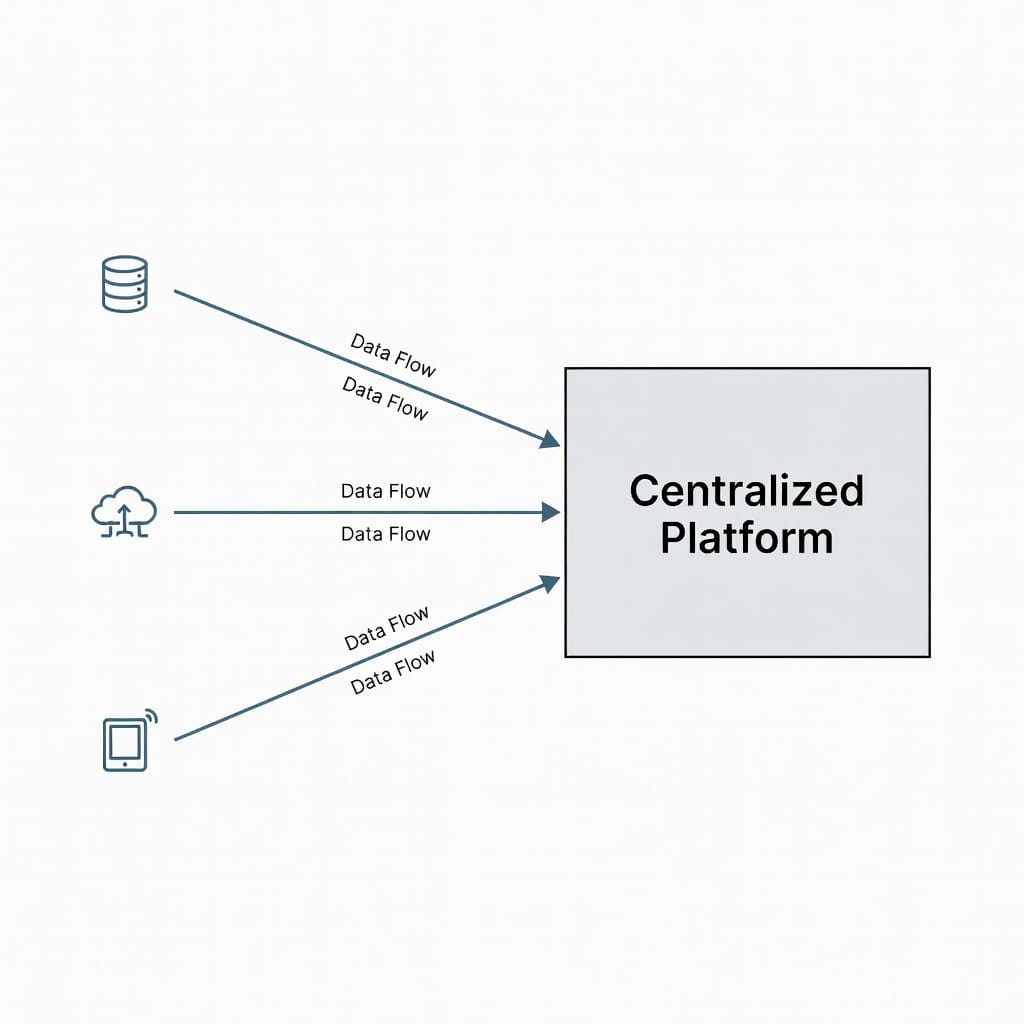
How Mystrika Unifies Marketing Data
This is where the fragmentation problem becomes real. Most B2B marketing teams use six to twelve different tools to manage the data categories above. A CRM for firmographics. A MAP for behavioral data. An intent data provider. An enrichment service. A sales engagement platform. A data warehouse. Each tool has its own schema, its own update cadence, and its own definition of a “lead.”
The result is data silos, inconsistent scoring, and a go-to-market motion that feels disjointed to the buyer.
Mystrika addresses this by acting as a unified platform for cold email outreach that integrates with your existing data stack rather than replacing it. Instead of forcing you to choose between your CRM and your engagement platform, Mystrika connects to both, pulling in firmographic, behavioral, and intent signals to inform sequencing, personalization, and timing. The platform’s AI layer evaluates which data points actually drive replies and meetings, then weights them accordingly – so your outreach gets smarter with every campaign, not more complex.
For marketing operations leaders who are tired of stitching together point solutions, Mystrika provides a single pane of glass for outbound data management, starting at $15 per month. The unification means your data decay is caught in real time, your intent signals trigger the right sequence immediately, and your team spends less time managing tools and more time closing deals.
The Invisible Revenue Killer: Master Data Hygiene and Enrichment
Having access to massive data lakes is meaningless if the water is toxic. B2B data decays at an alarming rate-industry benchmarks suggest that B2B contact data degrades by roughly 30% every year. People change jobs, companies are acquired, email domains migrate, and titles shift. When your outbound motion relies on static data, you are fundamentally fighting a losing battle against entropy.
“We used to measure our data team by how many millions of contacts they could acquire. Now, we measure them strictly on accuracy and decay velocity. A list of 5,000 pristine, enriched contacts will always outperform a database of 500,000 decaying records. Data hygiene isn’t just an IT problem; it’s the foundation of revenue operations.”
– Sarah Jenkins, VP of Revenue Operations at NexusTech
Best Practices for B2B Data Hygiene
Establishing a rigorous data hygiene protocol requires treating your database like a living organism rather than a static spreadsheet.
1. Standardization at the Point of Entry: Before a record even hits your CRM or sequencer, it must pass through a normalization filter. This means standardizing company names (e.g., stripping “Inc.”, “LLC”, or “GmbH”), normalizing job titles into functional tiers (Director, VP, C-Level), and structuring physical addresses. Without standardization, segmenting for campaigns becomes impossible.
2. Aggressive Deduplication: Duplicate records distort attribution, annoy prospects who receive parallel campaigns, and inflate software costs. Implement automated fuzzy-matching logic that merges records based on email addresses, LinkedIn URLs, and domain names.
3. Continuous Cryptographic Validation: Relying on the SMTP ping of your sending tool is too late. By the time your email bounces, your sender reputation has already taken a hit. Before any data payload is moved to the execution layer, run it through dedicated validation infrastructure. Routing your lists through verification tools like FilterBounce guarantees a hard bounce rate near zero, effectively quarantining honeypots, catch-alls, and inactive domains before they ruin your deliverability.
4. The 90-Day Quarantine Rule: If a contact has not opened an email, replied, or engaged with a digital asset in 90 days, move them to a passive list. Continually hitting unengaged data signals to spam filters that you are a spray-and-pray sender.
The Enrichment Waterfall Methodology
Once your data is clean, it must be enriched to provide context for personalization. No single data provider has perfect coverage. To maximize match rates, RevOps teams employ an “enrichment waterfall.”
A waterfall strategy queries your primary data provider first (e.g., Apollo, ZoomInfo). If a specific data point (like a verified mobile number or a specific software technology) is missing, the system automatically falls back to a secondary provider, and then a third, until the profile is complete.
This process layers demographic basics with deep firmographics, allowing you to segment your outreach not just by “VP of Sales in Chicago,” but by “VP of Sales at a B2B SaaS company that recently raised Series B funding, uses Salesforce, and is currently hiring for SDRs.”
Moving Beyond Static Profiles: Predictive Modeling & Intent
The modern era of B2B marketing has shifted from who you should target to when you should target them. Predictive modeling leverages machine learning algorithms to analyze historical closed-won data and identify the complex, multi-variable patterns that indicate a high propensity to buy.
By layering intent data-signals that suggest a company is actively researching a solution-predictive models can score accounts in real-time. This eliminates the guesswork of outbound sales. Instead of blasting your entire Total Addressable Market (TAM), you focus your budget and infrastructure on the 5% of the market that is currently in a buying window.
“When we shifted from demographic targeting to predictive modeling, our meeting booked rate jumped by 300%. We stopped interrupting people who didn’t care and started appearing exactly when they were researching our category. Intent data is the closest thing marketers have to a crystal ball.”
– Marcus Chen, Director of Demand Generation at FlowState
The 5 Pillars of B2B Marketing Data
To fully utilize predictive modeling, you need to understand and categorize the data you are feeding into the engine.
| Data Type | Definition | Key Variables | Use Case in Cold Outreach |
|---|---|---|---|
| :– | :– | :– | :– |
| Firmographic | Organizational attributes (the “company” profile). | Industry, revenue, employee headcount, location, growth rate. | Filtering the TAM; determining account tier and pricing potential. |
| Demographic | Individual professional attributes (the “buyer” profile). | Job title, seniority, department, tenure, past roles. | Routing the message to the correct decision-maker or champion. |
| Technographic | The hardware and software stack a company utilizes. | CRM used, hosting provider, payment gateways, marketing automation. | Crafting integration-specific pitches or competitive displacement campaigns. |
| Intent (Behavioral) | Signals indicating active research or buying cycles. | Topic surges, G2 profile views, whitepaper downloads, specific ad clicks. | Timing the outreach; triggering “just-in-time” messaging sequences. |
| Chronographic | Time-based events and company milestones. | Funding rounds, IPOs, leadership changes, office expansions, hiring surges. | Generating highly contextual, non-templated opening lines (icebreakers). |
Navigating the Compliance Minefield

As your data operations scale, so does your legal liability. Operating across borders means navigating a labyrinth of privacy regulations, most notably the General Data Protection Regulation (GDPR) in Europe and the California Consumer Privacy Act (CCPA/CPRA) in the United States.
Ignorance is not a defense, and B2B data is not exempt. While B2B outreach often operates under different legal justifications than B2C marketing, the penalties for non-compliance remain severe.
The GDPR B2B Compliance Checklist
Under GDPR, processing personal data requires a lawful basis. In B2B cold email, this is almost always Legitimate Interest (Article 6(1)(f)).
- [ ] Conduct a Legitimate Interest Assessment (LIA): You must formally document why your outreach is necessary and balance it against the individual’s rights. The product or service you are selling must be logically relevant to the recipient’s professional role.
- [ ] Article 14 Notification: If you scrape or buy data from a third party, GDPR requires you to inform the data subject that you are processing their data within one month of acquiring it, or at the time of your first communication. Your first cold email must include a privacy notice.
- [ ] Provide a Clear Opt-Out: Every communication must have an immediate, frictionless way to object to processing (unsubscribe).
- [ ] Honor the Right to be Forgotten: If a prospect asks to be deleted, you must remove their data from your active CRM. Crucially, you must retain an encrypted hash of their email in a suppression list to ensure you never accidentally buy their data and email them again.
- [ ] Data Minimization: Only store the data you actually need to conduct your campaign. Do not scrape and store personal home addresses or non-professional phone numbers unless strictly necessary.
The CCPA/CPRA B2B Compliance Checklist
California’s privacy laws have evolved, and the B2B exemption expired on January 1, 2023. B2B contacts in California now have the same rights as consumers.
- [ ] Notice at Collection: You must provide clear notice detailing the categories of personal information collected and the purposes for which it will be used.
- [ ] “Do Not Sell or Share” Mechanisms: If your data enrichment involves sharing data back to a vendor’s cooperative pool, this constitutes “selling/sharing” under CCPA. You must provide a clear mechanism for California residents to opt out of this.
- [ ] Vendor Agreements: Ensure your data providers are contractually bound to CPRA compliance and can propagate deletion requests down the chain.
- [ ] Right to Limit Sensitive Data: Ensure you are not inadvertently collecting “sensitive personal information” (like union membership or precise geolocation) without strict controls.
Architecting the Modern Data-to-Outbound Tech Stack
A flawless data strategy is useless without the infrastructure to act on it. Modern B2B marketing requires a deeply integrated tech stack where data flows seamlessly from acquisition, through hygiene and compliance, directly into the execution layer.
The goal is to eliminate manual CSV uploads and replace them with automated API-driven workflows. When a prospect triggers an intent signal, they should automatically be enrolled in a highly personalized sequence within minutes, sent from a perfectly warmed IP address.
The Data-Driven Outbound Tech Stack
| Stack Layer | Function | Tool / Technology Requirement |
|---|---|---|
| :– | :– | :– |
| 1. Sourcing & Intent | Identifying targets and buying windows. | Apollo, ZoomInfo, 6sense, Bombora, LinkedIn Sales Navigator. |
| 2. Enrichment | Filling in missing data gaps via waterfall. | Clay, Clearbit, Dropcontact. |
| 3. Validation | Ensuring zero hard bounces and removing traps. | FilterBounce (Essential for list sanitization). |
| 4. Infrastructure | Managing domains, IPs, and authentication. | DoYouMail (Automated SPF/DKIM/DMARC, high-volume architecture). |
| 5. Execution Layer | Sending emails, personalization, and inbox management. | Mystrika (Sequencing, warmup, AI personalization, Unibox). |
| 6. System of Record | Final attribution and pipeline management. | Salesforce, HubSpot, or specialized RevOps CRMs. |
Notice the critical distinction between Infrastructure (Layer 4) and Execution (Layer 5). Attempting to scale outbound marketing on a single Google Workspace domain will immediately result in spam placement. High-volume B2B outreach requires robust, specialized infrastructure. Using a provider like DoYouMail allows you to instantly deploy dozens of sending domains with perfect technical configurations (SPF, DKIM, DMARC) right out of the box, ensuring the delivery vehicle is pristine before the execution engine even starts.
Activation: Integrating Data with High-Volume Cold Email
The true test of your B2B data strategy happens at the Execution Layer. You have clean, enriched, highly-targeted, and verified data. Now, you must activate it.
This is where traditional marketing automation tools fail. Sending 5,000 cold emails through Mailchimp or Marketo will get your accounts suspended. You need a platform expressly built for the rigors of cold outreach-a system that natively understands sender reputation, inbox rotation, and dynamic personalization at scale.
This is where deploying Mystrika serves as the ultimate execution engine for your data.
“The bottleneck in our outbound wasn’t the data; it was the activation. We had incredible intent signals, but by the time we manually segmented lists, warmed up new domains, and wrote personalized copy, the buying window had closed. Moving our execution to a unified platform changed everything. It connected the brain of our data to the muscle of our outreach.”
– David Rossi, Head of Growth at CloudScale
The Warmup Pool: Protecting Your Data Investment
When you acquire pristine data, the worst thing you can do is blast it from a cold domain. Internet Service Providers (ISPs) track sending velocity and engagement. If a new domain suddenly sends 500 emails in a day, it is flagged as spam, rendering your expensive data useless.
Mystrika provides a massive, high-quality warmup pool that acts as an insurance policy for your outreach. Before a domain ever emails a real prospect, Mystrika automatically sends messages to a network of real, human-mimicking inboxes. These inboxes automatically open the emails, star them, reply to them, and pull them out of the spam folder if they land there. This algorithmic interaction builds a fortress around your sender reputation, ensuring that when you finally target your enriched data, your emails land squarely in the primary inbox.
AI Personalization at Scale
The era of `Hi {{first_name}}, I saw you work at {{company_name}}` is dead. B2B buyers instantly recognize generic template tags and delete them. True personalization requires weaving the deep firmographic, technographic, and intent data you’ve gathered into the narrative of the email.
Mystrika’s AI personalization engine ingests the rich data you’ve prepared in the earlier stages. Instead of just replacing static tags, the AI can read the data payload and dynamically generate hyper-relevant introductory sentences. For example, if your enriched data indicates that a target company uses Hubspot, recently secured Series A funding, and is showing intent for “cybersecurity solutions,” Mystrika’s AI can dynamically craft a unique email body for that specific prospect, blending those three data points into a compelling narrative. It allows you to achieve the quality of a manual, 15-minute researched email at the speed of thousands of sends per minute.
The Sequencer and The Unified Inbox (Unibox)
B2B sales are rarely closed on the first touch. Activating your data requires multi-step, logic-driven persistence. Mystrika’s sequencer allows you to build intricate campaign logic based on how the prospect interacts with your data. If they open an email three times but don’t reply, the sequencer can automatically trigger a different follow-up path than if they never opened it at all.
Furthermore, when you are running high-volume campaigns across 20, 30, or 50 different sending domains (provisioned by DoYouMail), managing the responses becomes a logistical nightmare. Logging into 50 different email tabs guarantees that hot leads will slip through the cracks. Mystrika solves this with its Unibox (Unified Inbox) architecture. Every reply, from every prospect, across every sending domain, is routed into a single, streamlined interface. Your SDRs can view the context of the enriched data, read the AI-generated email that was sent, and reply to the prospect directly from the Unibox.
By utilizing Mystrika as your execution layer, starting at an accessible $15/month, you effectively close the loop. You transform raw, sterile data into dynamic, personalized, and highly deliverable revenue-generating conversations.
Developing a Winning B2B Marketing Data Strategy
No matter how pristine your B2B marketing data is, it holds little value if you don’t build a robust, actionable strategy around it. Transitioning from raw data collection to active, revenue-generating deployment requires a clear roadmap. Developing a winning marketing strategy based on accurate data relies on four core pillars: defining your Total Addressable Market (TAM), pinpointing your Ideal Customer Profile (ICP), executing targeted lead generation, and achieving seamless marketing and sales alignment.
When you operationalize your data across these four pillars, you transform static lists and spreadsheets into a dynamic growth engine that scales predictably.
1. Defining Your Total Addressable Market (TAM)
Your Total Addressable Market (TAM) represents the overall revenue opportunity available if your product or service achieves 100% market share. When building a B2B strategy, TAM serves as your ultimate compass. It prevents you from wasting marketing resources on segments that are either too small to support your growth goals or too broad to target effectively.
To calculate your TAM using B2B marketing data, you typically use a bottom-up approach. Start by identifying the total number of companies in your target industry, geography, and size tier using verified firmographic data. Multiply this by the average annual contract value (ACV) of your solution.
Direct Answer: TAM Calculation Methods
- Top-Down: Uses industry research and reports (e.g., Gartner, Forrester) to estimate market size. It is often too broad for specific B2B software solutions.
- Bottom-Up: Uses your actual internal pricing multiplied by the exact number of accounts in your firmographic database. This is widely considered the most accurate method for B2B startups and enterprises alike.
- Value Theory: Estimates the value a product provides to a set of users and calculates how much they would be willing to pay. Useful for entirely new product categories where historical data doesn’t exist.
Understanding your TAM helps executive leadership allocate marketing budget, set realistic sales quotas, and determine exactly where to focus outbound efforts. Without solid B2B data, your TAM is just a hopeful guess. With verified firmographic and technographic data, you can build a highly accurate map of your true revenue potential, ensuring you only spend money trying to acquire accounts that actually exist.
2. Identifying Your Ideal Customer Profile (ICP)
While TAM represents every organization that could conceivably buy your product, your Ideal Customer Profile (ICP) represents the companies that should buy your product. These are the organizations that extract the absolute most value from your solution, have the fastest sales cycles, require the least amount of support, and boast the highest customer lifetime value (LTV).
A data-driven ICP goes far beyond basic industry tags and employee counts. By leveraging intent data, technographic data, and historical CRM data, you can build a rich, multi-dimensional ICP that guides every marketing decision.
A strong, highly targeted ICP might look like this:
- Firmographics: B2B SaaS companies based in North America, with 50-200 employees, and over $5M in recent funding.
- Technographics: Currently utilizing HubSpot CRM, AWS for hosting, and Stripe for payments.
- Intent/Behavioral Data: Actively searching for terms like “cold email outreach platforms” or reading competitor reviews on software comparison sites.
- Chronographics: Recently hired a new VP of Sales or secured Series A funding within the last 90 days.
Quick Fact: The Cost of a Weak ICP
Why is defining a strict ICP so crucial? Targeting companies outside of your ICP dramatically increases your Customer Acquisition Cost (CAC) while simultaneously increasing your churn rate. Marketing to bad-fit accounts drains ad spend, wastes sales reps’ time, and results in unhappy customers who leave after their first contract expires.
Once your B2B marketing data clearly defines this ICP, every downstream marketing activity becomes exponentially more efficient. Content marketing can speak directly to the specific pain points of this audience. Paid advertising algorithms can be trained on highly specific parameters rather than broad demographics. Most importantly, outbound sales and marketing efforts can focus exclusively on high-probability accounts, drastically improving conversion rates.
3. Executing Targeted Lead Generation
With your TAM mapped and your ICP defined, the next critical step in your strategy is executing targeted lead generation. This is where contact data becomes the lifeblood of your operation. You know exactly which companies to target; now you need to know exactly who to speak with inside those organizations.
B2B lead generation has shifted away from high-volume, generic email blasts to highly personalized, account-based outreach. Modern lead generation requires accurate email addresses, direct dial phone numbers, and verified professional profiles for the specific decision-makers within your ICP accounts.
Q&A: Targeted Lead Generation Best Practices
Q: How often should we verify our lead generation contact lists?
A: B2B data decays rapidly-at a rate of 25% to 30% per year-due to job changes, promotions, and company acquisitions. You should verify your contact lists at least quarterly, or ideally, use a real-time email verification and data enrichment tool immediately before launching any outbound campaign.
To execute this outreach effectively, you need the right infrastructure. Having a verified list of emails is useless if your messages land in the spam folder. This is where utilizing the right tools becomes mandatory.
For cold email execution, platforms like Mystrika are essential. Mystrika is a comprehensive cold email outreach platform built with advanced AI features, automated email warm-up to ensure high deliverability, a robust sequencer for multi-step campaigns, and a unibox (unified inbox) to manage all replies from multiple sender accounts in one place. With white-label capabilities and pricing starting at just $15/month, Mystrika allows marketing and sales teams to operationalize their B2B contact data efficiently. By feeding your high-quality, ICP-matched data into Mystrika, you can automate highly personalized sequences that consistently generate qualified meetings without ever sacrificing your sender reputation.
4. Aligning Marketing and Sales Data
The final, and often most difficult, pillar of a winning B2B marketing data strategy is achieving absolute alignment between your marketing and sales teams. Misalignment usually stems from a single, deeply rooted problem: siloed data. When marketing uses one database or automation platform to score leads, and sales uses a completely isolated CRM to work them, operational friction is inevitable.
To achieve true alignment, both teams must operate from a single source of truth. Marketing data must flow seamlessly into the CRM, enriching lead records with behavioral data, intent signals, and firmographic context before the lead ever reaches a sales rep.
When an Account Executive or SDR opens a lead record, they shouldn’t just see a name and an email address. They should see a complete story: exactly how that lead was generated, which webinars they attended, what pages they visited on your website, what whitepapers they downloaded, and what specific intent signals triggered their account to be flagged as active. This unified data approach ensures that marketing is held accountable for generating the right kind of leads (those that actually fit the ICP) and that sales has the deep context required to close them effectively.
Direct Answer: How to Measure Sales and Marketing Alignment
You can measure data alignment by tracking the Lead-to-Opportunity Conversion Rate alongside the MQL-to-SQL Acceptance Rate. If marketing is generating thousands of Marketing Qualified Leads (MQLs) but sales is rejecting them or failing to convert them into Sales Qualified Leads (SQLs), your data parameters for what constitutes a “good lead” are misaligned.
Furthermore, a bi-directional data feedback loop must be established. Sales must meticulously track closed-lost reasons and update contact records when data is found to be inaccurate (e.g., marking a contact as “Left Company”). This feedback allows marketing to refine their data providers, adjust the ICP targeting parameters, and improve campaign messaging over time. When marketing and sales share the same data ecosystem, the entire revenue engine runs smoothly.
Key Takeaways
- Data Quality Dictates Strategy Success: Even the most brilliant, creative marketing strategies will fail if they are built on decayed, inaccurate, or incomplete B2B data. Prioritize data hygiene before launching campaigns.
- TAM and ICP Require Granular Precision: Use deep firmographic and technographic data to build a realistic Total Addressable Market (TAM) and a highly specific Ideal Customer Profile (ICP). Move beyond basic demographic tags.
- Intent Data is a Pipeline Game Changer: Incorporating behavioral and intent data allows you to target accounts that are actively in the buying window, drastically shortening sales cycles and lowering acquisition costs.
- Infrastructure Amplifies Data ROI: Deploying accurate contact data through reliable infrastructure ensures your message is actually delivered. Utilize platforms like Mystrika-which offers AI sequencing, automated warmup, and a unibox starting at $15/month-to maximize your outreach efforts safely.
- Sales and Marketing Must Share a Single Source of Truth: Break down data silos between departments. Both teams must operate from the same enriched CRM ecosystem to ensure smooth handoffs, consistent messaging, and accurate lead scoring.
- Continuous Data Enrichment is Mandatory: B2B data decays rapidly. Implement automated, real-time data enrichment and verification processes to ensure your campaigns are always utilizing the most current, accurate information.
Frequently Asked Questions
What is the most important type of B2B marketing data?
While all data types are valuable in a mature strategy, firmographic and contact data form the non-negotiable foundational layer. Without knowing exactly which companies to target (firmographics) and how to reach the actual decision-makers (contact data), advanced datasets like intent or technographics cannot be effectively utilized.
How quickly does B2B contact data actually decay?
B2B contact data typically decays at a rate of roughly 2.5% per month, equating to about 30% annually. Professionals constantly change jobs, get promoted, switch departments, or leave the workforce entirely, making continuous data cleansing and real-time verification absolutely essential for maintaining high email deliverability rates.
Can predictive intent data replace traditional lead generation?
No, intent data does not replace traditional lead generation; it enhances and focuses it. Intent data tells you who is currently researching solutions in your specific category, allowing you to prioritize your traditional outbound outreach and inbound ad spend on the warmest possible accounts, rather than blasting a cold list blindly.
How do modern privacy laws like GDPR and CCPA impact B2B data?
Strict privacy regulations require businesses to have a lawful basis for processing personal data and mandate total transparency regarding how data is collected, stored, and used. While B2B data is occasionally treated with slightly different nuances than consumer data depending on the jurisdiction, strict compliance, clear opt-out mechanisms, and ethical data sourcing are critical to avoid severe financial penalties.
What is the best way to maintain ongoing marketing and sales alignment?
The most effective operational method is to establish a shared Service Level Agreement (SLA) based on unified, agreed-upon data definitions. Both teams must agree on exactly what data points constitute a Marketing Qualified Lead (MQL) versus a Sales Qualified Lead (SQL) based on specific firmographic and behavioral triggers tracked in a shared CRM.
How much should a growing company budget for B2B data and tools?
Budgeting varies widely based on company size, industry, and aggressive growth goals. However, the hidden cost of bad data-lost productivity, burned email domains, and missed revenue opportunities-always dramatically exceeds the cost of acquiring good data. Small teams can start with cost-effective solutions for outreach, such as Mystrika at $15/month, while dedicating a proportional budget to high-quality data enrichment providers to feed those platforms.